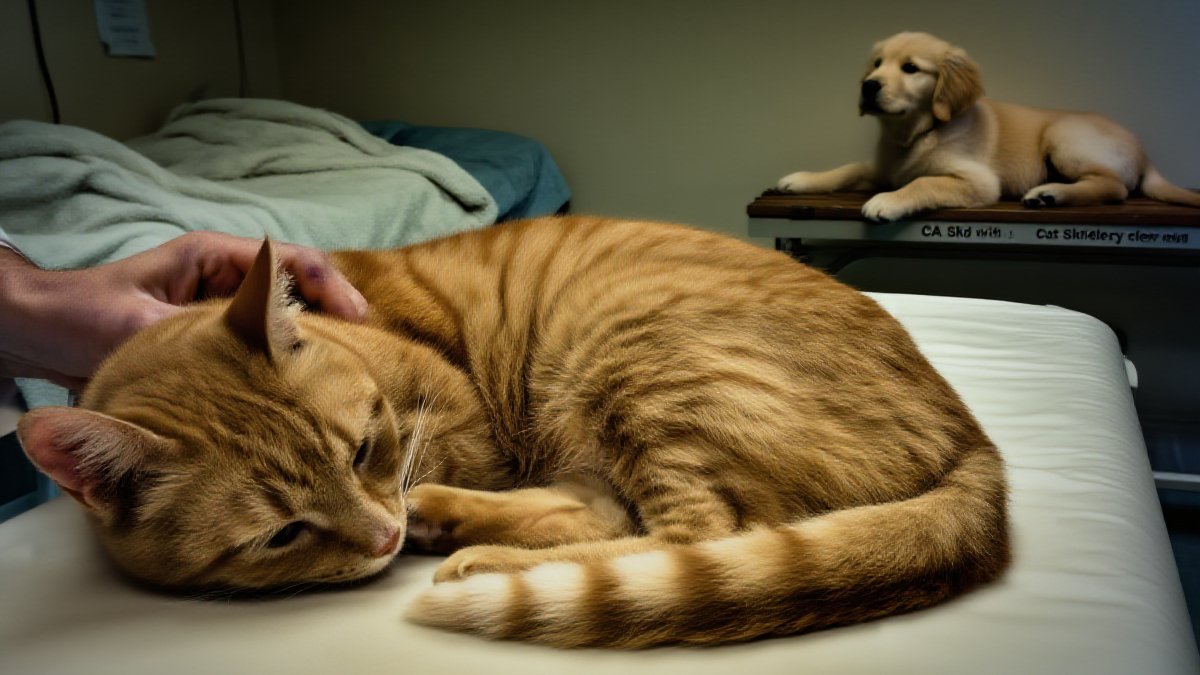
The cat arrived with a prescription shampoo, a foodshe had been switched to two weeks earlier, and an owner who had already solved the case: new detergent, new food, new shampoo — something in the house had changed, and the internet agreed. Six months of scratching said otherwise. Twenty minutes into the exam, a flea comb pulled a single flea off a cat on "year-round" prevention that had quietly lapsed in spring, and the whole case turned. Not the detergent. Not the food, not yet. One flea, one allergic cat, and a coastal California flea season that never really ends.
That is the shape most feline allergy stories take: a reasonable owner, a wrong first guess, and a trigger hiding in plain sight. There are three main triggers — fleas, food, environment — and the order you check them matters more than any single test. Here is how each behaves, and how a workup sorts them out.
Trigger One: Fleas, the Answer Nobody Wants
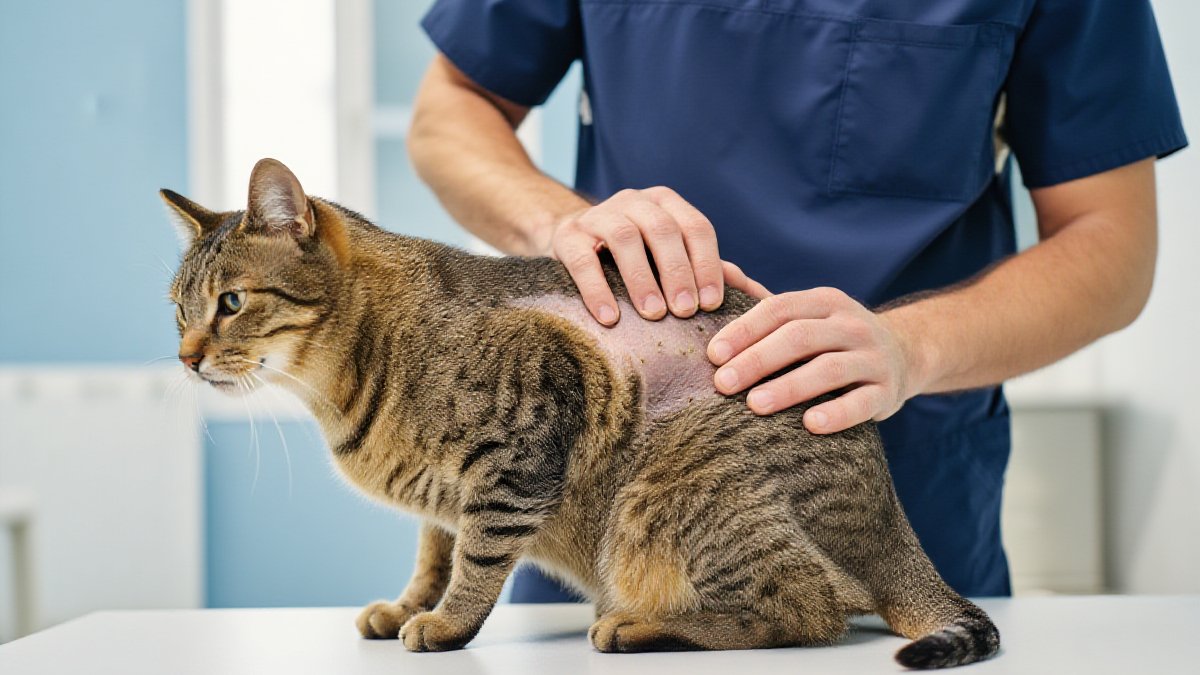
Flea allergy dermatitis is the most common allergy in cats and the one owners resist hardest, because a flea diagnosis sounds like an accusation about housekeeping. It is not. A flea-allergic cat does not need an infestation — a single bite sets off a reaction that itches for days — so a cat can scratch itself raw in a spotless home where no one has ever seen a flea. The pattern is the tell: flea-allergic cats concentrate damage on the lower back, the base of the tail, and the hind legs. If the back half of the cat is balding and the front half looks fine, write that observation down before the appointment; it shortens the workup considerably. And in Southern California, where winter never thins the population, "year-round prevention" has to mean actually year-round — the February lapse is the classic September case.
Trigger Two: Food, but Rarely the Food You Blame
Food allergies in cats are rarer than advertising suggests, and the culprit is usually a protein the cat has eaten for years — chicken, beef, fish — not the recent bag switch under suspicion. The distribution differs from fleas: head and neck itching, chin acne that will not clear, recurrent ear infections, sometimes vomiting or loose stool riding along. A cat with a chronically greasy, inflamed chin is a food-allergy candidate until proven otherwise. The only honest test is an elimination diet: eight to twelve weeks on a hydrolyzed or novel-protein food with not one treat, table scrap, or flavored medication in between, then a deliberate challenge. Blood and saliva tests for food allergy are sold but do not hold up. The trials that succeed are run like lab experiments; the ones that fail usually failed in week three, with a dental treat.
Trigger Three: The Environment That Follows the Cat Indoors
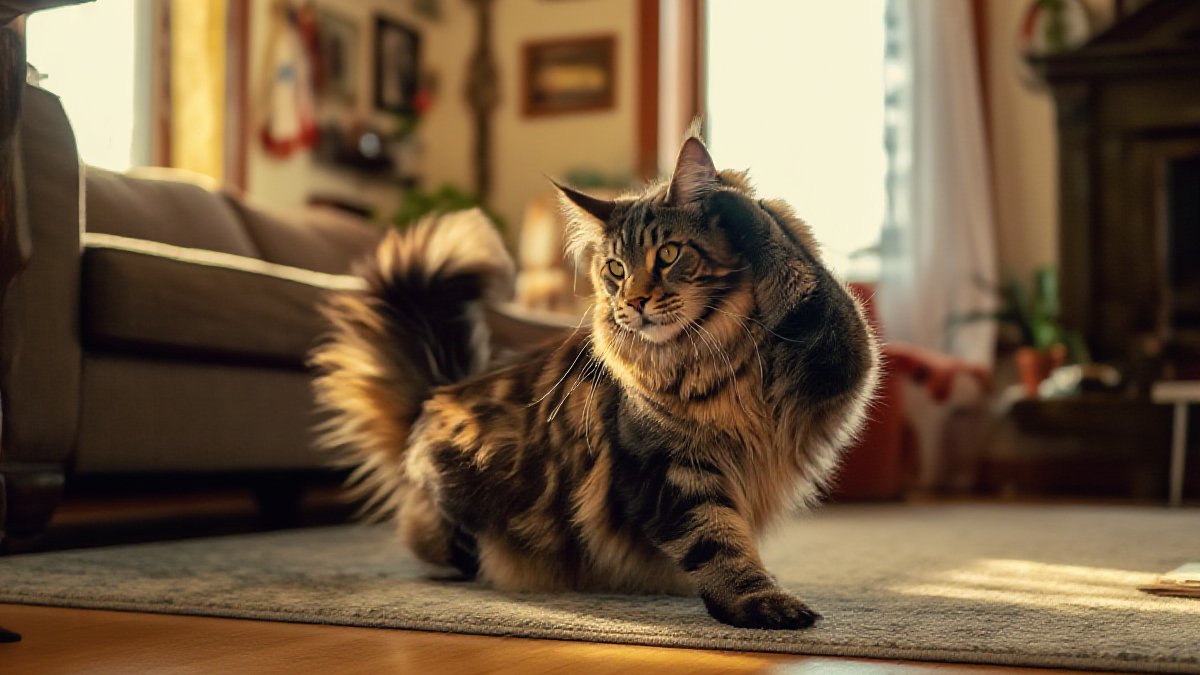
Atopy — environmental allergy to pollens, dust mites, and mold — is the diagnosis left standing after fleas and food are ruled out. Cats express it mostly through skin: paws licked until they stain rust-colored, bellies over-groomed into patchwork, flare-ups that track the season. In Laguna Niguel the calendar has its own texture — coastal sage and grass pollens peak in spring, the marine layer keeps molds comfortable much of the year, and indoor allergens like dust mites never take a season off at all. A cat does not need to sun itself on the patio to inhale the pollen that came in on your clothes and through the screens. Wiping the cat down with a damp cloth after high-pollen days, running the A/C filter on schedule, and washing bedding weekly sound like small things; they are small things that stack.
Own a Veterinary Clinic?
Enjoyed this article? Our editorial team researches, writes, and publishes professional features just like this one about clinics across the US. Get your practice in front of thousands of cat owners searching for a vet in your city.
How the Workup Actually Orders Itself
- Flea control, verified rather than assumed. Confirm the actual dosing dates and treat the house, not just the cat. First because it is cheapest, and most often the answer.
- Skin and ear exam with cytology. Yeast and bacterial infections ride along on allergic skin and need their own treatment before any allergy plan can be judged.
- Food elimination trial, eight to twelve weeks, strict. One complete trial beats three casual ones.
- Environmental allergy testing, once the first three are exhausted. Results drive immunotherapy — drops or injections that retrain the immune response instead of masking it.
Where a Local Practice Fits In
Allergy work rewards continuity — the same eyes on the skin across months, a chart that remembers what February looked like. Rancho Niguel Animal Hospital, at 27981 Greenfield Dr Ste. B off Greenfield near the 73, has been building exactly those long-horizon relationships: Dr. Pat Echolds and the team describe a deliberately old-school model — state-of-the-art medicine with the feel of a traditional family practice — and their 4.8-star rating across 72 reviews reflects it. Their service list covers the full allergy pipeline this article describes: comprehensive physical exams, allergy testing, urinalysis and bloodwork, flea and tick prevention programs, dental care including tooth extractions, and urgent care when a scratched-up ear canal turns into an infection at 6 PM. Hours run Monday through Thursday 8:30 AM–5:30 PM and Friday 8:30 AM–3:00 PM, closed weekends — worth knowing when a flare starts Saturday; the cat vets in Laguna Niguel, CA directory is the comparison point for weekend coverage. Call (949) 273-5010 and describe the itch pattern — the distribution on the body is diagnostic information, and good front-desk teams know to ask.
Living With an Allergic Cat
Cure is the wrong word for feline allergy — manage is the honest one. A flea-allergic cat on strict prevention lives an entirely normal life. A food-allergic cat eating the right diet is, for practical purposes, cured. Atopy gets the middle path: medications for the bad weeks, environmental tweaks for the rest, and an owner who notices the belly-licking before it becomes a bald patch. The cats who do best are not the ones on the most medication; they are the ones whose people caught the pattern early and stayed with it. If the scratching has already started, book the exam rather than buying the fourth shampoo — and for what a proper dermatology workup should include before you commit to anything, the cat services guide page breaks it down.
Rancho Niguel Animal Hospital
27981 Greenfield Dr Ste. B, Laguna Niguel, CA, 92677
Phone: (949) 273-5010
⭐ 4.8 (72 reviews)
This article is editorial content produced by the CatVetFinder team. Clinic details are drawn from public listings and may change — always confirm hours and services with the clinic directly.