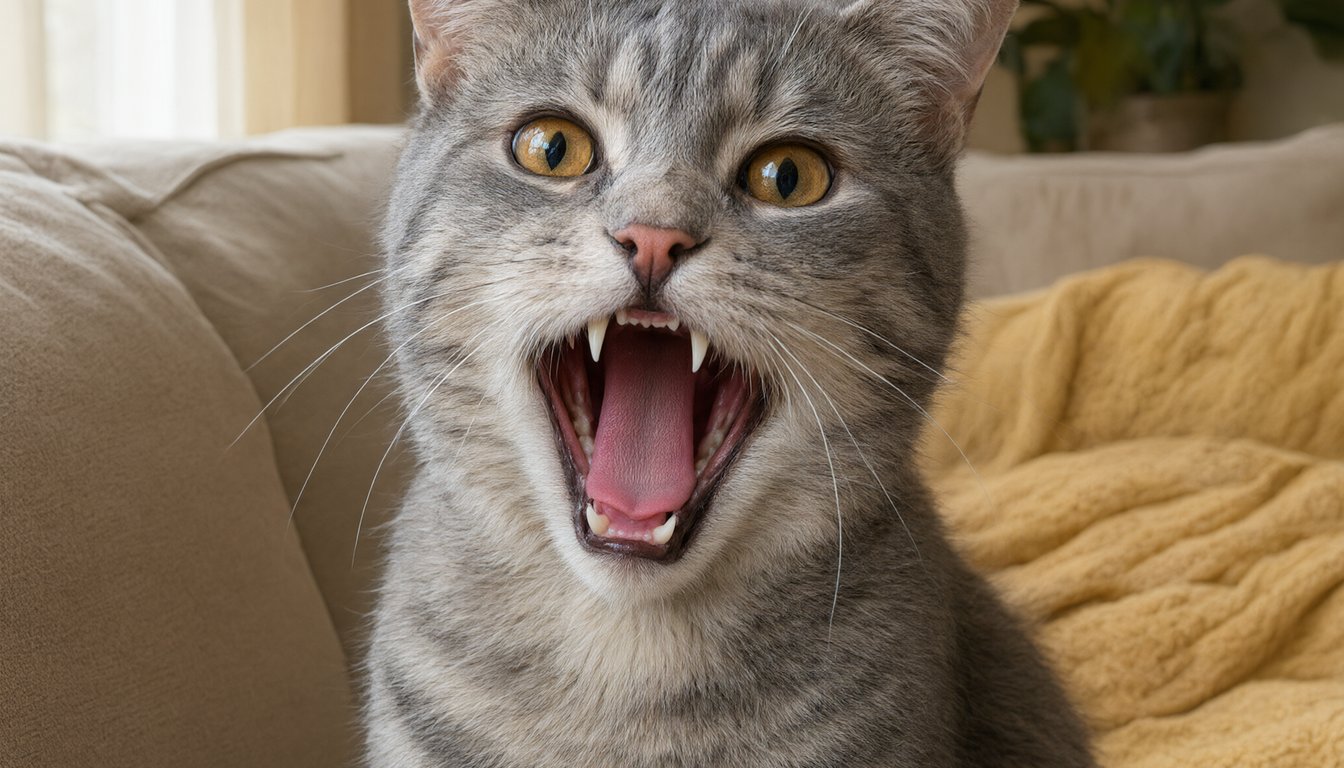
Cat breath is never going to smell like mint, and owners worry about the wrong baseline. A cat who eats meat and grooms with a tongue that collects bacteria will have breath with a distinct, mildly fishy-funky note — that is normal and no one should schedule a dental over it. What sends owners to the search box at midnight is the other thing: a smell that has changed. Rotten, sweet-and-fruity, ammonia-adjacent, or simply stronger than it was six months ago. That change is data, and different smells point at genuinely different organs.
The hard truth behind most searches for "cat bad breath" is that roughly 70 percent of cats show periodontal disease by age three, and the mouth is where most bad breath lives. But not all of it does — kidney disease, diabetes, and even some tumors have signature smells, and the mouth is occasionally the innocent bystander. This guide decodes the smells, separates the at-home fixes from the vet-required ones, and walks through what an actual dental workup and cleaning look like — with one worked example of how the conversation goes in a real practice.
Smell Decoder: What Each Kind of Bad Breath Usually Means
Own a Veterinary Clinic?
Enjoyed this article? Our editorial team researches, writes, and publishes professional features just like this one about clinics across the US. Get your practice in front of thousands of cat owners searching for a vet in your city.
Get close (your cat will tolerate a brief sniff) and try to characterize what you are smelling. The character of the odor is genuinely diagnostic, and it changes which system needs attention first.
- Rotten or like something died — the classic periodontal smell. Pus, decaying food debris, and anaerobic bacteria in inflamed gum pockets. Frequently paired with tartar you can see, red gum lines, drooling, or chewing on one side. The most common cause by far, and the one that only a dental cleaning fixes.
- Fruity or sweet, like nail polish remover — ketones. In a cat this is a diabetic red flag, especially alongside drinking more, urinating more, and weight loss on a normal appetite. Same-week vet call.
- Ammonia or urine-like — the kidney smell. Waste products the kidneys are not clearing get exhaled. In an older cat paired with weight loss or increased thirst, this is a bloodwork conversation, not a toothbrush conversation.
- Sudden foul smell from a young cat with no tartar — think foreign body. A string, grass blade, or piece of kibble lodged across the roof of the mouth or between teeth smells terrible fast. Sometimes visible with a flashlight; often not.
- Smell plus drooling, pawing at the mouth, or dropping food — whatever the odor is, the added behaviors move this from "monitor" to "book the visit." Pain and nausea live in that combination.
One smell worth knowing in the opposite direction: a kitten with mildly stinky breath while teething (around 3–6 months) is usually just teething, and it fades. No intervention beyond a chew-safe toy needed. Adult-onset smell is the one that gets investigated.
What Helps at Home — and What Never Will
The honest hierarchy matters here, because a lot of products are sold against a problem they cannot touch. Once a cat has visible tartar and inflamed gums, no treat, powder, or water additive reverses it — the calculus is mineralized and only scaling removes it. Home care is for slowing the next round and for the cat whose mouth is still clean.
- Toothbrushing, done actually — the only home method with real evidence behind it. A cat-specific brush or silicone finger brush, enzymatic pet toothpaste (never human paste — fluoride and xylitol), three or four times a week minimum. The outer surfaces of the back teeth matter most; that is where the disease starts. Starting as a kitten or right after a professional cleaning gives the habit its best chance.
- VOHC-accepted dental diets and treats — a genuine second tier. The Veterinary Oral Health Council seal means the product was tested for tartar control. It is a meaningful slowdown, not a cleaning.
- Water additives and gels with the same seal — helpful marginal players, fine to add, wrong to rely on.
- Chews and "dental" toys — mostly marketing unless sealed. Cats are not enthusiastic chewers the way dogs are, which limits the category on its face.
- What never works: mints, parsley, breath fresheners of any species. Masking the smell of an infected mouth is worse than useless — it hides the one symptom doing its job.

When Bad Breath Means Book the Vet This Week
Dental disease in cats is progressive and painful, and cats are peerless at hiding pain — a cat eating normally may still have resorptive lesions that hurt with every bite. The smell is often the only flag the cat raises. Book the visit soon rather than eventually when any of these is true: the smell is new or worsening month over month; there is visible redness at the gumline or brown tartar; the cat chews on one side, drops food, or prefers soft food it used to ignore; drooling has appeared; or the smell is paired with any systemic sign — weight change, thirst change, vomiting. A fruity or urine smell with systemic signs is a this-week call, not a scheduling-when-convenient one.
What the Workup and Cleaning Actually Look Like
Because the honest fix for the common case is a professional cleaning under anesthesia, it helps to know what that involves before the estimate arrives. The exam itself is quick — the vet lifts the lips, checks each quadrant, grades the tartar and gingivitis, and looks for the cat-specific problems: resorptive lesions, fractured fangs, and stomatitis, the painful full-mouth inflammation that has its own treatment ladder. The cleaning is a separate scheduled day.
On cleaning day the cat receives pre-anesthetic bloodwork (standard in mature cats and the reason the senior-bloodwork habit pays off), IV fluids, and a monitored anesthetic plane — dentals are the most common reason a cat is anesthetized, and modern protocols treat it with the seriousness of any procedure. Then: full-mouth scaling with an ultrasonic scaler, polishing, and — the step that separates real feline dentistry from a cosmetic rinse — dental radiographs. X-rays are how under-gum disease, root resorption, and dead roots get found, and studies consistently show they change the treatment plan in a large share of cat mouths that look merely "tartary" from the outside. Extractions happen same-day when indicated; cats do remarkably well with fewer or even no teeth afterward, usually eating kibble again within days and visibly feeling better within a week.
Gallatin Veterinary Services
22902 Jackson Rd, Marysville, OH, 43040
Phone: (937) 707-9216
⭐ 5.0 (4 reviews)
Gallatin Veterinary Services, out on Jackson Road in the rolling farm country south of Marysville, Ohio, is a good portrait of how this conversation runs at a hometown practice. They hold a 5.0-star average across their reviews so far — a young review count, which at a rural mixed-area practice usually reflects word-of-mouth clients who have been coming for years before they ever got asked to leave a review. That profile matters for dental decisions specifically: the judgment calls (which teeth are worth saving, whether anesthesia is safe for a 14-year-old, what can wait six months) are made by a vet who knows the cat across visits, not a rotating roster. The phone is (937) 707-9216 and the address is 22902 Jackson Rd, Marysville, OH 43040.
The practical flow for an owner in this position: book the mouth exam first — an ordinary appointment, not a dental day — and let the vet grade the mouth before any estimate is written. If a cleaning is recommended, the questions worth asking are whether dental radiographs are included in the quote, whether pre-anesthetic bloodwork is bundled or separate, and what happens if the X-rays turn up teeth that need extraction (a good practice calls you mid-procedure with the finding and the revised plan rather than surprising you on the invoice). For comparison around Union County, the cat vets in Marysville, OH directory lists the other practices in town, and the full profile at Gallatin Veterinary Services has hours and directions.
Bad breath in a cat is not a smell to freshen — it is a message to translate. Most of the time it says "book a dental"; occasionally it says "run bloodwork." Learn which before spending a dime on freshener.
Questions Cat Owners Ask About Cat Bad Breath
The mouth connects to the rest of the health picture more than most owners assume — cat dental disease and cleaning costs covers the full dental-decision economics, and the appetite side of the story (bad breath often arrives with eating changes) lives in why cats vomit and when to worry. For the systemic smells, cat diabetes signs and cat kidney disease signs decode the thirst and weight patterns that turn a smell into a diagnosis.
This article is editorial content produced by the CatVetFinder team. Clinic details are drawn from public listings and may change — always confirm hours and services with the clinic directly.