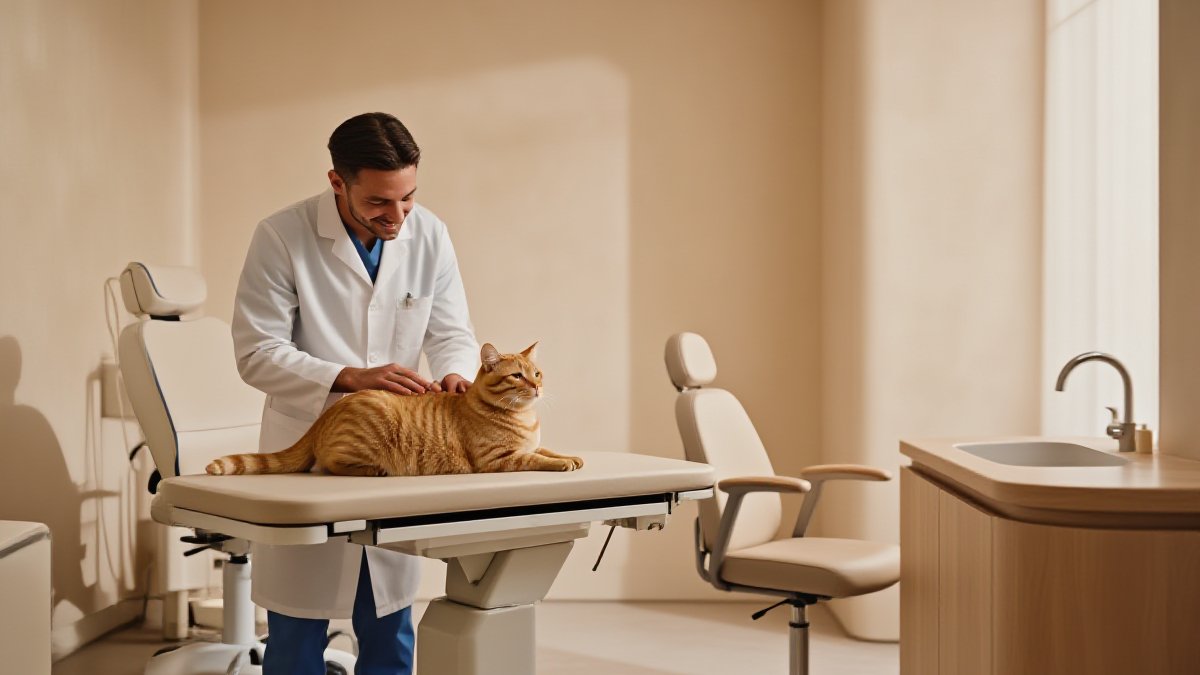
The morning light came through the clinic window in thin grey strips, the kind of overcast you get a lot in Olympia. A young technician was calling a scruffy orange cat into the room, and I could already tell this would be a long afternoon. The cat had been hiding behind the couch for two days, not eating, and its breath had that sour, stale smell most owners never connect to a health problem at all.
That is the whole story of feline dental disease. It does not announce itself with a limp or a fever. It shows up as a slowly fading appetite, a little less enthusiasm for the morning food bowl, a jaw that hurts and won't be opened. By the time a pet owner notices, the problem has usually been building for years. What that cat needed was a professional dental cleaning — and in a city like Olympia, more families are finally asking their veterinarian for it.
In this piece I walk through exactly what a professional cat dental cleaning involves, the anesthesia safety steps that make it possible to do the work at all, and what Washington cat owners can realistically expect to pay. Nothing here is a sales pitch for any particular clinic — it is simply the honest rundown of a service most cat parents still do not fully understand.
Own a Veterinary Clinic?
Enjoyed this article? Our editorial team researches, writes, and publishes professional features just like this one about clinics across the US. Get your practice in front of thousands of cat owners searching for a vet in your city.
Why a Cat's Teeth Get Sick So Easily
Cats have one of the simplest diets on the planet: mostly raw meat. Their teeth are built for shearing, and their mouths are built to stay clean, but the modern version of that diet is a mystery to most of them. When a cat eats kibble or wet food, plaque begins to form on the teeth within hours, and if it is not removed, it hardens into tartar. Tartar is the real enemy, because a brush cannot scrape it off — only a professional cleaning with ultrasonic scaling and hand polishing can.
Here is the part owners do not expect. A cat can have very healthy-looking teeth and still be losing its teeth silently. Tartar and bacteria breed just above the gumline, and there the gums slowly start to separate from the tooth. That thin pocket is where the infection lives, and cats do not feel pain the way we do — they simply stop eating and start hiding their discomfort, which is exactly why the disease is so insidious. Left untreated, the infection can spread to the kidneys, the heart, and eventually the whole body.
The Cleaning Itself: What to Expect in the Chair
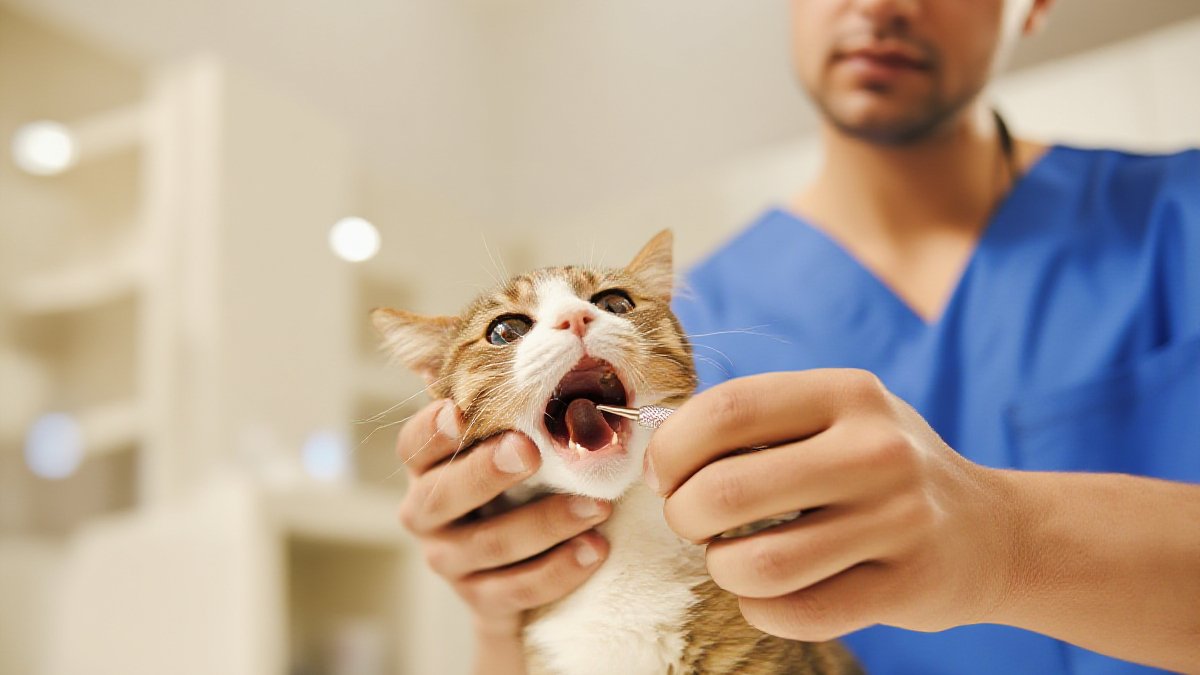
A professional dental cleaning is not a quick check-up. It is a full oral health procedure, and the honest way to describe it is that it follows the same protocol a human dentist uses. The technician will first take a careful look inside the mouth, checking each tooth for damage, broken points, or loose teeth, and probing the gumline for that telltale pocketing that means infection is already present. Those findings guide the entire rest of the visit.
Then comes the cleaning. Ultrasonic scaling uses a gentle vibrating tool to break up and lift the tartar off the tooth surface, and the technician follows that with hand instruments to smooth everything down and polish the enamel so plaque has a harder time re-attaching. If a tooth is badly broken, infected from the root, or so loose it could injure the cat, the veterinarian will discuss extraction as a real option. A full-mouth cleaning is often paired with extractions, and that combination is what turns a routine visit into a longer appointment.
- Mouth examination and gumline probing to map the damage
- Ultrasonic scaling to break up tartar above and below the gumline
- Hand scaling and polishing to smooth each tooth
- Fluoride-free polishing and a final oral assessment
- Extraction of any teeth that cannot be saved
The Anesthesia Question: Is It Really Safe?
This is the one thing that keeps most cat owners up at night. If a cat is going under, why not just hold it still and try? The answer is that a cat under sedation is not awake enough to cooperate, and a cat that is awake cannot be cleaned properly. A professional cleaning requires the cat to be completely still so the technician can work each tooth without causing injury — and that stillness can only come from anesthesia.
The thing that changed my mind was realizing the anesthesia is only the start of the safety process, not the risk itself.
Modern veterinary anesthesia is far safer than it once was, and the safety comes from the protocol around it rather than the drug alone. Before a cat is sedated, the veterinarian takes a full blood panel to check how the liver and kidneys are doing, because those organs clear the anesthesia from the body. A cat with healthy organs processes the drugs much more predictably than one that is unwell. The cat is also weighed, fasted lightly beforehand, and given a pre-medication that calms the nervous system before the main anesthetic is given.
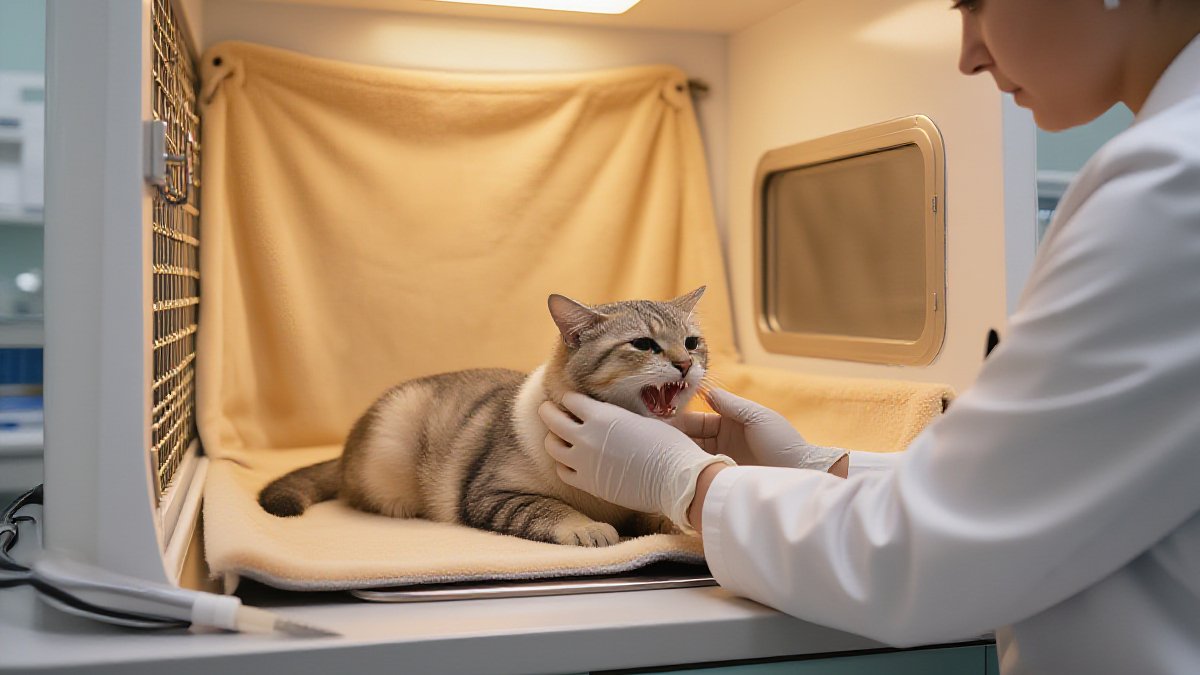
During the procedure, the cat is not left alone. An animal technician monitors its oxygen levels, its heart rate, and its breathing continuously, and supplemental oxygen is delivered the whole time. In the recovery area, the cat is watched until it is fully awake and stable before going home. Most cats that get through a professional dental cleaning under this kind of care leave the next day completely normal, eating and grooming within hours.
What Olympia Cat Owners Can Expect to Pay
The cost of a professional cat dental cleaning in Washington state varies mainly with how much work is actually needed. A basic cleaning on a cat with only mild tartar can run a few hundred dollars, but the honest average — the one a veterinarian would steer you toward — is higher, because most cats arrive with tartar, gum disease, and often one or two teeth that need removing.
- Basic professional cleaning (tartar only, no extractions): roughly $300 to $500
- Full cleaning with a blood panel and pre-medication: around $400 to $600
- Full-mouth cleaning with one or two extractions: $600 to $1,000 or more
- Daily dental care products and follow-up cleanings: a small ongoing cost
When you factor in what a sick cat can cost — lost appetite, missed work, emergency visits, and in the worst cases a decline that turns into something far more expensive — the cleaning usually pays for itself. That is the calculation a good veterinarian wants you to make, and it is the same one I make for every cat that comes through my door.
What You Can Do at Home
A professional cleaning does not replace daily care — it is the reset that makes home care work. Between cleanings, the goal is simply to keep plaque from re-forming. The single most effective tool is a cat-specific toothbrush and a veterinary dental gel. Cats accept a small finger brush far better than a human toothbrush, and a little dab of enzymatic dental gel rubbed along the gumline every day can remove the plaque that would otherwise turn into tartar within hours.
- Use a cat-sized toothbrush with soft, angled bristles
- Apply a veterinary dental gel daily to break up plaque
- Offer dental treats designed to reduce tartar buildup
- Keep clean water flowing so the mouth stays refreshed
- Schedule a professional cleaning at least once a year
The cat from that grey morning went home the following afternoon. By evening it was eating again, and by the next morning it was chasing the laser pointer like nothing had happened. The sour breath was gone, and the owner told me she would never have caught the problem so early without the cleaning. That is the whole point of the procedure, and it is worth every dollar.
If you live in Olympia, WA and your cat has been losing interest in its food or has a bad smell coming from its mouth, it is worth a call to your veterinarian. A full-mouth professional dental cleaning at Spay Neuter All Pets (Snap) on 8340 Libby Rd NE is a good place to start, and the clinic's five-star-rated team handles dental work with the same care they give every other service.
Spay Neuter All Pets (Snap)
8340 Libby Rd NE, Olympia, WA
⭐ 5.0
The Signs You Should Not Ignore
- A noticeable change in breath that does not go away with brushing
- Difficulty eating, chewing on one side, or dropping food
- Swollen, bleeding, or receding gums
- Loose or missing teeth
- A slow decline in appetite over weeks
Dental disease is one of the most common — and most overlooked — conditions in cats, but it is also one of the most treatable. Give a cat a professional cleaning, and it often goes on to enjoy a stronger, healthier, and much happier life.
More Cat Care Guides for Washington Owners
This article is editorial content produced by the CatVetFinder team. Clinic details are drawn from public listings and may change — always confirm hours and services with the clinic directly.