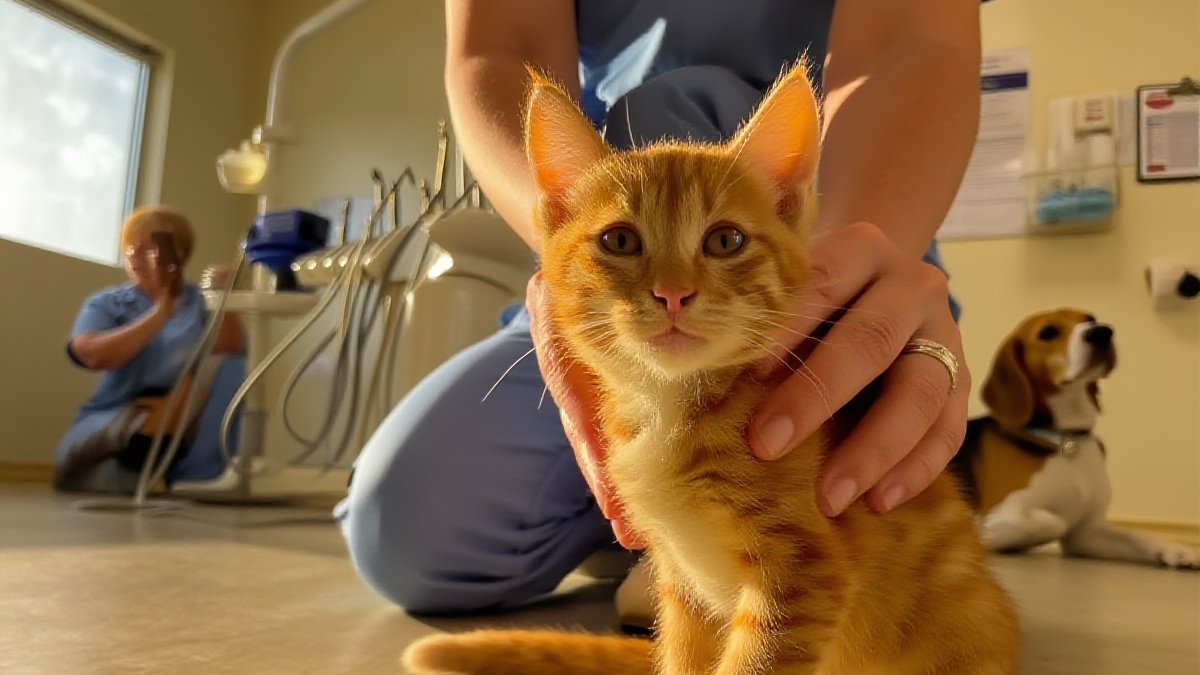
The biggest lie in cat medicine is not told by anyone in particular. It just hangs in the air of every waiting room in America, and it goes like this: cats are clean, quiet, low-maintenance animals, so unless something is bleeding, nothing needs doing. Nowhere does that lie cost more than in the mouth. By age three, roughly two-thirds of cats already have some form of periodontal disease, and almost none of them are showing it the way a dog would — no dropped food, no pawing at the face, just business as usual while the gums quietly lose the argument.
So instead of writing the usual lecture, here are the five questions cat owners in Muskogee actually ask at the front desk and in the exam room — at Animal Medical Center on West Peak Boulevard and everywhere else — with the answers we should all be giving.
"Why Does My Cat's Breath Smell Like That?"
Because mouths do not smell like tuna, they smell like whatever is living in them. A faint food smell right after dinner is normal; a sour, fish-pond odor that greets you at whisker range is the smell of bacteria having their way with the gumline. Cat owners have joked about "cat breath" for so long that many never stop to ask what it actually is. It is inflammation. It is plaque hardening into tartar. In advanced cases it is infection around tooth roots that will cost far more to fix than to prevent. Breath is not a punchline; it is the cheapest early-warning system your cat will ever give you.
"Can I Just Look Myself?"
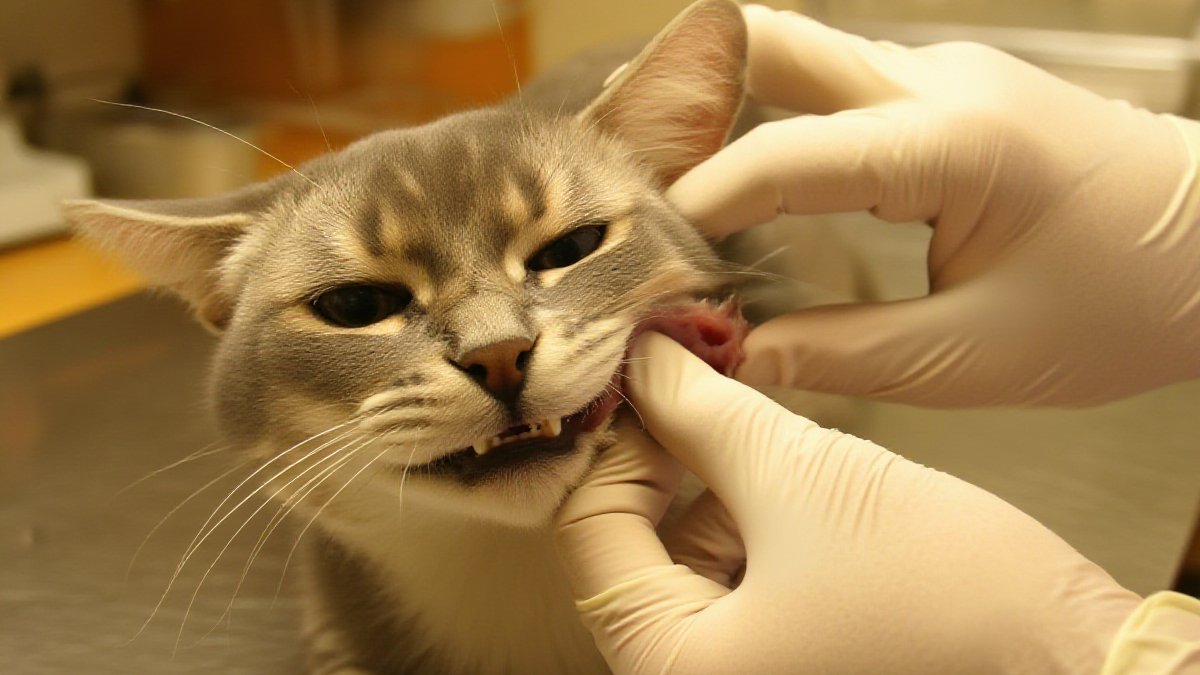
Yes, and you should, though do not expect a full tour. Wait until the cat is relaxed, lift the lip on one side, and look at the cheek teeth — the big molars halfway back are where the trouble starts, because that is where saliva pools and tartar calcifies. You are looking for three things: red or puffy gums where they meet the tooth, yellow-brown crust on the teeth themselves, and any spot where the gum seems to be growing up over a tooth. Cats also get a strange, uniquely feline condition called tooth resorption, where the body dissolves its own teeth from the outside in — often invisible without dental X-rays, but sometimes you will catch a cat flinching when that molar is touched. Whatever you find, a photo on your phone next to the cat makes the conversation at the clinic twice as useful.
"Doesn't Dry Food Clean Their Teeth?"
In a word: no. The idea refuses to die, but watch a cat eat sometime — most of them swallow kibble practically whole, and the crumbs that matter are nowhere near the gumline. Chewing is not cleaning. There are prescription dental diets and treats carrying the VOHC seal that do measurably slow tartar, and some clinics recommend them between cleanings, but they are maintenance, not treatment. Feeding dry food and assuming the teeth are being handled is like buying car wax and skipping the oil change for a decade.
"What Happens During a Real Feline Dental?"
Own a Veterinary Clinic?
Enjoyed this article? Our editorial team researches, writes, and publishes professional features just like this one about clinics across the US. Get your practice in front of thousands of cat owners searching for a vet in your city.
A proper one is a full anesthetic procedure, and that is not a luxury — it is the only way to clean below the gumline, where the actual disease lives, or to take the full-mouth X-rays that find the problems nobody can see awake. Scaling, polishing, charting every tooth, X-rays of the roots, and often nerve blocks and extractions where teeth have already been lost to disease. The anesthesia part is what worries people, and the worry is fair; it is also worth knowing that pre-anesthetic bloodwork, IV fluids, and continuous monitoring are standard at a full-service clinic, and that age is a reason to run the labs, not a reason to let a mouth keep rotting. Animal Medical Center on West Peak Boulevard runs as a full-service mixed-animal practice — cats and dogs alongside the farm calls they are known for around Muskogee — so the dental suite, the monitoring, and the lab are all under one roof on Peak Boulevard, open Monday through Friday, 8:00 to 5:30.
"What Does It Cost to Wait?"
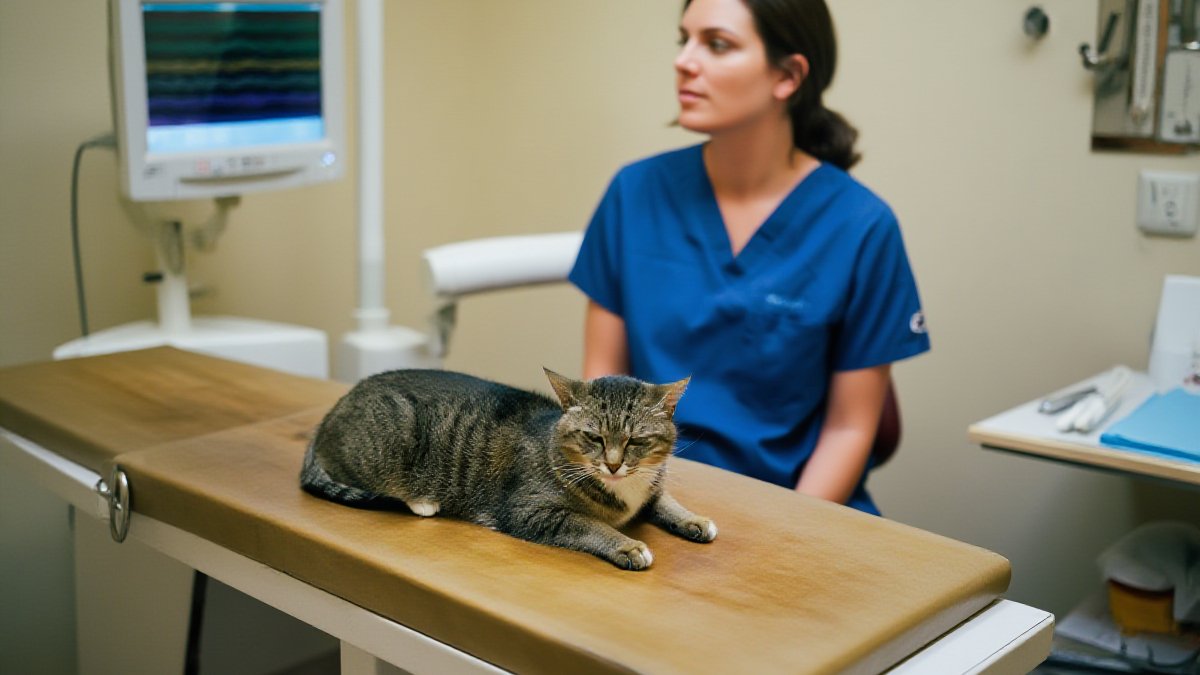
Here is the arithmetic nobody puts on a poster. An early-stage dental, clean teeth, no extractions, might run a few hundred dollars in eastern Oklahoma. Wait two years: extractions, X-rays, nerve blocks, pain meds, recheck visits — the bill commonly triples, and the cat spent those two years in pain it was professionally hiding, because hiding pain is what prey animals do. So the question "what does it cost to wait" has two answers, and the one on the invoice is the smaller of them. If the breath has already turned, call (918) 683-6161 and ask the front desk where your cat sits on that timeline. The staff at Animal Medical Center will tell you straight — a 4.6-star rating on a few dozen reviews in a town like Muskogee only survives on being straight with people. The clinic keeps weekday hours, Monday through Friday, 8:00 to 5:30, so non-urgent dental work is a plan-ahead, book-the-Tuesday kind of errand.
Animal Medical Center: Synar Tim DVM
2300 W Peak Blvd, Muskogee, OK, 74401
Phone: (918) 683-6161
⭐ 4.6 (21 reviews)
More detail on what each service involves lives in the cat services guide, and if you are comparing clinics around eastern Oklahoma, the cat vets in Muskogee, OK directory lists them all. For bigger specialty cases, Tulsa, OK is a straight shot up the turnpike, and the Broken Arrow, OK directory has its own set of options.
More Muskogee & Eastern Oklahoma Cat Resources
This article is editorial content produced by the CatVetFinder team. Clinic details are drawn from public listings and may change — always confirm hours and services with the clinic directly.