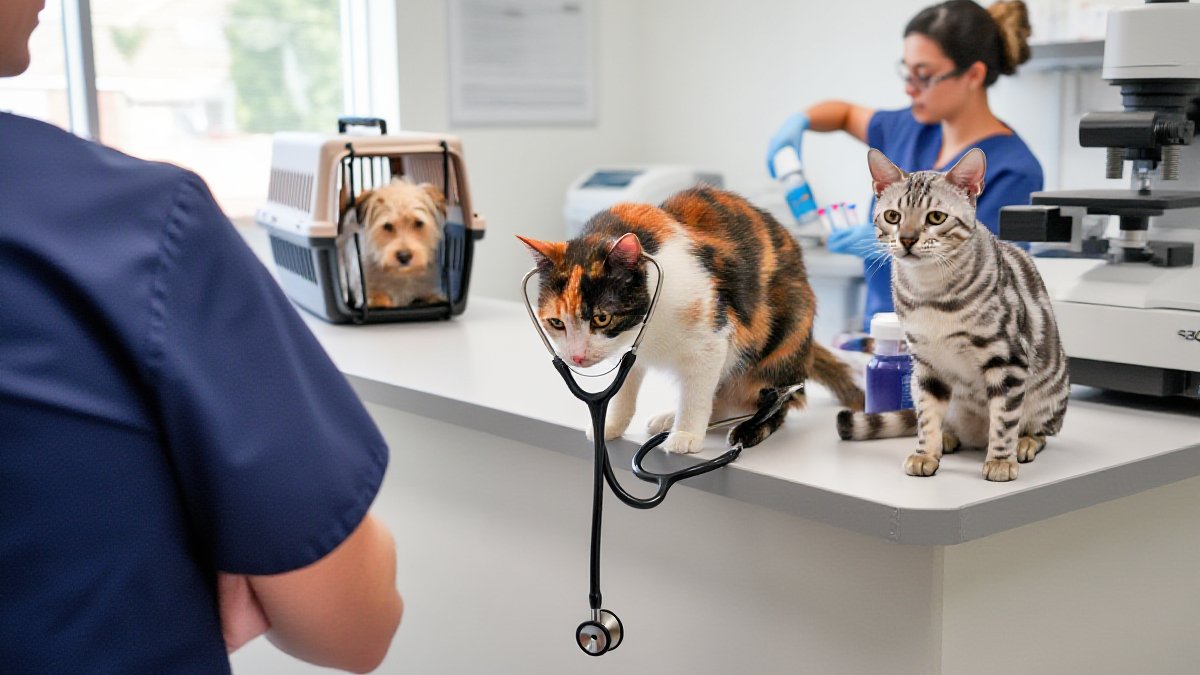
Every diagnostic test in veterinary medicine is a conversation with a patient who cannot talk. The cat on the table has been composing a report for days — drinking more, eating less, hiding under the guest bed — and the owner has been translating from a language with no words. Bloodwork, X-rays, ultrasound: these are not bureaucratic add-ons tacked onto an exam fee. They are the actual translation machinery, the difference between "something seems off" and "her kidneys are under strain, and here is the plan."
The confusion is understandable. Test menus look like alphabet soup — CBC, chemistry panel, T4, urinalysis — and the prices are real money, so owners reasonably ask which ones matter. The honest answer is that each test answers a different question, and the skill lies in matching the question your cat’s story is asking to the test that answers it. Here is that matcher, written for Beaufort owners, with the actual local logistics.
Bloodwork: The Report Card You Can’t See
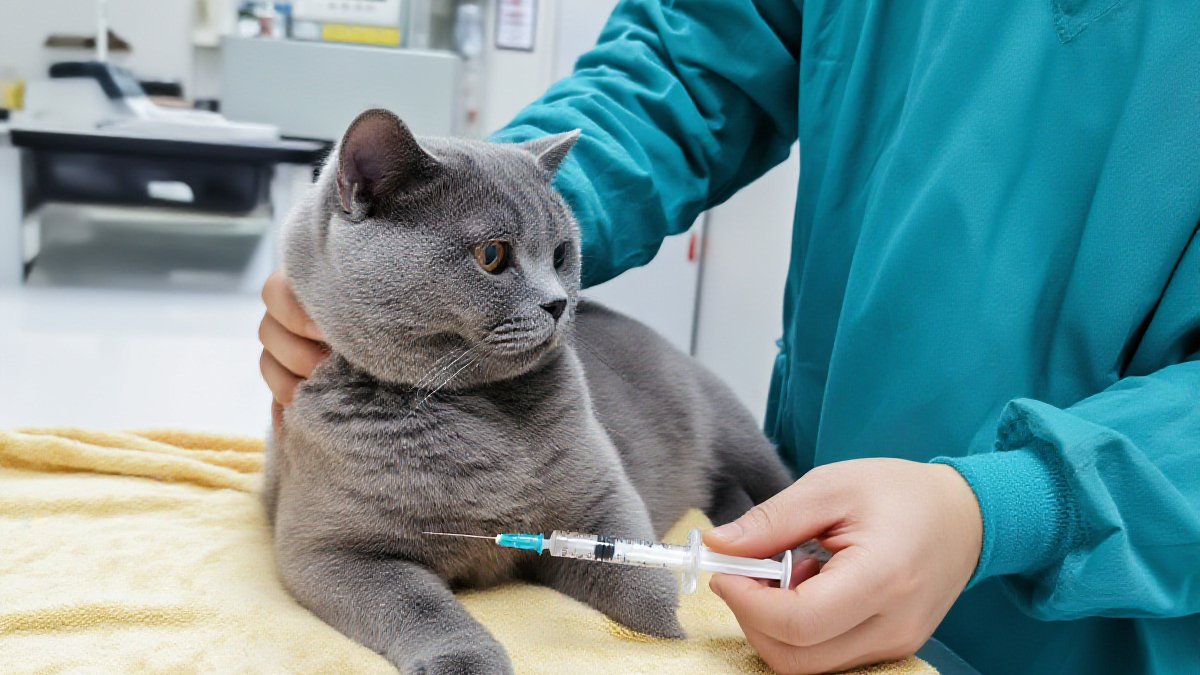
A routine blood panel is really two tests wearing one coat. The CBC — complete blood count — reads the cells themselves: red cells for anemia and hydration, white cells for infection and inflammation, platelets for clotting. The chemistry panel reads what the organs are doing: kidney values (BUN, creatinine) for the filtering plants, liver enzymes for the processing hub, blood sugar, electrolytes, and proteins. A cat that seems "just a little off" often has a panel that says otherwise — early kidney disease, a brewing infection, diabetes — months before the cat itself looks sick.
Two rules make bloodwork make sense. First, senior cats (roughly seven and up) benefit from annual panels even when perfectly well, because cats are champions at masking disease and the trends between years matter more than any single number. Second, any cat about to undergo anesthesia — a dental cleaning, a spay, virtually anything — deserves a pre-anesthetic panel, because the anesthetic plan depends on what the liver and kidneys can clear.
X-Rays: The Skeleton and the Shadow Picture
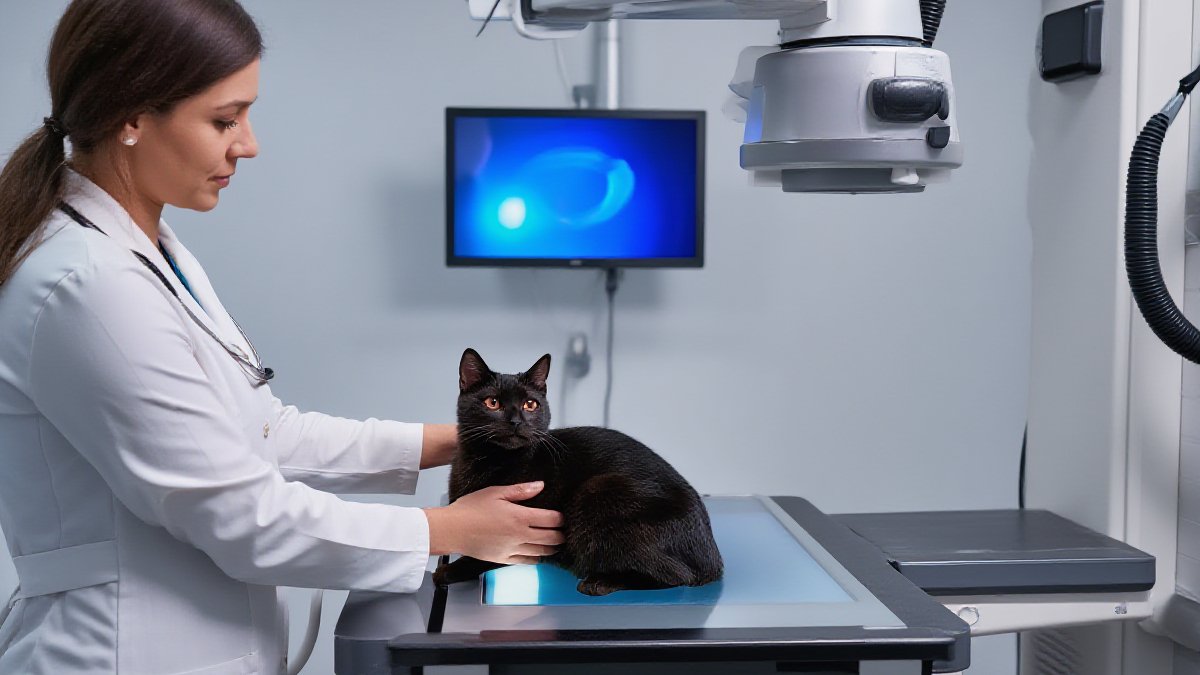
Radiographs answer mechanical questions. Is there fluid in the chest? Did something metallic or string-like end up in the stomach? Are the hips arthritic, the lungs clear, the heart enlarged? Digital radiography has quietly improved the odds here: images render in seconds, can be enhanced and measured on screen, and — importantly for a worried owner standing at the front desk — can be read while you wait rather than after a courier trip to an outside lab. For a vomiting cat, a cat hit by a car, or a senior cat with a cough, X-rays are usually the fastest structural answer in the building.
Ultrasound: The Moving Picture
Where X-rays see structure, ultrasound sees architecture in motion — soft tissue in real time. Bladder stones, intestinal wall thickness, kidney architecture, fluid pockets, pregnancies, tumors: an ultrasound exam often finds what an X-ray and bloodwork together only hint at. It is painless, requires no radiation, and in many clinics needs only a shaved patch and a cooperative cat. The trade-off is time and hands-on skill, which is why ultrasound tends to ride along after the first-pass tests rather than replacing them.
The Tests Owners Forget: Urinalysis and Blood Pressure
Own a Veterinary Clinic?
Enjoyed this article? Our editorial team researches, writes, and publishes professional features just like this one about clinics across the US. Get your practice in front of thousands of cat owners searching for a vet in your city.
Two inexpensive diagnostics get skipped more than any others, and both punch above their price. A urinalysis measures concentrating ability — how well the kidneys are actually doing their job — and screens for crystals, infection, and glucose that the blood panel alone can miss. It is, quite literally, the companion test to every senior chemistry panel; a kidney value that reads "slightly high" means one thing in a concentrated urine and something much different in a dilute one. Blood pressure matters for the same population: hypertension in cats is both common and silent, and it damages kidneys, retinas, and the brain while the cat sits at home looking "fine."
Where Beaufort Cats Get This Done
The practical question is where the chain of tests can happen without turning into a relay race across the county. Animal Medical Center West on Robert Smalls Parkway runs in-house laboratory services — CBC and chemistry panels on-site, answers in minutes rather than days — alongside digital X-rays, so the two most common first-pass diagnostics happen under one roof in a single visit. Their service list covers the full diagnostic ladder for cats: urinalysis, ultrasound imaging, blood pressure monitoring, allergy testing, and dental X-rays for the under-the-gumline work that a dental cleaning should always include. Hours run 8:00 AM to 6:00 PM Monday through Friday (closed weekends, so plan senior panels and pre-anesthetic workups on weekdays), and the clinic’s two locations share a mobile app and online booking through PetDesk, which is the low-friction way to schedule follow-up testing without a phone tree.
Which Test, Which Cat: A Quick Matcher
| What you’re seeing at home | Question it raises | Test that answers it first |
|---|---|---|
| Drinking more, urinating more, weight drift | Kidneys, diabetes, thyroid | Chemistry panel + urinalysis (T4 in seniors) |
| Vomiting, off food, hiding | Obstruction vs. gastritis | Bloodwork + digital X-rays, ultrasound next |
| Bad breath, dropping food | Dental disease below the gumline | Oral exam + dental X-rays at cleaning |
| Senior cat, no symptoms | Masked disease, trend tracking | Annual senior panel + blood pressure |
| Pre-surgery or pre-dental | Anesthesia safety | Pre-anesthetic blood panel |
Animal Medical Center West
154 Robert Smalls Pkwy, Beaufort, SC, 29906
Phone: (843) 525-6655
⭐ 4.9 (297 reviews)
One Beaufort-specific footnote: for cats whose interests run to travel or exotic housemates, the same clinic issues domestic and USDA international health certificates — paperwork that itself requires current diagnostics — and treats exotics alongside the neighborhood cats. The cat vets in Beaufort, SC directory lists every local option, the cat vets in Charleston, SC directory covers the corridor north, and the cat vets in Savannah, GA directory handles the southbound side of the bridge.
This article is editorial content produced by the CatVetFinder team. Clinic details are drawn from public listings and may change — always confirm hours and services with the clinic directly.