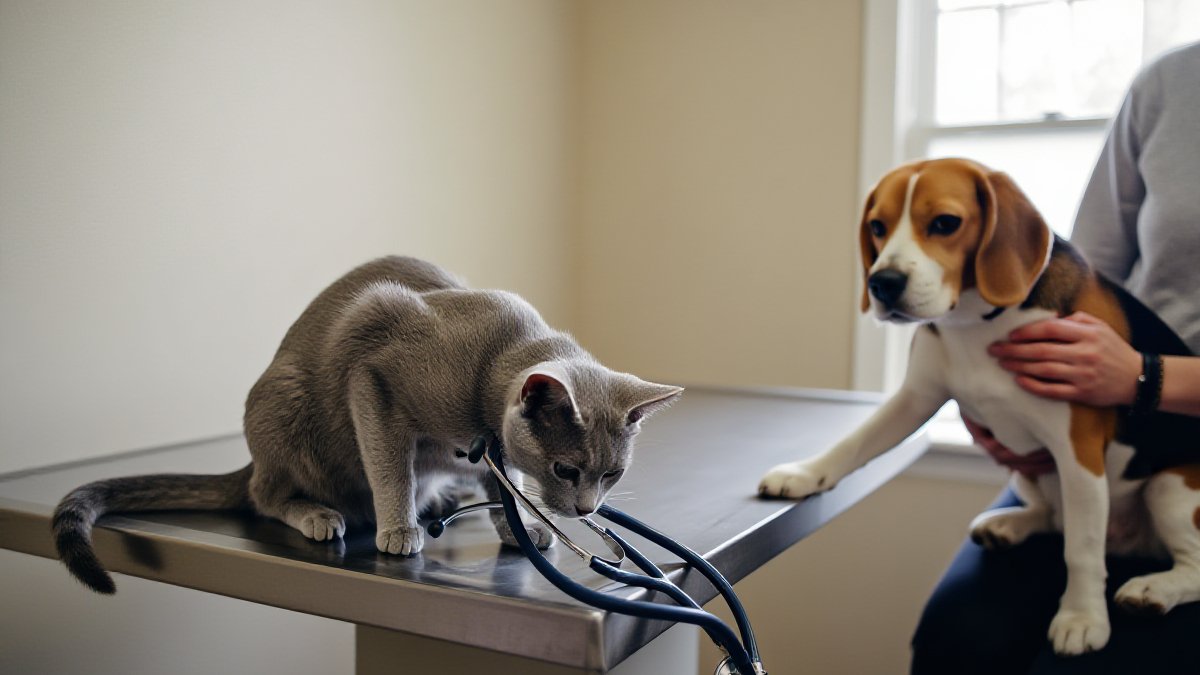
The thyroid cat came in on a morning in March, a thirteen-year-old barn cat turned house cat, carried in a carrier that had clearly never been used for anything pleasant. His owner had a typed list — losing weight, eating twice what he used to, yelling at the ceiling at three in the morning. She had already decided it was old age. “He’s just getting old, right?” she asked, in the tone of someone hoping to be told no.
Ten minutes of bloodwork later, the answer was no: his thyroid levels were through the roof, his kidneys were straining to keep up, and every symptom on that typed list was a treatable hormone problem pretending to be the sunset of a life. Two years later that cat is still yelling at the ceiling — but now on medication, at a normal weight, and with kidneys we are actively protecting.
That visit cost one blood draw. It bought two years. This is what the machines behind that draw actually measure, and how a clinic decides which test to reach for first.
Bloodwork: The Quarter-Hour That Rewrites the Chart
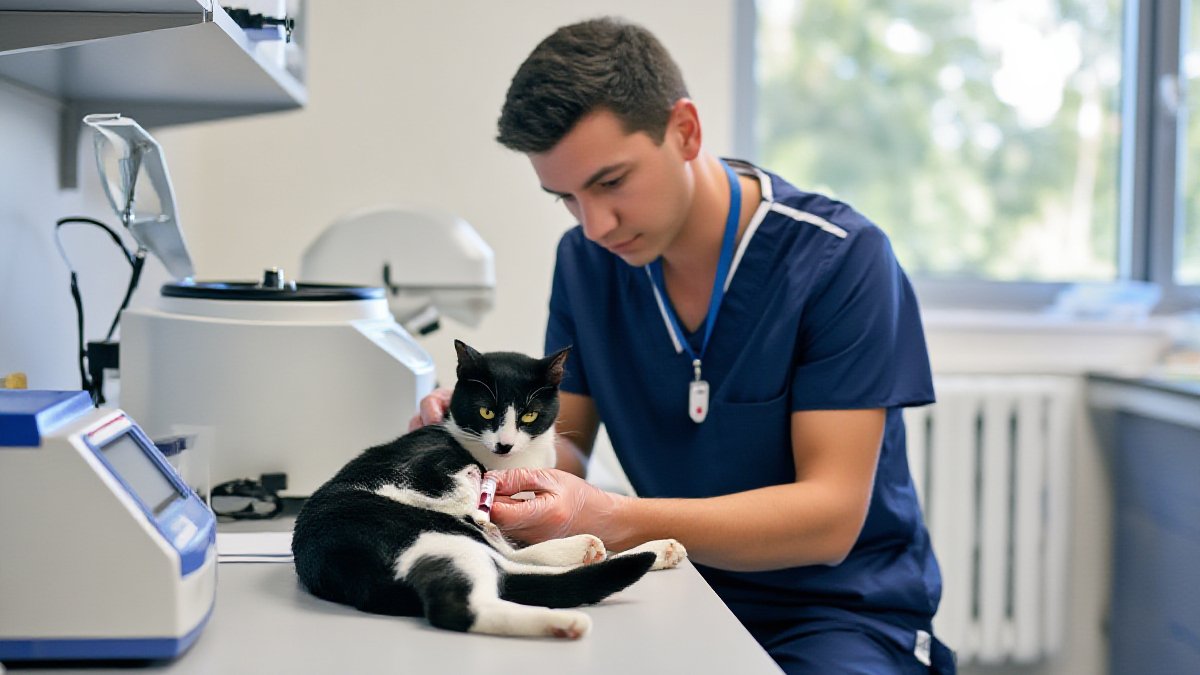
A chemistry panel and complete blood count is the least dramatic test in the building and the one that changes the most stories. The CBC counts the cellular army — red cells that carry oxygen, white cells that fight infection, platelets that clot. The chemistry panel reads the organs’ mail: kidney values (BUN, creatinine), liver enzymes, blood sugar, thyroid in older cats. Nothing on the page is a diagnosis by itself; the pattern is the diagnosis, and reading patterns is what veterinary training is actually for.
What makes in-house bloodwork different from sending samples to an outside lab is not accuracy — both are accurate — it is hours. Susquehanna Valley Veterinary Clinic runs CBC and chemistry panels in its own lab, which means a sick cat’s kidney values are on the treatment-room screen during the same appointment, not the next morning. In a vomiting cat, that difference is the difference between “come back Thursday” and “we’re starting fluids now.”
X-Rays: Architecture and Accidents
Radiographs answer structural questions. Is the heart enlarged? Are the lungs wet or clear? Did that swallowed thread make it past the stomach? Is there a tumor casting a shadow where no shadow belongs? Digital X-ray — which the clinic uses for everything from orthopedic injuries to dental work — gives us images in seconds and lets us zoom into the lung fields without re-shooting. For a coughing cat, a trauma cat, or a constipated cat, the X-ray is the fastest structural opinion money can buy.
Own a Veterinary Clinic?
Enjoyed this article? Our editorial team researches, writes, and publishes professional features just like this one about clinics across the US. Get your practice in front of thousands of cat owners searching for a vet in your city.
What X-rays do poorly is texture. A kidney on a radiograph is a silhouette; the interior of that kidney, the walls of the bladder, the chambers of the heart, are all beyond its reach. When the silhouette raises a question about what is inside, the case moves to ultrasound.
Ultrasound: Watching the Organs Work
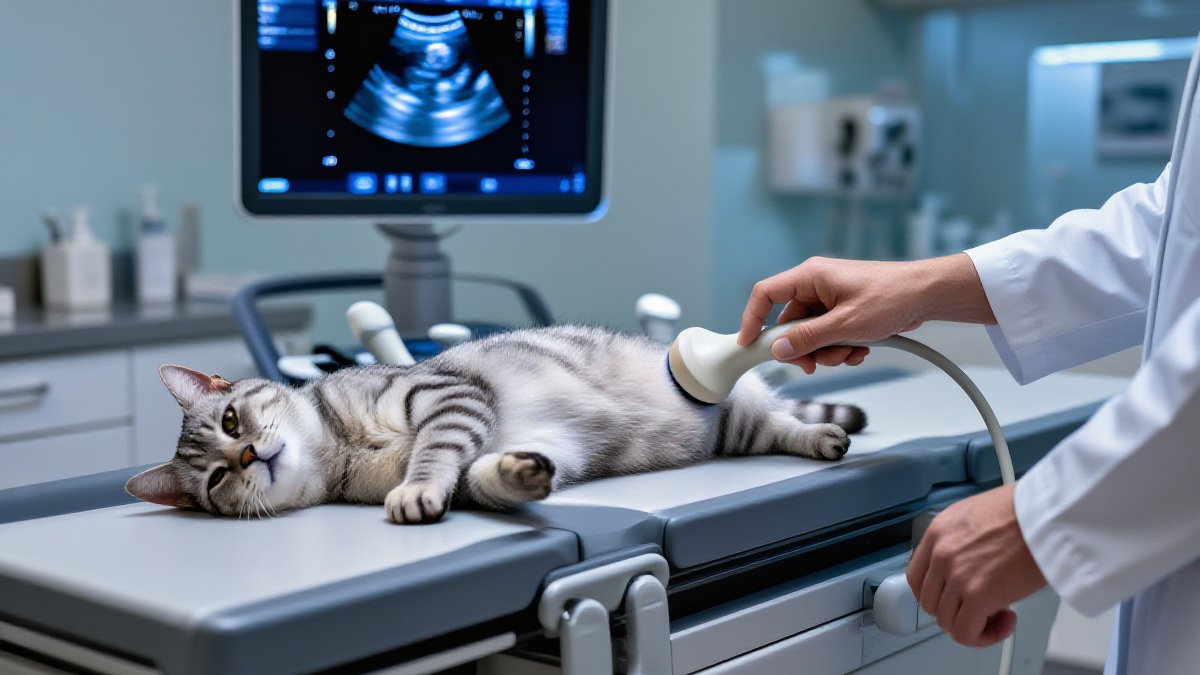
Ultrasound is real-time interior cinematography. It shows bladder walls thickened by inflammation, kidneys scarred by chronic disease, fluid where fluid should not be, kittens with beating hearts. It needs no sedation in most cats, it involves no radiation, and its great trick is showing motion — which is why cardiac ultrasound (echocardiography) is how feline heart disease is actually seen, not guessed at. The clinic’s ultrasonography covers abdominal disease, heart evaluations, and the soft-tissue questions radiographs raise but cannot answer.
The two tests are complements, not rivals. A cat with a suspected intestinal blockage gets an X-ray to confirm the pattern, then an ultrasound to see whether the object has blood supply. A senior cat with a heart murmur gets an EKG — the clinic partners with cardiology specialists for advanced cardiac cases — and usually an echo to see the valve that caused it. Sequence matters, and the sequence is clinical, not commercial.
When a Harrisburg Cat Needs Which Test
The word “needs” does real work here. A healthy young adult cat needs none of this beyond an annual check. The calculus shifts with age and symptoms. Cats over ten earn bloodwork annually — kidney disease, overactive thyroid, and diabetes together affect a third of senior cats and are all quietly visible in a chemistry panel years before they are loudly visible in the litter box. Vomiting that lasts more than a day or two earns imaging. Weight loss with a good appetite earns a thyroid level before anything else. A cat straining to urinate is an emergency that earns everything at once.
Central Pennsylvania adds its own wrinkles — indoor-outdoor cats who meet cars and other animals, an aging barn-cat population with dental disease, and hard winters that turn subtle lamenesses into serious ones. The clinic’s full diagnostic profile covers the comprehensive exams and senior screening that catch these early; the cat vets in Harrisburg, PA directory is where you compare every option in the city before you book.
Susquehanna Valley Veterinary Clinic
2235 Kohn Rd, Harrisburg, PA, 17110
Phone: (223) 322-7894
⭐ 4.8 (175 reviews)
The Tests Our Own Cat Gets, and When
- Annual chemistry panel and CBC from age seven — earlier for purebreds prone to known conditions. The thyroid cat taught me the cost ratio: one draw versus years of disease.
- Blood pressure and urine concentration alongside bloodwork in seniors. Hypertension in cats is silent and treatable, and it blinds kidneys and retinas before it announces itself.
- X-rays for coughs, trauma, and constipation — the structural questions. Ultrasound for texture questions: walls, chambers, interiors.
- Dental radiographs during every professional cleaning. Half of a cat’s tooth is below the gumline, and resorptive lesions hide exactly there.
The most expensive diagnostic test is the one that arrives too late to change the outcome — the cheapest is the one a routine exam prompted in time.
Paying for Answers Without Overpaying for Them
Diagnostic medicine has a pricing logic worth understanding: the test is justified by whether the result will change what happens next. Bloodwork before anesthesia changes drug choice and dosing — justified. Repeat imaging on a stable cat two weeks after a clear scan — usually not. When you compare clinics through the Pennsylvania cat vet directory or look at neighboring options in Lancaster, PA, ask not “what do you charge for tests” but “what would you do with the result.” The second question is the one that separates thorough medicine from expensive medicine.
This article is editorial content produced by the CatVetFinder team. Clinic details are drawn from public listings and may change — always confirm hours and services with the clinic directly.