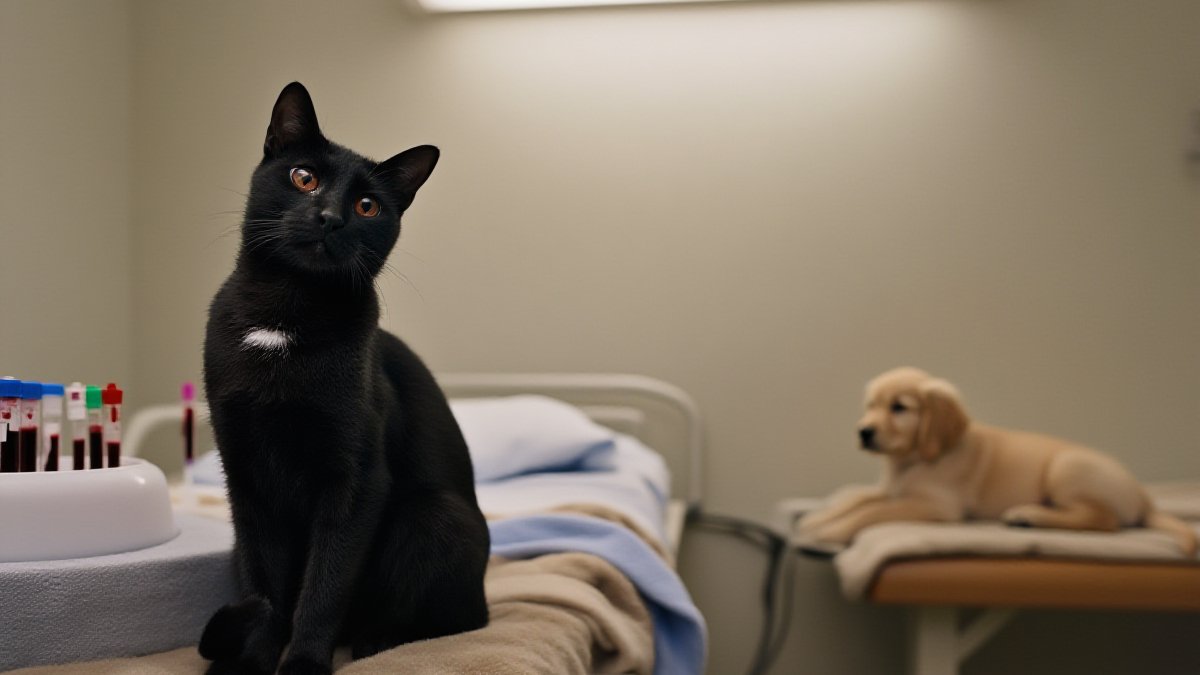
Diarrhea is the symptom cat owners handle most often and understand least. Part of that is the cat itself: a dog with loose stool for two days gets a vet visit; a cat with the same problem gets observed from across the room, because the litter box keeps its evidence mostly private. The other part is that cats genuinely do get transient soft stool from small things — a new food, a stressful week, a grass-and-caterpillar season — and most of those episodes really do end on their own. So the practical question is never "is diarrhea bad?" It is: how do I tell this week's ordinary messy stool from the first sign of something that will not fix itself?
This guide works through the answer the way a feline vet actually triages it: the duration rule that decides most cases, the companion symptoms that change the timeline, what stool appearance suggests, the situations that skip the wait entirely, and what a clinic work-up looks like if the simple explanation is wrong — with one worked example of what that conversation sounds like in a real practice.
The Duration Rule Comes Before Everything Else
Veterinary triage of diarrhea starts with one question: how long has this been going on? A single soft or loose stool in a cat who is eating, drinking, playing, and grooming normally is usually a gut-management event — something eaten, something stressful, something seasonal. One to two days of soft stool in an otherwise-bright adult cat is the zone where watchful waiting at home is reasonable. Past the two-day mark, the case changes character: after 48 hours the vet conversation moves from "wait and see" to "come in for at least a fecal exam," and after three to four days it is an appointment, not a conversation, because chronic diarrhea in cats carries a different differential — parasites, food intolerance, inflammatory bowel disease, pancreatic and thyroid problems — none of which resolve on a bland diet.
- One soft stool, cat otherwise normal — monitor. Check the next two stools before drawing any conclusion; single-event softness carries little information.
- Loose stool 24–48 hours, cat bright and eating — reasonable home-watch window for a vaccinated adult indoor cat. Offer the usual food, keep water fresh, keep the box clean enough to read.
- Diarrhea past 48 hours, even in a bright cat — schedule a visit. The fecal exam is cheap and answers more than anything you can observe at home.
- Diarrhea more than 3–4 days, or a repeating weekly pattern — a work-up, not a diet roulette. Chronic intermittent soft stool is how food intolerance and IBD introduce themselves.
Two populations collapse that timeline dramatically: kittens, and cats with any chronic condition. A kitten with diarrhea is a same-day call regardless of behavior — the fluid math simply does not allow a watch-and-wait, and parasites are near-universal in that age group. A diabetic, kidney, or hyperthyroid cat with new digestive upset belongs on the phone with the vet the first day, because their baseline has less slack.
Own a Veterinary Clinic?
Enjoyed this article? Our editorial team researches, writes, and publishes professional features just like this one about clinics across the US. Get your practice in front of thousands of cat owners searching for a vet in your city.
The Companion Symptoms That Change the Answer
Stool consistency alone is a weak signal. What makes diarrhea significant is what arrives with it. Read the combinations, not the symptom:
| What you see alongside the diarrhea | What it suggests | Urgency |
|---|---|---|
| Normal energy, normal appetite, no vomiting | Diet indiscretion, food change, stress response | Watch for 24–48 hours, then call |
| Vomiting plus diarrhea | Gastroenteritis, foreign body, toxin, pancreatitis | Same-day vet visit |
| Blood — fresh red streaks or small amounts | Colitis, parasites, stress response; common and often mild | Same-day or next-morning visit |
| Black, tarry stool (coffee-ground texture) | Digested blood from higher in the GI tract — ulcer or severe inflammation | Urgent — same day |
| Diarrhea plus lethargy, hiding, or refusal to eat | Systemic illness until proven otherwise | Same-day vet visit |
| Soft stool plus visible weight loss over weeks | Malabsorption, IBD, pancreatic disease, cancer | Scheduled work-up, do not delay |
| Repeated straining, little or nothing produced | Could be the colon — or could be a urinary blockage | Emergency if you cannot confirm urine output |
| Kitten, any age, any diarrhea, with or without other signs | Parasites, viral infection, dehydration risk | Same-day call, always |
What the Stool Itself Tells You
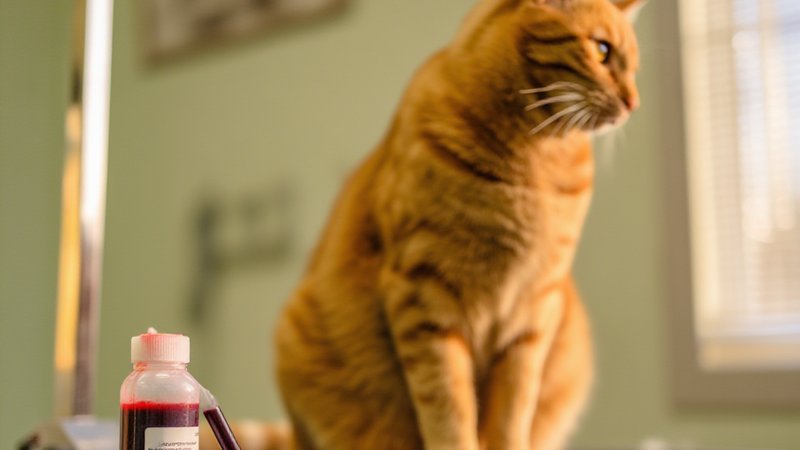
It is an unglamorous subject, but the appearance of stool is genuinely diagnostic information, and your vet will ask about it precisely because it narrows the differential faster than anything else in the history. Soft-serve texture once is noise; the details below are what actually change the plan:
- Completely liquid, no formed portion — small-intestinal or acute infectious diarrhea; dehydration risk climbs faster with volume, so note how often the box shows it.
- Soft but formed, with a normal cat above it — the least concerning pattern; often food-related and self-limited.
- Mucus-coated stool — large-intestinal (colonic) irritation; common with stress colitis and diet changes, worth reporting at the visit.
- Fresh red blood on the surface or mixed in — colonic inflammation or a parasite problem; usually not an emergency by itself, but never a "wait a week" either.
- Black, tarry, pitch-dark stool — digested blood; means bleeding higher in the tract. The single most urgent stool appearance on this list after a complete obstruction.
- Greasy, pale, foul, bulky stool that does not scoop normally — malabsorption or pancreatic insufficiency; a chronic-work-up pattern, not an overnight worry.
- Visible worms or rice-like segments — parasites, straightforwardly; photograph it and bring the image, and the visit gets much simpler.
The First 48 Hours at Home: The Short Honest Version
For an otherwise-bright vaccinated adult with one to two days of soft stool, home management is legitimate — the goal is to stop compounding the problem and keep the gut moving, not to medicate. Skip the last food change you made; if a new diet started this, return to the previous food and transition to the new one over 7–10 days rather than overnight. Feed normally in smaller portions rather than fasting a cat — cats do not fast well, and anorexia on top of diarrhea moves a patient toward hepatic lipidosis surprisingly fast. Keep water fresh in more than one location, because hydration is the only true first aid that exists here. And resist the enormous temptation of over-the-counter human anti-diarrheal medicines: loperamide and bismuth-subsalicylate products are unsafe or unpredictable in cats at home doses, and they mask the trend your vet needs to see if things do not resolve.
Then hold one question firmly at the front: is there a story this week, or did stool just change without a reason? A cat that raided the trash, spent a weekend at a boarding facility, or finished a course of antibiotics explains itself, and the home-observation plan is reasonable. Soft stool with no story at all is the version that earns a fecal exam sooner rather than later.
How the Clinic Work-Up Actually Proceeds
It helps to know the sequence a doctor will use, because it explains the cost structure and the pacing of a diarrhea case. First-line diagnostics are a physical exam and a fecal test — the fecal exam finds Giardia, roundworms, hookworms, coccidia, and bacterial overgrowth for a modest fee, and it resolves a meaningful share of cases all by itself. If that comes back clean and the diarrhea continues, the next tier is bloodwork (kidney and thyroid values do real work here in middle-aged and older cats), plus checking whether the cat is actually absorbing — some chronic cases are caught with a simple B-vitamin blood level. Imaging follows when the history or exam is suspicious: X-rays for obstruction pattern and lymph nodes, ultrasound for intestinal wall thickness and the architecture that separates inflammatory bowel disease from something more serious.
Diet trials sit alongside diagnostics rather than after them in feline practice, because the gut responds faster to food than many owners expect. A hydrolyzed-protein or novel-protein trial for 6–8 weeks is simultaneous treatment and diagnostic information; that is why your vet may ask you to commit to it strictly — no treats, no flavor chews, no table scraps — before ordering the next expensive test. The point of the ladder is not that every cat climbs it; the point is that each rung is ordered so the cheap, high-yield answers come first and the more invasive ones are earned by prior evidence.
What This Looks Like in Practice: Milton Animal Hospital, Milton, FL
Because most of the value in a diarrhea case lives in the first conversation, it is worth seeing what a solid version of that conversation looks like in a real clinic. Milton Animal Hospital on Avalon Boulevard in Milton, Florida — a 4.7-star practice across roughly 700 owner reviews — is a full-service small-animal hospital with in-house labwork, digital imaging, and surgical capability, which maps directly onto the work-up ladder above: a same-visit fecal and bloodwork answer instead of a three-day wait for outside results. Owner reviews consistently describe unhurried exams with clear per-step pricing and follow-up calls after treatment changes — the two behaviors that matter most in a diarrhea case, where the useful information often comes from "how is the stool today" rather than from another same-day procedure.
Milton Animal Hospital
4282 Avalon Blvd, Milton, FL, 32583
Phone: (850) 623-6780
⭐ 4.7 (698 reviews)
For diarrhea specifically, two practical things stand out in that profile: in-house fecal testing means the same-day visit actually answers something instead of sending samples out and hoping, and the practice's depth in dentistry and senior medicine matters when a chronic soft-stool case turns out to be systemic rather than dietary — the referral-free path to figuring that out lives under one roof. And for the Gulf Coast owners around Milton, Pensacola, and Navarre who keep this practice busy, that consistency is the point: the same team that knows your cat will be the one reading the second fecal, not a rotating stranger.
Questions Cat Owners Ask About Diarrhea
If this guide is helping while you figure out the next step, three pieces sit close to this one: cat vomiting: when it is a hairball and when it is not — the sibling symptom that frequently arrives together, chronic weight loss in indoor cats — the most reliable long-game companion to unresolved gut trouble, and what a cat vet visit actually costs so the fecal-to-ultrasound ladder above has no pricing surprises.
This article is editorial content produced by the CatVetFinder team. Clinic details are drawn from public listings and may change — always confirm hours and services with the clinic directly.