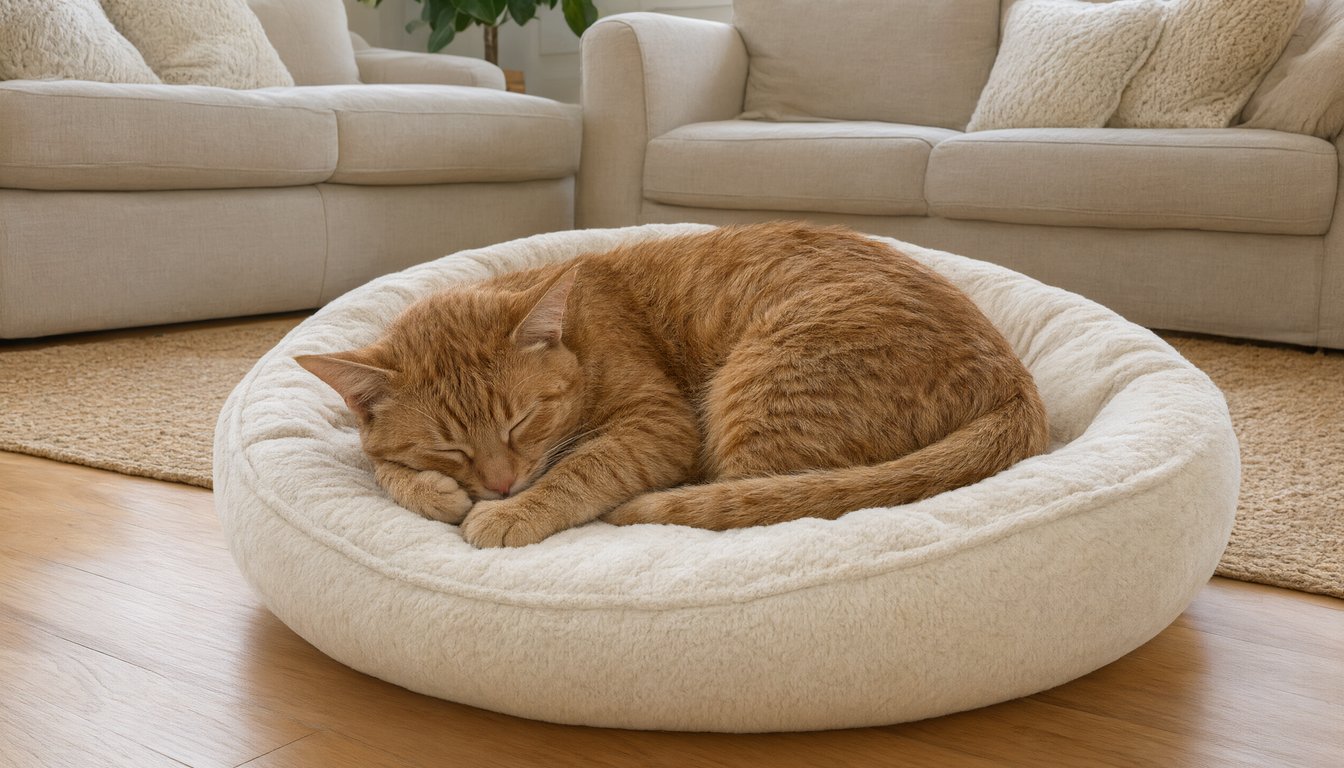
For most of feline medicine's history, a diagnosis of FIP — feline infectious peritonitis — was the sentence every cat owner dreaded most. Vets delivered it apologetically, because for decades there was no approved treatment and the only honest answer to "what do we do now" was "keep him comfortable." That era is over. Since the antiviral GS-441524 became accessible in the US, an FIP diagnosis has shifted from a death sentence to a long, expensive, exhausting, and frequently successful treatment course. Remission rates in published studies and the large owner-community treatment groups now run well past eighty percent.
The catch is that none of this works unless the disease gets caught. FIP hides behind a disguise of ordinary symptoms — a fever that comes and goes, a cat eating a little less, a belly that slowly fills with fluid. Owners routinely lose weeks to "wait and see" because nothing looks like an emergency. This guide walks through what FIP actually is, the signs that should move a cat from "watch it" to "call the vet today," how the diagnosis gets made, what the treatment involves and costs, and what recovery realistically looks like.
What FIP Actually Is (and What It Isn't)
FIP is caused by feline coronavirus — and this is where most owners get confused, because "coronavirus" in cats is not COVID-19 and is not a human health concern at all. Feline enteric coronavirus is incredibly common: it spreads through shared litter boxes and grooming in any multi-cat setting, and in most cats it causes either nothing or a few days of mild diarrhea, then disappears. The virus that causes it is harmless. FIP happens when, in a small percentage of infected cats, that common virus mutates inside the cat's own body into a form its immune system cannot control, triggering the runaway inflammation that defines the disease.
Two consequences of that biology matter for owners. First, FIP itself is not contagious — a cat with FIP cannot pass FIP to housemates. What spreads is the harmless ancestor virus, through feces, in environments where many cats share space: catteries, shelters, rescues, and boarding or daycare facilities. Second, the risk profile follows from it. Most FIP cases appear in cats under two years old, and purebreds and shelter-adopted kittens are overrepresented. An eight-year-old indoor-only single cat is a genuinely unlikely FIP candidate; a one-year-old adopted last month from a crowded shelter is exactly the demographic this disease picks on.
The Two Forms of FIP and Their Signs
FIP shows up in two overlapping presentations, and knowing both matters because one of them is much easier to spot than the other:
| Form | What's happening | Signs owners notice |
|---|---|---|
| Wet (effusive) FIP | Inflamed blood vessels leak protein-rich fluid into the abdomen or chest | Progressively swollen, pear-shaped belly; labored or fast breathing if fluid collects around the lungs; lethargy; poor appetite; weight loss despite the bloated look |
| Dry (non-effusive) FIP | Inflammatory masses (granulomas) form in organs — kidneys, liver, intestines, eyes, brain | Vaguer picture: persistent fever that ignores antibiotics, weight loss, quiet lethargy; cloudy eyes or eye inflammation; wobbly gait, head tilt, seizures when the nervous system is involved |
Wet FIP announces itself — a young cat whose belly swells over a couple of weeks is hard to miss and rarely gets ignored. Dry FIP is the disease that kills by subtraction: it takes three weeks of "he's just been off his food" before anyone notices the fever has never actually broken. The single most under-appreciated red flag in all of feline medicine is a young cat with a recurring or persistent fever that does not respond to a standard antibiotic course. That pattern, especially in a young rescue or purebred, is an FIP workup request — not another round of a different antibiotic.
How Vets Diagnose FIP
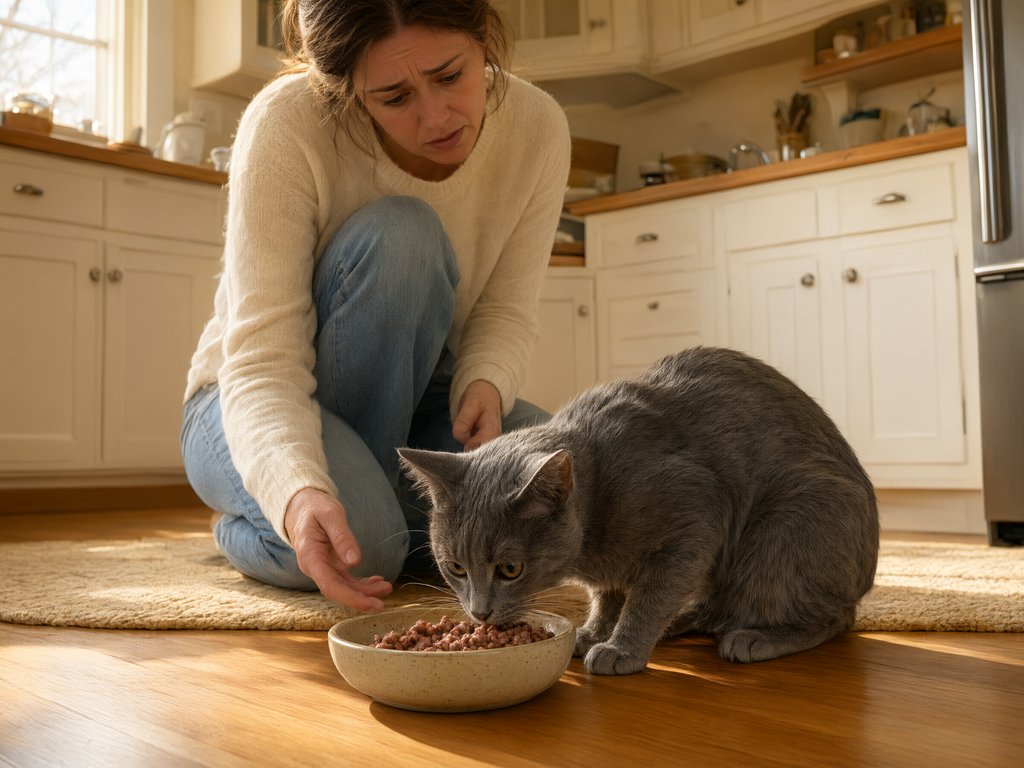
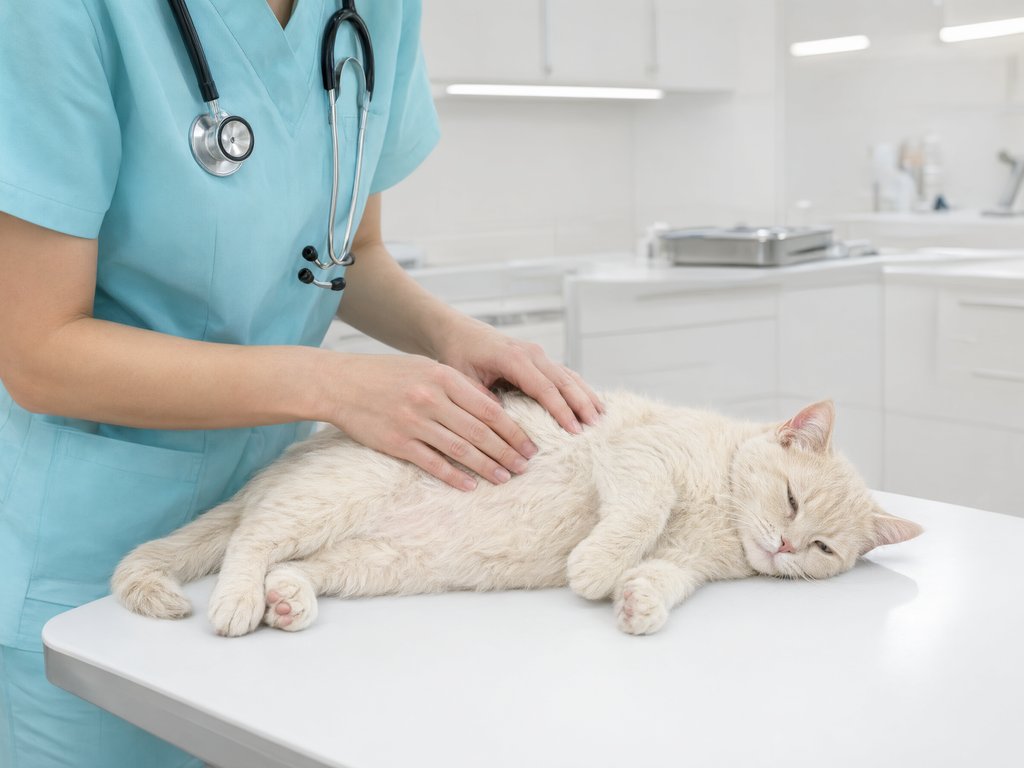
Here is the frustrating part: there is no single cheap test that says "FIP, yes or no." FIP is a diagnosis of pattern-matching — the vet assembles a picture from many imperfect clues, and the confidence in the picture is usually high enough to justify treatment. What the workup actually involves:
- Signalment and history — age under two, recent shelter or cattery exposure, purebred background. This alone shifts the pre-test probability substantially.
- Bloodwork — the classic fingerprint is high total protein with a low albumin-to-globulin (A:G) ratio, plus anemia and elevated liver values. An A:G ratio above 0.8 makes FIP very unlikely; below 0.4 makes it considerably more likely.
- Effusion analysis — in wet FIP, the fluid itself is diagnostic gold: thick, yellow-tinged, high in protein, with the characteristic cell profile. Ultrasound-guided sampling of the belly or chest is quick and low-risk.
- PCR testing on the effusion — detects coronavirus genetic material inside the fluid. A positive PCR on abdominal effusion in the right patient is close to confirmatory.
- In dry FIP, organ imaging — ultrasound of the kidneys and intestines, and where neurologic signs exist, sometimes an MRI. Affected eyes can be examined directly, and fluid drawn from the eye can be tested.
Owners are often surprised that a "definite" FIP case still comes with hedged language. That is not the vet being evasive; it is the honest state of the science. What has changed is the stakes of the hedging. Under the old no-treatment reality, uncertainty did not change the plan. Under the new one, a vet who is 85% sure can start treatment, watch the response, and let the cat's improvement itself close the diagnostic loop — response to antiviral therapy in a sick young cat is among the most convincing evidence there is.
Own a Veterinary Clinic?
Enjoyed this article? Our editorial team researches, writes, and publishes professional features just like this one about clinics across the US. Get your practice in front of thousands of cat owners searching for a vet in your city.
Treatment: GS-441524 and the 84-Day Course
The drug that rewrote this story is GS-441524, the antiviral that came out of the same research lineage as remdesivir. For years it was the medicine everyone knew worked and no one could legally buy — the subject of a gray market of Chinese black-market vials and enormous owner-run Facebook treatment groups where people dosed their own cats by weight with syringes and hope. That has largely ended in the US: compounded GS-441524 is now available through veterinary channels under FDA enforcement discretion, which means your veterinarian can legitimately prescribe and source it.
The protocol, in practical terms: daily injections (or, increasingly, oral tablets, which have transformed the experience for owners of needle-shy cats) at a dose based on the cat's weight and the form of disease — neurologic and ocular FIP get higher doses. The course runs 84 days after the cat is clinically well, and stopping early is the single most common cause of relapse. Monitoring visits track weight (doses adjust as the cat gains back what it lost), blood values, and the resolution of fluid or lesions. Response is usually dramatic and fast: fevers drop within days, appetites return within a week, and fluid stops accumulating within one to two weeks. Published remission rates sit in the 80–90% range, with most failures coming from the hardest presentations (advanced neurologic disease) rather than the routine ones.
Relapses happen and are usually treated with a second course, often at a higher dose — still with good outcomes when caught early. This is why the follow-up schedule matters as much as the drug itself, and why a cat in treatment needs a clinic relationship, not just a pill bottle.
What FIP Treatment Costs in the US
Cost is the part nobody enjoys discussing, and the numbers moved dramatically in the owner's favor when legal compounded supplies arrived:
| Cost component | Typical US range |
|---|---|
| Diagnosis workup (exam, labs, ultrasound, fluid sampling) | $400 – $1,500 |
| GS-441524 medication, full 84-day course | $1,000 – $3,500 (weight- and form-dependent; higher for neurologic FIP) |
| Monitoring visits, repeat labs, dose adjustments | $300 – $800 across the course |
| Total realistic budget | Roughly $1,800 – $5,500 for most treated cats |
For comparison, the black-market era routinely cost $5,000–$10,000 with no vet oversight and no product quality guarantee. Pet insurance deserves a special mention here: it covers FIP only if the policy was in force before the coronavirus or any suggestive symptoms appeared in the record — one more reason the enrollment-timing argument in our insurance guide matters. Owners caught uninsured should ask clinics about payment structures before declining treatment; the economics of this disease changed faster than most people's assumptions about it.
What This Looks Like in Practice: OneWorld Pet Resort, Anniston
All of this national advice eventually becomes a local logistics problem, so here is a real Alabama example of the environment side of the story: OneWorld Pet Resort on Rucker Street in Anniston, rated 4.9 stars across 50 reviews. OneWorld is built around boarding and daycare — indoor/outdoor kennels, play areas, and the clean, well-run facility its reviewers consistently mention — which makes it a good stand-in for exactly the kind of multi-animal environment where feline coronavirus circulates. Two practical takeaways connect a place like this to the FIP picture. First, hygiene and cohorting at any boarding facility genuinely reduce coronavirus transmission: when you board a young cat, it is fair to ask how shared spaces and litter areas are managed. Second, cats coming home from boarding or a shelter stay who then run a fever that won't quit deserve a prompt call to their veterinarian — and a cat in the middle of an 84-day GS-441524 course, with its Tuesday weigh-ins and blood rechecks, needs a local practice with weekday hours that make the schedule doable. OneWorld's doors are open Monday through Friday from 7:30 to 5:30 and Saturday mornings from 8 to 2, the kind of schedule that actually fits around a working owner's treatment calendar.
OneWorld Pet Resort
315 Rucker St, Anniston, AL, 36205
Phone: (256) 403-0557
⭐ 4.9 (50 reviews)
Prevention: What Owners Can Actually Do
There is no FIP vaccine worth getting — the product that exists performed poorly in trials and is not recommended by major guidelines. Prevention is environmental: scoop litter boxes daily and keep them away from food and water; keep stress low in multi-cat homes, since crowding and stress drive viral shedding; get new kittens from environments with reasonable hygiene and lower density; and if one cat in the household has been diagnosed, remember the object of concern is the harmless enteric virus, not FIP itself — housemates have almost certainly already been exposed to it long ago. The realistic goal is not a coronavirus-free cat (nearly impossible in any cat that has met another cat) but a low-inoculum, low-stress environment that gives the virus fewer mutation opportunities.
Questions Owners Ask About FIP
Two companion reads fill in the surrounding picture: what a cat blood test actually measures decodes the A:G ratio and lab values that FIP workups lean on, and what a cat vet visit costs grounds the diagnostic-phase numbers in real line items. If your cat's presentation is sudden breathing trouble or collapse, that is not a workup question — start with the symptoms that can't wait until morning.
This article is editorial content produced by the CatVetFinder team. Clinic details are drawn from public listings and may change — always confirm hours and services with the clinic directly.