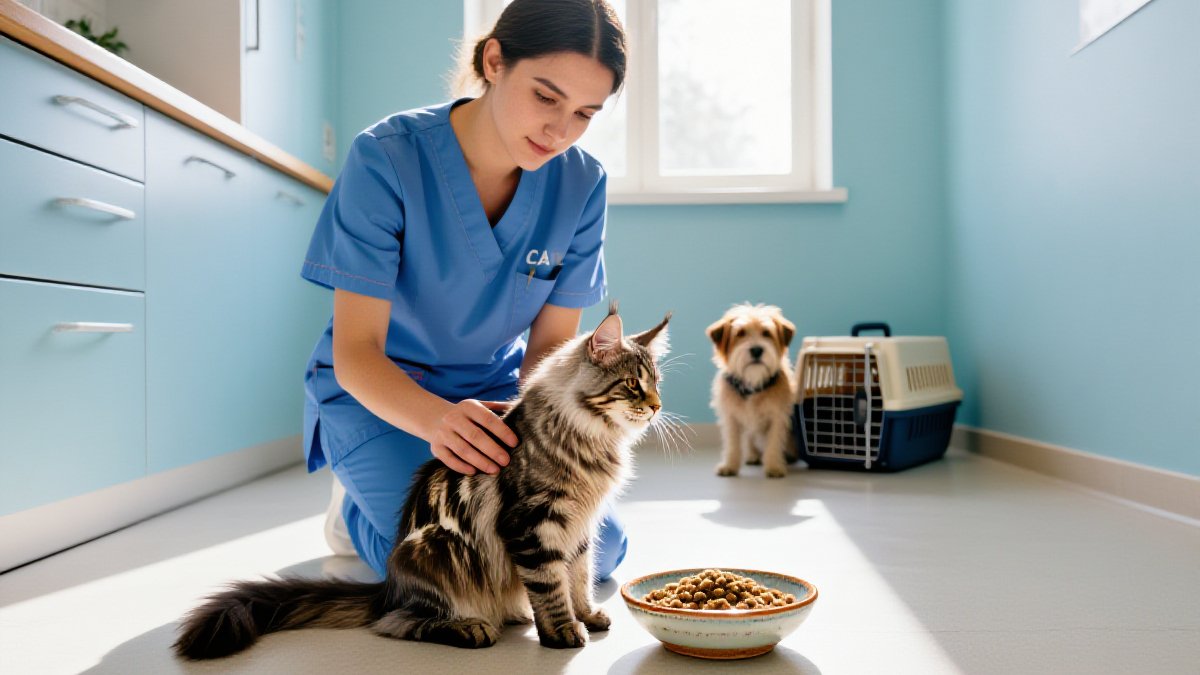
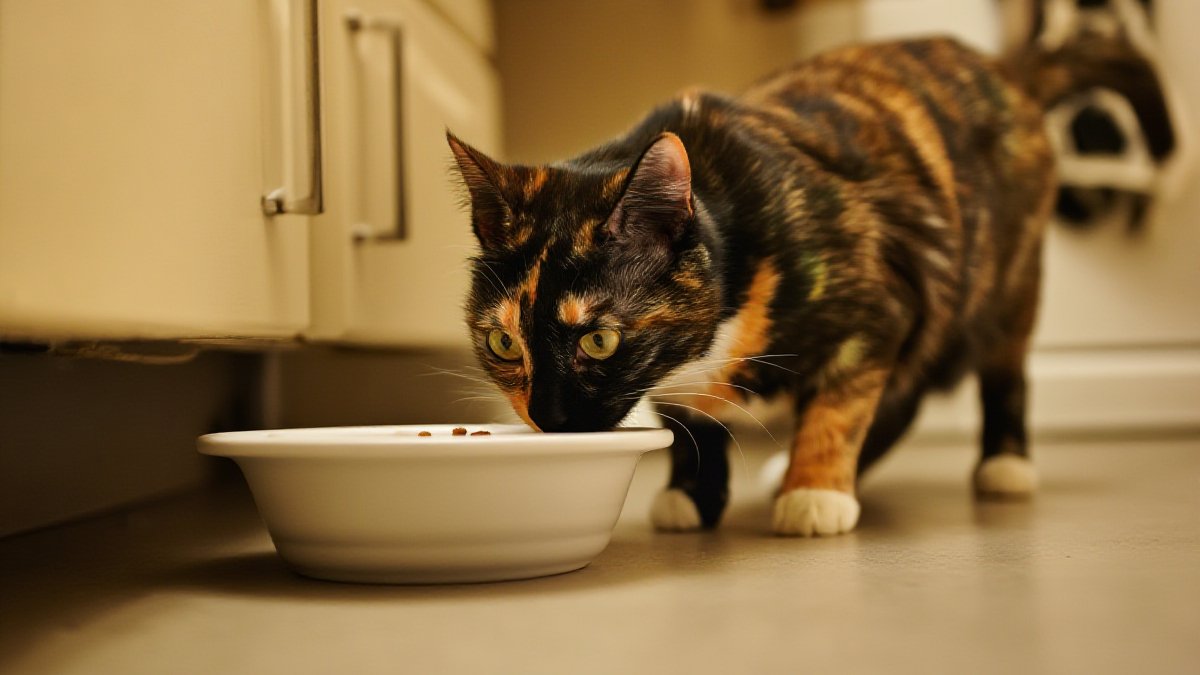
There is a specific kind of quiet that worries experienced cat people more than any noise: the quiet of a bowl that stays full. Dogs announce hunger. Cats, by and large, would rather you figure it out on your own — and when they stop eating, they rarely make an announcement. A cat who turns away from breakfast once might be reacting to a new bag of food, a changed feeding spot, or yesterday’s vet visit still echoing. A cat who turns away from three meals in a row is telling you something else entirely.
The stakes behind that quiet are higher than most owners realize. Cats are the one common household species whose bodies are genuinely bad at fasting. A dog can skip a weekend and shrug it off. A cat — particularly a cat carrying extra weight — starts mobilizing fat stores so aggressively that the liver chokes on the traffic. The condition is called hepatic lipidosis, it can begin within two to three days of anorexia, and it turns a whatever-it-is problem into a two-part emergency: whatever started the fast, plus the fasting itself.
So the question for a Tracy cat owner staring at an untouched bowl is not really "should I worry." It is "how much clock is left," and that is a question with a real answer.
Own a Veterinary Clinic?
Enjoyed this article? Our editorial team researches, writes, and publishes professional features just like this one about clinics across the US. Get your practice in front of thousands of cat owners searching for a vet in your city.
The 48-Hour Clock, and Why It Runs Faster in Cats
Veterinarians generally draw the worry line at 24 to 48 hours of a cat refusing food — sooner for kittens, seniors, or cats with known conditions like diabetes. The reason for the short fuse is metabolic. When a cat stops eating, its body reaches for fat reserves, but the feline liver was built for a diet of many small protein-rich meals, not for sustained fasting. Fat floods into the liver faster than it can be processed, fat vacuoles swell inside the liver cells, and the organ begins to fail at its actual jobs. Left untreated, hepatic lipidosis is frequently fatal; caught early and re-fed — sometimes stubbornly, through a tube if the cat refuses — most cats recover fully.
The kicker is that the fast almost never starts for interesting reasons. Dental pain. A stomach upset. A household stress — a new pet, a houseguest, the neighbor’s renovation. An upper respiratory infection that blocks the nose, because a cat who cannot smell often will not eat. The move to a new house. None of these announce themselves as emergencies, which is exactly why the calendar, not the symptom, drives the decision.
What Else the Refusal Might Be Doing
- A partial refusal counts. A cat who normally finishes two meals and now licks the gravy off one is still trending the wrong direction — appetite in cats is measured over days, not meals.
- Skipping food but drinking normally is still a fast. Water does not feed the liver.
- Hiding plus not eating together is a classic feline pattern for pain anywhere in the body — dental disease, arthritis flare-ups, abdominal discomfort.
- Weight loss with a still-reasonable appetite is a different but equally urgent flag: diabetes, kidney disease, and hyperthyroidism all announce themselves this way in middle-aged cats.
Finding the Cause: What a Workup Actually Involves
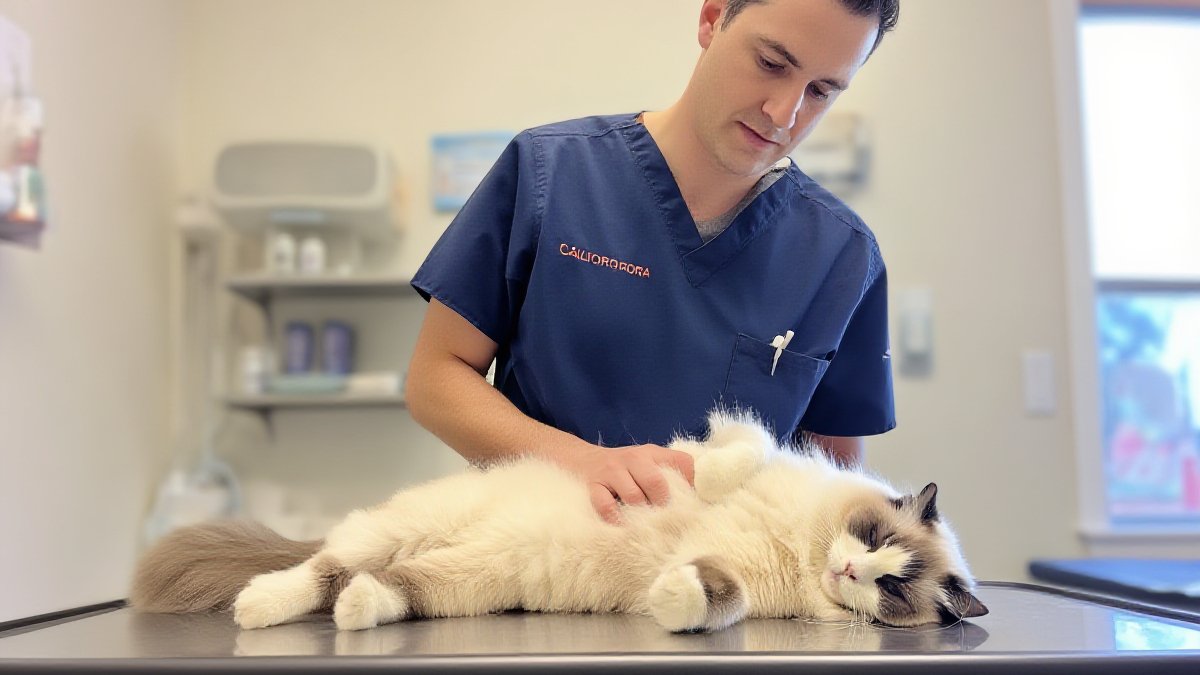
By the time the 48-hour line is close, the guesswork should end at a clinic table. A proper anorexia workup is refreshingly concrete: a thorough physical exam with hands on the abdomen and a look in the mouth at the teeth and gums; in-house bloodwork — a CBC and chemistry panel — to check liver values, kidney function, and blood sugar; a urinalysis; and digital X-rays or ultrasound when something internal needs a closer look. At Jules Veterinary Center, all of that happens under one roof on West 11th Street: their diagnostics list runs from in-house bloodwork and urinalysis to digital radiography, ultrasound, and EKG, and their exam rooms stay open six days a week — 8:00 AM to 5:00 PM on weekdays, with Saturday hours until 3:00 PM for owners who cannot break away midweek.
That last part matters more than it sounds. The single most common failure mode in feline appetite cases is waiting for a convenient day to book — and then watching the 48 hours expire on a Friday afternoon. A clinic with Saturday hours turns that timing trap into a non-event.
When the Diagnosis Is the Nose, Not the Bowl
One cause deserves its own paragraph because it is so easy to miss: scent. A cat’s appetite runs through its nose, and a congested cat — typically from an upper respiratory infection — often will not eat simply because it cannot smell the food. Warming the food slightly to boost the aroma, offering strongly scented options, and keeping the cat hydrated can bridge the gap, but the underlying infection still needs a look, and a cat going two days without meaningful calories because of a stuffy nose is exactly the patient the 48-hour rule was written for.
Jules Veterinary Center also keeps a genuinely unusual breadth of services in-house, which matters when a first-pass answer does not stick: behavioral counseling for stress-driven appetite loss, allergy testing when skin and gut symptoms travel together, nutritional counseling and weight-management plans built for cats who need the weight off safely, and — for the multi-species households of the Central Valley — experience with rabbits, small mammals, and reptiles, so a house call for the cat does not leave the rest of the menagerie stranded.
The Local Arithmetic: A Tracy Checklist
- Count the meals skipped, not the hours spent worrying. A full 24 hours without eating, or a visible trend across three meals, starts the clock.
- Check the litter box and the water bowl on the way out — these details change a phone call’s urgency.
- Call [[Jules Veterinary Center|/cat-clinic/california/tracy/jules-veterinary-center-9436/]] at (209) 833-7387 and describe what you are seeing in plain words; ask for the earliest exam slot.
- If the clock expires after hours or on a Sunday, know your nearest emergency hospital route in advance — and do not wait for morning on a kitten or a diabetic cat.
- For comparison shopping and second opinions, the [[cat vets in Tracy, CA|/cat-vets/california/tracy/]] directory lists every practice in town, and the [[cat vets in Stockton, CA|/cat-vets/california/stockton/]] and [[cat vets in Modesto, CA|/cat-vets/california/modesto/]] directories cover the corridor either way.
Jules Veterinary Center
1755 W 11th St, Tracy, CA, 95376
Phone: (209) 833-7387
⭐ 4.6 (492 reviews)
This article is editorial content produced by the CatVetFinder team. Clinic details are drawn from public listings and may change — always confirm hours and services with the clinic directly.