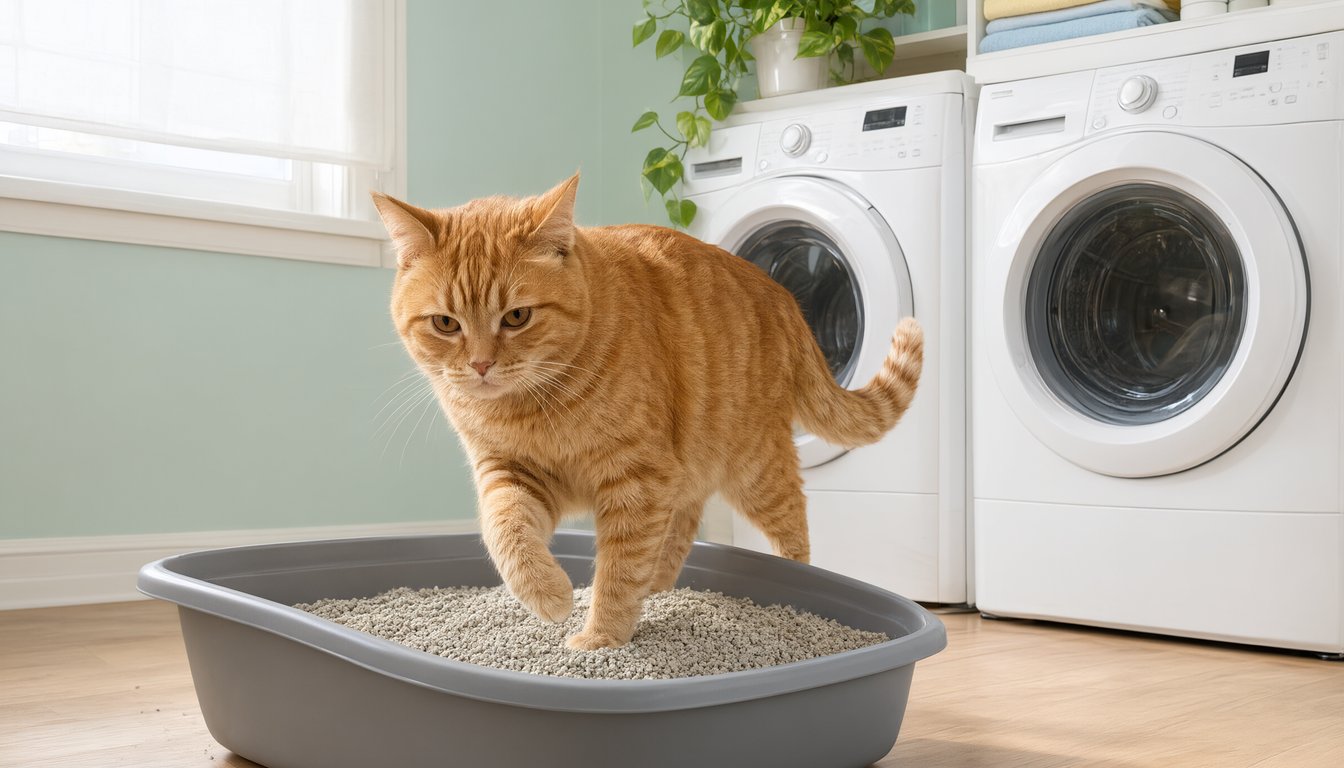
Few things strain the bond between a cat and its person faster than a puddle on the rug. It feels personal. It feels deliberate. And it is almost never either. Housesoiling is one of the most common reasons cats are surrendered to shelters in the United States, and the saddest part of that statistic is that the overwhelming majority of cases are treatable — most of them cheaply, many of them in a week. The cat peeing on your laundry is not punishing you for the weekend trip. She is telling you something, and the job of this guide is to translate.
The single most important thing to understand up front: a sudden change in litter box behavior is a medical symptom until proven otherwise. Urinary tract disease leads the list, and some of the conditions behind it — blockage in male cats especially — are emergencies. Behavior and environment matter enormously too, but the order of operations is always rule out the body first, then fix the box. Work through this guide in that order.
Step One: Rule Out the Body Before You Blame the Behavior
When a previously reliable cat starts missing the box, the vet visits first. A long list of physical problems announce themselves as housesoiling, and several of them look identical from the outside. A urinary tract infection, bladder inflammation (feline idiopathic cystitis, which is extremely common and stress-linked), bladder crystals or stones, kidney disease, diabetes, and hyperthyroidism can all produce accidents — the last three by making the cat produce so much urine that no box schedule can keep up.
- Small, frequent urine spots — often tiny amounts, sometimes bloody — point at the bladder itself. Cystitis and crystals live here.
- Straining with little or nothing produced, crying in the box, repeated trips — this is an emergency, not a symptom. A blocked male cat can die within 24–48 hours.
- Large puddles, everywhere, plus drinking more and maybe losing weight — think kidney disease, diabetes, or thyroid disease. These need bloodwork, not a new litter brand.
- Accidents plus constipation or straining to defecate, or poop deposited near but not in the box — constipated cats associate the box with pain and start avoiding it.
- Older cat, new accidents, also yowling at night or pacing — hyperthyroidism and cognitive decline both show up in the litter box first.
The diagnostic cost of checking is low relative to guessing: a urinalysis with culture and a basic blood panel resolve most of the list in a single visit. If the workup is clean, you have lost nothing and gained the confidence to treat this as a behavior-and-environment problem — which is a completely different fix, and one that fails when people keep looking for a medical answer that is not there.
If the Workup Is Clean, the Box Is Talking
Cats do not develop litter box objections out of spite. They develop them because something about the box fails a preference test the cat never agreed to. The classic triggers are well documented in behavioral research and line up remarkably well with what owners report: a box that is not cleaned often enough, a covered box that traps odor and blocks sightlines, a new litter the cat was never transitioned to, a location next to the washing machine on spin cycle, a painful memory (constipation, a UTI) that got attached to the box itself, or — in multi-cat homes — a housemate cat guarding the hallway to the only box.
Here is the part that surprises people: the most common single cause in an otherwise healthy cat is simply that the box is not clean enough, by the cat’s standards, not the owner’s. A box scooped every other day can smell like a public restroom to a nose with two hundred million scent receptors. Cats are the only pets we expect to use a toilet that gets flushed once a day at best.
Own a Veterinary Clinic?
Enjoyed this article? Our editorial team researches, writes, and publishes professional features just like this one about clinics across the US. Get your practice in front of thousands of cat owners searching for a vet in your city.
The Gold-Standard Setup (Which Solves Most Cases)
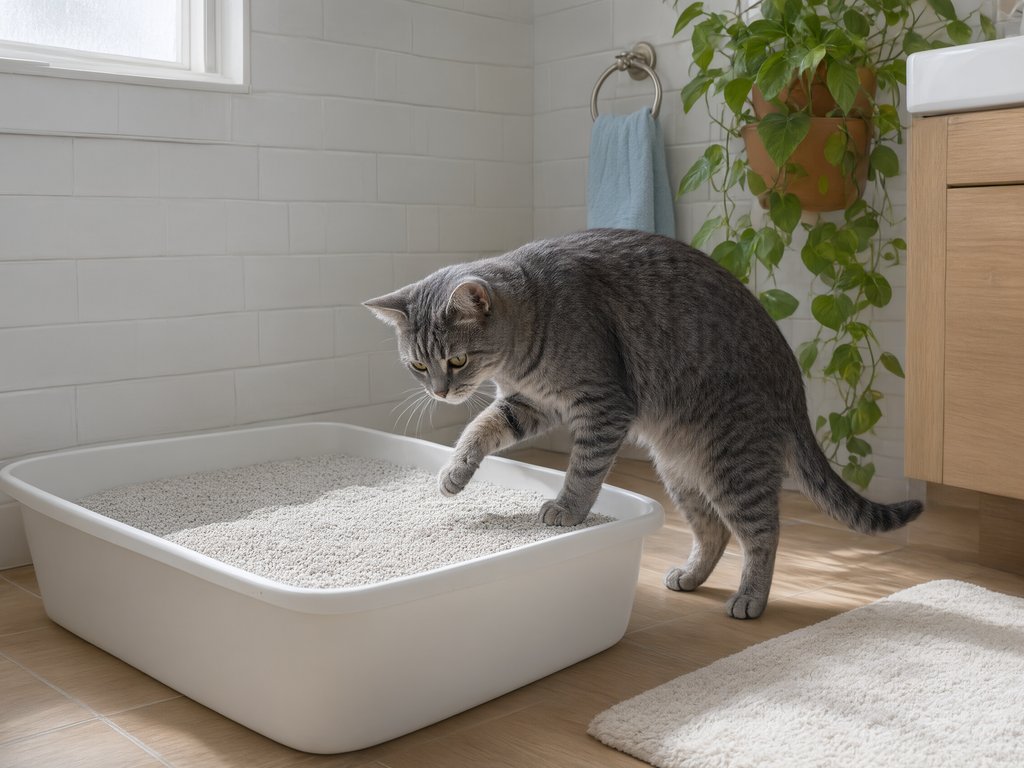
Before any other intervention, rebuild the box situation to the configuration behaviorists consider the default. It costs less than a vet visit and resolves a startling share of cases on its own:
- One box per cat, plus one extra. Two cats, three boxes. This is not a suggestion — box-count failures are the most common setup error in multi-cat homes.
- Uncovered, large, and open-entry. Covered boxes are a human preference. To a cat they are a blind odor trap with an ambush corner.
- Unscented, fine, clumping litter — the texture most cats test as preferred in preference studies. Skip the scented formulas; what smells "fresh" to you smells like a chemical attack to a cat.
- Scoop daily, fully dump and wash the box every 2–4 weeks. Scented litters and liners are workarounds for a problem that should not exist.
- Location: quiet, open sightlines, away from the food bowls, and NOT next to a loud appliance. One box per floor of the house, minimum.
- If a new litter is necessary, transition over a week — new box next to old box, gradually shifting the ratio. The cold-switch is the single most reliable way to create avoidance.
- For seniors and kittens: low-entry sides. An arthritic twelve-year-old who has to hop a high wall to relieve herself will eventually choose the rug instead.
Cleaning Up the Damage the Right Way
Two rules, because both get violated daily. First, clean urine spots with an enzymatic cleaner, not regular detergent or anything with ammonia. A standard cleaner removes the stain but leaves the proteins; to the cat, the spot still reads as a litter box and gets reused. Second, never punish. Yelling, rubbing a nose in it, or trapping the cat in a room with the box teaches the cat that humans are unpredictable and dangerous — it does not teach the cat anything about the box. Worse, punishment adds stress, and stress is the fuel behind feline cystitis, so you can literally punish a cat into more accidents.
If the cat has settled on one particular spot — the bathmat, the corner of the bedroom — use the geography. Place a litter box directly on that spot for a couple of weeks, then move it an inch a day toward where you want it. It sounds absurd. It works surprisingly often, because you are working with the preference instead of against it.
Multi-Cat Homes: The Conflict Nobody Sees
In homes with more than one cat, add a fourth category of cause: resource conflict. It is rarely dramatic. There is no hissing match in the hallway. What there is, is a confident cat who naps in the hallway near the litter box, or a young cat who ambushes the older one on the way to the basement. The victim cat simply starts choosing safer real estate — your bed, the laundry pile, a bath mat that holds scent. The fix is box placement and number: multiple boxes in genuinely separate locations, none in dead-end corridors or closets where a cat can be cornered. If tension is visible, a veterinary behaviorist or a Fear-Free certified practice can help untangle it before it escalates into urine-marking, which is a harder problem.
What This Looks Like in Practice: Cinco Ranch Veterinary Hospital, Katy, TX
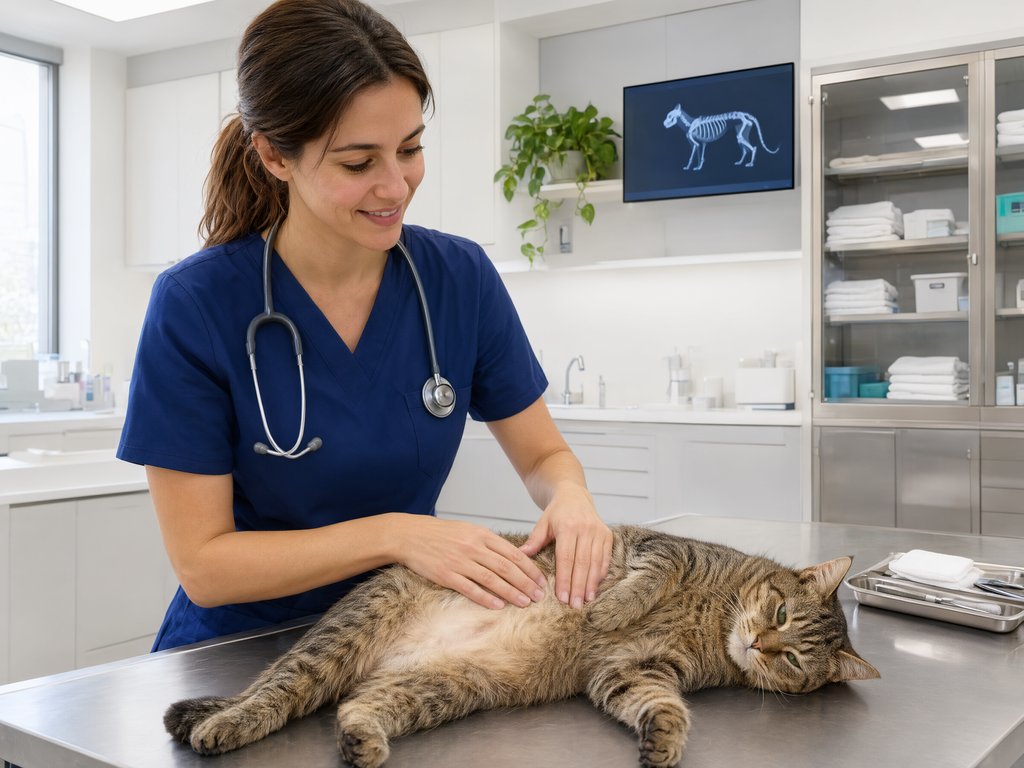
Because the housesoiling workup is mostly a first-visit conversation plus basic diagnostics, it helps to see what a good version of that visit looks like in a real practice. Cinco Ranch Veterinary Hospital on Cinco Park Place in Katy, Texas — rated 4.7 stars across more than 500 owner reviews — is a full-service, cat-friendly hospital whose published services run from wellness exams and diagnostics to dental care and surgery, with behavioral counseling among them. A housesoiling workup there means exactly what this guide describes: a urinalysis and bloodwork on-site, a physical exam that checks the bladder and the arthritic hips older cats hide, and a conversation about box setup that treats the owner as part of the treatment plan. Reviews consistently describe unhurried, thorough visits — the difference between being handed a detergent recommendation and getting the actual differential worked through.
Cinco Ranch Veterinary Hospital
2519 Cinco Park Pl, Katy, TX, 77494
Phone: (281) 693-7387
⭐ 4.7 (536 reviews)
For a housesoiling case specifically, the practical advantage of a full-service hospital is that the urinalysis, the senior panel, and the behavior discussion happen in one appointment instead of three referral trips — and that matters, because the window in which owners stay motivated to fix a litter problem is measured in weeks.
When It Is Marking, Not Missing
One distinction changes the entire treatment path: vertical spraying on walls, with a cat standing and quivering tail, is urine marking — a communication behavior, usually about territory or stress — while horizontal puddles are generally elimination outside the box. Marking in intact cats is largely a hormone problem, and spaying or neutering resolves the vast majority of it. Marking in already-altered cats is usually anxiety-driven (new cat in the building, a move, outdoor cats visible through a window) and responds to reducing the perceived threat — feline pheromone diffusers, blocking window views, and sometimes anti-anxiety medication prescribed after a real exam. The doses of context matter enough that a vet conversation is worth it before assuming any marking is hopeless.
The Realistic Timeline
Owners deserve honest expectations, because most people give up around week three. Medical cases often improve within days of treatment — a cystitis cat on pain medication and a stress-reduction plan can turn around remarkably fast. Pure box-preference cases typically take two to six weeks of consistent setup: daily scooping, an additional box in the preferred location, enzymatic cleaning of every prior site. Setbacks after a household change are normal and do not mean the plan failed. The cases that do not resolve are usually the ones where the medical workup was skipped and an untreated bladder condition kept simmering underneath the behavioral plan.
Questions Cat Owners Ask About Litter Box Problems
Related guides that pair with this one: the early signs of kidney disease in cats covers the excessive-urination end of the medical list, the signs of diabetes in cats covers the other big thirst-and-puddles condition, how to make vet visits low-stress with the right carrier and setup helps with the visit itself, and seasonal household hazards for cats covers the stress-and-toxin events that commonly trigger flare-ups.
This article is editorial content produced by the CatVetFinder team. Clinic details are drawn from public listings and may change — always confirm hours and services with the clinic directly.