Drive out North Lee Highway past the last of the big-box stores and the town loosens its grip — fields, fence lines, the occasional horse pasture, the kind of landscape where a barn cat is still a working title. Cleveland has that split personality: a college town with a growing medical corridor and, ten minutes in any direction, gravel roads where the cats are fed on porches and nobody has ever weighed them.
This is the geography behind the question I get more than any other from families around Bradley County: what should I actually be feeding my cat? Not which brand, though the brand question is coming. The real question underneath is about stages — kitten, adult, senior — and the suspicion, correct more often than not, that a bag marketed for "cats" is quietly wrong for theirs.
Valley Paws Boutique on North Lee Highway has been answering that question in person for years, with a 5.0-star rating across 68 reviews that reflects a practice built one unhurried visit at a time. This is that conversation, written down.
Kittens: The Year That Builds the Cat
Own a Veterinary Clinic?
Enjoyed this article? Our editorial team researches, writes, and publishes professional features just like this one about clinics across the US. Get your practice in front of thousands of cat owners searching for a vet in your city.
A kitten doubles its birth weight in the first week and multiplies it many times over by the first birthday, which means every bowl is doing construction work. Feed a kitten "adult maintenance" food and you are handing a framing crew a lunch pail built for a retiree — the protein and calcium math simply does not close. Kitten formulas carry more protein, more fat, and the exact calcium-to-phosphorus ratio growing bones require.
- Kitten-formulated food from weaning to around twelve months — the life-stage label matters more than the brand name.
- Wet food twice a day plus dry available; kittens dehydrate faster than adults and rarely drink enough on their own.
- Three to four small meals a day until six months, then down to three.
- Free-choice feeding is fine for kittens — but mark the calendar for the switch to adult portions, because the habit of the overflowing bowl outlives the need for it.
Adults: The Long Middle Where Most Cats Slip
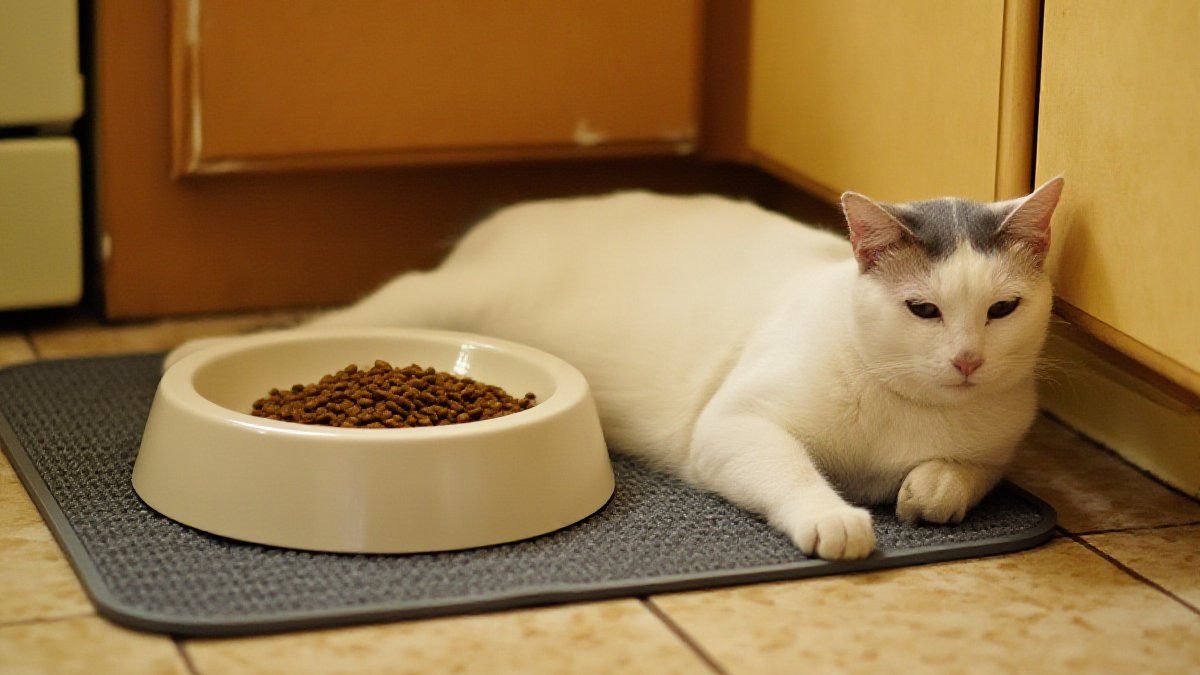
Somewhere around the first birthday the kitten food goes away, and with it the kitten's furnace of a metabolism. Most cats in America are spayed or neutered, which drops daily energy needs by roughly a quarter to a third — and almost nobody cuts the portion by a third. Two pounds of extra weight on a cat is, proportionally, about thirty pounds on an average adult person, and it arrives a half-ounce at a time. The twelve-pound "big boy" whose family proudly reports that he is solid is, in exam-room terms, an obese cat with arthritis already scheduled for middle age.
The fix is not a special diet; it is arithmetic and honesty. Measure the food — an actual measuring cup, not the coffee mug on the counter — and count the treats as part of the day, because a dental chew and a pinch of lunch meat can be a fifth of a cat's calories without anyone noticing. Weigh the cat twice a year. The scale at the veterinary front desk is free and does not require an appointment in most clinics.
Seniors: When the Bowl Has to Change Again
Around seven the questions change, and around twelve they change again. Senior cats lose muscle even when the scale holds steady — the weight is quietly trading protein for fat — so senior formulas push protein quality and add omega-3s for joints and cognition. More important than any bag is the monitoring: in senior cats, the kidneys and the thyroid write the menu. An overactive thyroid makes a cat eat voraciously and still lose weight; kidney disease does the reverse until late. Both are common, both show up on bloodwork a year before the bowl can tell you, and both rewrite the feeding plan completely — which is why the nutrition conversation and the senior bloodwork conversation are really one conversation.
What Matters More Than the Brand
- Wet food at least once a day — cats evolved as desert animals and spend most of their lives mildly dehydrated on dry-only diets.
- A water source the cat actually uses: wide bowls, distance from the food bowl, or a fountain for the cats who prefer moving water.
- An AAFCO nutritional adequacy statement on the bag — the minimum floor, not a marketing line.
- Prescription diets that solve a medical problem — kidney, joint, hydrolyzed — are medicine. Use them like medicine, with a veterinarian involved.
When those pieces are in place, the brand matters far less than the marketing suggests. When they are not, no brand rescues the plan. That is also why a good clinic conversation starts with the home routine, not the bag: what the cat eats, where it eats, who else steals from the bowl, and whether the water dish is the same standby nobody has refilled since Tuesday.
Where This Fits in Cleveland
Families around Bradley County have real options for this conversation. Valley Paws Boutique on North Lee Highway is the closest thing this piece has to a co-author: their team fields nutrition questions daily, they see cats of every age, and that perfect 5.0 across 68 reviews comes from the kind of unhurried appointments where the bowl on your counter gets discussed like it matters — which, as it turns out, it does. They are located at 5220 N Lee Hwy, and they can be reached at (423) 432-8445. Cleveland also sits close enough to Chattanooga that the specialty layer — the surgeon, the 24-hour facility — is a forty-minute drive rather than an overnight decision, which is a quiet luxury for a town this size.
If you are mapping options around town, the cat vets in Cleveland, TN directory lists every clinic in the city with ratings and services, and the Chattanooga, TN and Athens, TN directories cover the neighbors to the southwest and northeast. The cat services guide page explains what wellness exams typically include, nutrition counseling among them.
Valley Paws Boutique
5220 N Lee Hwy, Cleveland, TN, 37312
Phone: (423) 432-8445
⭐ 5.0 (68 reviews)
More Cleveland & Southeast Tennessee Cat Resources
This article is editorial content produced by the CatVetFinder team. Clinic details are drawn from public listings and may change — always confirm hours and services with the clinic directly.