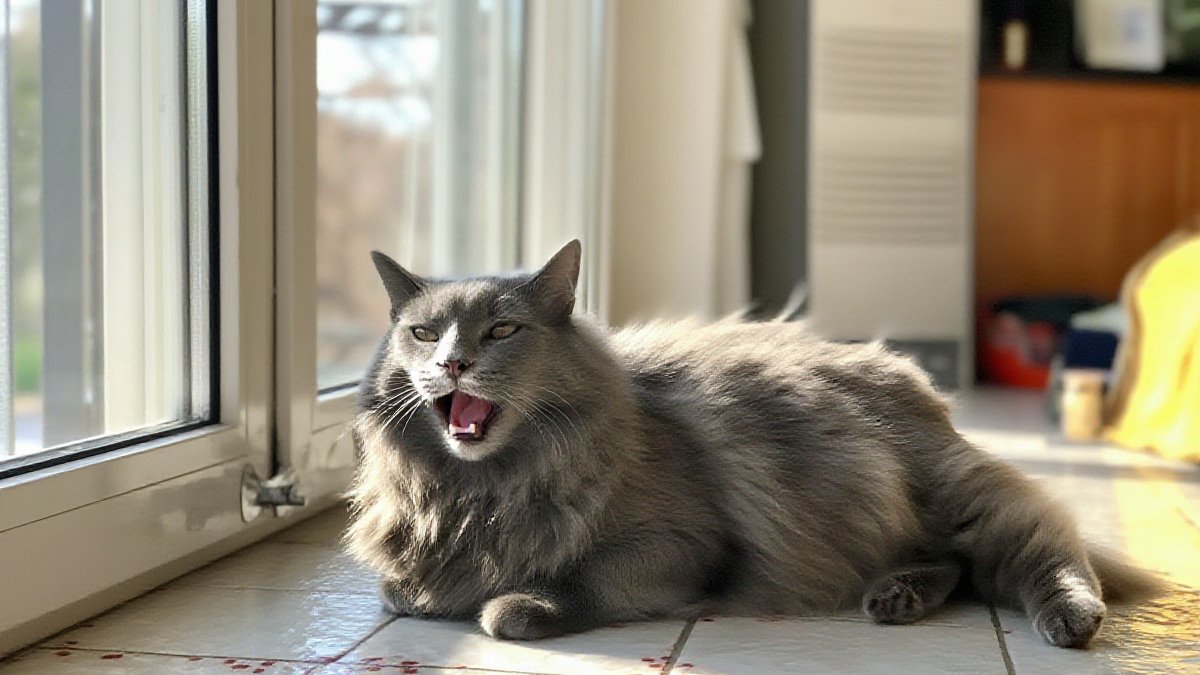
Cats are better at hiding heat stress than almost any other pet in the house. A dog pants loudly, flops on the tile, and makes its discomfort everyone's problem. A cat simply finds the coolest corner it can, curls smaller than usual, and goes quiet — until one afternoon it doesn't get up. That silence is exactly why owners often miss the early stages of overheating: there is no dramatic signal until the body is already in trouble. And while heatstroke in cats is less common than in dogs, when it happens it is just as dangerous, with organ damage possible within hours.
This guide walks through the whole picture: how cats actually lose heat (and why the usual tricks fail them), the signs that move from "keep an eye on it" to "act now" to "drive, don't call first", the safe way to bring a cat's temperature down at home, what the emergency visit itself looks like, and how to set up a home that never lets it get that far.
Own a Veterinary Clinic?
Enjoyed this article? Our editorial team researches, writes, and publishes professional features just like this one about clinics across the US. Get your practice in front of thousands of cat owners searching for a vet in your city.
Why Cats Overheat Differently Than Dogs — and Than You Expect
A cat's cooling system is stingy. Cats have very few sweat glands that matter — the ones that work are on the paws, and they do little in still air. Panting, their backup system, is inefficient and a last resort; a cat that is openly panting has already used up its first options. Their main tool is behavior: seeking shade, stretching out on cool surfaces, grooming (saliva evaporation does some of the work), and reducing activity. Every one of those tools can be defeated by circumstances — a sun-soaked room with no airflow, a carrier in a warm car, a closed bathroom during a move, or a catio that catches afternoon sun. Overweight cats, senior cats, kittens, flat-faced breeds like Persians, and cats with breathing or heart conditions all have less margin, and they cross the line faster.
The Signs, in Order of Urgency
Overheating in cats is a spectrum, not a switch. Reading the early end correctly is what prevents the late end, so think in three tiers.
- Early heat stress: restlessness that turns into hiding, seeking out tile or sinks or the bathtub, increased grooming, warm and dry paw pads, slightly faster breathing, and an unwillingness to play or move much. The cat is still responsive and normal.
- Clear overheating: open-mouth panting (in a cat, this is a real warning sign, not a dog-normal behavior), drooling or thick ropey saliva, bright red gums or tongue, rapid breathing even at rest, stumbling or an unsteady walk, and vomiting.
- Heatstroke (emergency): labored or noisy breathing, gums turning pale or bluish, lethargy to the point of not responding, muscle tremors or seizures, vomiting or diarrhea that will not stop, body temperature at or above 104°F, and in the worst cases collapse or loss of consciousness.
One behavior deserves special mention: panting. Cats may briefly pant after a hard play session or a stressful car ride, and that usually resolves within minutes in a cool room. Panting that persists in a calm cat, in a warm room, with no recent exertion, is never normal — treat it as the middle tier and start acting.
| Sign | Likely heat stress | Likely heatstroke — emergency |
|---|---|---|
| Breathing | Slightly fast, closed mouth | Panting, open mouth, labored or noisy |
| Gums | Normal pink | Bright red early, then pale, gray, or bluish |
| Behavior | Hiding, sluggish, still responsive | Stumbling, tremors, seizure, unresponsive |
| Drooling | None or minimal | Thick, ropey, excessive saliva |
| Temperature (rectal, if you can take it) | Under 103°F | 104°F or higher |
How to Cool a Cat Down Safely at Home
The goal in the middle tier is gentle, steady cooling — not ice. Rapid cooling with ice water or ice packs clamps down the blood vessels in the skin and actually traps heat inside, while also risking a shivering response that generates more heat. Work the room and the cat at the same time.
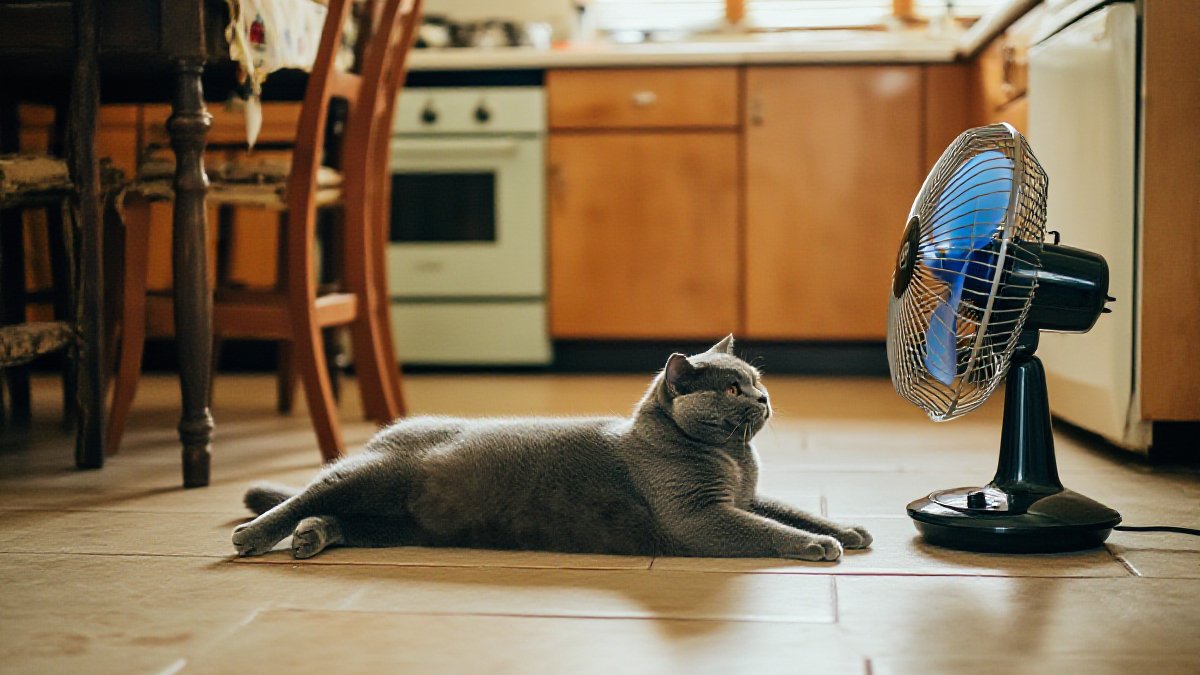
- Move the cat to the coolest space available — a room with air conditioning, a shaded basement floor, or at minimum a room with a fan moving air across it.
- Wet a cloth with cool (not cold) water and run it over the cat's fur, focusing on the belly, armpits, groin, and paw pads — areas where blood runs close to the surface.
- Let the cat lie on a damp towel or a cooled surface; contact with cool floor tile does more than most owners expect.
- Offer small sips of cool water. Do not force water into the mouth — a panting or distressed cat can aspirate it.
- Keep air moving with a fan, aimed past the cat rather than directly into its face.
- Recheck behavior every few minutes. A cat on the right track stops panting within ten to fifteen minutes and starts seeking normal interaction again.
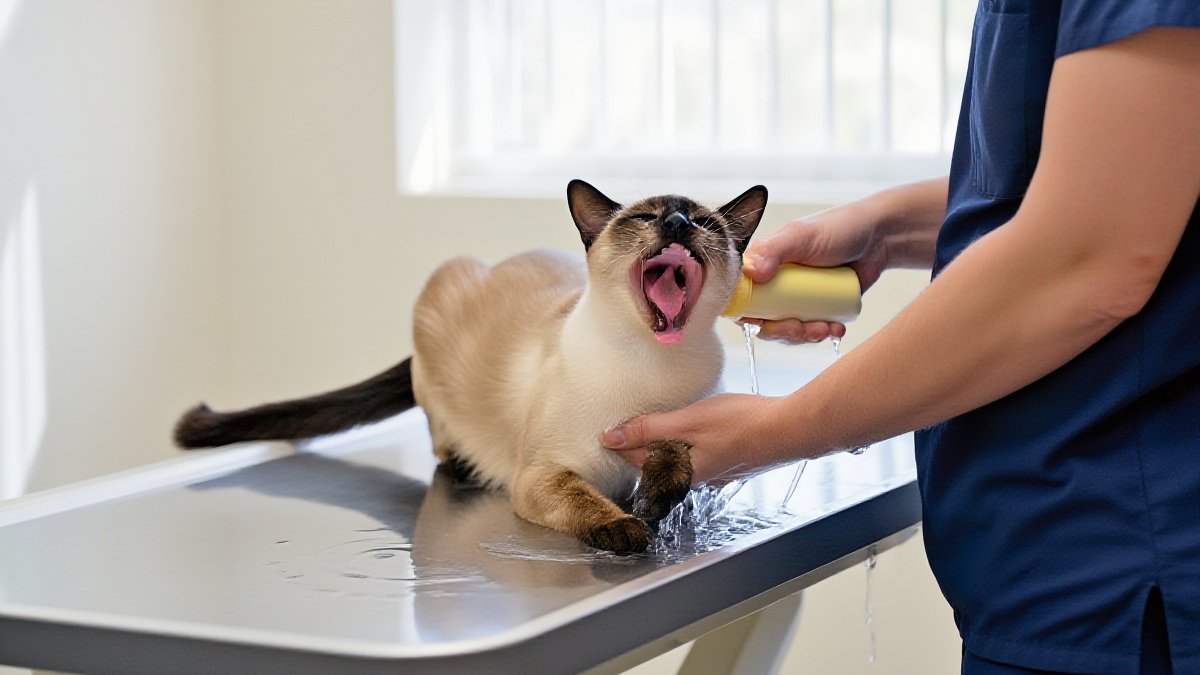
When does home cooling stop being the plan? If panting or drooling has not clearly improved within about fifteen minutes of active cooling, if the cat has vomited, stumbled, or seemed confused at any point, or if you simply cannot get the temperature of the room down — that is the drive to the vet, and it is worth calling ahead so the team is ready when you arrive. Continuing to cool the cat in the car (windows cracked for airflow, damp towel to lie on, AC on) is useful; delaying to "see if it settles" is not.
What Happens at the Emergency Visit
Heat treatment at the clinic is focused and fast. The team confirms core temperature, continues controlled cooling if needed, and stops precisely at normal — cooling a cat below its target overshoots into hypothermia, which is its own emergency. From there the visit is mostly surveillance: heatstroke injures organs on a delay, so the cat typically gets IV fluids to support blood pressure and the kidneys, oxygen if breathing is compromised, and blood work to check kidney values, liver enzymes, electrolytes, and clotting. Some cats need to stay monitored for a day or two even after looking normal, because kidney injury can declare itself a day after the event. Expect the vet to also ask exactly what happened and how long the cat was hot — the answers genuinely change the monitoring plan.
Prevention: Building a Home That Stays Cool
The honest framing is that heatstroke in cats is almost entirely a preventable housing and habit problem. The cats who end up at the emergency clinic were usually in a room that heated up quietly, or a container that trapped them. A few fixed habits close nearly every gap.
- Keep at least one reliably cool room in the house on hot days — curtains closed, AC or fan running — and make sure the cat can reach it at all times.
- Check airflow in enclosed spaces: catios, sunrooms, and rooms with south-facing glass heat up faster than owners expect, especially in the afternoon.
- Never leave a cat in a parked car, a closed carrier in the sun, or a crate on a back seat while errands run long.
- Keep fresh water in more than one location; cats drink more when water is easy to find.
- Groom heavy-coated cats regularly in the warm months — matted undercoat traps heat against the skin.
- Watch the high-risk cats hardest: seniors, overweight cats, flat-faced breeds, and cats on medications that affect temperature regulation.
What This Looks Like in Practice: Healing Paws Animal Hospital
Healing Paws Animal Hospital
900 Collierville Arlington Rd, Collierville, TN, 38017
Phone: (901) 446-4620
⭐ 5.0 (99 reviews)
To make the emergency path concrete, here is one worked example. Healing Paws Animal Hospital in Collierville, TN, located at 900 Collierville Arlington Rd, holds a perfect 5.0-star average across 99 reviews, and its own description leans into exactly the kind of medicine a heat case needs: wellness exams, vaccinations, dental care, and surgery, with an emphasis on preventive, individualized plans rather than one-size-fits-all care. A preventive-minded clinic is the natural first call for the prevention half of this topic — a summer exam is the moment to ask how your specific cat's risk profile (age, weight, breed, breathing) should change your cooling plan. For the emergency half, their team can be reached at (901) 446-4620, and Collierville owners keep in mind that any clinic can direct you to the nearest 24-hour facility if the timing lands after hours.
The sequencing takeaway is the same regardless of which clinic you call: stabilize with gentle cooling first, call during the drive, and hand over a cat whose history you can state in one sentence — "panting since 2 p.m., vomited once, cooled with wet towels for fifteen minutes, improved but still breathing fast." That sentence gets a heatstroke cat onto the right treatment path faster than anything else an owner can do.
Questions Cat Owners Ask About Overheating
Heat is only one of the quiet household hazards worth a pass through your home. The signs that mean an emergency vet trip covers the broader list of symptoms that cannot wait until morning, while seasonal hazards for cats runs the full calendar from antifreeze to holiday plants — and if the summer worry list extends to what your cat is chewing on, plants that are toxic to cats is the other checklist every owner should keep handy.
This article is editorial content produced by the CatVetFinder team. Clinic details are drawn from public listings and may change — always confirm hours and services with the clinic directly.