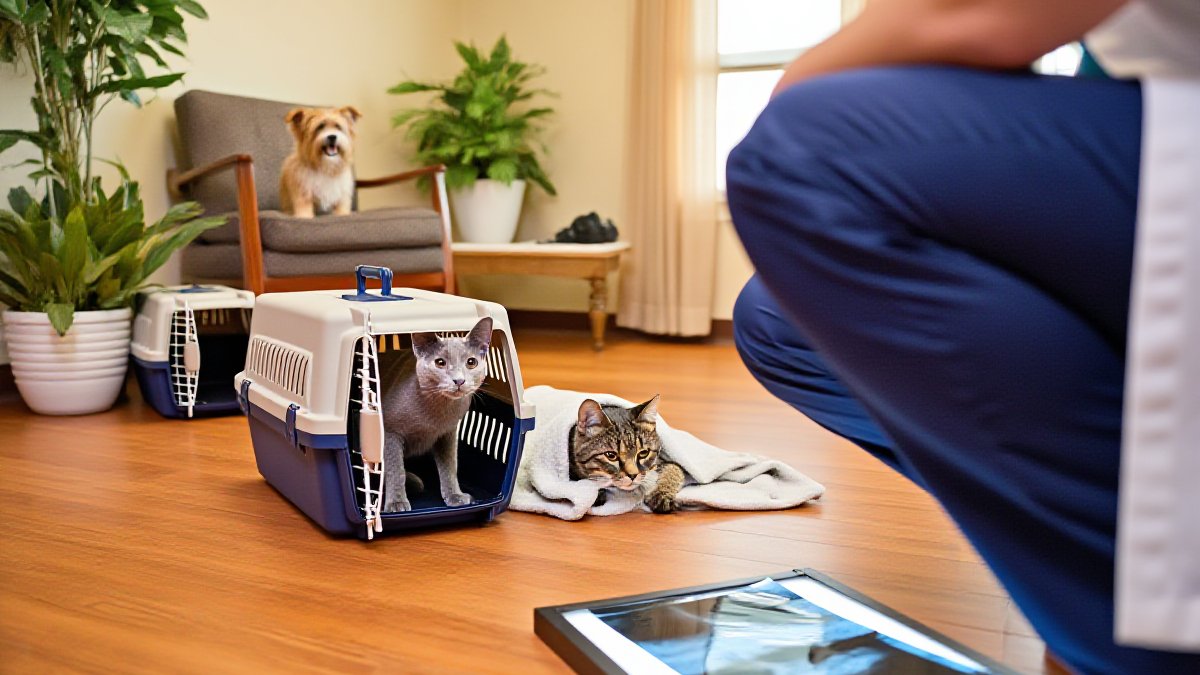
Somewhere along Military Trail this week, a cat is scheduled for a routine spay, and her person has spent three nights reading forum threads written by strangers. Surgery questions are like that — they arrive at 11 p.m., dressed in worst-case scenarios. The honest answers are less dramatic and far more useful, so this is the version of the conversation I have across the exam table, condensed for Boynton Beach cat owners.
The questions below are the ones that actually come up, in roughly the order they come up: safety first, then the day of, then the strange week at home afterward. If you keep one idea, keep this one — the surgery is the easy part. Aftercare is where good outcomes are made.
The Anesthesia Question, Answered Like a Person
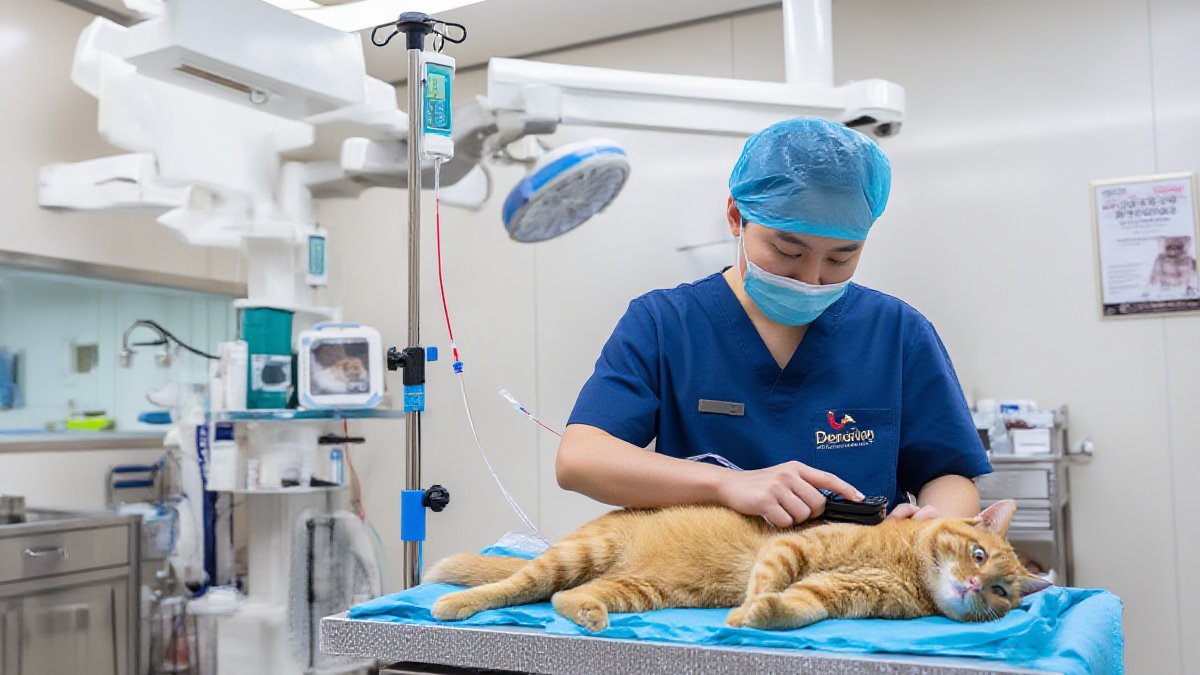
"Is she too old for anesthesia?" is the single most common question I hear, and the honest answer is that age is a number but the kidneys, the heart, and the bloodwork are facts. A fourteen-year-old cat with clean labs is frequently a better anesthetic candidate than an overweight six-year-old who has never had blood drawn. Modern protocols layer things: pre-anesthetic labs, tailored drug choices, warming blankets, and a dedicated pair of hands monitoring heart rate, oxygen, and blood pressure for every minute your cat is under. That layered approach is why serious anesthetic events in healthy cats are genuinely rare — and why the pre-surgical bloodwork is not an upsell. It is the part doing the protecting.
The second most common worry is food. Cats must arrive with an empty stomach because a full stomach under anesthesia can lead to aspiration, which is a genuine emergency. If your appointment is in the morning, pull the food bowl at bedtime the night before and let the water stay down — hydration helps the veins, the blood pressure, and the recovery.
What Recovery Actually Looks Like, Hour by Hour
The ride home is the wobbliest part of the day. Expect glassy eyes, a drunken walk, and a cat who wants to wedge herself under the bed — she is not in crisis, she is still metabolizing. She should be bright-eyed and interested in a small meal by the next morning. The timeline most cats follow: 24 hours to seem basically normal, ten to fourteen days for the incision to heal, and two weeks before the stitches are out or dissolved and the zoomies are officially allowed back.
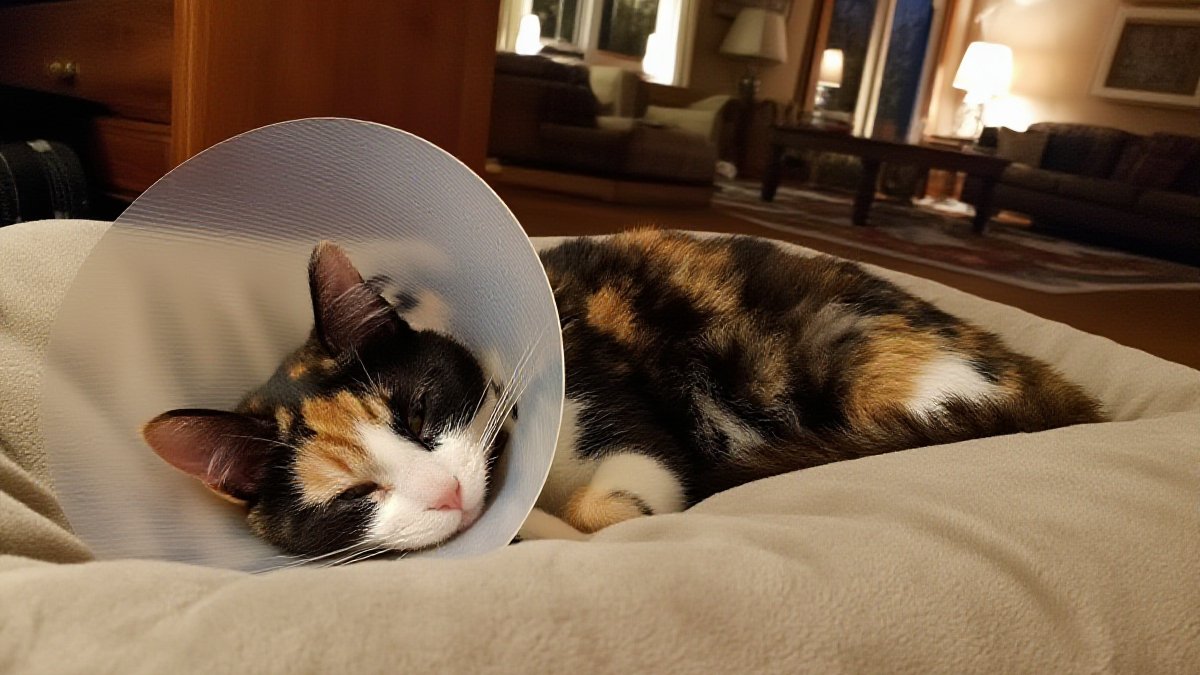
Two aftercare rules carry almost all the weight. Keep the incision clean and dry — no baths, no wet grass, no licking, which is why the cone or the soft collar stays on even though the cat has opinions about it. And skip every pain medication in your cabinet: a single acetaminophen tablet can be fatal to a cat, and ibuprofen and aspirin are not far behind. If she seems uncomfortable, that is a phone call, not a do-it-yourself project.
The Questions Nobody Puts in a Brochure
Own a Veterinary Clinic?
Enjoyed this article? Our editorial team researches, writes, and publishes professional features just like this one about clinics across the US. Get your practice in front of thousands of cat owners searching for a vet in your city.
Where Boynton Beach Cats Have This Done
VSA Animal Hospital at 10114 S Military Trl holds a 5.0-star rating, which in this business usually means one thing: a team that calls you the day after surgery to ask how the cat is doing. They run the full perioperative arc — pre-anesthetic screening, spay and neuter, soft tissue procedures, dental surgery with clean teeth as the bonus rather than the point, and the unglamorous rechecks afterward. The hours run 8 to 5 weekdays, and the number is (561) 740-9397. Ask them, as I would, what their monitoring setup looks like; a hospital that enjoys that question is the right kind of hospital.
VSA Animal Hospital
10114 S Military Trl, Boynton Beach, FL, 33436
Phone: (561) 740-9397
⭐ 5.0
One last thing worth saying out loud: the cheapest, safest surgery is the one your cat never needs. Keeping a healthy weight, brushing the teeth or at least tolerating the vet doing it, and showing up for the annual exam removes more surgical risk than any monitor in the building. The cat services guide maps that preventive side, and the cat vets in Boynton Beach, FL directory shows every clinic in the city if you are still choosing where to land.
More Cat Surgery & Boynton Beach Resources
This article is editorial content produced by the CatVetFinder team. Clinic details are drawn from public listings and may change — always confirm hours and services with the clinic directly.