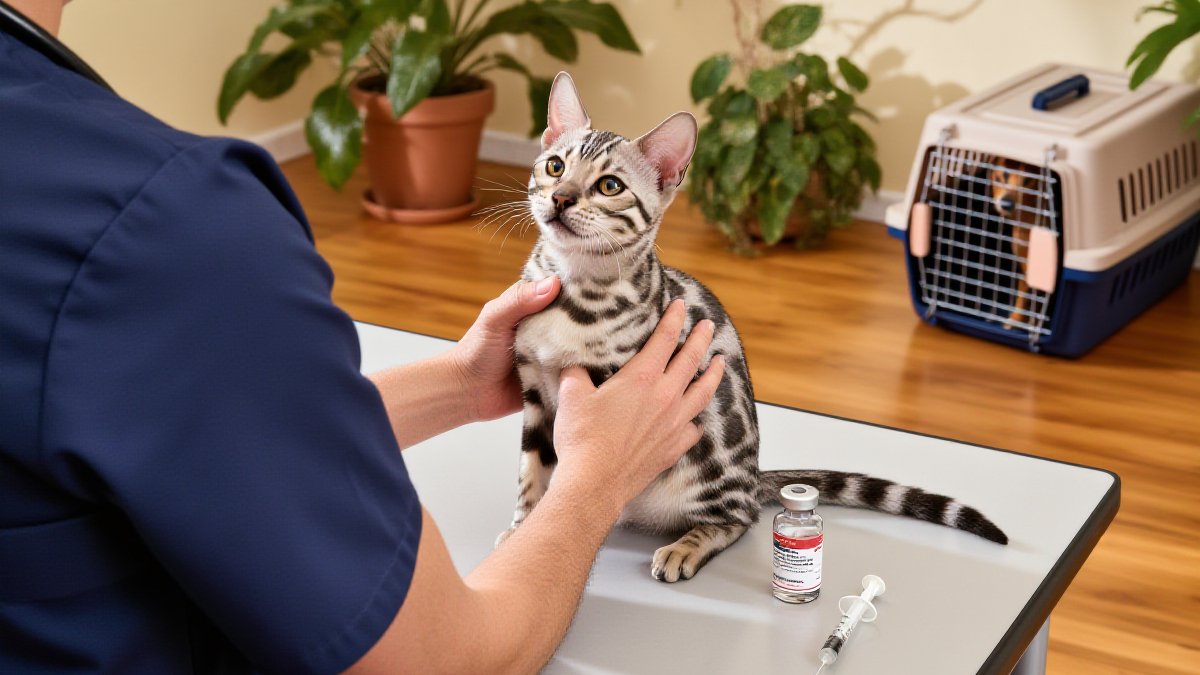
When does a kitten actually need its first shot? Six weeks? Eight? And if the answer changes depending on who you ask at the pet store, the breeder, and your neighbor down Thompson Blvd, no wonder the whole schedule feels like folklore. It is not. The timing behind feline vaccines is one of the most rigorously standardized parts of veterinary medicine, built around a single biological fact: maternal antibodies that protect a newborn kitten also, for a stretch of weeks, quietly neutralize the vaccines you give. Schedule wrong, and shots get wasted. Schedule right, and a few short clinic visits cover a cat for years.
For Sedalia pet parents — raise a kitten in a rail town where the State Fair brings animals from every county through town each August, or simply share a porch with the neighborhood strays — the timeline below is the one your veterinarian is working from, translated into plain English.
When Does a Kitten Need Its First Vaccines?
The series starts at six to eight weeks, while the kitten still carries some maternal protection but not enough to fully block a vaccine. The workhorse is the FVRCP — a three-virus combination covering feline viral rhinotracheitis (herpes), calicivirus, and panleukopenia, the last of which is a hardy, often-fatal virus that survives in the environment for a year or more. Boosters repeat every three to four weeks until the kitten is 16 to 20 weeks old, because nobody can pinpoint the day maternal antibodies fade — the repeated visits guarantee at least one dose lands after protection wanes and takes hold.
| Age | Visit | What happens |
|---|---|---|
| 6–8 weeks | First kitten visit | Physical exam, fecal test, deworming, FVRCP #1 |
| 9–12 weeks | Booster visit | FVRCP #2, FeLV test and first FeLV dose for most kittens, weight check |
| 13–16 weeks | Booster visit | FVRCP #3, FeLV #2, rabies (a kitten is old enough at 12–16 weeks) |
| Around 1 year | Adult wellness visit | FVRCP and rabies boosters, full exam — this visit proves the kitten series "took" |
| Every 1–3 years | Ongoing boosters | FVRCP and rabies move to three-year cycles in most healthy adults; FeLV stays annual for at-risk cats |
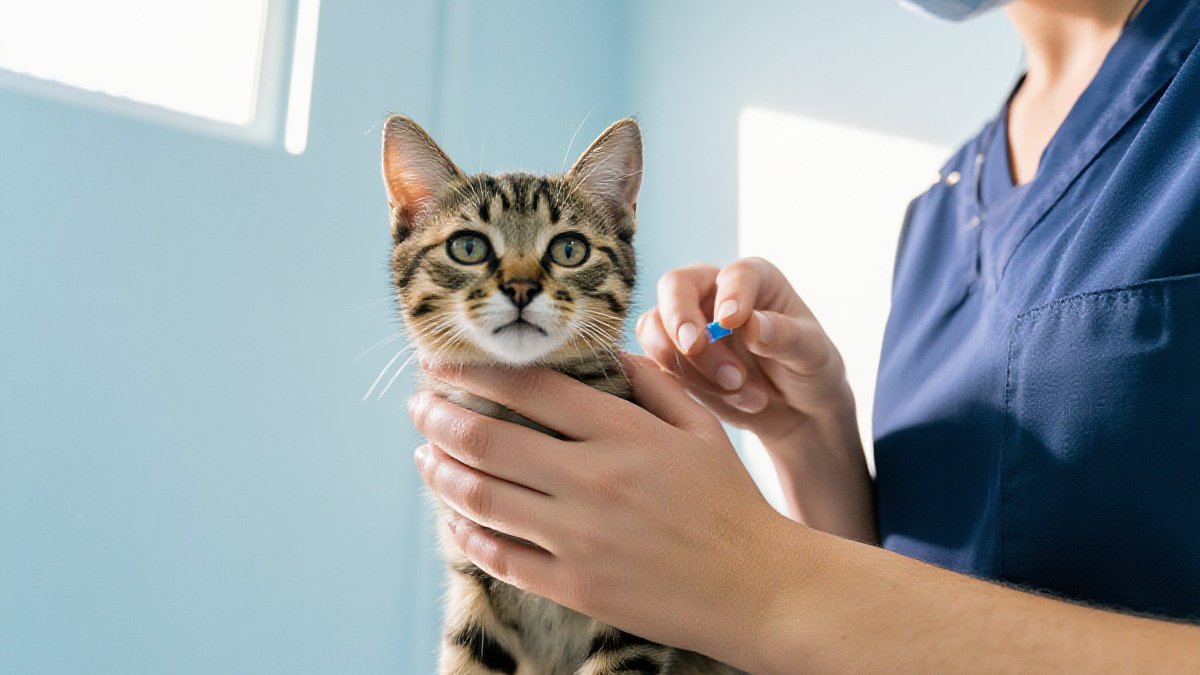
What Happens After the Kitten Series Ends?
The one-year booster is the visit people skip, and skipping it undoes more of the kitten series than any other mistake. Immunologically, that visit converts a kitten's "primed" immune system into a durable adult memory; the three-year cadence that follows assumes it happened. Adult cats then settle into a rhythm most Missouri owners find refreshingly light: FVRCP and rabies on three-year cycles, an annual exam that checks weight, teeth, heart, and coat, and lifestyle vaccines where the risk warrants — feline leukemia (FeLV) remains an annual recommendation for any cat that goes outdoors or lives with an unknown-status cat, and in a county like Pettis where outdoor tomcats wander, vets see the logic of that caution every spring.
Which Cat Vaccines Does Missouri Actually Require?
One: rabies. Across most Missouri cities and counties — Pettis County communities included — a current rabies vaccination is a legal requirement for cats, and it is the certificate every boarding kennel, grooming appointment, and interstate travel document will ask for first. The rest of the schedule is medicine, not law, but the logic is local. Panleukopenia does not care that your cat is indoor-only; it survives on surfaces. Rabies is a public-health issue with a uniformly fatal outcome once symptoms start. FeLV spreads through the casual saliva contact that happens when outdoor cats share a water bowl — common on any block in town. The distinction matters when a clinic talks to you about "core versus lifestyle": rabies and FVRCP are core everywhere, and the lifestyle add-ons get chosen based on how your cat actually lives.
Own a Veterinary Clinic?
Enjoyed this article? Our editorial team researches, writes, and publishes professional features just like this one about clinics across the US. Get your practice in front of thousands of cat owners searching for a vet in your city.
Why Do Indoor-Only Cats Still Need Boosters?
Because "indoor" describes the cat, not the viruses. Panleukopenia rides in on shoes and clothing. Rabies is legally mandated regardless of lifestyle because the consequences of one bat encounter are absolute — and bats find their way into Missouri houses every summer. Even the escape artist scenario deserves a mention: an indoor cat that slips out the door on a July evening joins the local cat population for one unforgettable night. Vaccination is cheaper than any of those scenarios, and the exam attached to the booster visit is where early kidney, dental, and weight changes get caught years before they become diagnoses.
How Do Vaccine Visits Work at a Sedalia Clinic?
At Thompson Hills Animal Clinic, a vaccine visit follows the wellness-exam-first pattern: a technician records weight and temperature, the doctor does a nose-to-tail exam, and only a healthy cat gets vaccinated that day. Their published service list covers comprehensive physical exams and core vaccinations alongside flea and tick prevention, microchipping, and nutritional counseling — so a kitten's whole early schedule fits in the same visits that handle deworming and the first flea preventive. The clinic's own description of its approach is worth quoting: every patient is treated "as if they were our own," which is the temperament you want holding a six-week-old kitten who has never seen a table before.
Practical notes for working owners: the clinic at 1201 Thompson Blvd runs 8:00 AM to 5:30 PM Monday, Wednesday, and Friday, stays open until 8:30 PM on Tuesdays and Thursdays for after-work appointments, and takes Saturday walk-ins from 9:00 AM to 1:00 PM. The 4.6-star rating across 486 reviews is the kind of number that only accumulates through years of mornings exactly like the one your kitten is about to have.
What Do Vaccines Cost — and What Makes Them Worth It?
In mid-Missouri, a kitten's full series — three FVRCP visits, rabies, FeLV testing and vaccination, deworming, and exams — typically lands in the low hundreds of dollars spread across four months. Compare the alternatives: panleukopenia treatment runs into the thousands with a guarded prognosis, and a rabies exposure investigation (for the unvaccinated cat, and the family living with it) is a legal and emotional cost no budget plans for. Call Thompson Hills Animal Clinic at (660) 827-5310 for current pricing and to book the first visit, or browse all cat vets in Sedalia, MO to compare practices. New to the area and still choosing? Neighboring Warrensburg, MO and Jefferson City, MO listings are worth a look too.
Thompson Hills Animal Clinic
1201 Thompson Blvd, Sedalia, MO, 65301
Phone: (660) 827-5310
⭐ 4.6 (486 reviews)
More Sedalia & Central Missouri Cat Resources
This article is editorial content produced by the CatVetFinder team. Clinic details are drawn from public listings and may change — always confirm hours and services with the clinic directly.