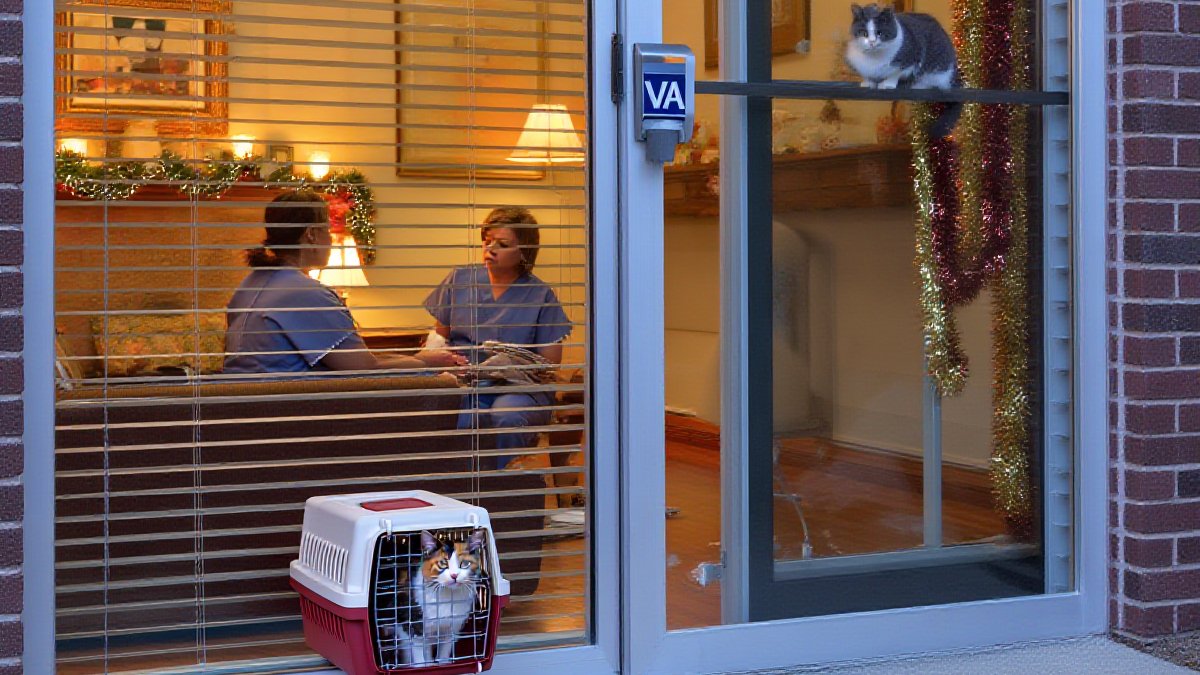
Why does the most wonderful time of the year send so many cats to the emergency room? Not because cats are fragile. Because December hands them a house full of new things to chew, climb, drink, and knock over — and then fills the house with people, noise, and a cooking schedule nobody sane would call calm.
Chesapeake cat owners deal with a specific version of this. You have a mostly-indoor cat in a region where a "White Christmas" is a coin flip, holiday guests fly into Norfolk, and the calendar fills with open houses and road trips. Here is what actually sends cats to the ER between Thanksgiving and New Year's — and what a busy Chesapeake veterinary team wishes every owner knew before the boxes come down from the attic.
Is Tinsel Actually Dangerous — or Just Annoying?
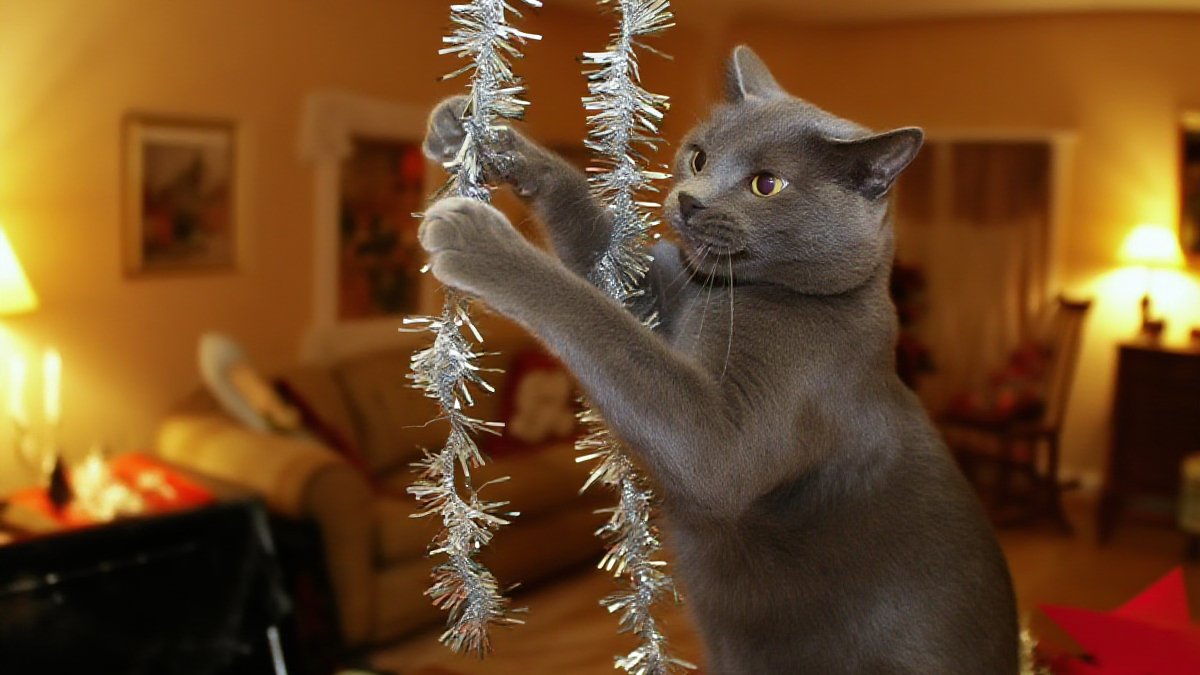
Dangerous. Genuinely, specifically dangerous for cats. Tinsel is thin, shiny, irresistible to paw at — and it behaves like a linear foreign body once swallowed, sawing through intestine as the gut tries to move it along. It is one of the few decorations that can turn a playful afternoon into emergency abdominal surgery. Ribbon, string, and gift-wrap curling ribbon sit in the same category. If your cat has never shown interest, congratulations — but do not bet the season on it. A cat who suddenly discovers tinsel at age seven has not read your assumptions about them.
The practical rule: no tinsel, no ribbon, no string garlands in a house with a cat — or kept strictly out of reach, which with a cat means not in the house. If you see tinsel hanging from your cat's mouth, do not pull it. You can do real damage cutting the strand free; a strand that has traveled needs a veterinarian, possibly with imaging and endoscopy, and time matters. That is a drive-to-the-clinic-today situation, not a wait-until-Monday one.
Own a Veterinary Clinic?
Enjoyed this article? Our editorial team researches, writes, and publishes professional features just like this one about clinics across the US. Get your practice in front of thousands of cat owners searching for a vet in your city.
Which Holiday Plants Will Actually Hurt a Cat?
- Lilies — the worst one on the list. Even a speck of pollen or water from the vase can shut down a cat's kidneys. No lilies in a cat house, ever, in any arrangement.
- Poinsettias — overrated as a killer, underrated as a misery. Chewing one means irritated mouth and stomach, vomiting, a bad day. Not usually deadly.
- Mistletoe and holly — both cause real gastrointestinal upset, and mistletoe can affect the heart in significant doses.
- Christmas cactus and orchids — the genuinely cat-friendly options when you need something blooming.
- Pine needles — not toxic, but sharp enough to puncture a curious tongue or gut. Sweep early, sweep often.
Some cats will gnaw any plant in reach, and that is where knowing your own animal matters more than any list. If yours is the type, keep arrangements in rooms the cat cannot enter and check what your guests bring. The bouquet on the dinner table that someone brought as a hostess gift is very often the hazard you did not choose.
What About All Those Extra People in the House?
Stress does not look the way people expect. Some cats hide for the entire party — fine, let them. The dangerous version is quieter: a stressed cat stops eating, and a cat that goes forty-eight hours without food risks hepatic lipidosis, a liver condition that lands cats in the hospital. The other common casualty of a full house is the open door. Guests who do not know the cat's habits, delivery drivers, kids propping doors open while carrying gifts — it adds up. A cat who has never once shown interest in the outdoors will take that gap.
The Human Food Problem
Ham drippings, seasoned poultry skin, onion-rich stuffing, bread dough, chocolate desserts, sugar-free cookies — nearly every classic holiday table item is wrong for a cat, and a few are actively dangerous. Onions, garlic, and leeks damage feline red blood cells even in small amounts, and alcohol does not take much either. Ask guests not to feed the cat from the table, no matter how much the cat performs. If you suspect your cat ate something it should not have, call a veterinary team right away — in Chesapeake, Animal Eye Care Associates at (757) 366-9060 can talk you through whether this is an at-home watch or an immediate visit, and animal poison control lines are worth having saved in your phone before the season starts.
Animal Eye Care Associates
660 Independence Pkwy Ste 350, Chesapeake, VA, 23320
Phone: (757) 366-9060
⭐ 4.9 (151 reviews)
One specialty deserves its own paragraph, because the eye clinic angle is not a garnish here. Animal Eye Care Associates has served Chesapeake and the wider Hampton Roads area for years as a dedicated veterinary ophthalmology practice, with over 55,000 pets and wildlife helped. Cats will be cats — tinsel whips past a face, a cat pokes itself on a pine branch, an ornament shatters — and eye injuries are the classic hidden cost of a decorated house. Squinting, tearing, pawing at the face, a cloudy or bloodshot eye: those are same-day complaints, and this is the team to call at (757) 366-9060 when one shows up.
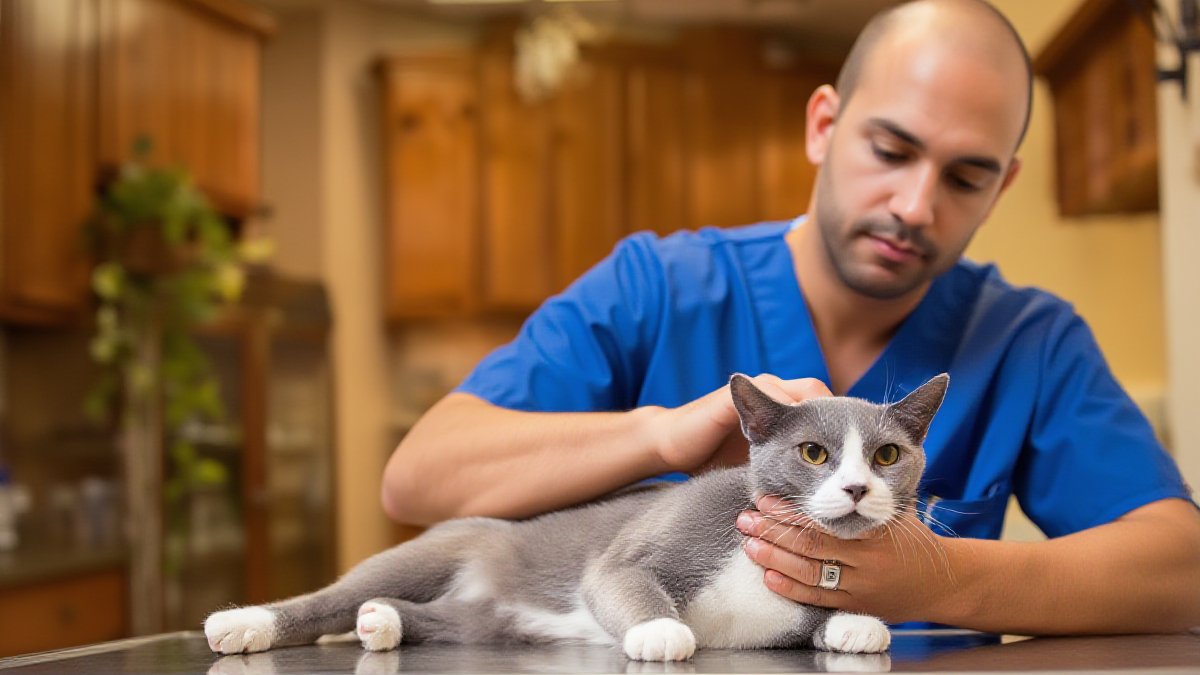
How Do You Know If This Is an Emergency?
- Vomiting more than once or twice, or vomiting with a bloated, painful belly.
- Known or suspected tinsel, ribbon, or string — mouth or otherwise. No waiting.
- A lily in the house and any sign the cat touched it. No waiting either.
- Not eating for more than a day, hiding hard, or unusual vocalizing.
- Any squinting, tearing, cloudiness, or pawing at an eye.
When in doubt, call — that is what the phone is for, and triage over the phone is free. Chesapeake owners can browse cat vets in Chesapeake, VA to compare nearby practices, or start with the team at Animal Eye Care Associates, whose clinic profile lists hours and directions at Animal Eye Care Associates.
The holidays with a cat are not about removing every hazard — they are about removing the few genuinely dangerous ones and keeping one calm territory intact while the rest of the house gets loud. Do that, and the season's worst surprise is the gift wrap mess.
This article is editorial content produced by the CatVetFinder team. Clinic details are drawn from public listings and may change — always confirm hours and services with the clinic directly.