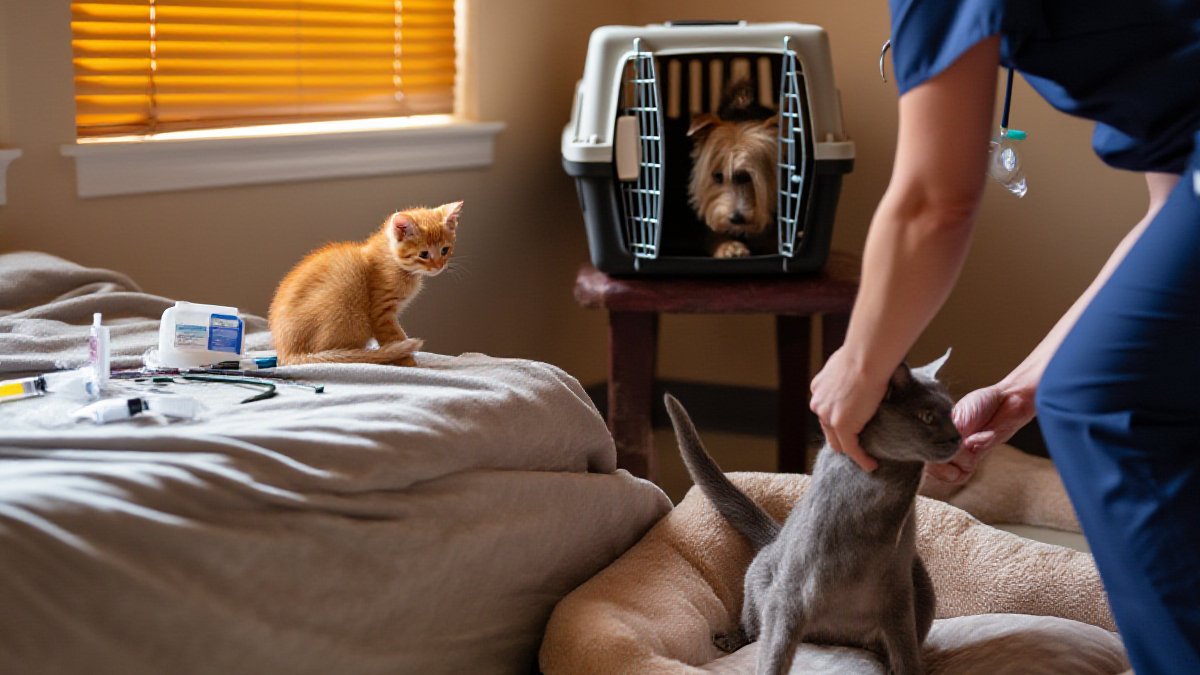
Somewhere in Dublin there is a twelve-year-old cat who used to take the bedroom windowsill in one motion — bookshelf to dresser to sill, a route mapped over years — and who now sits at the base of the dresser and looks up. The owners see a cat who is "slowing down." What is actually happening is quieter and more treatable than old age: degenerative joint disease, the near-universal condition of senior cats. Radiographic studies of cats past twelve consistently find arthritic changes in a large majority of them, and the behavior changes show up years before most owners name them.
The reason this matters in a cost article is simple: arthritis in cats is one of the cheapest chronic conditions to manage well and one of the most expensive to ignore. Ignored, it converts into everything owners dread — missed litter boxes, a cat that bites when touched, a decline blamed on "age." Managed, it is a senior cat who keeps using the windowsill, just via a step stool now.
Smalley's Animal Hospital on East Jackson Street has spent decades as one of Laurens County's most trusted practices — 4.7 stars across 306 reviews in our directory — serving both the small-animal and farm sides of a Georgia crossroads town. Their team's approach to senior cats starts with the physical exam, and their hours — Monday through Friday, 8:00 AM to 5:00 PM — make the twice-yearly senior check the easiest thing on this list to actually schedule.
The Signs Owners Miss Before the Obvious Ones
Limping is nearly absent in feline arthritis. Cats distribute weight so skillfully that a badly arthritic cat can move with no visible gait change at all. What changes instead is behavior, and the changes arrive in a rough order: first the high jumps go (the refrigerator, the tall cat tree's top perch), then the precise landings (a thump where there used to be silence), then the grooming (a dull or matted coat over the hips and lower back, because bending to groom those spots hurts), and finally the litter box, because high-sided boxes and basement stairs are the last straw. An older cat sleeping on the floor instead of the bed is not cozy — it is a decision about the jump.
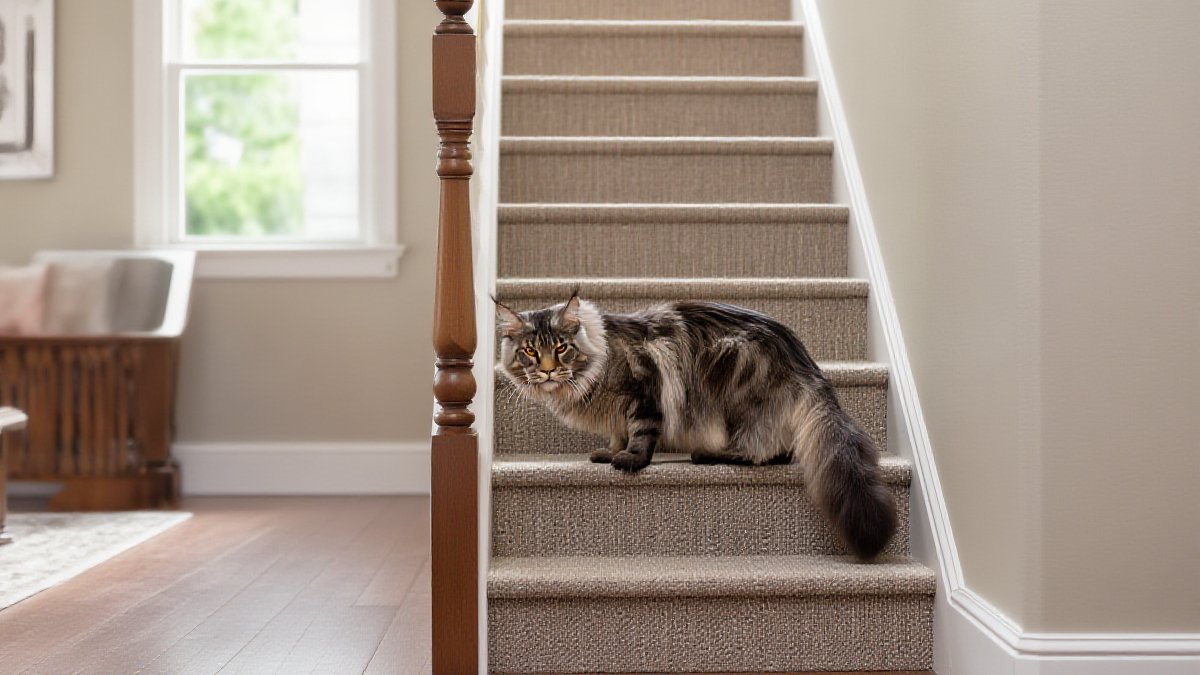
Vets score these changes with questions that feel oddly specific on purpose: Can your cat get on the counter without a running start? Does she still groom her lower back? Any hesitation at the litter box lip? Owners who keep a phone video of the cat's daily jump attempts give the exam a running start. Two visits a year is the senior-cat standard — baseline bloodwork each time, because arthritis care decisions (which pain medication, which dose) depend on kidney and liver values that shift with age.
What Diagnosis Actually Involves
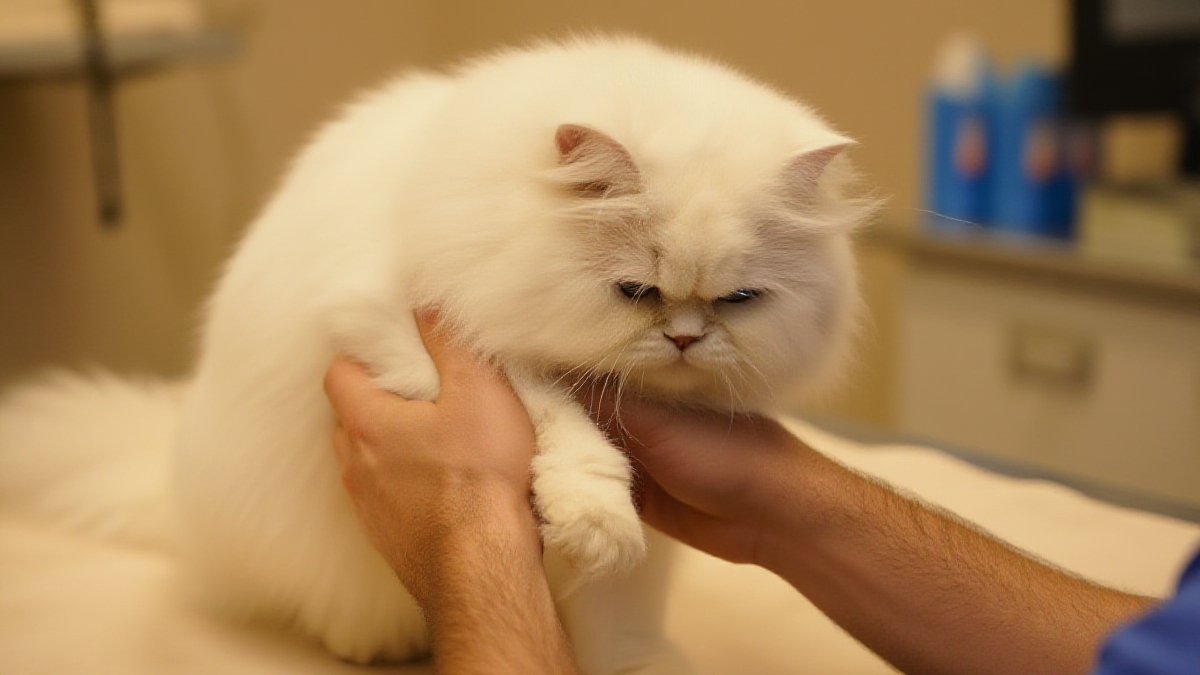
The workup is appropriately unhurried. The exam itself — watching the cat walk, feeling the hips and spine, flexing each joint, watching the cat rise from a lying position — establishes most of the picture. Baseline labwork tells the vet which treatments are safe. X-rays, when needed, confirm which joints are involved and rule out lookalikes like bone cancer. None of this requires a specialist: it is squarely within a general practice's wheelhouse, which matters in a town like Dublin where the nearest referral center is a drive down I-16.
Own a Veterinary Clinic?
Enjoyed this article? Our editorial team researches, writes, and publishes professional features just like this one about clinics across the US. Get your practice in front of thousands of cat owners searching for a vet in your city.
The Cost Picture, Line by Line
Costs vary by clinic, region, and how complicated the cat is, but a Dublin owner can plan around these honest ranges. They assume a cat with no complicating conditions; multiple conditions raise the labwork and monitoring line.
| Item | Typical US Range | How Often | What It Buys |
|---|---|---|---|
| Senior wellness exam | $50 – $100 | Every 6 months | Hands-on joint and pain assessment; the foundation everything else adjusts to |
| Senior bloodwork panel | $100 – $250 | Every 6 – 12 months | Kidney/liver/thyroid values that determine which medications are safe |
| X-rays (2–4 views) | $150 – $350 | Once, occasionally repeated | Confirms which joints, rules out lookalikes |
| Environment setup | $30 – $120 | One-time | Step stools, ramps, a low-sided litter box, memory-foam beds |
| Joint supplements (omega-3s, glucosamine) | $15 – $40/mo | Ongoing | Modest symptom support; the entry-level tier |
| Solensia (frunevetmab) injection | $60 – $120/mo | Monthly | The newer once-monthly injection many cats respond to well |
| Oral pain medication | $20 – $60/mo | Ongoing | Long-term comfort when monitored by exam + labwork |
Two budget notes from the field. First, the environment line is the cheapest and most underused tier — a $40 step stool can restore a cat's access to a favorite perch and meaningfully change its day, and no prescription is needed to start there. Second, the monthly medication tier is exactly the one that should never be started without labwork; budgeting for the twice-yearly exam and panel is what makes every other line on this table safe to use for years. Practices like Smalley's Animal Hospital can sequence this over two visits if the full workup at once is a strain — say so on the phone at (478) 272-2933 and ask what they recommend.
The Dublin Version of Senior Cat Ownership
Middle Georgia life shapes the arthritis question in specific ways. Indoor-outdoor habits are common here, and a stiff-jointed cat navigating rural yards — drainage ditches, uneven porch steps, the occasional dog encounter — takes falls a purely indoor cat never will. Summer heat and humidity drain seniors fastest, and winter mornings in an uninsulated porch room stiffen joints before the coffee finishes. Households with barns or shops nearby will also recognize the working-cat version of this problem: the barn mouser who stopped making the hay bale climb has the same disease as the lap cat, just with fewer witnesses. Smalley's large- and small-animal mix means that conversation can happen in one visit, for the barn cat and the house cat alike.
- This week: film your cat attempting its favorite jump. That ten-second video is the most useful thing you can bring to an exam.
- This week: add a step stool or two. Cost is trivial; benefit is immediate.
- Within a month: book the senior exam at Smalley's — (478) 272-2933 — and bring the video plus any litter-box changes.
- Twice yearly, after that: exam plus labwork, with the treatment tier adjusted to what the labs say.
- For context on clinics and prices: the [[cat vets in Dublin, GA|/cat-vets/georgia/dublin/]] directory lists every practice in town, and the [[Macon, GA cat vet directory|/cat-vets/georgia/macon/]] covers the nearest metro's options.
Smalley's Animal Hospital
600 E Jackson St, Dublin, GA, 31021
Phone: (478) 272-2933
⭐ 4.7 (306 reviews)
This article is editorial content produced by the CatVetFinder team. Clinic details are drawn from public listings and may change — always confirm hours and services with the clinic directly.