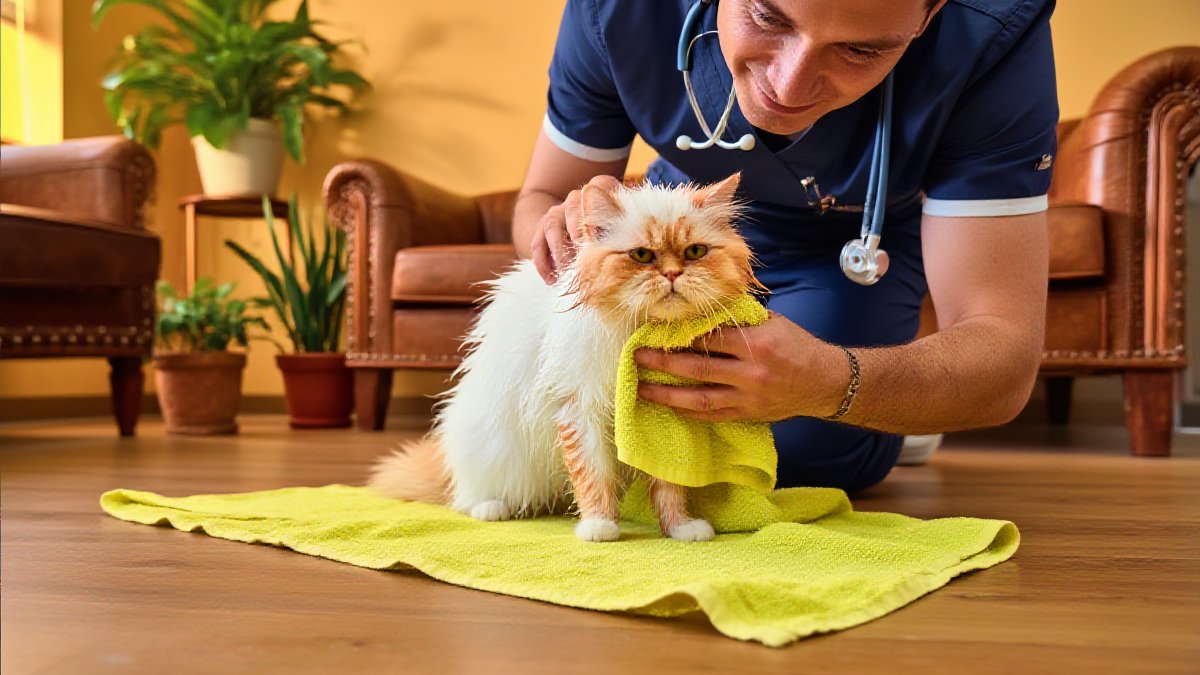
Gulfport has a way of turning August into a full-contact sport. The asphalt on Pass Road radiates long after sunset, the humidity refuses to drop below the point where sweat does its job, and every cat owner in Harrison County eventually learns the same lesson: a cat will not tell you it is overheating. Cats are stoic by design. They were bred by desert ancestors who expressed discomfort as a last resort, and they carry that habit into a Mississippi summer, where the heat index regularly climbs fifteen degrees above what the thermometer says.
That is why the standard advice — "keep pets cool in summer" — is not good enough here. The Gulf Coast rule for cats is different: shade and water are not conveniences, they are infrastructure. And the failure modes we see at the clinic are specific to this climate: the screened porch that loses its shade at 2 PM, the storm that takes out the power and the air conditioning together, the car that seems safe because it is parked in it rather than in a shopping center lot.
Mobile Veterinary Services LLC has built its practice around Harrison County house calls, which means their veterinarians see heat risk where it actually lives — in yards, on porches, and in the homes of pets who never board a car. Their clinic at 17342 MS-53 posts summer hours of 8:00 AM to 5:00 PM, Monday through Friday, and their Fear-Free certification matters more than usual in the summer, when cats arrive already stressed by the ride. Their rating on our directory — 4.8 stars across 167 reviews — reflects a practice Gulfport cat owners trust with the season’s worst days.
Why Gulfport Humidity Is Harder on Cats Than Dry Heat
Cats have limited cooling machinery. They do not sweat the way people do across most of their body — their sweat glands live in the paw pads, which is nearly decorative — so they offload heat by grooming (saliva evaporation), by seeking cool surfaces, and by simply slowing down. In a dry climate, that system works reasonably well. In Gulfport humidity, it stalls. Evaporation is the mechanism, and when the air is already saturated, saliva will not evaporate any faster than sweat will. A cat in a 92°F Gulfport afternoon with a heat index of 105°F is effectively wearing a wet blanket.
This is why the danger signs in coastal Mississippi are quieter than the ones you have memorized for dogs. A dog pants; a cat that is open-mouth panting is already in serious territory. Watch instead for the early tells: grooming that suddenly stops, a cat stretched flat on tile or in the bathtub, ears that are hot to the touch, and the abrupt refusal to move that owners sometimes mistake for laziness. The progression from there — rapid breathing, drooling, vomiting, wobbliness, collapse — is heatstroke, and it is a phone call, not a watch-and-wait.
The Four Risks That Fill Gulfport Summer Appointments
- The afternoon porch. A screen porch that is shaded at 10 AM can be fully sun-exposed by 2 PM. Cats who "always come in when it gets hot" can be caught asleep when the sun swings around. Give every outdoor-adjacent cat a guaranteed cool room with a fan and water — not just access to the porch they like.
- The parked car. Even cracked windows, in Gulfport humidity, a car interior can climb past 110°F in under twenty minutes. The errand will not take ten minutes. Bring the cat home first, or leave the cat at the clinic-grade cool of your house.
- The storm outage. Gulf Coast storm season means power outages, and outages kill air conditioning exactly when the air outside is most dangerous. Prep a hot-weather kit now: battery fans, frozen water bottles to drape towels over, extra bowls, and your carrier in an accessible closet, not the attic.
- The dehydrated senior. Older cats and cats with kidney disease decompensate fastest in heat. If your cat is on the geriatric side of ten, summer is the season to keep water in multiple rooms and watch the litter box — reduced urine output in hot weather is a red flag, not a quirk.
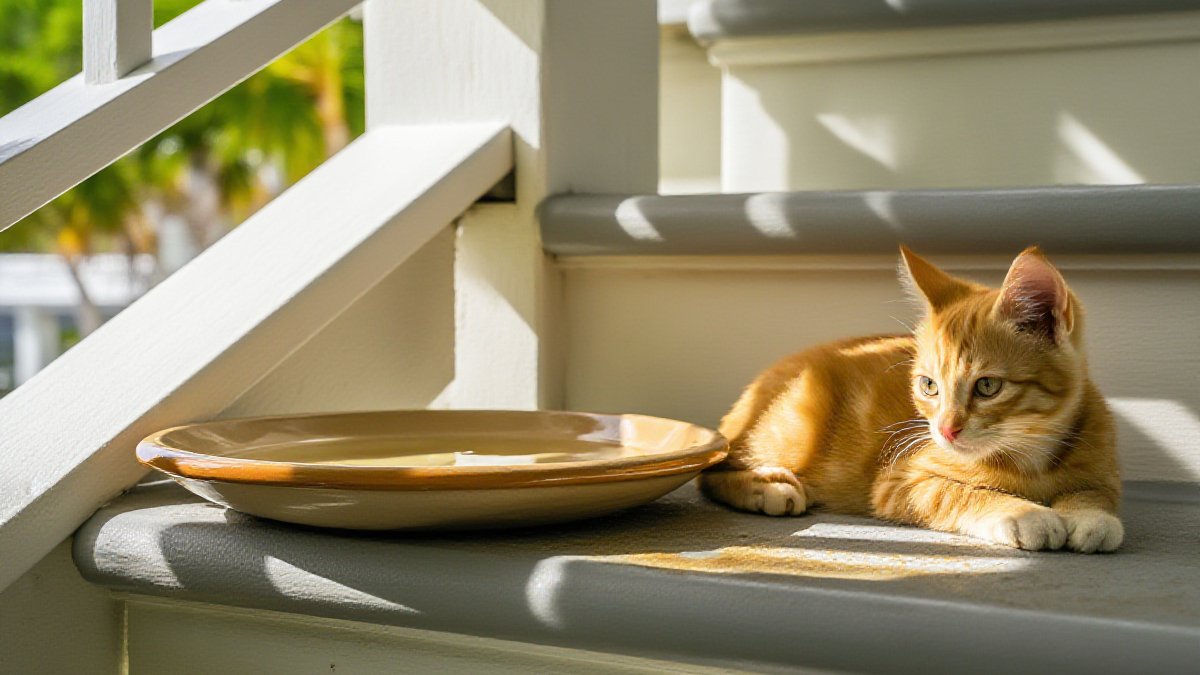
Hydration deserves its own engineering pass. Wide, shallow ceramic bowls keep whiskers comfortable and water cooler longer; a cat fountain helps cats who prefer running water; and a bowl of ice cubes laid out in the morning gives a slow-release cool. Wet food in summer does double duty — it is calories with a water chaser — though any food change should be gradual. These are the same habits the team at Mobile Veterinary Services LLC walks through on house calls, where the water situation a cat actually faces is visible to the vet on the visit rather than reported secondhand.
Own a Veterinary Clinic?
Enjoyed this article? Our editorial team researches, writes, and publishes professional features just like this one about clinics across the US. Get your practice in front of thousands of cat owners searching for a vet in your city.
What a Heat-Season Exam Actually Covers
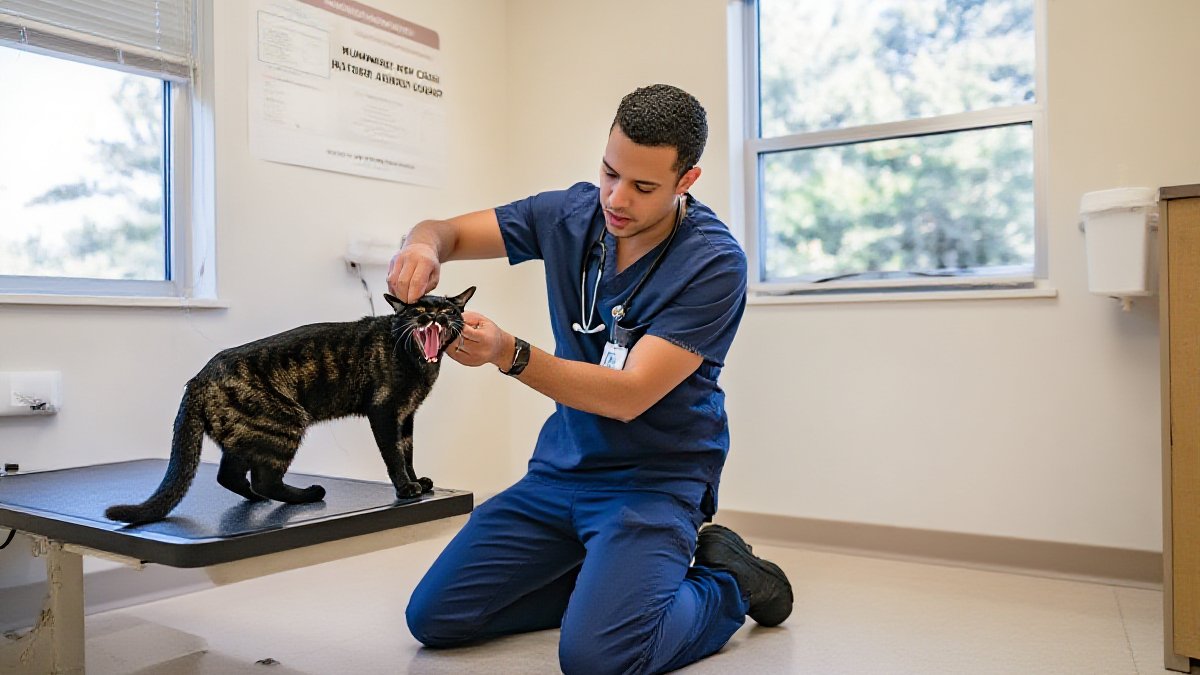
A heat-focused visit is not a generic checkup with a summer sticker on it. For a coastal cat, the useful checklist looks like this: a weight and hydration assessment (skin tent and gum moisture tell a trained hand more than any amount of owner guessing); a heart and lung listen, because cats with early heart disease are the ones heat exhausts first; a senior panel if your cat is past ten, to catch kidney or thyroid issues that heat will amplify; and a frank conversation about parasite prevention, because fleas and mosquitoes do not take the summer off in Harrison County — heartworm prevention is a year-round prescription here, not an April-to-September one.
The practice’s service list runs unusually deep for a mobile-first clinic: comprehensive physical exams, in-house bloodwork, digital X-rays and ultrasound, allergy testing, core vaccinations, and emergency stabilization during business hours. For multi-species households — and along MS-53 there are plenty — the same team covers equine dental work and farm calls. That range matters in an emergency, because the vet who knows your cat from routine wellness visits is the vet who can triage faster when a hot July afternoon goes wrong.
If a Cat Overheats: The First Five Minutes
- Move the cat to air conditioning or the coolest room available — shade alone is not enough at a 105°F heat index.
- Offer — do not force — cool water. Never ice water, and never ice baths; vasoconstriction traps heat in the core.
- Dampen the fur with lukewarm water, focusing on the groin, armpits, and paws, where heat sheds fastest.
- Call [[Mobile Veterinary Services LLC|/cat-clinic/mississippi/gulfport/mobile-veterinary-services-llc-28785/]] at (228) 831-9123 while cooling is underway. Open-mouth panting, vomiting, or wobbliness means go now.
- After hours in Harrison County, know your nearest emergency hospital route in advance. Heatstroke damage is time-critical; waiting out the night is how minor episodes become organ injuries.
Gulfport’s July Calendar: A Month-by-Month Rhythm
Local rhythm matters: June is when the first heat advisories hit and when porch cats start stretching out flatter than usual. July and August are the peak-risk months — power outages, cars, and overexertion all stack. September brings a false cooldown; the air temperature drops but the asphalt and the humidity do not, and late-season cases show up right through the month. The pattern we hear from coastal owners who have managed cats through a decade of Gulf Coast summers is consistent: water everywhere, shade guaranteed, carriers reachable, and a standing relationship with a clinic that answers in July like it answers in January.
Mobile Veterinary Services LLC
17342 MS-53, Gulfport, MS, 39503
Phone: (228) 831-9123
⭐ 4.8 (167 reviews)
This article is editorial content produced by the CatVetFinder team. Clinic details are drawn from public listings and may change — always confirm hours and services with the clinic directly.