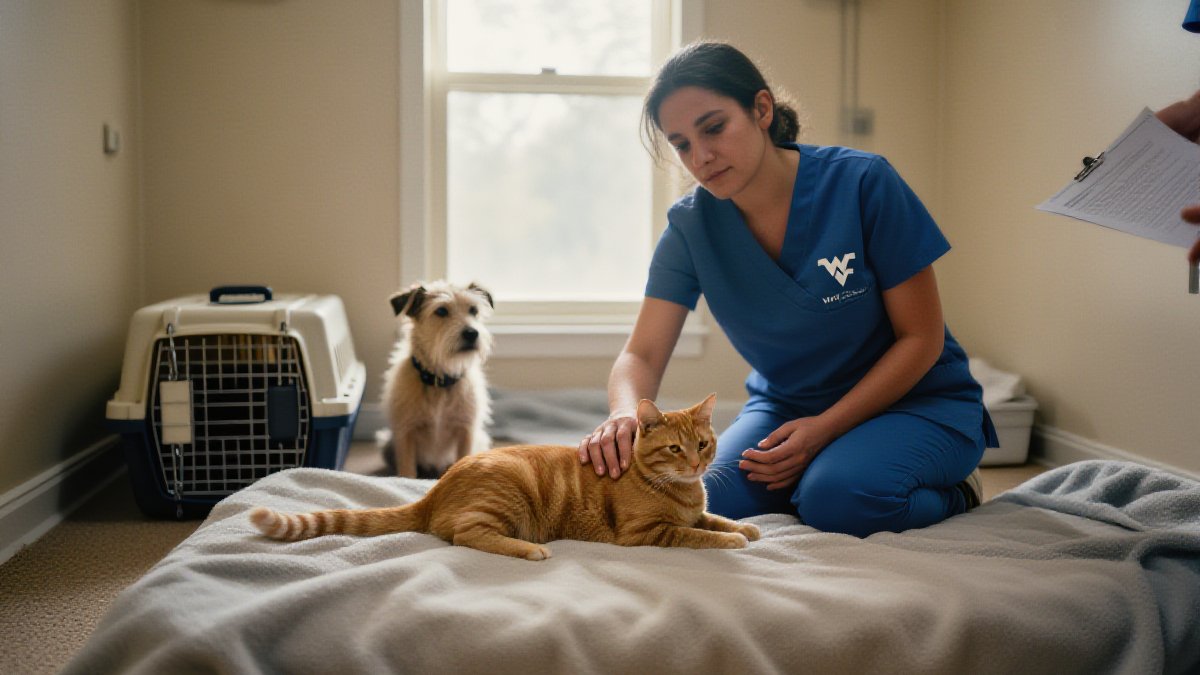
The email arrives most weeks in some form: my vet says my cat needs a $2,800 dental procedure / a biopsy / a thyroid treatment plan, and I don't know whether to trust it. Underneath almost every version of that email is a quieter, more embarrassed question — is it rude to ask someone else? Cat owners treat a second opinion the way they treat returning a gift: technically allowed, socially fraught, and probably a reflection on the first vet. It isn't. It is a routine part of how good medicine works, and the vets who resent it are the rare exception, not the rule.
This guide covers the honest version: the situations where a second opinion genuinely changes outcomes, the ones where it mostly buys time and money, how to bring your cat's records so the second vet starts ahead instead of from scratch, what a second-opinion visit costs, and one underused option — taking a feline-only practice a fresh look at a case that started somewhere else.
A Second Opinion Is Normal Medicine, Not an Accusation
Start by dismantling the guilt, because it stops more owners than cost does. Medicine — human and veterinary — runs on second opinions. Specialists ask colleagues to review their imaging. Surgeons have cases peer-reviewed as a matter of routine. Your primary vet would, in most cases, rather see you get a confirming opinion than see you decline a recommended treatment out of unvoiced doubt. A good practice's actual reaction to "I'd like a second opinion" is usually a shrug and a printout — and in the best cases, a specific name. Some will even say "I'd see Dr. X for this," which is a far more useful recommendation than any online list.
There are two distinct things an owner might be seeking, and they lead to different doors. The first is diagnostic doubt: something is wrong, the workup hasn't found it, or the explanation doesn't fit. The second is treatment doubt: the diagnosis is agreed, but the plan — its price, its invasiveness, its odds — feels uncertain. Knowing which one you want makes the second visit dramatically more useful, because the answer to "did we miss something" is a review and fresh eyes, while the answer to "is this the right plan" is a treatment conversation.
The Six Situations Where a Second Opinion Earns Its Cost
- A major procedure with real cost or risk. Surgery over roughly the $1,500 line, a dental with multiple extractions, a biopsy of an uncertain mass. These are exactly the decisions where a confirming opinion is standard practice, and small differences in approach between clinics can change both the bill and the outcome.
- Chronic symptoms with no diagnosis. A cat who vomits weekly, or itches endlessly, or keeps losing weight while bloodwork "comes back normal." Broad, unresolved problems benefit enormously from a different brain — sometimes a feline-focused one, sometimes a specialist internist.
- A diagnosis that doesn't match what you see at home. You know this particular cat. If "kidney disease" is floated in a twelve-year-old who is thriving, or a dental claim doesn't square with the cat eating dry food normally, a fresh external exam is fair to everyone — including the first vet.
- First vet and cat are in a bad loop. Some cats struggle with a specific clinic for reasons nobody can name. A quieter, feline-only, or Fear-Free practice sometimes produces a calmer exam and completely different findings — because in most cats, the appearance of health collapses under stress.
- Big-ticket chronic disease with treatment options. Diabetes, kidney disease, and hyperthyroidism each have multiple legitimate protocols with different price tags and different daily obligations. It is reasonable to shop between approaches. The comparison is not disloyalty; it's a family expense exceeding $100/month.
- Something feels off in the way you're being treated as a client. Being rushed, unable to get answers to questions, or pushed toward a sale rather than a plan. You're not asking for a definitional second opinion here — you're vetting the relationship. Both are allowed.
Own a Veterinary Clinic?
Enjoyed this article? Our editorial team researches, writes, and publishes professional features just like this one about clinics across the US. Get your practice in front of thousands of cat owners searching for a vet in your city.
How to Set Up the Second Visit So It Isn't a Restart
The difference between an expensive repeat workup and a genuinely fresh look entirely comes down to the record transfer. A second vet who receives your cat's actual history — records, notes, images, lab results — does not repeat last month's bloodwork. One who receives only "he's been vomiting" starts the whole climb again at your expense. So bring or send:
- The last 12 months of labwork and imaging, ideally as PDFs or DICOM files rather than phone photos.
- The visit notes or discharge summary from the appointment where the current plan was made, including the specific diagnosis and the differentials that were considered.
- A cost estimate for the proposed plan. This is data, not an accusation — it lets the second vet see who priced what and where their own approach differs.
- A dated, one-page home chronology. Not a history of your cat's life — the last two to eight weeks of the actual problem: when it started, what it looked like, what's changed. five minutes of notes is worth more to the second vet than an hour of recollection.
- The current medications and what hasn't worked. Negative results are data — knowing the two things your cat has already tried and failed is the way you prevent paying for a third.
One more thing worth arranging: say on the phone when booking, "I'm coming for a second opinion on a diagnosis from another clinic." Say it plainly, not apologetically. It changes how the visit is scheduled (more of a consultation slot than a start-from-scratch exam) and it gets the records request moving the same day you call.
What a Second-Opinion Visit Costs
The good news is that the diagnostic side is usually the cheap part. Depending on where you are in the country and how much unused workup is already on hand:
| Item | Typical US Range | What Changes the Price |
|---|---|---|
| Second-opinion exam / consultation | $50 – $150 | Feline-only and specialty practices often carry slightly higher consult fees, which is payment for longer appointment slots. |
| Records transfer | Free – $25 | Most clinics email PDFs free; a few charge a small copying or file fee. |
| Repeat of bloodwork (if not supplied) | $100 – $250 | Almost avoidable if records arrive in advance — this is the single biggest savings in the whole exercise. |
| Recheck imaging (X-ray, ultrasound) | $150 – $500 | Depends entirely on whether the images themselves, not the report, can be sent and re-read. |
| Specialist consultation (if escalated) | $125 – $300 | Often courtesy-priced or bundled when the referring vet initiated a proper referral. |
A reasonable rule: if the second visit confirms the first vet's plan, the second-opinion fee was insurance on a much larger decision, and it was cheap at that. If it changes the plan — avoids a surgery, swaps an expensive drug for a better-fitting one, finds the thing that was missed — it was the best money you spent all year. There is no version of this where the second opinion is wasted, as long as you brought the records.
The Feline-Only Option (and Why It's Underrated for Second Opinions)
Most second-opinion advice jumps straight to "find a specialist," and specialists are the right answer for a genuine medical puzzle — cardiology, oncology, surgery. But there is a middle door that owners underuse: the feline-only general practice. Cats are not small dogs, and a clinic that refuses to see anything else builds a completely different diagnostic instinct — how cats express pain, what a cat's dental disease actually looks like, which cats are quietly stressed rather than calm, what a senior cat's "normal" is.
That instinct matters unusually often in second-opinion cases, because cats collapse the moment a visit goes wrong. A cat who "hates the vet," hyperventilates at the office, and gets read as sick at the mixed-practice clinic across town may be misread as sick in a dog-waiting-room environment. A feline-only practice removes that confound entirely — no dogs at all, kennel design and handling choreography built around the species. For behavior-looking problems, appetite problems in a cat who "tolerates" vet visits, and dental opinions especially, this is not a boutique preference. It is a methodological advantage.
What This Looks Like in Practice: Feline Veterinary Care of Morgantown, WV
Concretely, here is what that kind of second-opinion pathway looks like at a real feline-only practice: Feline Veterinary Care of Morgantown on Sturgiss Avenue, holding a 4.6-star average across more than 160 reviews. The clinic sees cats exclusively — no dogs on the premises at all — and describes its approach as "a safe and relaxing environment for your cat's health needs," which is exactly the confounder a second-opinion visit wants removed. Its service list covers the situations in this article almost line for line: comprehensive physical exams, behavioral counseling that explicitly looks for physical causes behind behavior complaints, professional dental cleanings with dental X-rays before any extraction decision, soft-tissue surgery, and nutritional counseling.
Feline Veterinary Care of Morgantown
1821 Sturgiss Ave, Morgantown, WV, 26505
Phone: (304) 943-7954
⭐ 4.6 (161 reviews)
For a second-opinion owner, two things in that profile do specific work. First, the behavioral-counseling service is written the way feline veterinarians actually think: "we identify any physical causes before you create a behavioral plan" — which is precisely the right posture for the owner whose cat "is suddenly aggressive" and was told to see a trainer as step one. Second, the clean-reports pattern in owner reviews — owners who describe skittish cats tolerating nail trims and exams calmly for the first time — is the practical evidence of the environment doing what it claims. One recent reviewer described a nine-year-old cat brought in for GI issues where the exam itself surfaced a separate, more urgent oral-health problem: exactly the way a second set of eyes is supposed to behave — the new vet looked at the whole cat, not just the presenting complaint.
When a Second Opinion Can Wait — and What to Do Instead
Not every doubt warrants a drive. Some situations are better served by a different tool first:
- You didn't understand the explanation. Before you shop clinics, ask your own vet again — or by email, where answers are calmer and fuller. "Can you walk me through why you chose plan B over plan A" is a completely normal question, and many doubts dissolve the moment the reasoning is spoken out loud.
- The plan is small-stakes and reversible. A seven-day trial of a urinary diet, a recheck in two weeks, an antibiotic course: if the decision is cheap and revisitable, the highest-value move is usually to just run the trial and see what happens, not to complicate the story with another visit first.
- The workup isn't finished yet. If bloodwork is pending or a recheck is booked next week, an interim second opinion just autopsies an incomplete picture. Opinions compound on data — wait for the data.
- It's an emergency. A cat in urinary blockage, open-mouth breathing, or collapse does not get a second opinion on the way to the hospital. Emergency first, questions later.
Mistakes That Waste the Second Opinion
- Arriving without records. The single most common failure — the visit becomes a $200 restart of work already done. Send documents ahead, every time.
- Hiding the fact that it's a second opinion. It changes the clinical conversation the vet has, and the omissions come out awkwardly anyway.
- Shopping for the answer you want. If you've decided you don't want the surgery, you will find a vet who agrees with you — and that's not a second opinion, that's a yes-man with a license. Go prepared to genuinely change your mind in either direction.
- Running both vets simultaneously without telling anyone. If you proceed, tell the second vet whether you're handing the case over to them or returning to your original practice. Cases that live in two clinics with no owner carrying the baton fall through gaps.
- Waiting for a specialist when a good feline-only generalist can answer the question. Match the depth of the second opinion to the complexity of the question — most second-opinion questions don't need a board-certified specialist, they need fresh eyes and species expertise.
The cat behind this article's opening email turned out to have an entirely ordinary dental disease that the first clinic had priced as a much larger extraction surgery; the second opinion trimmed the plan and the bill by more than half, and thecat spent the afternoon snoozing on the same windowsill as always. But the resolution mattered less than the mechanism: the owner asked calmly, forwarded records like it was paperwork rather than a betrayal, and everyone — both vets included — came out of it looking professional. That is what a second opinion looks like when it works.
Questions Cat Owners Ask About Second Opinions
The second-opinion conversation sits next to two others worth reading: what diagnostics actually cost and when they're worth it, and how vets frame payment plans when a plan exceeds the budget. If the topic at hand is dental, read what a cat dental cleaning involves end to end before agreeing to any extraction estimate.
This article is editorial content produced by the CatVetFinder team. Clinic details are drawn from public listings and may change — always confirm hours and services with the clinic directly.