It is one of the most deceptive injuries in cat medicine: a fight with another cat leaves nothing but a pinprick puncture, maybe a scab the size of a peppercorn, and within two or three days the cat is swollen, feverish, and miserable. That is a cat bite wound abscess — and it happens so reliably that experienced owners of outdoor cats treat any fight as the start of a countdown. The reason is built into the weapon itself. A cat's canine teeth are long, slender, and slightly curved, so when one drives through skin it injects bacteria from the mouth deep beneath the surface and then seals the entrance behind it. The skin closes over a pocket of infection, and the body's response to that pocket is the abscess: a hot, fluid-filled swelling that is painful in a way cats rarely hide.
Why Cat Bites Abscess So Predictably
Dog bites tear; cat bites inject. The narrow puncture channel carries Pasteurella and other mouth bacteria into subcutaneous tissue, and because the puncture is so small it closes within hours, trapping the inoculum inside. Most bite wounds land on the face, the base of the tail, or along the forelimbs — the geometry of a cat standoff — and the hind legs get their share too when the losing cat turns to flee. Over the next one to three days bacteria multiply in the closed space, dead tissue and white cells accumulate as pus, and the swelling grows until the skin over it thins, purples, and sometimes ruptures on its own, draining foul material that owners often discover on a couch or bedding. Intact males, outdoor-access cats, and cats in multi-cat neighborhoods with territorial friction make up the great majority of cases, and the pattern peaks in warmer months when doors and windows stay open and cats roam.
The Signs, in the Order They Usually Appear
- Day 0: the fight itself — often unheard — leaves one or more tiny punctures, a small scab, a patch of matted fur, or tenderness the cat flinches from when touched.
- Day 1–2: early lameness if a leg is involved, reluctance to be petted in one spot, a drop in grooming over the affected area, and the first hints of feeling off: hiding, sleeping more, eating less.
- Day 2–3: the classic abscess arrives — a firm-then-soft swelling, hot to the touch, on the face, tail base, or a limb. Fever, lethargy, and appetite loss usually ride along with it.
- Rupture stage: the skin over the swelling breaks and drains thick, foul-smelling, often yellowish or blood-tinged material. The cat typically feels somewhat better once drained — which is exactly why owners mistake it for a resolved problem.
What Veterinary Treatment Actually Involves
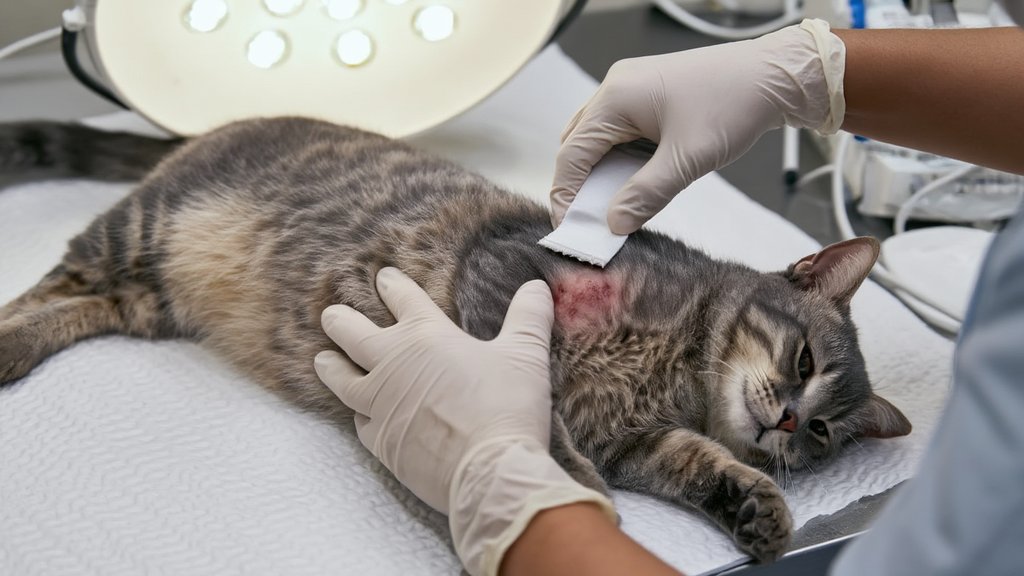
Treatment follows a consistent plan, scaled to how established the abscess is. First, sedation is usually needed — lancing and flushing a painful abscess is not something a cat tolerates awake. The veterinarian opens the wound, drains the pus completely, debrides any dead tissue, and flushes the pocket with antiseptic solution; most abscesses are left partially open or given a small drain so they keep draining rather than re-sealing, which is the whole failure mode you are trying to avoid. Almost every case goes home with a broad-spectrum antibiotic — the amoxicillin-clavulanate class is the workhorse here because it covers Pasteurella reliably — and pain control, because these wounds genuinely hurt. Warm compresses at home twice a day keep the drainage path open while the pocket heals from the inside out. Where the swelling is large or recurrent, the vet may clip a wider area to look for a second puncture, because two wounds (canine upper and lower) often mean the bite went all the way through.
The Complication That Outranks the Abscess
Bites carry one risk that has nothing to do with pus: rabies and FIV/FelV exposure. A cat bitten by a cat of unknown vaccination status needs its rabies booster assessed the same day, and a cat not currently vaccinated against FIV faces a testing decision — the virus is transmitted through bite wounds, and a baseline test followed by a recheck in a few weeks is the standard approach after a deep bite from an unknown cat. This is also the moment to confirm the cat's own rabies vaccination is current, because in most US jurisdictions an overdue rabies vaccine turns a routine wound visit into a quarantine conversation. None of this replaces the wound treatment; it rides alongside it, and it is the part of the visit owners most often undervalue.
Own a Veterinary Clinic?
Enjoyed this article? Our editorial team researches, writes, and publishes professional features just like this one about clinics across the US. Get your practice in front of thousands of cat owners searching for a vet in your city.
Home Care and the Healing Timeline
After lancing, expect drainage for two to five days: the wound weeps, the cat owes you some towels, and the e-collar earns its keep because licking re-contaminates the pocket. Warm compresses for five to ten minutes twice daily encourage continued drainage. The antibiotic course must run its full length even though the cat looks better by day three — stopping early is how a resistant pocket survives and re-abscesses in two weeks. A properly treated abscess closes within one to two weeks, with hair regrowth following over the next month. What should trigger a return visit: drainage that keeps flowing past a week, a new swelling beside the healed site, the cat still lethargic or off-food after two days on antibiotics, or any wound on an ear, eyelid, or tail that is not improving — those sites drain poorly and sometimes need surgical revision.
A Worked Example: Hayward Veterinary Hospital, Hayward, CA
Hayward Veterinary Hospital
25886 Mission Blvd, Hayward, CA, 94544
Phone: (510) 200-7280
⭐ 4.7 (139 reviews)
East Bay owners have a convenient option for exactly this kind of presentation: Hayward Veterinary Hospital on Mission Blvd in Hayward, California — a Fear-Free-certified practice, which matters when the patient arrives already painful and defensive about being handled — holding a 4.7-star rating across 139 client reviews. Their listed services cover urgent care, surgery, and wellness exams, which is the combination an abscess case uses in one visit: lance, flush, antibiotic, pain management, and the rabies-booster check in the same appointment. Call (510) 200-7280 and mention that a bite wound is suspected — clinics will typically prioritize a swelling that appeared over a day or two. Owners comparing options across the East Bay can also browse the full cat vets in Hayward, CA listing to see which nearby practices fit their situation.
The Takeaway
A cat bite wound is never a skin problem; it is a sealed injection of bacteria with a two-to-three-day fuse. Count the days from any known or suspected fight, watch the predictable spots — face, tail base, forelimbs — and get a swelling lanced, flushed, and put on antibiotics before it ruptures on your couch. Ask about rabies and FIV status in the same visit, keep the drainage open with warm compresses, and finish every antibiotic pill. The cheapest abscess is the one you never treat twice.
This article is editorial content produced by the CatVetFinder team. Clinic details are drawn from public listings and may change — always confirm hours and services with the clinic directly.