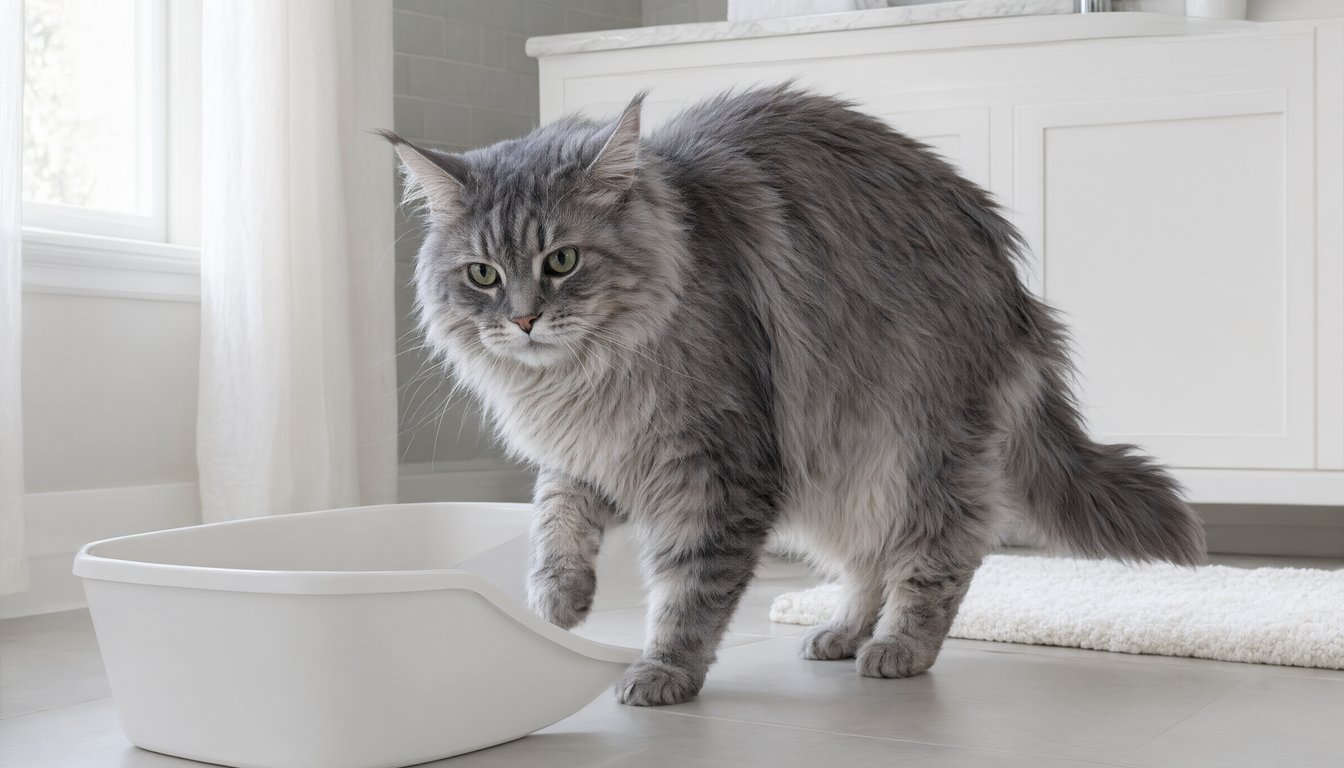
Constipation is one of the sneakiest cat problems because the main symptom happens behind a closed door — in the box, where nobody is watching. Owners usually notice it a day or two late: the litter has no poop in it, or the poop that is there is small, dry, and coin-shaped. By then the cat has already been straining quietly for days. The good news is that most feline constipation is mundane — dehydration, hair, a lazy gut — and it responds to boring, effective fixes. The bad news is that the worst version of it, a complete blockage or a colon that has stopped contracting, can go from annoying to organ-threatening in about 72 hours.
This guide walks through what constipation actually looks like from the outside, what you can safely do at home and for how long, and what a real veterinary workup looks like when home care does not move things along — with one worked example of how that appointment unfolds at a practice that deals with this daily.
The Litter Box Tells: Signs Your Cat Is Constipated
Cats poop one or two times a day on a normal diet. The first evidence of constipation is almost always a change in that rhythm, and the box preserves the evidence better than the cat does. Here is what to look for:
- Fewer or no deposits — a day with no poop is not alarming; two to three days is the line where you should be actively checking.
- Small, hard, dry pellets — the textbook output of a constipated cat: little dark "coins" that crumble rather than hold together, sometimes buried in litter so you have to actually look.
- Long visits with little result — squatting, shifting position, leaving after 60–90 seconds with nothing produced.
- Crying or vocalizing in the box — pain during defecation is never normal, and it reframes everything below as urgent.
- A dry, unproductive squat that looks like urination — owners frequently report "my cat keeps trying to pee" when the cat is actually straining to defecate. Check whether there are wet clumps. If the cat is straining and NOT passing urine, that is a urinary emergency — go now, not tomorrow.
- Vomiting, appetite loss, and hunching — constipation backs the whole system up. A constipated cat that also stops eating or vomits repeatedly has moved past the home-care stage.
- A lump you can feel — along the lower belly, a firm sausage-shaped mass is often a loaded colon. It is also, rarely, something else entirely; anything firm down there earns an exam.
One distinction worth learning, because it changes the whole conversation: constipation (hard, infrequent stool) sits on a spectrum with obstipation (nothing moves at all) and megacolon (a stretched-out colon that has lost its muscle tone). The earlier end is manageable at home. The later end is managed at the vet, sometimes for life.
Why Cats Get Constipated in the First Place
Own a Veterinary Clinic?
Enjoyed this article? Our editorial team researches, writes, and publishes professional features just like this one about clinics across the US. Get your practice in front of thousands of cat owners searching for a vet in your city.
The feline colon is a water-recovery machine — it is designed to squeeze every drop out of waste before it leaves. That design is why cats survive on so little drinking water, and it is also exactly why they constipate so easily. The usual suspects, roughly in order of how often they are the answer:
- Chronic mild dehydration — dry-food-only cats, cats who avoid the water bowl, and cats who will not drink from a bowl next to their food are the classic constipation patients.
- Hair and grooming load — long-haired cats, heavy shedders, and seniors with arthritic hips who cannot twist to groom swallow more hair and pass more hair. Hairball season is constipation season.
- Arthritis — a cat with sore hips will sit differently in the box, postpone the trip, and tolerate a fuller colon longer. This is one of the most under-appreciated causes in cats over ten, and it is fixable.
- Too little exercise, too much weight — an indoor sedentary gut is a slow gut.
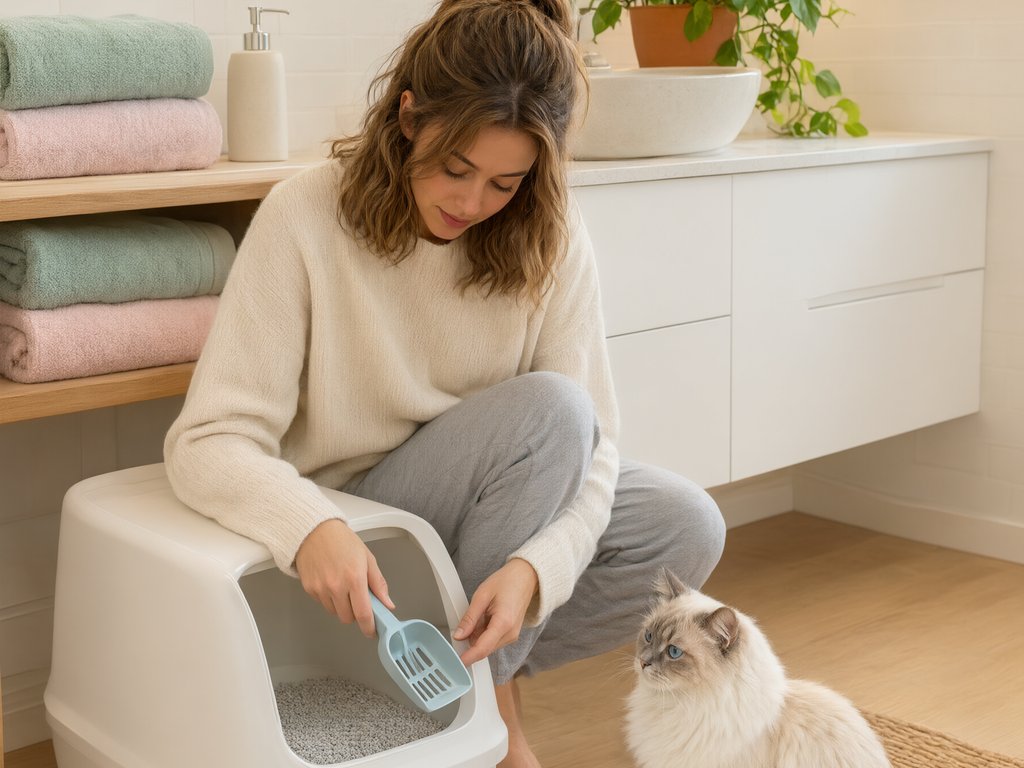
- Litter box avoidance — a cat who holds it because the box is dirty, shared, or in a scary spot accumulates stool that dries out further.
- Diet change or foreign material — a new food, bones, or an over-groomed cat eating carpet fibers and fur ties can mechanically slow things down.
- Medical causes — kidney disease (which dehydrates the whole cat), painful anal gland issues, spinal problems, and a narrowed pelvis from an old fracture all show up in the box.
What Actually Helps at Home (and What to Skip)
For a cat that is merely sluggish — eating, drinking, not vomiting, no crying in the box — 24 to 48 hours of home care is a reasonable window before calling the vet. What genuinely helps is unglamorous:
- Water, aggressively — wet food instead of dry for a few days is the single most effective move, because canned food is roughly 75 percent water versus under 10 for kibble. Add a second water station away from the food bowl; many cats refuse to drink where they eat.
- Hairball control — brush daily during shedding seasons, and for long-hairs consider a hairball-control diet or gel so the hair exits one end instead of compounding at the other.
- Movement — two or three 5-minute play sessions a day genuinely stimulates gut motility. This is the cheapest laxative that exists.
- Vet-approved fiber — small amounts of plain canned pumpkin work for some cats; psyllium products exist for pets. Start tiny — flooding a slow gut makes bloating worse.
- Mild, vet-dosed stool softeners — some practices bless an over-the-counter product at a feline dose. Call first; dosing errors in cats are easy and some human products are flat-out toxic to them.
- What to skip: milk (most adult cats are lactose intolerant and it causes worse problems than it fixes), mineral oil dosed by mouth (it can be aspirated into the lungs), and human laxatives of any kind. And do not give an enema yourself — over-the-counter phosphate enemas can kill a cat.
When Constipation Means the Vet Today
Some constipation is a weekend project; some is a drop-everything morning. Treat it as same-day urgent when: there has been no stool for three or more days; the cat is crying in the box or seems painful when picked up; it has vomited more than once or refused food; there is straining with NO urine (that may be a blocked urinary tract — a true emergency); the abdomen feels tense and drum-like; or the cat is a senior, diabetic, or has kidney disease and the pattern is new for them. Repeated rounds of "mild" constipation every few weeks also belong at the vet — that rhythm is how megacolon announces itself early, and early is when it is easiest to manage.
What the Veterinary Workup Looks Like
The appointment usually starts exactly where you would hope: a history and a hands-on abdominal exam, where a practiced thumb can find and grade a loaded colon in seconds. From there it depends on what the exam finds. Most straightforward cases get an enema or a couple of rounds of fluids and prokinetic drugs (medications that make the colon contract again), plus a hydration plan at home — and the cat produces a spectacular amount of poop within 24 hours, which owners should be warned about in advance.
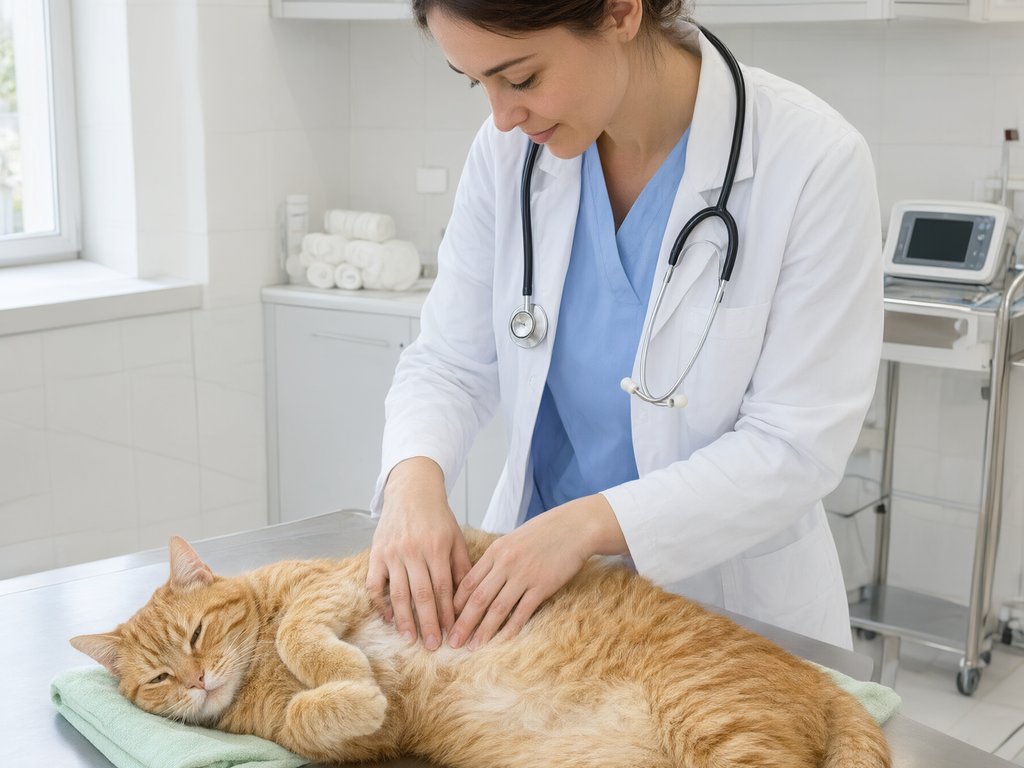
When the case is not straightforward — severe impaction, a suspected megacolon, a senior with weight loss — the workup adds X-rays to measure the colon and rule out a mass or a narrowed pelvis, bloodwork to check kidney values and hydration, and sometimes a discussion of long-term management: prescription fiber, a hydration routine, or medications taken a few times a week. In the most stubborn megacolon cases, surgery to remove the non-functioning section of colon exists and has good outcomes — but most cats never get there if the early pattern gets taken seriously.
Hidden Springs Animal Hospital
11801 N 23rd Ave, Boise, ID, 83714
Phone: (208) 229-2500
⭐ 5.0 (85 reviews)
Hidden Springs Animal Hospital, out on North 23rd Avenue in northwest Boise near the foothills, is a good picture of how this conversation runs at a well-established neighborhood practice. They hold a 5.0-star average across 85 client reviews — a review profile that large at a perfect score usually reflects a practice clients have trusted for years and finally got around to writing about. That continuity matters for constipation specifically: the condition recurs, and the cat who needed one enema this year is a different patient from the one whose colon has been quietly stretching for three. A vet who has weighed and palpated the same cat across visits can tell the difference early. The phone is (208) 229-2500 and the address is 11801 N 23rd Ave, Boise, ID 83714.
The practical flow for an owner in this situation: call and describe the timeline honestly — how many days since a stool, what the output looked like, whether the cat is eating and drinking. If it is early, the clinic may steer you through 24–48 hours of hydration and fiber with a call-back plan; if it is advanced, you will be seen the same day. The questions worth asking: will X-rays be used to size the colon, is the hydration plan oral or subcutaneous, and what should the at-home routine look like for the next month — because the discharge instructions, not the enema, are what prevent the next episode. For comparison around the Treasure Valley, the cat vets in Boise, ID directory lists other practices, and the full profile at Hidden Springs Animal Hospital has hours and directions.
Constipation is a slow alarm. One quiet day in the box is nothing; three is a message. Read the box daily — it is the cheapest diagnostic in cat ownership.
Questions Cat Owners Ask About Cat Constipation
Constipation rarely travels alone — it shares dehydration and diet with the rest of the digestive picture. cat diarrhea and when to worry covers the other end of the stool spectrum, why cats vomit and when to worry decodes the nausea that often rides along, and for seniors whose slowed grooming and arthritis set the whole thing up, cat kidney disease early signs explains the hydration side of the story.
This article is editorial content produced by the CatVetFinder team. Clinic details are drawn from public listings and may change — always confirm hours and services with the clinic directly.