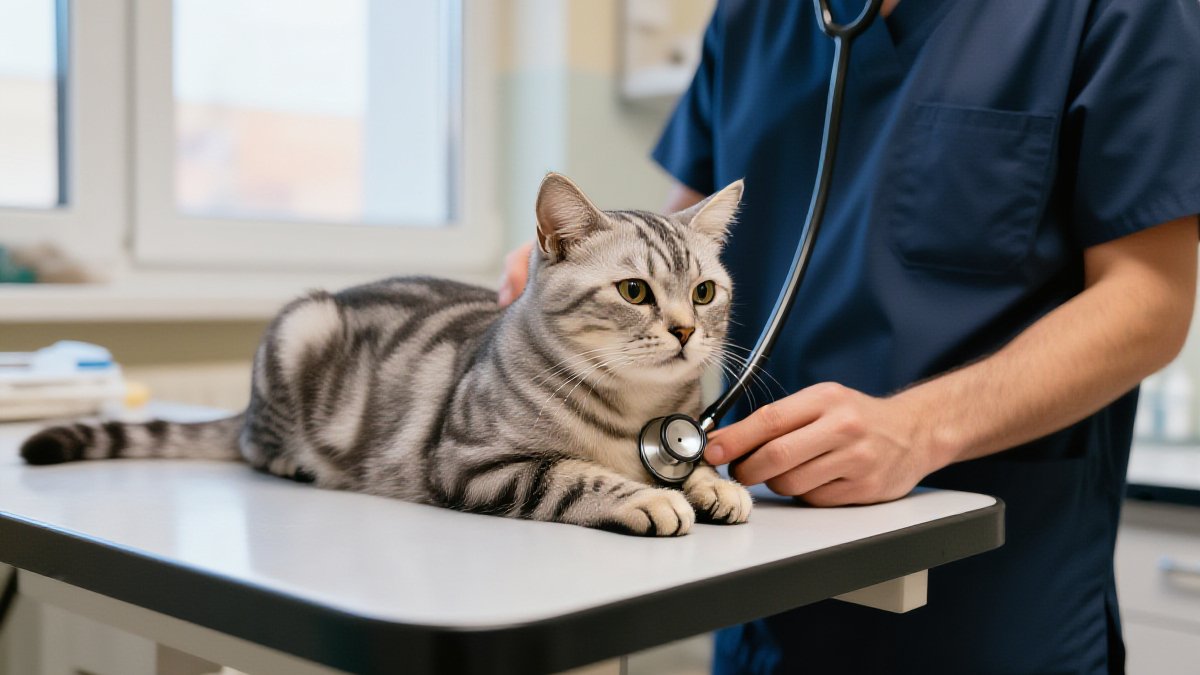
Few sentences from a veterinarian land as heavily as "your cat has a heart murmur" — usually said calmly, mid-routine-exam, while the owner hears it as a verdict. The reality is gentler and more interesting: a murmur is a sound, not a disease. It is the noise of turbulent blood flow picked up through a stethoscope, and it sits on a spectrum from "physiologic and meaningless" to "the first clue of serious heart disease." Somewhere around one in five or six cats has a detectable murmur at some point, and a large share of those cats never develop heart disease at all. The word alone does not tell you which group yours is in — the follow-up does.
This guide walks through what the grades mean, why kittens and stressed cats murmur without anything being wrong with their hearts, which symptoms actually matter, what the testing ladder looks like, and how owners should think about it day to day. No panic, no shrugging — just the sequence that separates the innocent murmurs from the ones that deserve a cardiologist.
What Is a Murmur, Exactly — and Why Does My Cat Have One?
A normal heartbeat is two clean sounds: the valves closing, in rhythm. A murmur is extra sound — a whooshing or swishing — created when blood flows turbulently instead of smoothly. That turbulence can come from a leaky or narrowed valve, a hole in the heart's walls, thickened muscle, thyroid-driven overcirculation, or simple fast blood flow in a cat whose heart rate just spiked to 220 beats per minute because a stranger is holding it in a clinic.
That last cause deserves real attention, because it explains a large share of first-time murmur findings. Cats at the vet are stressed, and stress creates "flow murmurs" — turbulence in an anatomically normal heart that is simply beating hard. Vets know this, which is why a murmur found in a wide-eyed, panting cat is often re-checked later, on a calmer day, before anything else is ordered. Kittens add another wrinkle: many young cats have innocent murmurs that fade completely by four to six months of age as the heart and circulation mature.
| Cause category | Typical picture | What it usually means |
|---|---|---|
| Physiologic (flow) murmur | Found in a stressed cat or excited kitten, soft grade, no other symptoms | Often disappears on a calm recheck — not heart disease |
| Innocent murmur of youth | Kitten under ~6 months, otherwise thriving and growing | Commonly outgrown; recheck at next vaccine visits |
| Structural heart disease | Persistent murmur, sometimes with a gallop rhythm or arrhythmia | Needs echo-based diagnosis: cardiomyopathy, valve defects, shunts |
| Systemic driver | Adult or senior cat, weight loss or ravenous appetite alongside the murmur | Think hyperthyroidism, anemia, high blood pressure — treat the cause |
The Symptoms That Turn a Murmur Into an Urgent Matter
Most cats with a murmur and no disease act completely normal — cats hide heart problems better than almost any other species. But certain signs change the conversation from "monitor" to "act this week" or even "act tonight." Watch for:
- Open-mouth breathing or panting outside of a stressful car ride — in a cat this is never normal and is a cardiac/respiratory red flag.
- Breathing faster than about 35–40 breaths per minute at rest, when the cat is asleep and relaxed. Counting the sleeping respiratory rate at home is the single most useful monitoring trick owners of heart-suspect cats have.
- Hind-limb weakness, dragging, cold back legs, or sudden crying with a limb that is painful to touch — a saddle thrombus from heart disease blocks blood flow to the rear legs and is a life-threatening emergency.
- Fainting, collapse, or disorientation episodes.
- Quietly shrinking: weight loss, reduced appetite, hiding more, or a senior cat slowing down in ways attributed to age — hyperthyroidism and heart disease both hide inside "he is just getting old."
- Bluish-tinged gums or tongue.
The Testing Ladder: From Stethoscope to Cardiologist
Veterinary medicine handles murmur follow-up in layers, and it is worth knowing the ladder so the sequence makes sense when it is proposed to you. The first layer is a recheck auscultation on a calm day — sometimes with the owner holding the cat in a quiet room — to see whether a stress-driven murmur was the whole story. The second layer is bloodwork: a thyroid level (hyperthyroidism is a notorious murmur-maker in middle-aged and senior cats), a red blood cell count to rule out anemia, and blood pressure, since hypertension forces the heart to work against resistance. None of this is exotic; any well-run general practice does it in one visit.
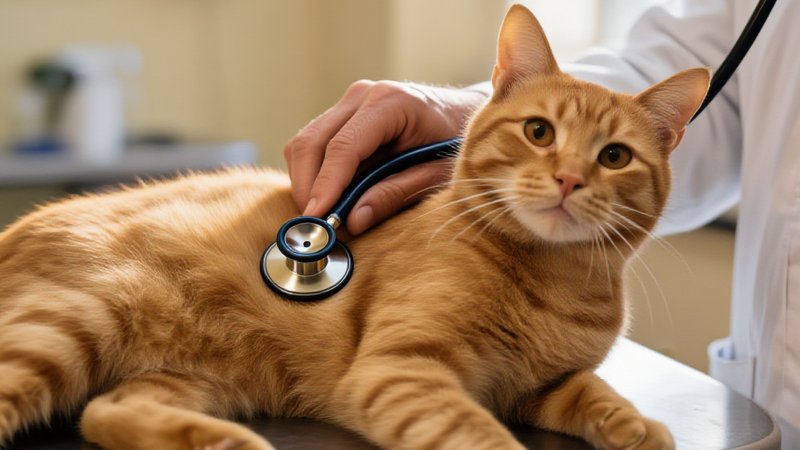
The third layer is the echocardiogram — an ultrasound of the beating heart — which is the test that actually answers the question. Echo shows chamber size, wall thickness, valve function, and blood-flow direction; it distinguishes hypertrophic cardiomyopathy (the most common feline heart disease) from valve defects, shunts, and hyperthyroid- or pressure-driven changes. If the murmur persists on calm rechecks, or bloodwork points at real disease, or the cat is headed for anesthesia (dental work, spay/neuter), an echo is the standard next step, ideally interpreted by or with a veterinary cardiologist. Chest X-rays and an ECG round things out when fluid on the lungs or rhythm problems are suspected.
One practical rule from this ladder: a murmur discovered the week before a planned anesthetic procedure matters more than the same murmur in a lounging seven-year-old with normal bloodwork. Anesthesia forces a workup, because a sedated heart with undiagnosed cardiomyopathy is a genuinely risky heart.
Own a Veterinary Clinic?
Enjoyed this article? Our editorial team researches, writes, and publishes professional features just like this one about clinics across the US. Get your practice in front of thousands of cat owners searching for a vet in your city.
Living With the Answer: Monitoring and What Life Looks Like
The outcome depends on the diagnosis, and the outcomes are more varied than owners fear. An innocent or physiologic murmur means: live normally, recheck at routine visits, done. Hyperthyroid-driven murmurs often quiet down once the thyroid is treated. Structural disease like HCM has no cure, but cats on appropriate cardiac medication can live comfortably for years — with life expectancy hinging far less on the initial grade than on whether fluid in the lungs and clot risk are managed early.
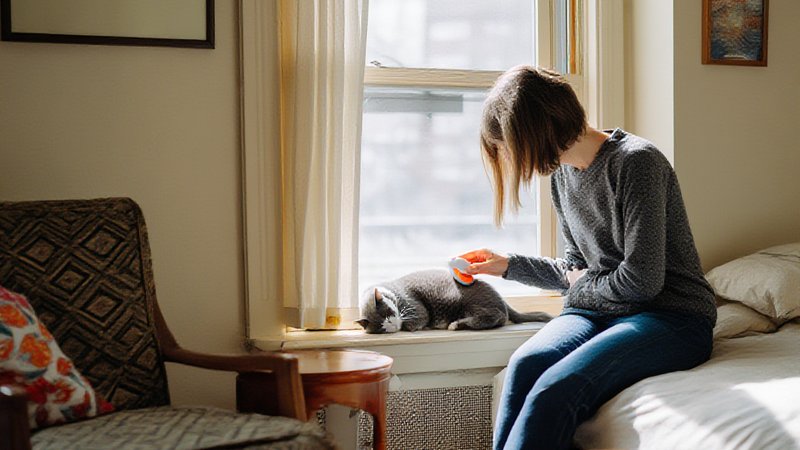
- Learn the sleeping respiratory rate: count breaths over 30 seconds while the cat is deep asleep, twice a week, and keep a simple log. A creep upward is the earliest at-home warning of congestive heart failure.
- Keep every recheck even when the cat seems fine — murmurs in cats change slowly and quietly.
- If heart disease is confirmed, ask specifically about clot prevention; aortic thromboembolism is the most feared complication and there are medications that reduce the risk.
- Maintain a normal weight and a low-salt, balanced diet as directed by the vet — but never restrict a cat's food aggressively without guidance; rapid dieting in overweight cats carries its own dangers.
- Report any new medication, supplement, or diet change to the vet before adding it — some decongestants and herbal products are dangerous for cardiac cats.
What This Looks Like in Practice: Culbreth Carr Watson Animal Clinic
Culbreth Carr Watson Animal Clinic
1223 E 2nd Ave SE, Rome, GA, 30161
Phone: (706) 503-7630
⭐ 4.7 (903 reviews)
A worked example makes the ladder concrete. Culbreth Carr Watson Animal Clinic in Rome, GA, at 1223 E 2nd Ave SE, holds a 4.7-star average across roughly 900 reviews — the profile of a busy general practice, which is precisely where most first-time murmurs are found. This is the setting where layer one and layer two happen: the calm-day recheck, the thyroid panel, the blood pressure cuff, the honest conversation about whether this kitten's murmur is likely to fade or this senior's is likely to need an echo. Their number is (706) 503-7630.
The useful takeaway from a general practice like this one is sequencing and trust in rechecks. If a murmur was noted in a visibly stressed cat at the end of a vaccine visit, the reasonable next step is a scheduled recheck rather than an immediate referral. If the murmur is loud, persistent, paired with a gallop rhythm, or found in a cat with weight loss and a racing heart, the same practice will typically run the bloodwork same-visit and arrange echocardiography rather than watch and wait. Owners who understand that the grade alone decides nothing — the pattern across visits does — tend to spend less and worry less.
Questions Cat Owners Ask About Heart Murmurs
A murmur rarely travels alone in the senior-cat picture — the same checkups that pick up murmurs catch the other quiet diseases. How often senior cats need checkups covers the visit schedule that finds these early, hyperthyroidism in cats explains the hormonal condition behind many adult-onset murmurs, and cat kidney disease early signs takes the same early-detection approach to the other silent senior-cat condition.
This article is editorial content produced by the CatVetFinder team. Clinic details are drawn from public listings and may change — always confirm hours and services with the clinic directly.