Somewhere around a cat's seventh birthday, the schedule that worked for years quietly stops being enough. Most owners keep running the annual-checkup playbook: one visit a year, mostly vaccines, mostly quick. The trouble is that a year is roughly one-seventeenth of a seven-year-old cat's life but a sixth of a sixteen-year-old's — and the diseases that kill senior cats, kidney disease, hyperthyroidism, diabetes, arthritis, and cancer, are all conditions where catching the change months earlier genuinely changes the outcome. A cat in chronic kidney disease stage 2 who is found early has years of intervention ahead; the same cat found in stage 4 has an emergency and a prognosis conversation instead.
The actual answer to "how often" is not one number — it is a short ladder keyed to age and to what the last set of bloodwork said. This guide walks through that ladder: the checkup interval for each age band, what a senior exam should include beyond a vaccine visit, the at-home signs that should pull the schedule forward regardless of the calendar, and what an older cat's first extended work-up looks like in a real practice — with one worked example of how that conversation goes.
The Age Ladder: How Often, by Life Stage
Veterinary medicine treats cat aging as a sprint at the far end. Compared to a person, a cat's physiological clock runs about four times fast for most of middle age and faster still after ten, which is why the AAFP and AAHA guidelines draw the senior line at seven and the geriatric line at eleven. Each band below assumes a cat with a clean bill of health and normal baseline labs — chronic disease moves every interval shorter.
- Adult cats (3–6 years): every 12 months. Baseline weight, dental grade, heart and kidney auscultation, and boosters on the standard schedule.
- Mature cats (7–10 years): every 12 months at minimum, but the annual exam should convert into a senior exam — six-month checks are ideal, and baseline senior bloodwork (CBC, chemistry panel, thyroid) and a urinalysis should be done at least once in this band even if the cat looks perfect.
- Senior/geriatric cats (11–14 years): every 6 months. At this age a disease can go from undetectable to unhideable in nine months, and six months is the interval that catches it while it is still manageable.
- Geriatric cats (15+): every 4–6 months, with blood pressure and body-weight trends checked between visits if the cat tolerates trips well.
Two checkpoints inside those intervals deserve emphasis. First, bloodwork is not optional at the senior line: a chemistry panel plus T4 at seven and again at ten tells the vet which way the cat is trending, and the trend is often more informative than any single result. Second, blood pressure becomes its own test around eleven — hypertension in cats is silent until something breaks (retinas, kidneys), and it is common enough in geriatric cats that skipping it is a real diagnostic gap.
What a Senior Exam Includes That a Vaccine Visit Does Not
Owners are sometimes surprised that a visit for a fourteen-year-old runs longer and costs more than the annual shot visit of an eight-year-old. The extra time buys a genuinely different exam. A proper senior work-up stacks several tests and hands-on findings that the routine visit simply does not cover.
- Full chemistry panel, CBC, and T4 — kidney values (creatinine, SDMA, BUN), blood sugar, electrolytes, red-cell count, and the thyroid number that quietly explains weight loss and appetite change in older cats.
- Urinalysis with urine specific gravity — the earliest warning of kidney trouble generally appears in the urine before the blood, which is the entire argument for doing this test alongside the panel.
- Blood pressure measurement with a cuff — standard from age 11, earlier for cats with kidney or thyroid findings.
- Weight and body-condition scored against prior records, not eyeballed — a slow slide from 11.5 pounds to 10.2 across two years is a normal amount of change to the eye and a loud signal on paper.
- Mouth, eyes, and joints examined deliberately — dental disease, hypertensive eye changes, and arthritis all read as "just getting old" and all three are treatable.
At-Home Signs That Shorten the Schedule
Own a Veterinary Clinic?
Enjoyed this article? Our editorial team researches, writes, and publishes professional features just like this one about clinics across the US. Get your practice in front of thousands of cat owners searching for a vet in your city.
The calendar sets the minimum; a few specific behaviors at home should pull the next visit forward regardless of when it falls. The core four all involve the litter box and the food bowl, because cats telegraph kidney and thyroid trouble there first: drinking more, urinating more, eating more while losing weight, and eating less while losing weight. Each corresponds to a different disease and none of them improve on their own. The second tier is quieter but just as actionable — and it matters because senior cats are hard-wired to mask discomfort.
- Draining the water bowl, polluting the litter box daily — a same-week call, not a wait for the next checkup; this is diabetes or kidney disease until urine tells you otherwise.
- Vomiting more than once a week, or new hairball-free vomiting — information first, cat second: see a thorough differential before assuming age.
- Hesitating before a jump, no longer using the high perch, stiff sitting — arthritis affects most cats over 12 and is treatable, but only if someone looks for it.
- Voice change, night activity, new vocalizing at midnight — the classic hyperthyroid triad alongside weight loss on a good appetite.
- Halitosis you can smell across the room — dental pain and occasionally kidney disease; senior dental decisions carry anesthesia questions worth discussing in person.
What the First Extended Work-Up Looks Like
If it has been several years since the last real work-up, the first senior bloodwork visit is the bigger one: panel, urine, blood pressure, a long dental assessment, and a conversation that maps out the cat's own risk profile going forward. It helps to walk in knowing what the visit is for and what each piece costs, because this is the visit where a vet earns the trust that makes the next ten years of decisions easier.
La Paloma Small Animal Hospital
4238 East US Hwy 377, Granbury, TX, 76049
Phone: (817) 579-7311
⭐ 4.8 (455 reviews)
La Paloma Small Animal Hospital, west of the square along Highway 377, is a good portrait of what this conversation looks like in a mature Texas practice. They run a 4.8-star average across 455 reviews, which at that volume is built on the transaction every senior family cares about: honest sequencing. Owners describe the staff walking through what each test is for and which ones can wait six months rather than accepting everything at once — the difference between a 300-dollar visit that prevents a 3,000-dollar crisis and a 300-dollar visit that delays it. The phone is (817) 579-7311 and the address is 4238 East US Hwy 377, Granbury, TX 76049.
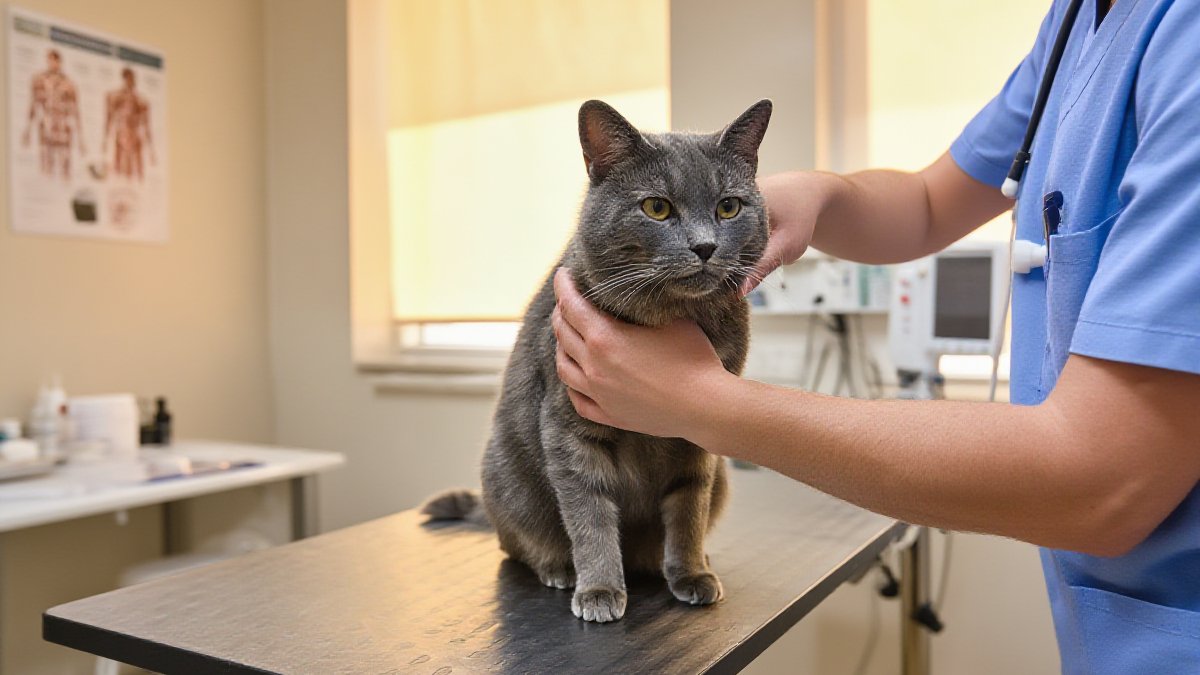
For the work-up itself, the practical flow runs: blood drawn from a front leg while the cat is still comfortable, urine collected either by cystocentesis or a free-catch brought from home, blood pressure measured with a small cuff on a tail or forelimb mid-visit, and results usually back same-day for the in-house panel. The conversation after results matters most when the numbers are borderline rather than obvious — a creatinine creeping up across two panels with normal urine concentration is caught at exactly this kind of visit, and the intervention is dietary plus monitoring, not crisis management.
The best day to find early kidney disease in a cat is six months before the cat shows it. The senior checkup schedule exists to make that day more likely.
Questions Cat Owners Ask About Senior Cat Checkups
Keeping a senior cat healthy is mostly a calendar discipline, and it pairs well with two other pieces on this site: why indoor cats lose weight — the single most useful long-term symptom to track at home — and how long indoor cats live for the full life-stage picture. For straight feeding-science context in old age, what a cat vet visit actually costs helps the senior work-up come without pricing surprises.
This article is editorial content produced by the CatVetFinder team. Clinic details are drawn from public listings and may change — always confirm hours and services with the clinic directly.