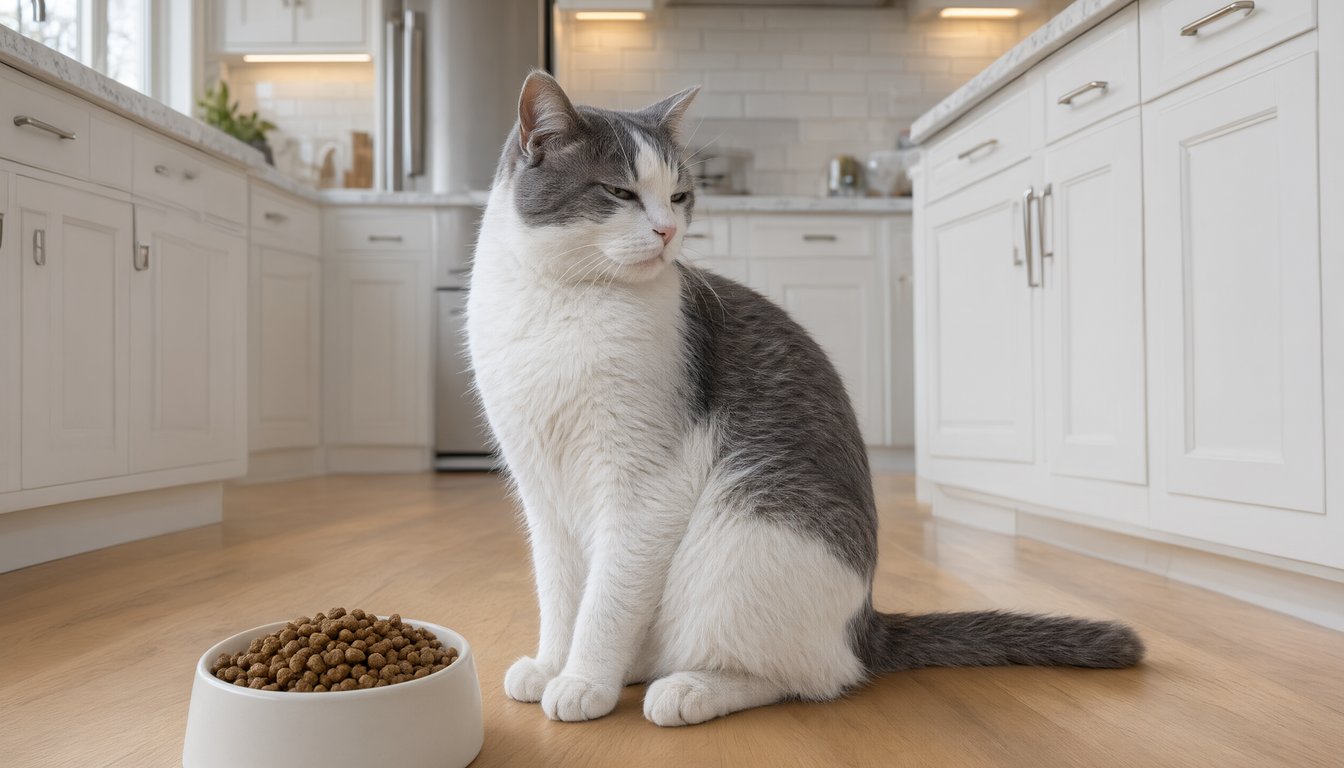
A dog who skips a meal is a footnote. A cat who skips a meal is a data point — and among emergency vets it is treated like one, because cats are the one species where a run-of-the-mill "he's being picky" can tip into organ damage while the owner is still waiting to see if appetite returns on its own. Feline medicine even has a formal word for not eating: anorexia, in the original clinical sense, and it is never a diagnosis in itself. It is a symptom with a clock attached.
This guide is that clock, laid out. What the harmless explanations are and how to test for them, why cats specifically cannot safely coast through a hunger strike (short version: hepatic lipidosis), the symptoms that turn "someday this week" into "today," what actually happens at the vet for an appetite workup, and a worked example of what a well-equipped general practice does with a cat who has stopped eating.
The Short Answer: The 24/48/72-Hour Rule
Vets generally agree on a three-line framework, and it is worth writing on the fridge:
- Under 24 hours of eating less, still drinking, acting normal: usually watch-and-wait. Check the obvious causes below, offer something tempting, and note the time so you know exactly when the clock started.
- A full 24 hours of eating nothing at all — or 48 hours of eating only crumbs: call the vet. Not because the cause is necessarily serious, but because cats have a hard metabolic floor that makes "wait another day" a genuinely bad strategy.
- Kittens, senior cats, diabetic cats, or overweight cats who stop eating: skip the wait entirely. In these groups the danger line arrives in hours, not days, and the same rule applies to any cat showing vomiting, hiding, or lethargy alongside the appetite loss.
Why Cats Are Different: Hepatic Lipidosis, the Clock Behind the Rule
The reason "cats are picky, they'll eat eventually" is folklore worth retiring comes down to metabolism. A cat is an obligate carnivore built to eat small meals frequently — in the wild, a mouse every few hours. Its liver is not designed to run long on stored reserves. When a cat stops eating, the body pulls fat into the liver for fuel, and in cats that fat can accumulate faster than it can be processed, inflating the liver and shutting it down. That condition — hepatic lipidosis — is one of the more common reasons a previously healthy house cat ends up hospitalized, and it frequently starts with nothing more dramatic than a stressful week and a skipped appetite.
The frustrating part is the feedback loop: a cat who feels unwell from early liver stress eats even less, which worsens the problem. This is why the clock matters more in cats than in dogs, and why most feline vets treat 24 hours of total anorexia as a phone call, not an observation period. The good news is that lipidosis is both preventable by early action and, caught in time, often reversible — but catching it in time is precisely the point of the 24/48/72 rule.
The Ordinary Causes Worth Ruling Out First
Most short appetite dips have boring explanations, and an hour of detective work can save everyone the worry:
- The food changed. A new bag (reformulated or simply from a different plant), a new flavor, or kibble that went stale or rancid after sitting open for weeks. If you switched anything recently, switch back and watch.
- The bowl changed, or the location did. Cats are surprisingly rigid about dishes and placement — a new plastic bowl that smells different, a bowl moved next to a noisy appliance, or a dishwasher soap residue can stall a sensitive cat. Wash the usual bowl, put it back in the usual place.
- Stress. Houseguests, a new baby, a move, a new pet, construction noise, or even a neighborhood cat appearing at the window can suppress appetite. Look for another change in the cat's environment in the past week.
- Weather and mild upset. Hot days reduce appetite in many cats, and a mildly queasy day after a grooming session (too much fur swallowed) is common. A cat who vomits once, then acts hungry by evening, usually needs nothing but a watchful night.
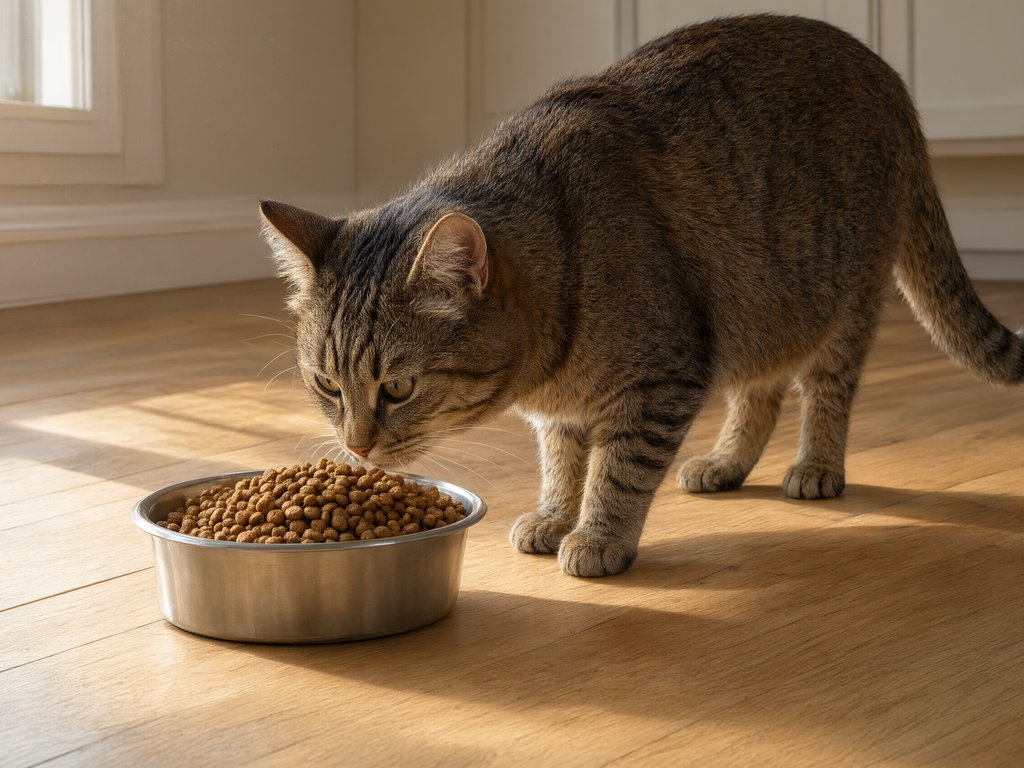
- Dental pain masquerading as pickiness. A cat with a sore tooth wants to eat but hurts when it tries — approaching the bowl, sniffing, backing away, maybe chewing on one side. This cause does not resolve on its own and needs a vet visit, but it is one of the most common "why won't he eat" answers in adult cats.
The honest test for any of these: fix the suspected cause, offer something strongly scented (warmed wet food, tuna in water, a lick of plain cooked chicken), and see whether appetite returns within a few hours. If it does, the mystery is solved. If the cat sniffs everything and walks away — true anorexia, not pickiness — the ordinary-causes list is exhausted and the vet list begins.
The Serious Causes: What Vets Are Ruling Out
When a cat genuinely will not eat, the differential list in a vet's head is long, which is exactly why the workup is systematic rather than guesswork:
| Cause | Clues That Point to It | Urgency |
|---|---|---|
| Kidney disease / kidney failure | Increased drinking and urination, weight loss, bad breath; most common in senior cats | Same-day to next-day vet visit |
| Hyperthyroidism (early stages) | Usually a ravenous cat — but advanced disease can flip to appetite loss; older cats, restlessness, vomiting | Prompt vet visit |
| Pancreatitis / GI disease | Vomiting or diarrhea alongside appetite loss, tucked-up posture, hiding | Same-day vet visit |
| Dental disease or oral pain | Approaches food, chews oddly or drops food, pawing at mouth, drooling | Vet visit within a day or two |
| Urinary blockage (males especially) | Straining in the litter box, crying, no urine, nausea that kills appetite | EMERGENCY — hours matter |
| Infection or fever | Hiding, lethargy, warm ears, no interest even in favorite treats | Same-day vet visit |
| Foreign body / obstruction | Vomiting, no stool, string or toy access in the home | EMERGENCY |
| Nausea from almost anything | Lip-smacking, salivation, hunched posture over the water bowl | Depends on the cause — this is a symptom, not an answer |
Notice the pattern: appetite loss is the shared symptom of nearly every serious feline illness. Cats hide sickness as a survival instinct, and eating is one of the first visible things to go and one of the last to be faked. That is precisely why "he stopped eating" gets taken seriously as a complaint in a feline clinic regardless of how healthy the cat otherwise looks.
What the Vet Visit Actually Looks Like
Own a Veterinary Clinic?
Enjoyed this article? Our editorial team researches, writes, and publishes professional features just like this one about clinics across the US. Get your practice in front of thousands of cat owners searching for a vet in your city.
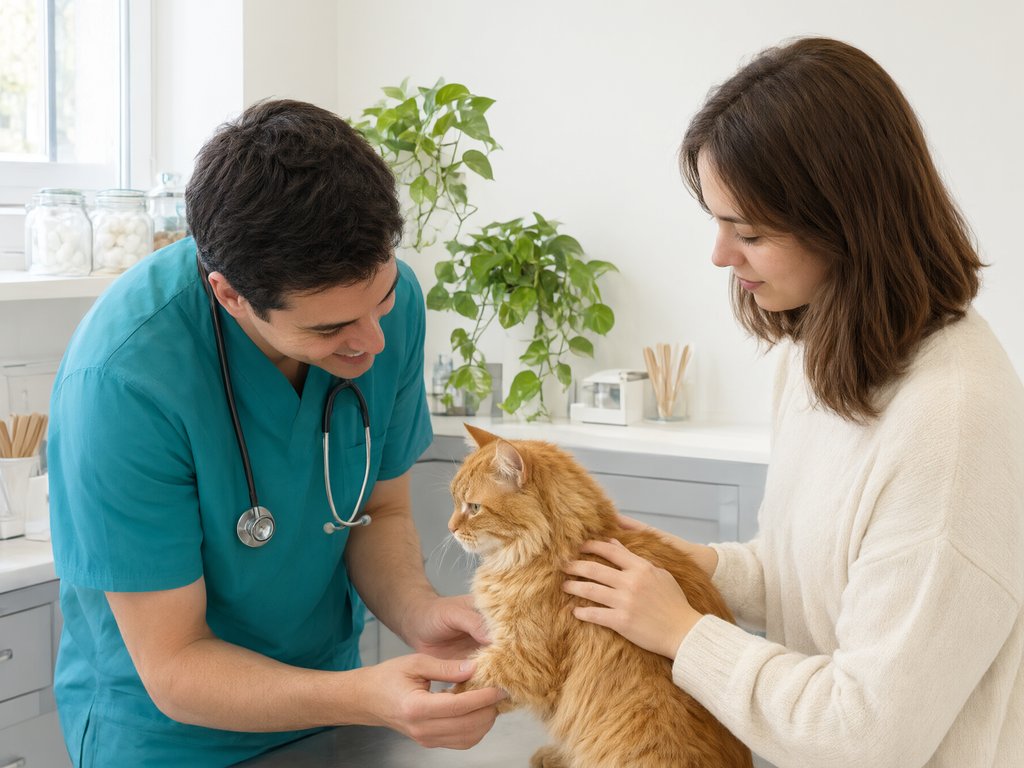
An anorexia workup is one of the more routine things a general practice handles, and it follows a predictable arc. First the history — how long, what changed, is the cat drinking, any vomiting, any access to strings or lilies or human medications. Then a hands-on exam: weight and body condition compared to last visit, mouth and teeth, abdomen palpated, temperature. From there the two most common next steps are bloodwork (a chemistry panel and complete blood count reveal kidney values, liver enzymes, blood sugar, and thyroid in one draw) and a urinalysis, which together catch the majority of causes. Imaging — X-rays or ultrasound — follows if the belly is painful or the labs point somewhere specific.
Bring three things and the visit gets shorter and cheaper: a timeline of when eating last was normal, the exact food (brand and flavor — including anything new, even treats or chews), and a photo or note of any vomiting you've seen. If the cat vomited something unusual, photograph it rather than cleaning it up.
What You Can Safely Try at Home Tonight
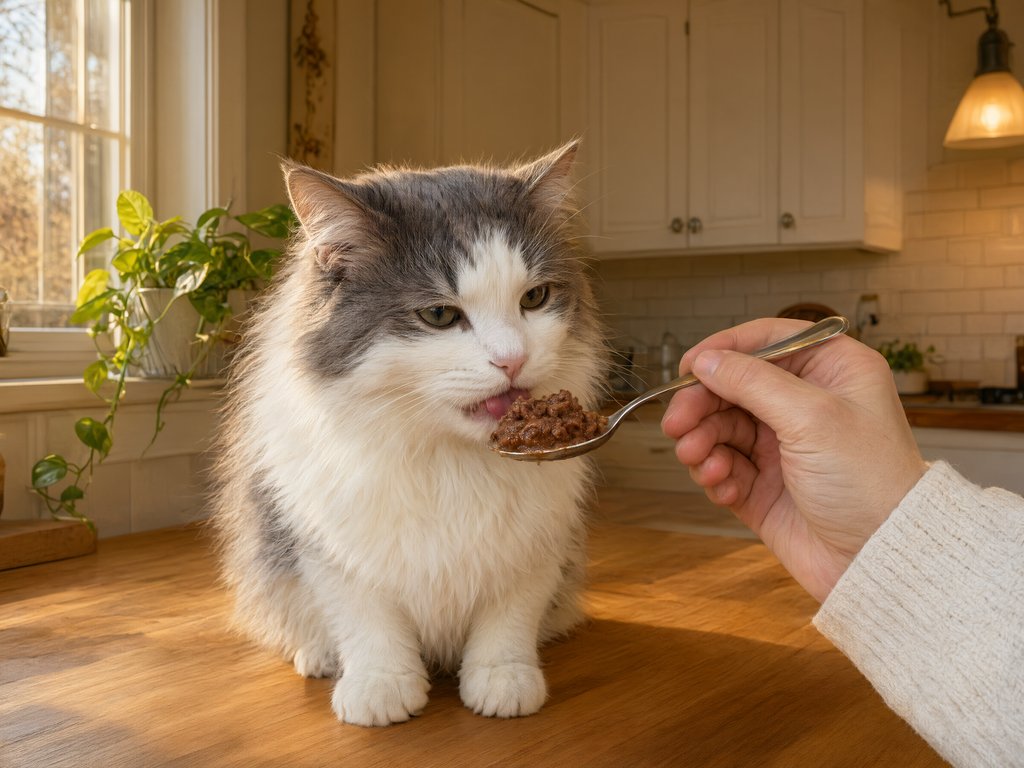
- Warm the food. Ten seconds in the microwave (stirred and tested) pushes the aroma into the air — the single most effective trick for a borderline appetite.
- Offer texture variety: a spoonful of wet food warmed, plain boiled chicken with no seasoning, meat-based baby food with no onion or garlic powder. Check labels carefully — onion and garlic are toxic to cats.
- Make it easy. Low-sided dish so whiskers don't touch the sides, quiet room, fresh water nearby but not beside the food. Some cats refuse to drink near their food for the same sensory reasons.
- Reduce the noise floor. Loud households suppress feline appetite. A quiet room with the cat, the food, and nothing else for twenty minutes often works where hovering does not.
- Weigh the cat if you can. A bathroom scale with the cat in a carrier, minus the carrier weight, gives you a trend line. Weight loss during an appetite slump is exactly the data a vet will ask about.
What This Looks Like in Practice: Coventry Animal Hospital, Pottstown, PA
To make this concrete, here is how an appetite workup runs at a real general practice: Coventry Animal Hospital on New Schuylkill Road in Pottstown, Pennsylvania — a full-service, AAHA-accredited hospital holding a 4.8-star average across more than 770 owner reviews. AAHA accreditation matters specifically in an anorexia case, because accredited hospitals are evaluated on the unglamorous parts of an appetite workup: diagnostic capability, pain management, and the standards that separate a thorough workup from a shrug and a "see if he eats tomorrow."
The practical fit for this scenario is the clinic's service mix: comprehensive physical exams for the hands-on part (mouth, abdomen, hydration), in-house diagnostics to run bloodwork the same day rather than sending it out, dental care for the cats whose "pickiness" turns out to be a painful mouth, and feline surgery for the cases where an obstruction or mass turns up. Hours run 7:30 a.m. to 7:30 p.m. weekdays, Saturday until noon, closed Sunday — so a cat whose appetite fades on a Saturday evening is a case for the nearest emergency hospital, a distinction worth knowing before it is needed. For a Pottstown-area owner, the cat vets in Pottstown, PA directory lists the other practices in town, and the full profile at the Coventry Animal Hospital detail page has hours, directions, and the full service list.
Coventry Animal Hospital
1620 New Schuylkill Rd, Pottstown, PA, 19465
Phone: (610) 323-9454
⭐ 4.8 (772 reviews)
Questions Cat Owners Ask About Cats Not Eating
Appetite loss rarely travels alone. If your cat is also bringing food back up, read cat vomiting: when it's a hairball and when it isn't next; if the stools have changed too, the diarrhea guide covers the digestion side. In cats over ten, appetite loss paired with weight loss despite eating is its own pattern — see the early signs of kidney disease and hyperthyroidism symptoms in cats for the two most common explanations in senior cats.
This article is editorial content produced by the CatVetFinder team. Clinic details are drawn from public listings and may change — always confirm hours and services with the clinic directly.