
New kitten owners almost always arrive at their first vet visit with the same small confusion: they booked "the shots" and were handed a schedule of three to four more visits stretched across four months. It feels like upsell. It is not — it is the only way kitten immunity actually builds, because antibodies the kitten received in its mother's milk slowly fade at different rates in different kittens, and the vaccine series is designed to cover that fade no matter where any given kitten's fall happens to sit.
This guide lays out the real week-by-week timeline: which vaccines matter (there are two "core" ones, not fifteen), why the series has to repeat, what boosters at one year buy you, what shots actually cost at clinics across the US, and what happens at each visit besides the needle. Save it — the schedule is genuinely easy to follow once someone writes it down plainly.
First, the Two Vaccines That Are Not Optional
Own a Veterinary Clinic?
Enjoyed this article? Our editorial team researches, writes, and publishes professional features just like this one about clinics across the US. Get your practice in front of thousands of cat owners searching for a vet in your city.
Kitten medicine, guided by the leading veterinary associations, divides vaccines into core and non-core. The core pair for every kitten in every state:
- FVRCP (the "feline distemper" combination) — panleukopenia, herpesvirus-1, calicivirus. Panleukopenia alone is a brutal, often fatal kicker of a virus that survives in the environment for a year or more; the two respiratory viruses cause the sneezing, eye-ulcer kitten infections every shelter battles. One numeric series protects against all three for life.
- Rabies — required by law for cats in nearly every US state and municipality, regardless of whether the cat ever sets a paw outside. Rabies vaccine timing is usually the 12–16 week slot, with local rules setting the minimum age.
Non-core, given based on lifestyle and risk: FeLV (feline leukemia) for kittens — it is core for kittens under one year in many regions because the disease is devastating and early infection is the dangerous kind — plus FIV and Bordetella in special cases. Your vet will steer this part; you do not need to negotiate it. The two-item core list is the whole reason a kitten visit looks smaller than a puppy visit.
The Week-by-Week Timeline
| Age | Visit | What happens | Typical cost (US) |
|---|---|---|---|
| 6–8 weeks | Visit 1 | First FVRCP; physical exam; fecal test and deworming; FeLV/FIV blood test for at-risk kittens | $30–$70 for the vaccine; $25–$55 for fecal/testing add-ons |
| 9–12 weeks | Visit 2 | Second FVRCP; many clinics add FeLV here; deworming recheck | $30–$70 vaccine; FeLV $25–$45 |
| 13–16 weeks | Visit 3 | Third FVRCP (series end for kittens who started early); rabies vaccine (age rules vary by state) | $30–$70 FVRCP; rabies $15–$40 |
| 1 year | Booster visit | FVRCP booster and rabies booster; annual wellness exam and parasite prevention chat | $60–$120 total |
| Adult | Every 1–3 years | FVRCP every 1–3 years (per which vaccine type), rabies per law (usually annually or triennially); annual exams regardless | $50–$150 per cycle |
Why three or four FVRCP doses instead of one? Because of windowing: whatever FVRCP is given before roughly 16 weeks can be neutralized by lingering maternal antibodies, and no test tells you which dose will be the "clear" one. The series is how immunology handles not knowing. Skipping doses two and three because the kitten "already got a shot" is the single most common way unvaccinated adults end up with panleukopenia — the vaccine did not fail, the series was never finished.
What Else Happens at Each Kitten Visit
The vaccine is the skeleton of the appointment; the muscle around it is what shapes the cat's health curve:
- Fecal test and deworming at the first visit or two — roundworms are near-universal in kittens, and one negative test does not clear every parasite stage.
- FeLV/FIV testing for any kitten whose mother's status is unknown, which is most shelter and rescue kittens.
- The spay/neuter conversation — most clinics recommend around 5–6 months for most kittens, with timing adjusted for breed and lifestyle; our spay and neuter recovery guide walks through what that surgery actually involves.
- Microchipping, ideally at the spay/neuter surgery visit or any visit with the kitten already relaxed — see our guide to cat microchip costs.
- A full physical each visit: weight tracking, teeth eruption check, heart and lung listen, umbilical and palate checks — the "boring" components that catch congenital problems early.
Cost, end to end: a common question, and the honest range. A complete kitten series with testing and deworming routinely lands between $150 and $350 across US general-practice clinics, sliding higher in big coastal metros and lower at nonprofit vaccine clinics and shelter-affiliated programs. Many regions have low-cost monthly shot clinics where FVRCP drops to $20–$30. If the price difference is deciding whether the series happens at all, that is a good use of a low-cost vaccine clinic — the series itself is non-negotiable.
What This Looks Like in Practice: Victoria Veterinary Clinic, Victoria (TX)
The schedule above is national; here is how it runs at a real small-town practice in the Texas Crossroads region: Victoria Veterinary Clinic on Houston Highway. A 4.9-star rating from a South Texas general practice is a strong signal — reviewers consistently describe un-rushed kitten appointments and fair pricing — and the service list covers the whole pediatric sequence under one roof: same-day wellness and vaccine appointments, kitten deworming and fecal testing, FeLV testing and vaccination, microchipping, spay and neuter scheduling, plus surgical and dental services for later years. For a first-time kitten owner in a town this size, being able to do visits 1 through 3, the surgery, and the microchip in one familiar clinic (rather than threading appointments across the county) is a genuinely practical advantage.
Victoria Veterinary Clinic
3902 Houston Hwy, Victoria, TX, 77901
Phone: (361) 703-5644
⭐ 4.9 (54 reviews)
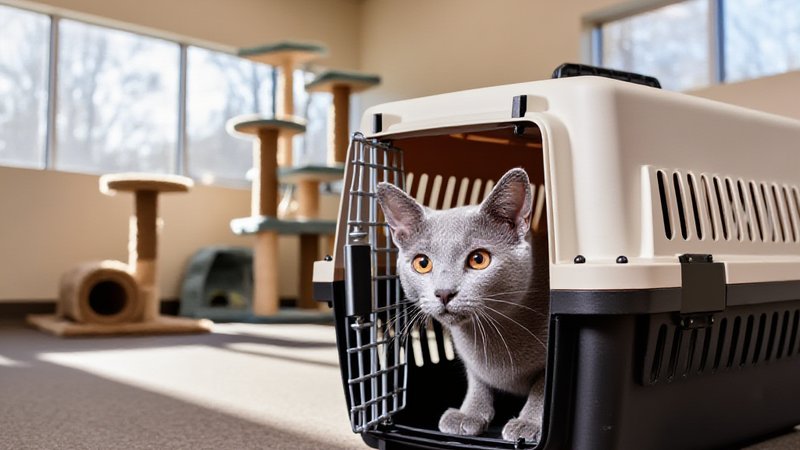
The other practical note from a clinic of this type: kitten series in smaller-town practices tend to be budget-friendlier than metro pricing — the entire series minus specialty testing often lands at the lower end of the national range above — and the visits are usually with one small, familiar team. That last detail matters more for cat behavior than any handling technique: a kitten who sees the same faces every visit stops treating the carrier like a court date.
Common Kitten-Schedule Questions (and Honest Answers)
The slogan version of everything above: four short visits in the first four months buy a decade or two of protection. What comes after the series is the same preventive-curve maintenance the adults need — see our cat vaccine and from-the-start care overview for the adult schedule, and what a first vet visit for a young cat looks like for setting up a low-stress relationship with the clinic itself.
More Kitten & Vaccination Guides
This article is editorial content produced by the CatVetFinder team. Clinic details are drawn from public listings and may change — always confirm hours and services with the clinic directly.