The adoption counselor hands over the carrier, sends you home with a small bag of the shelter's food, and says the thing everyone says: "give him time to settle in." Then the door closes and you are alone with a twelve-week-old stranger hiding behind your water heater, and it turns out nobody actually Hands you the manual. Every new cat owner improvises — and almost everyone improvises the same three or four avoidable mistakes in the same first week.
This checklist is that manual, arranged the way the month actually unfolds: what to set up before the cat comes home, what the first vet visit is for and when it should happen, which behaviors in week one are normal and which are not, and the paperwork decisions — insurance timing especially — that only work if you make them early. It is deliberately practical: each item is a thing you do, not a thing you feel.
Before Day One: Set Up One Room, Not the Whole House
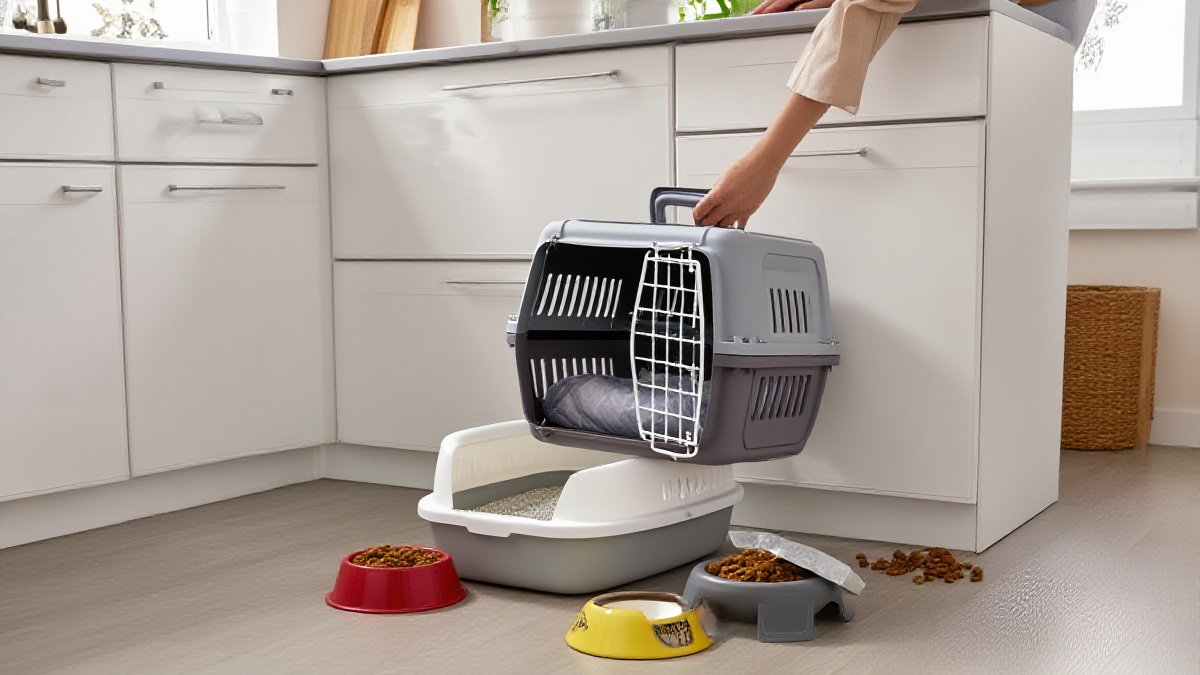
The single most common mistake is giving a new cat the entire home immediately. A whole house is not a gift to a frightened animal — it is an unpatrollable territory full of hiding spots you cannot reach. Set up one small room (a spare bedroom or bathroom works) with everything on this list, and let the cat graduate to the rest of the house once it is eating, using the box reliably, and exploring on its own:
- One litter box per the golden rule — one per cat plus one spare — placed away from the food. A low-sided box is genuinely easier for a kitten or a nervous adult to enter.
- Food and water in a quiet corner, using the same food the shelter or breeder used. Switch foods gradually over a week or two if you plan to change; instant diet swaps cause GI chaos and muddy the already-murky waters of "is he just stressed or actually sick."
- A carrier left out permanently as furniture, not a closet appliance. This one decision quietly fixes every future vet visit — more on that in our guide to low-stress vet visits.
- One vertical option (a cat tree or cleared bookshelf) and one horizontal hiding option (a covered bed or a box on its side). Cats need both: vantage and refuge.
- A scrub of not-obvious hazards: open toilet lids, dangling blind cords, lilies in any bouquet (fatal to cats even in pollen form), and loose string or hair ties that get swallowed.
Days 1–7: The Quiet Week
The first week has exactly one job: let the cat decide to trust the room. That means short visits, no forced handling, no parade of visitors wanting to meet the new family member, and food offered on a schedule so appetite becomes a signal you can actually read. A cat that hides for three days is not a failed adoption — a cat that is not eating, hiding past day four, or has not used the litter box by day two deserves a call to a vet, because that is the stress pattern where illness (or an unaddressed infection like a shelter URI) lives.
The First Vet Visit: Book It for the First Week, Not Month Two
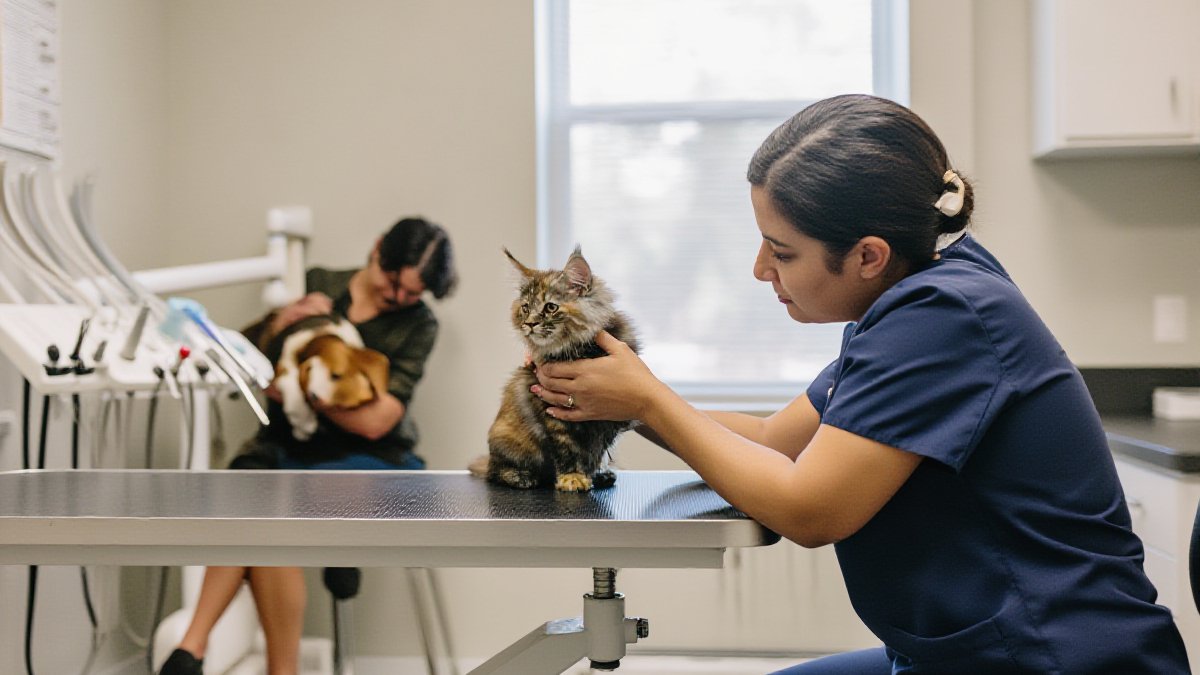
Even for a healthy-seeming adult from a shelter, the first vet visit belongs inside the first week, and there are four concrete reasons totaling almost no cost:
Own a Veterinary Clinic?
Enjoyed this article? Our editorial team researches, writes, and publishes professional features just like this one about clinics across the US. Get your practice in front of thousands of cat owners searching for a vet in your city.
- A baseline exam establishes what "normal for this cat" looks like — weight, dental grade, heart sounds. Every future "is he losing weight" panic gets settled against this baseline instead of guesswork.
- Shelter records are often incomplete or vague ("vaccinated" without dates). Your vet can read the record and decide what is genuinely due now versus what can wait to the yearly cycle.
- A fecal test is cheap insurance. Shelter cats and kittens carry intestinal parasites at high rates; some (roundworms) are transmissible to humans, which turns "just deworm the kitten" into a household-health issue.
- Microchip registration gets checked and fixed. Consider it part of the adoption paperwork, not the socialization work — our microchipping guide walks through what to verify.
Timing matters beyond convenience. If the cat came from a shelter or a cattery situation, upper respiratory infections incubate for days — a cat that sneezed once at the shelter on day two is far easier to treat confirmed-and-in-hand than diagnosed by telephone from a waiting room on day ten. And if there are already cats at home, the first visit doubles as your quarantine checkpoint: you want the newcomer examined and cleared before sharing airspace, let alone water bowls.
Weeks 2–4: Building the Routine (and the Relationship)
- Lock in a feeding schedule and measure the food. Free-feeding a new cat from the first week is how a "slightly round" cat becomes a diabetic ten-year-old — and the weight you prevent in year one is the cheapest medicine you will never have to buy.
- Play daily, deliberately. Ten minutes of wand-toy play twice a day does more for bonding and for nighttime "zoomies" management than anything purchasable.
- Handle paws, ears, and mouth casually and briefly, several times a week, with treats. This small habit is what makes future nail trims, pillings, and dental exams cooperative instead of apocalyptic.
- Begin positive carrier association if you skipped the furniture trick: feed near it, then in it, then close the door for a meal, then a short drive to nowhere with a treat at the end.
- If there is a resident cat: swap scents (a sock rubbed on one and placed near the other), feed on opposite sides of a closed door, and only then graduate to short visual contact. Rushing the visual step is the mistake that produces the six-month feud.
The Paperwork Window: Insurance, Vaccines, and the Calendar
One decision is genuinely time-sensitive: pet insurance. Every condition a vet documents in the first weeks — the sneeze, the ear residue, the soft stool — becomes a pre-existing condition excluded from a policy bought later. Owners who enroll a healthy young cat within the first weeks of adoption get a policy that covers the expensive decade; owners who wait "until something comes up" get a policy that covers everything except the thing that comes up. Our guide on whether pet insurance is worth it for cats runs the math honestly, and the short version is that the timing matters as much as the decision.
Vaccination, meanwhile, needs the calendar mapped rather than guessed. A kitten follows the booster series (our kitten vaccination timeline guide lays out week by week); an adult on unknown status usually restarts the core series and is boosted per law. Either way, your first visit should end with actual dates booked — the single most effective trick for keeping a new cat on schedule is simply having the next appointment physically on the calendar before you leave the parking lot.
What This Looks Like in Practice: Timberline Animal Hospital, Fort Collins
Concrete advice lands better attached to a real clinic, so here is what a strong new-cat first visit looks like at a well-reviewed Colorado practice: Timberline Animal Hospital on South Timberline Road, holding a 4.9-star average across more than 460 reviews. But a first-visit checklist is easier to run with a practice that actually covers the pieces in one place: Timberline offers comprehensive physical exams, vaccine programs, flea and tick prevention, and behavioral counseling under one roof — which matters for a new-cat owner, because week-one questions ("is this scratching normal," "why is she refusing the box") rarely respect the boundary between a medical visit and a behavior question. The clinic describes itself as a full-service hospital covering dogs, cats, and small mammals, with sick-pet visits alongside routine wellness — so the cat that seems "a little off" in week one can transition from a welcome visit to a workup without changing clinics mid-answer.
Timberline Animal Hospital
2614 S Timberline Rd # 111, Fort Collins, CO, 80525
Phone: (970) 377-1900
⭐ 4.9 (463 reviews)

Where New Owners Actually Go Wrong
- Waiting on the vet visit because the cat "seems healthy." The visit is not for sickness — it is for the baseline, the record-reading, and the parasites nobody can see.
- Introducing new cats face-to-face on day two. Six weeks of slow introduction beats six months of repairing a feud; do the scent-swap-first version and trust the boredom.
- Free-feeding from the start. Measured meals make appetite a readable signal, keep weight sane, and make twice-daily medication (should it ever come) trivial.
- Skipping insurance during the healthy window. Pre-existing conditions exclude everything documented before the policy starts — the first vet visit is the moment that clock starts, not the first crisis.
- Punishing litter box accidents. The fix is nearly always mechanical — another box, better location, finer litter — and punishing the cat teaches only that the box location is now also terrifying.
- Decluttering the "boring" sessions: a cat that has never had daily play for the first month develops the midnight_sprint furniture-attack pattern that owners then spend years apologizing for.
Thirty days in, the pattern you are aiming for is boring in the best way: the cat eats on schedule, uses the box without drama, has a vet it has already met once for a non-urgent reason, and has a calendar with the next visit already written on it. Every expensive, heartbreaking feline problem that shows up at emergency clinics has a cheap, ordinary version of itself at week two, and the entire skill of being a good new cat owner is mostly just showing up to the week-two version of it.
Questions New Cat Owners Ask
New-owner season never really ends — someone you know is always about to adopt. When they do, the reading that helps most is what a first vet visit actually covers and the week-by-week kitten vaccination timeline, plus our guide to getting a cat into the carrier without a battle, because every good visit starts with a cooperative ride.
This article is editorial content produced by the CatVetFinder team. Clinic details are drawn from public listings and may change — always confirm hours and services with the clinic directly.