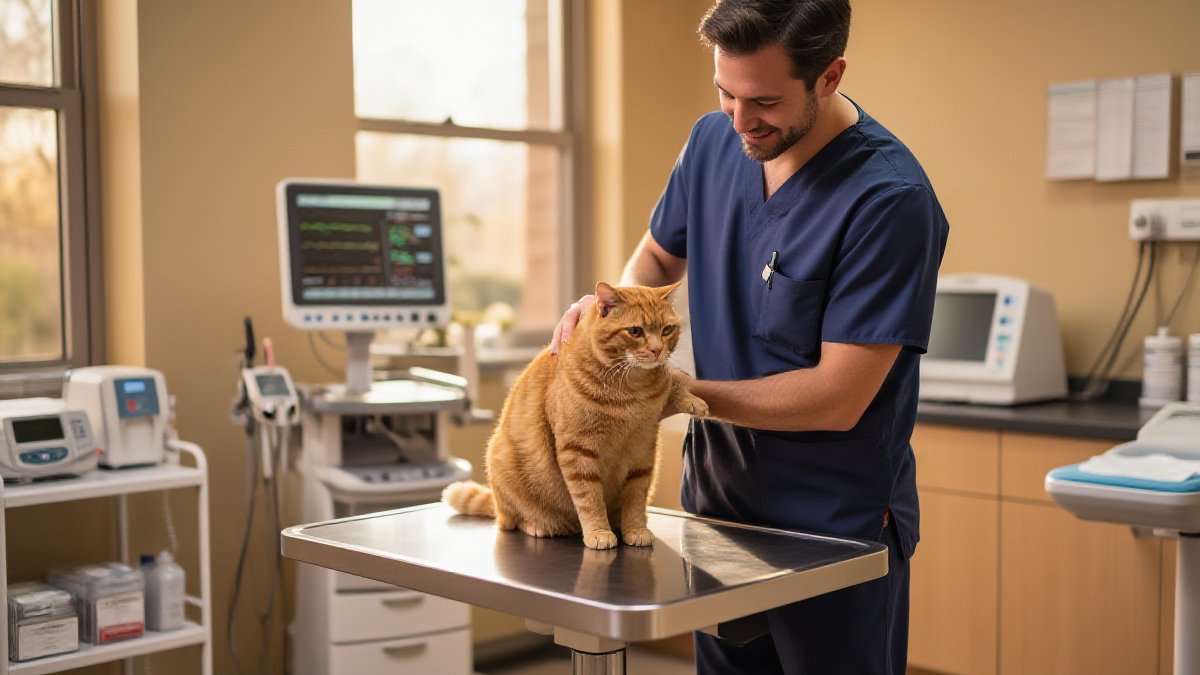
There is a fourteen-year-old tabby who stopped climbing onto the dresser sometime last spring, and a big orange fellow who quietly retired from the kitchen step stool the same season. In both houses, nobody said the word arthritis out loud, because nobody knew there was anything to say it about. Old cats sleep more. Old cats pick easier spots. That is just aging.
Except it very often is not. Radiographic studies of apparently healthy senior cats keep finding the same thing: degenerative joint changes in the large majority of cats over twelve. Most of those cats were never brought in for lameness, because they were never lame. They simply renegotiated their lives around joints that hurt — so smoothly that the change reads as personality, not injury.
Cats Do Not Limp. That Is the Whole Problem.
Dogs announce arthritis. They limp on the way to the car, they struggle on the stairs, they make it impossible not to notice. Cats are built differently, in temperament as much as in joints: they distribute weight, they take the long flat route, they opt out of the jump rather than miss it. Emergency and general-practice vets alike will tell you they can count on one hand the number of cats presented for limping. The arthritis is found underneath something else — a dull coat, a weight complaint, a routine senior exam — the way you find damp under fresh paint.
The Signs That Get Written Off as "Just Aging"
- A pause at the base of the bed or couch before jumping up — the little windup that was never there before
- Abandoning a favorite high perch for the floor or the arm of the recliner
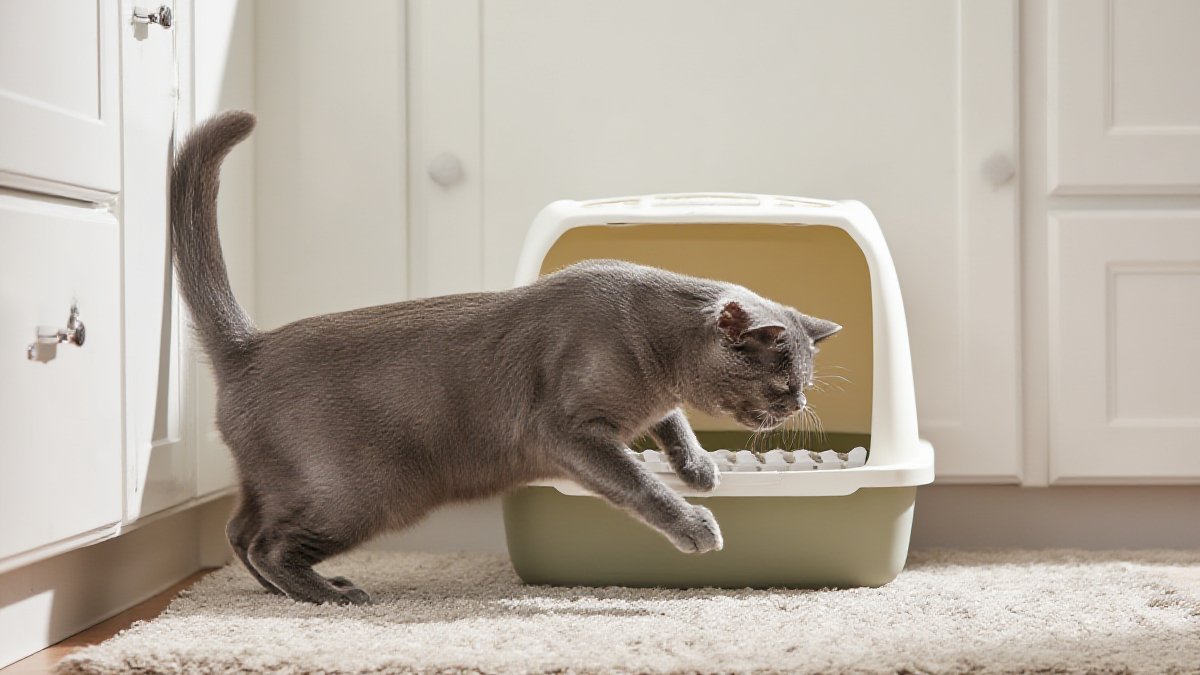
- Skipping over the litter box rim occasionally, or new accidents near the box because the sides feel too tall
- Greasy or matted fur along the lower back and haunches, from bending less while grooming
- Irritability when petted over the hips or the base of the tail
- Sleeping in one position all night and moving stiffly for the first minute after standing
- Shorter play sessions that end in a slow walk-away rather than a sprint
Not one of these is "limping," and every one of them is arthritis until an exam proves otherwise. What a veterinarian asks instead: Is the litter box still being entered the old way? Has the sleeping spot migrated from the cat tree to the couch? Does the cat still chase the morning sunbeam across the room, or has the sunbeam come to the cat? Has grooming slowed along the lower back, where the spine has grown a ridge and the hind legs have lost flexibility?
Own a Veterinary Clinic?
Enjoyed this article? Our editorial team researches, writes, and publishes professional features just like this one about clinics across the US. Get your practice in front of thousands of cat owners searching for a vet in your city.
The Order Things Fall Apart
The behavior changes arrive in a rough but recognizable order, and the order is useful because it gives you a staging map. First the vertical claims are surrendered — the counter, the tall cat tree’s top perch, the refrigerator. Then the landings change: a thump where there used to be silence. Then the coat over the hips dulls or mats from under-grooming, because bending there hurts. Finally the litter box, because high sides and basement stairs are the last straw. An older cat sleeping on the floor instead of the bed has not become cozy — it has made a decision about the jump.
How a Vet Confirms What the Cat Won’t Say
There is no blood test for arthritis, and the workup is refreshingly low-tech:
- The movement exam. Walking, rising, joint flexion, spine palpation. An arthritic cat often reveals itself before any joint is touched — the stiffness settling into position, the reluctance to fully flex the hips, the muscles over the spine that have thinned while the belly has not.
- Baseline labwork. Kidney and liver values decide which pain medications are safe, so this is not an upsell — it is the license for everything that follows.
- X-rays when needed. They confirm which joints are involved and rule out lookalikes like fractures and bone cancer, rather than to prove arthritis exists.
- A pain score and an owner questionnaire. The questions feel oddly specific on purpose — counter jumps, lower-back grooming, litter-box hesitation. Answer them literally, not optimistically.
One more diagnostic tool surprises owners: a trial of pain relief can be diagnostic too. A cat who was "just old" and becomes demonstrably more playful, grooming, jumping, rejoining the family in a week or two — that cat was in pain, and the improvement is the proof.
What Treatment Actually Looks Like
Nobody cures arthritis in a cat; you manage it, and managed well, most cats act years younger. The cats who do best get a layered plan, cheapest layer first, and the layers are not optional extras:
- Weight first, unglamorous but decisive: a cat carrying two extra pounds feels it in every stride, and no supplement outruns gravity.
- Environmental engineering: low-entry litter boxes, ramps to the favorite window, memory foam where the cat actually sleeps, a step stool of honor returned to the kitchen. No prescription required, and often the fastest visible win.
- Real pain medication — a Solensia injection monthly, gabapentin, or an NSAID when kidneys allow. Never, under any circumstances, a human painkiller from the home medicine cabinet.
- Joint support with actual evidence behind it — omega-3s, glucosamine products, the occasional therapeutic diet. Modest, real, safe alongside everything else.
- A senior exam twice a year, because bloodwork trends and blood pressure change the plan long before anything shows at home.
What It Actually Costs
Costs vary by clinic, region, and how complicated the cat is, but the shape of the budget is consistent. These are honest planning ranges, not quotes — and they assume a cat with no complicating conditions:
| Item | Typical US Range | How Often | What It Buys |
|---|---|---|---|
| Senior wellness exam | $50 – $120 | Every 6 months | Hands-on joint and pain assessment; the foundation everything else adjusts to |
| Senior bloodwork panel | $100 – $300 | Every 6 – 12 months | Kidney/liver/thyroid values that determine which medications are safe |
| X-rays (2–4 views) | $150 – $350 | Once, occasionally repeated | Confirms which joints, rules out lookalikes |
| Environment setup | $30 – $120 | One-time | Step stools, ramps, a low-sided litter box, memory-foam beds |
| Joint supplements (omega-3s, glucosamine) | $15 – $40/mo | Ongoing | Modest symptom support; the entry-level tier |
| Solensia (frunevetmab) injection | $45 – $120/mo | Monthly | A once-monthly injection many cats respond to well |
| Oral pain medication (gabapentin etc.) | $15 – $60/mo | Ongoing | Long-term comfort when monitored by exam + labwork |
Two rows in that table do most of the quiet work. The environment line is the cheapest and most underused tier — a $40 step stool can restore a cat’s access to a favorite perch and meaningfully change its day, and no prescription is needed to start there. And the bloodwork is not a formality — it is what makes the pain medication safe, because an NSAID that helps a healthy fourteen-year-old can injure a fourteen-year-old whose kidneys are quietly running at sixty percent.
Two Clinics Set Up for Sore, Stressed Cats
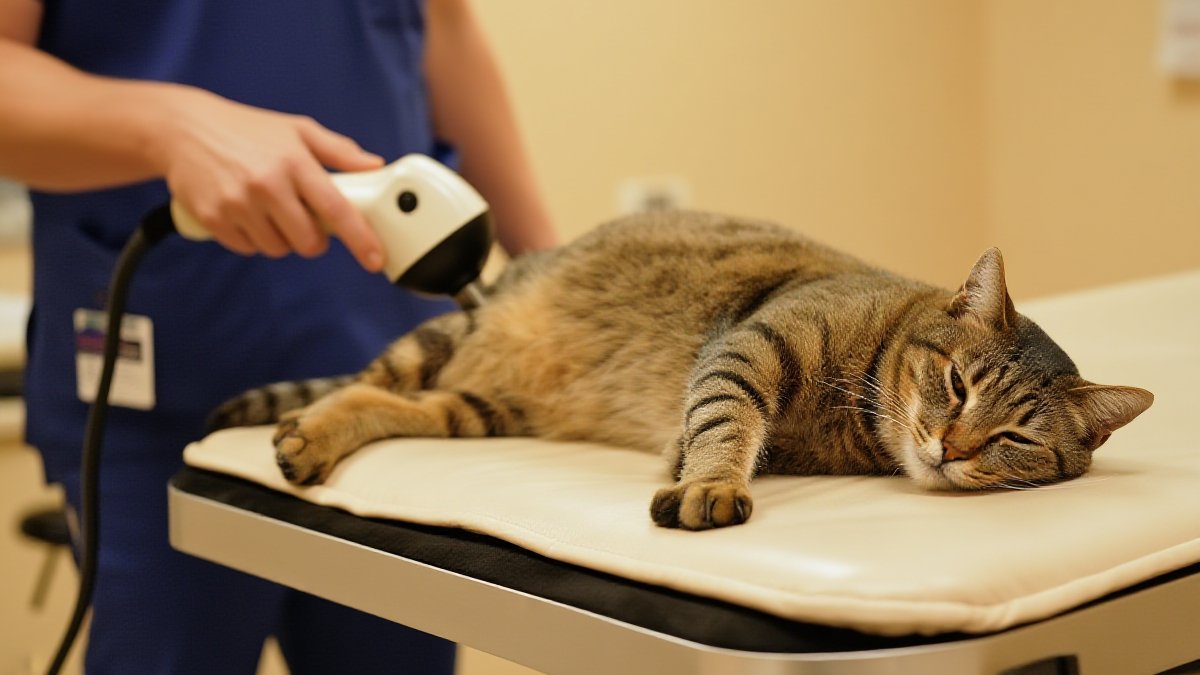
National advice lands differently with a face attached, so here is what the layered plan looks like in practice. One example: Green Dog Dental and Veterinary Center on Ventura Boulevard in Sherman Oaks — a hybrid outpatient center where general practice, same-day urgent visits, and board-certified specialists share one roof. For arthritic cats specifically, the pieces that matter are all in-house: digital X-rays and ultrasound, same-visit bloodwork, and a rehabilitation menu — cold laser therapy, acupuncture, physical therapy — that many neighborhood practices refer out for. The team is Fear-Free Certified, which for a painful senior cat is not a nicety; a cat braced for fight has muscles you cannot examine.
Green Dog Dental and Veterinary Center
13907 Ventura Blvd # 101, Sherman Oaks, CA, 91423
Phone: (310) 606-2407
⭐ 4.7 (276 reviews)
A second example, on the other side of the country: Animal Hospital of Largo in Florida, whose senior wellness program runs exactly this way — age-specific screening panels, blood pressure monitoring, weight and nutrition counseling, and pain management as its own service rather than an afterthought. For cats whose arthritis rides alongside other senior conditions, they keep ultrasound, digital X-rays, and an in-house lab under the same roof, which matters more than it sounds: a twelve-year-old cat should not be making three trips across town for three answers.
Green Dog Dental and Veterinary Center
13907 Ventura Blvd # 101, Sherman Oaks, CA, 91423
Phone: (310) 606-2407
⭐ 4.7 (276 reviews)
Where the Money Should Not Go
- Human painkillers, ever. A single acetaminophen tablet can kill a cat — not exaggeration, pharmacology. Cats cannot metabolize it, and the same goes for most of what sits in a home medicine cabinet.
- Premium joint supplements with no studies behind them. Glucosamine products and omega-3s have real, modest evidence; the $70 boutique "joint chews" usually have a marketing budget instead.
- Skipping the recheck to save the exam fee. A cat that stays on gabapentin for a year without a recheck is either under-treated or over-treated, and you will not know which until something tips.
- The emergency room as a pain clinic. ERs are magnificent at what they do, and their prices reflect it. Chronic stiffness belongs in a regular clinic that knows the cat.
- Waiting for a "better month." Arthritis only moves one direction, and every month of untreated pain is a month the cat spends practicing not jumping.
The tabby from the beginning of this article went home with a joint medication, a set of foam steps, and — his family swears — an attitude he had not worn since kittenhood. The orange fellow got his step stool back and, after labwork cleared him, a monthly injection. Neither cat got younger. They got comfortable again, and the difference between those two things is most of what matters.
Questions Owners Ask About Senior Cat Arthritis
If three or four of the signs above sound familiar, an exam is worth the drive — and if your cat has also gone quiet at the food bowl, read why a cat not eating is a same-day problem next, because appetite changes and joint pain travel together more often than owners expect.
This article is editorial content produced by the CatVetFinder team. Clinic details are drawn from public listings and may change — always confirm hours and services with the clinic directly.