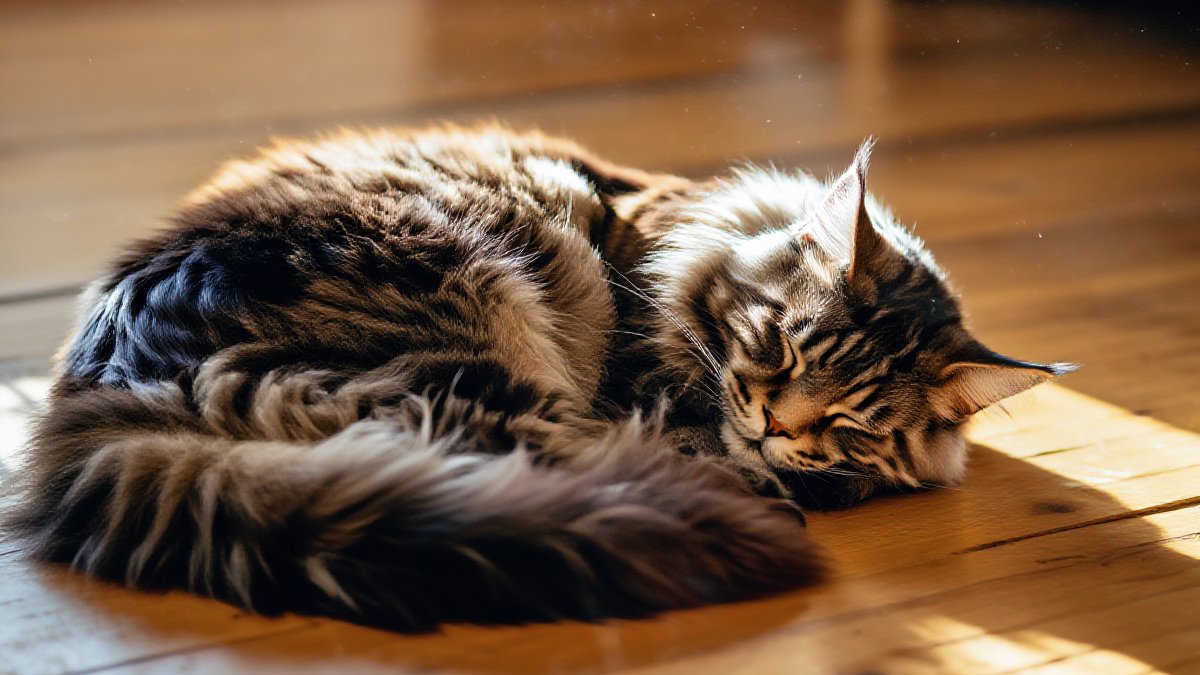
Somewhere in the middle of the afternoon, most cat owners have looked at a sleeping cat and asked the question out loud: do you ever wake up? The numbers back the impression up. Adult cats sleep 13 to 16 hours in a 24-hour cycle, some pushing toward 20, and a large share of what looks like sleep is something subtler — drowsing with one ear still on duty, ready to surface at the sound of a can opener.
So the headline answer is: your cat is supposed to sleep this much. It is inherited design, not laziness. Cats are crepuscular hunters built to burn energy in short, explosive dawn-and-dusk hunts and to conserve it the rest of the time; the domestic cat runs that ancient program on a food bowl instead of live prey. But the flip side matters just as much, because "sleeping a lot" is also how cats hide illness. The real skill is telling designed sleep from disease-related withdrawal — and that is what the rest of this guide teaches.
How Many Hours Is Normal, by Age?
| Life stage | Typical sleep in 24h | What is normal for them |
|---|---|---|
| Newborn kitten | ~20 hours | Sleep between every feeding; growth happens in sleep |
| Kitten (2–6 months) | 18–20 hours | Big sleep blocks plus wild, frequent play bursts |
| Adult (1–7 years) | 13–16 hours | Long drowse cycles, alert at dawn and dusk |
| Senior (10+ years) | 16–20 hours | More sleep, less intense activity, same responsiveness to food and people |
Use the table as a baseline, not a diagnosis. What varies more meaningfully than hours is pattern: a healthy cat's sleep has rhythm. There are wake windows with real engagement — play, following you, patrolling — and there are predictable sleep blocks. Disease flattens rhythm before it changes total hours.
The Signs That Separate Deep Sleep from Illness
A sleeping cat and a lethargic cat can look identical from across the room. The difference shows in how they come back online:
- Response to food. A healthy cat who is 80% asleep will still register the sound of the fridge or the treat bag within seconds. A genuinely lethargic cat does not bother.
- Response to you. Healthy sleep ends with a stretch, a blink, maybe an approach. Lethargy looks like sleeping through your arrival, not getting up to greet, staying put when normally the cat would relocate.
- Posture and hiding. Sick cats pick hiding spots — under beds, in closets, in the back of a closet shelf — while healthy sleepers stay in the open, often near the household's action.
- Grooming. Cats who stop keeping their coat up are telling you something is off; a matted or greasy coat in a formerly fastidious cat is a flag, not a cosmetic issue.
- Appetite and thirst changes layered on top of the sleep increase. Sleep alone: fine. Sleep plus eating less, drinking differently, or missing meals: that is a visit.
Own a Veterinary Clinic?
Enjoyed this article? Our editorial team researches, writes, and publishes professional features just like this one about clinics across the US. Get your practice in front of thousands of cat owners searching for a vet in your city.
What Hides Behind "More Sleep Than Usual" in Middle-Aged and Senior Cats
The conditions that present first as gradual sleepiness are exactly the ones worth catching early. Pain is the biggest category: arthritis makes a cat stop initiating activity long before it limps, and feline arthritis is famously underdiagnosed for precisely that reason. Kidney disease, overactive thyroid, and diabetes each pull energy down while often boosting other drives — more thirst, changed appetite, nighttime restlessness — so the picture is "sleeps more and something else has changed," never sleep alone. Heart disease can show up as reduced play tolerance. Depression from household change (a move, a loss, a new pet) can genuinely flatten a cat too, but it is a diagnosis that comes after the medical workup, not before it. If your cat is past seven and the sleep number has crept up over months, an exam with bloodwork is the difference between catching kidney disease when it is manageable and finding it when it is advanced.
What This Looks Like in Practice: Paradise Animal Hospital, Catonsville, MD
A full-service practice earns its keep on questions like this one, because "my cat sleeps too much" needs an exam plus labs, not a behavior lecture. Paradise Animal Hospital on Frederick Road in Catonsville, Maryland holds a 4.6-star rating across 783 owner reviews — a volume of feedback that says a lot about how a busy multi-doctor hospital handles everyday wellness questions and senior screening alike. For the sleep-lethargy question specifically, what matters is the same-day bloodwork path: thyroid, kidney, and glucose values from one draw answer most of it. The hospital serves the Catonsville and Baltimore County area and takes appointments by phone.
Paradise Animal Hospital
6350 Frederick Rd, Catonsville, MD, 21228
Phone: (410) 744-4224
⭐ 4.6 (783 reviews)
Questions Cat Owners Ask About Cat Sleep
If the sleep change is coming with other signs, these guides go deeper: senior cat vet checkups: how often and why covers the screening schedule that catches the quiet conditions, signs of kidney disease in cats is the most common senior sleeper-imposter, and indoor cat weight loss addresses the low-energy cycle that excess weight creates.
This article is editorial content produced by the CatVetFinder team. Clinic details are drawn from public listings and may change — always confirm hours and services with the clinic directly.