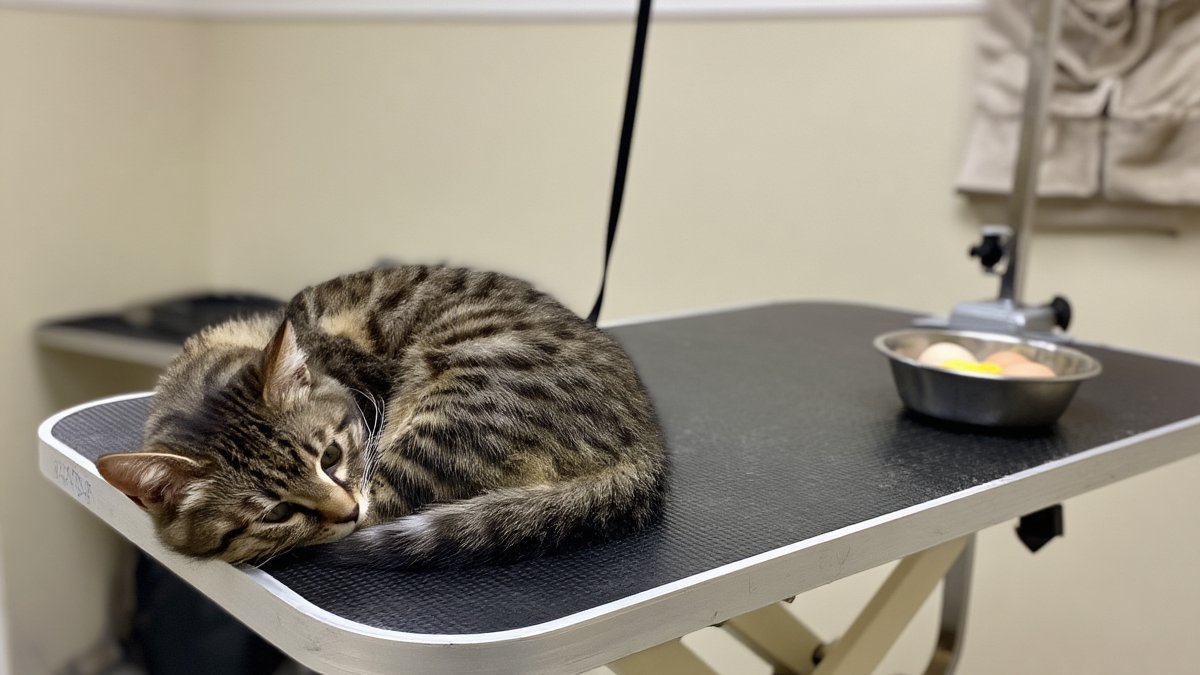
The moment you crack eggs on a Sunday morning, the cat appears — drawn by the sound, the smell, the sheer theatricality of breakfast. And so the question every egg-adjacent owner eventually asks: can cats actually eat eggs, or is this a human food that stays human?
The short answer is yes, with two hard conditions: the egg must be fully cooked, and it should be a small occasional addition, not a meal. Eggs are one of the most biologically complete proteins in the kitchen, and cats — obligate carnivores built to run on animal protein — digest them well. But raw eggs carry real risks for cats, and portion sizes that feel tiny to a human are substantial to a ten-pound animal. Here is the full picture, from benefits to preparation to the cats who should skip eggs entirely.
Quick Answers First
Own a Veterinary Clinic?
Enjoyed this article? Our editorial team researches, writes, and publishes professional features just like this one about clinics across the US. Get your practice in front of thousands of cat owners searching for a vet in your city.
Why Eggs Appeal to a Cat’s Biology
Cats are obligate carnivores: their bodies are engineered to derive nutrition from animal tissue, and they have lost the metabolic machinery to thrive on plant-heavy diets. Eggs sit near the top of the protein-quality scale — the amino acid profile of an egg is the reference standard against which other proteins are measured, and it delivers taurine-relevant animal protein, vitamin B12, riboflavin, selenium, and fat in a highly digestible package. For a species that evolved hunting eggs as well as mice, the appeal is not mysterious. What evolution did not prepare the house cat for is abundance: a wild cat would find an egg occasionally and eat it whole, shell and all; a house cat with a cooperative human could eat far more than it should, every day, forever. That gap is the whole portion-size story.
Portion Rules That Actually Work
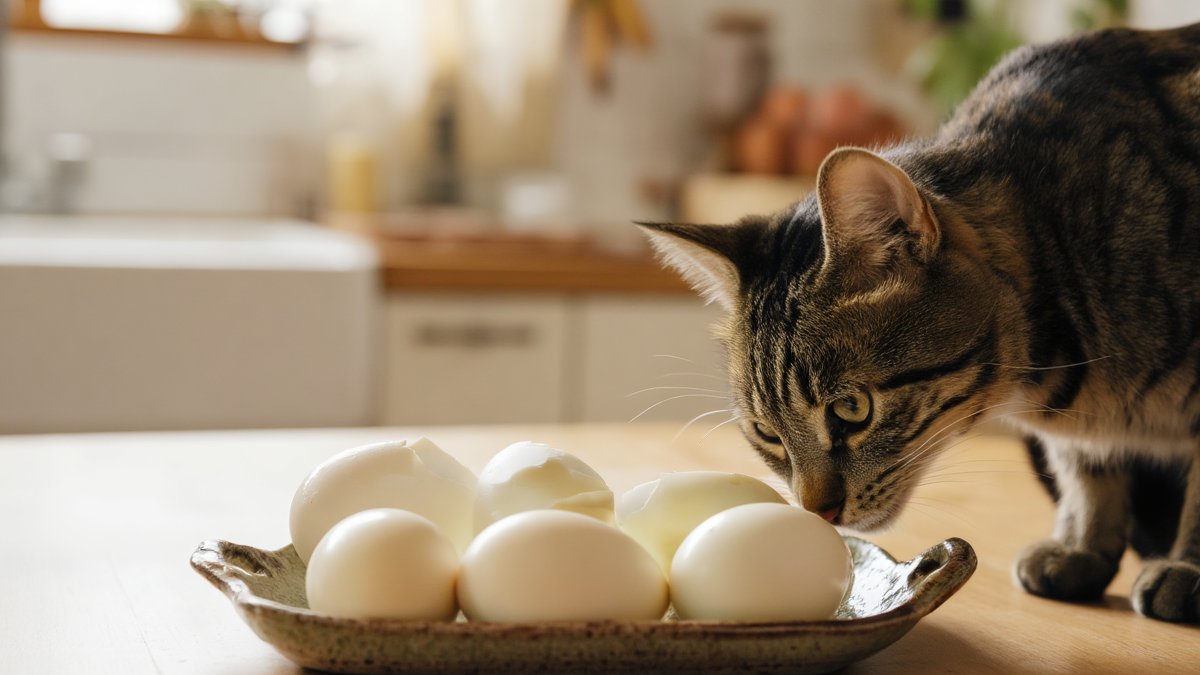
Treats of every kind, eggs included, should stay under roughly ten percent of a cat’s daily calories — and for a typical ten-pound indoor cat, that ceiling is small. Practically, it works out to about a tablespoon of cooked egg as an occasional treat, two or three times a week at most, rather than daily. Egg should never displace balanced cat food, which is fortified with taurine, vitamins, and minerals in ratios eggs alone cannot match. Overweight cats, cats with pancreatitis history, and cats on prescription diets should skip egg treats unless a vet explicitly clears them — the added fat and the dietary disruption are not worth it. And when offering egg for the first time, start with a teaspoon and watch for twenty-four hours; a cat with a sensitive stomach will tell you quickly.
The Raw Egg Problem, Specifically
Raw-feeding circles sometimes promote raw eggs as a natural coat supplement, and the claim does not survive contact with the evidence. Beyond the Salmonella exposure — which matters in households with children, elderly family members, or immunocompromised people, since an infected cat can transmit bacteria through its saliva and stool — raw egg whites carry avidin, which ties up biotin and can, with regular feeding, produce the very deficiency the raw egg was supposed to prevent. Cooking denatures avidin and kills Salmonella in one move, which is why the cooked rule is not a style preference but the entire safety case. The yolk, cooked, is the nutrient-dense half; the white, cooked, is nearly pure protein. Neither half is safe raw.
When an Egg Snack Becomes a Vet Question
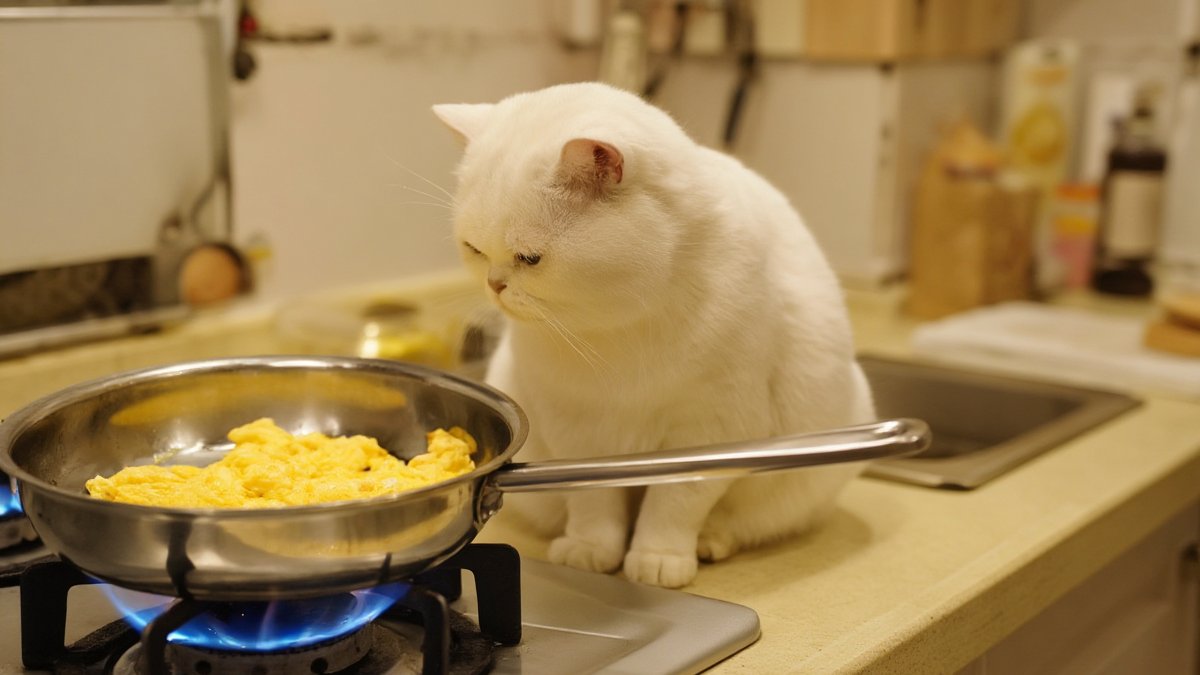
A healthy cat that stole a bite of plain scrambled egg has almost certainly come to no harm. The situations that convert a treat into a consultation look different: vomiting or diarrhea that lasts beyond a day after any new food; signs after raw egg specifically, where lethargy, fever, or bloody stool over the following week deserves a call; a cat on a prescription kidney, urinary, or gastrointestinal diet that got into eggs regularly (diet disruption matters); and any cat that shows food-guarding distress — drooling, retching, a distended belly — after an unusual feast. Chronic overfeeding shows up more slowly, as weight gain, which brings its own veterinary conversation.
What This Looks Like in Practice: PetVet Vaccination Clinic, Fort Pierce, FL
Diet questions are the cheapest appointment you can make — most clinics will field them during a routine visit, and preventive-focused practices answer dozens each week. In Fort Pierce, Florida, PetVet Vaccination Clinic is a 4.9-rated walk-in vaccination and wellness clinic on Okeechobee Road serving the Treasure Coast, the kind of stop-in practice where a routine visit is the natural moment to ask what treats belong in your cat’s week. Owners along the Treasure Coast can compare clinics in the cat vets in Fort Pierce, FL listing.
PetVet Vaccination Clinic
4888 Okeechobee Rd, Fort Pierce, FL, 34947
Phone: (800) 427-7973
⭐ 4.9
More Egg Questions, Answered
Eggs are one of the safer human foods to share, but they share a shelf with plenty of foods that are not: foods cats can’t eat lists the danger items, wet versus dry food covers the everyday diet question properly, and why cats eat grass explains the other odd food behavior owners ask about.
This article is editorial content produced by the CatVetFinder team. Clinic details are drawn from public listings and may change — always confirm hours and services with the clinic directly.