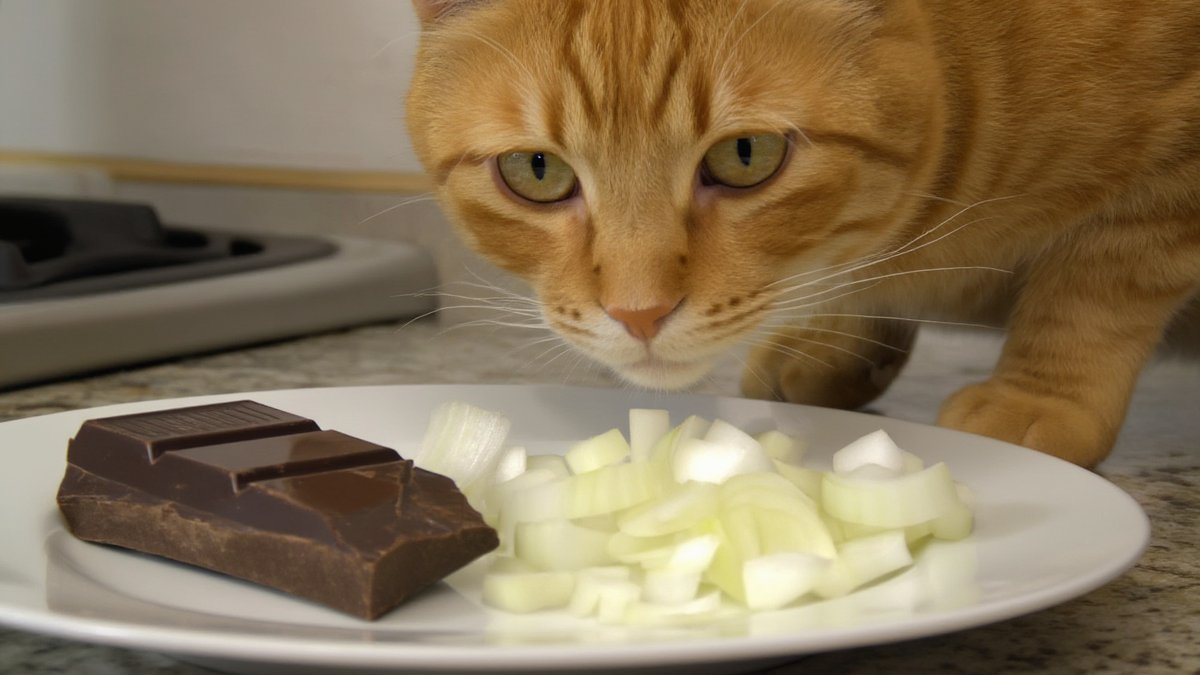
It happens on a Tuesday, not during the holidays. Dinner is on the stove, the counter is within reach of every cat in the house, and by the time the pan hits the burner, a tabby has already claimed the bowl of chopped onion. The owner sweeps it off the counter with a mix of relief and dread — because somewhere between the kitchen table and the emergency vet line, there is a list that most people only half know: some things on a human plate are flatly poisonous to cats, some are quietly corrosive over weeks, and some are simply so wrong for a cat's body that they count as "can't" even though nothing dramatic ever happens. This guide sorts the whole counter into those three piles, explains what poisoning actually looks like in a small animal, and walks through exactly what to do in the first twenty minutes after the incident — including the one phone number worth saving before you need it.
The Pile That Is Genuinely Poisonous
A few items on the human table can cause organ damage in a cat, even at small doses. These are the ones where "a little is fine" is not true.
- Onion and garlic family — onion, garlic, chives, leeks, and scallions in any form, raw or cooked. The sulfur compounds damage red blood cells over a day or more, so the cat can look fine at first and then go pale and weak once the damage shows up. Garlic is often cited as worse per gram, but there is no safe threshold worth betting on.
- Chocolate — the methylxanthines in it hit the heart and nervous system. Dark chocolate is the worst offender by far; a nibble of milk chocolate from a countertop bar is less alarming than an actual piece of 70% dark, but the direction of travel is the same: tremors, rapid heartbeat, vomiting.
- Caffeine — coffee, tea, energy drinks, and caffeine pills. A sip of cold brew left on the counter can be serious for a ten-pound cat; an energy drink or a pill fragment is a true emergency.
- Alcohol — even small amounts depress breathing and coordination, and a tablespoon or two of beer can kill a small cat. The myth that cats are immune to alcohol because they "hate the taste" has cost real lives.
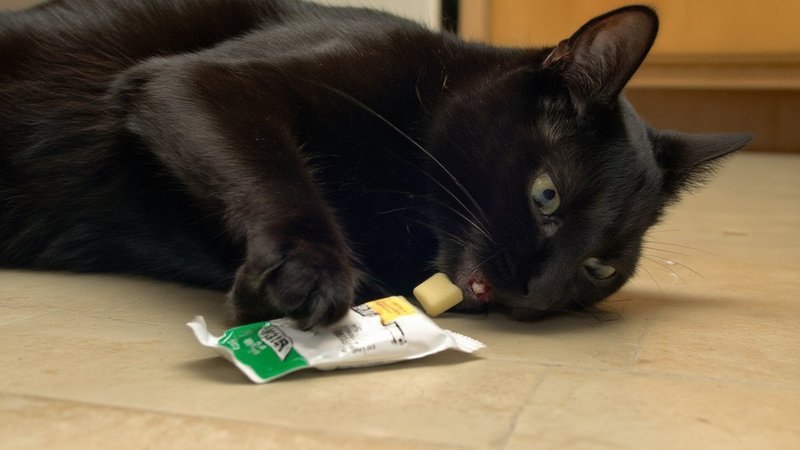
- Xylitol — the artificial sweetener in sugar-free gum, mints, and some baked goods. It triggers a rapid insulin release, which can crash blood sugar fast and, in severe cases, damage the liver. A dropped piece of chewing gum is the classic scenario.
- Raw dough — yeast keeps rising inside the stomach, producing gas and alcohol as it ferments. Swollen, painful abdomen and vomiting are the usual first signs.
- Grapes and raisins — this is the honest "uncertain" entry: research has not pinned down the exact toxic compound, and cats are not the classic species in the poisoning reports (dogs are). But enough cases exist that most vet poison lines treat any grape or raisin ingestion as worth a call.
The Pile That Is Quietly Wrong
This group will not poison a cat in one sitting, but it is the stuff that shows up at the vet months later as a diagnosis. Milk is the poster child: most adult cats are lactose intolerant, and the glass of whole milk left out "as a treat" is a reliable route to gas, cramping, and diarrhea — which is why plain water is the only drink on the counter that should stay within reach. Raw fish deserves its own warning: it contains thiaminase, an enzyme that depletes vitamin B1, so a cat living mainly on raw sardines or mackerel can develop thiamine deficiency with neurological signs over weeks. Cooked bone is the other slow one — cooked chicken and turkey bones splinter into sharp shards that can puncture the gut, while fatty trimmings like bacon grease and fried-skin scrapings are a well-known trigger for pancreatitis, an expensive, painful inflammation of the pancreas.
And then there is dog food itself. It is not toxic in the way onion is — a cat that steals kibble from the dog bowl will not collapse. But it is formulated for a different species, with less taurine and different protein ratios than a cat needs, so feeding it as a regular diet sets the stage for heart muscle problems down the road. The rule of thumb: an accidental few bites are nothing; "we just feed her whatever the dog eats" is a medical decision, not a budget one.
What Food Poisoning Actually Looks Like in a Cat
Cats are famously good at hiding illness, so early poisoning often looks like "she seems a little off." The pattern to recognize: vomiting that starts within an hour or two of eating the item (or, with onion and garlic, one to three days later), drooling or a swollen mouth, diarrhea — sometimes bloody — lethargy out of proportion to her usual naps, gums that look pale or yellow-tinged instead of pink, rapid breathing, trembling, and in caffeine or xylitol cases, collapse. Two details matter more than the list. First, cats can look perfectly normal for hours after ingesting something toxic; "she seems fine" is not a clearance. Second, small animals tip over fast — a dose that would make a dog vomit once can be serious in a ten-pound cat with no margin.
The First Twenty Minutes: What To Do If Your Cat Ate Something
Do not induce vomiting at home unless a professional tells you to — some substances burn on the way back up, and cats are poor cooperators with hydrogen peroxide. Instead: figure out what was eaten and roughly how much (keep the wrapper, the bottle, or the plate), note the time, keep the cat calm and away from more of it, and call ASPCA Animal Poison Control at 888-426-4435 — the line is staffed by veterinary toxicologists around the clock, and the consultation fee is a fraction of an ER visit. If you cannot reach the line and the cat is showing neurological signs — tremors, collapse, seizures — go straight to an emergency vet with the packaging in hand. The single most useful thing you can do before any call is have that number saved now, not at 11 p.m. on a Tuesday.
Own a Veterinary Clinic?
Enjoyed this article? Our editorial team researches, writes, and publishes professional features just like this one about clinics across the US. Get your practice in front of thousands of cat owners searching for a vet in your city.
The Exceptions: Human Food That Is Actually Fine
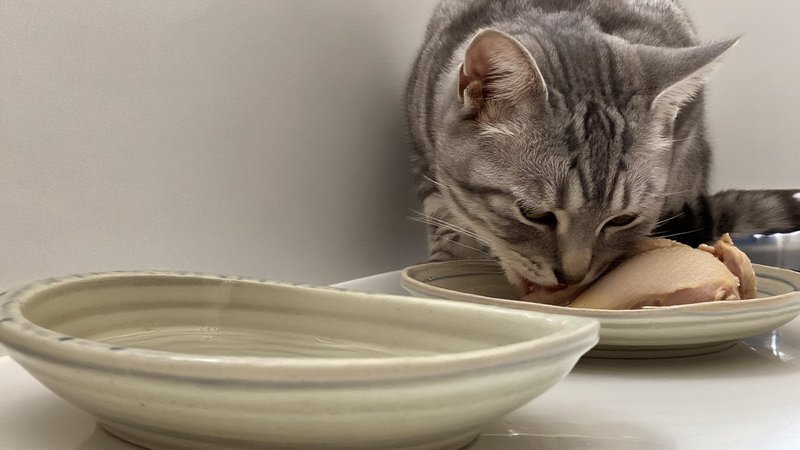
Not everything on the plate is an enemy, and a cat that knows it can get occasional plain pieces of cooked chicken or a few peas will stop raiding the trash. Generally safe in modest amounts: plain cooked chicken or turkey (no bones, no skin piled with fat), small pieces of cooked carrot or green bean, a spoonful of plain pumpkin for digestion, and a sliver of plain rice when the stomach is unsettled. Salt and seasoning are where these "safe" items stop being safe — a salty snack stick or heavily seasoned dish tips into the same territory as the fatty-trimmings warning above. The practical rule: if it came out of a bag with a flavor name, it is a no; if it is a single plain ingredient cooked in water or dry heat, an occasional bite is fine.
What This Looks Like in Practice: Cedar City Veterinary Care, Lebanon, OH
Cedar City Veterinary Care
511 N Broadway St # 2003, Lebanon, OH, 45036
Phone: (513) 812-0115
⭐ 4.9 (47 reviews)
As a worked example: Cedar City Veterinary Care sits at 511 N Broadway St # 2003 in Lebanon, Ohio, and carries a 4.9-star rating across 47 reviews — the kind of steady local record that usually means the front desk has seen this exact phone call before. That matters for food incidents, because the quality of the first conversation determines everything: what was eaten, how much, when, and whether the cat is showing signs right now. A clinic comfortable with toxic ingestion questions will tell you straight whether your Tuesday-onion-cat needs an appointment today or a watchful weekend at home, rather than defaulting to "come in just to be sure." Lebanon owners can also compare nearby practices before deciding where their emergency call goes Cat vets in Lebanon, OH.
The Short Version for Skimmers
Genuinely poisonous: onion and garlic family, chocolate, caffeine, alcohol, xylitol, raw dough — and grapes or raisins, which are uncertain but worth a poison-line call. Quietly wrong: milk, raw fish, cooked bones, fatty trimmings, and dog food as a regular diet. Fine in moderation: plain cooked chicken, peas, carrots, pumpkin. If the cat ate something from the first list, note what and when, keep the packaging, and call ASPCA Animal Poison Control at 888-426-4435 before deciding anything else. And since a food incident can turn into a longer story — repeated vomiting that will not settle is its own red flag cat vomiting: when to worry, and diarrhea lasting more than a day or two deserves the same attention cat diarrhea: when to worry — know the difference between "watch her tonight" and "go now."
The kitchen is the one room in the house where a cat's curiosity has a real cost list. The fix is not more willpower at 11 p.m.; it is the plate going on top of the counter, the trash can with a lid, and the poison-control number saved to your phone tonight — while nothing has happened yet. For the rest of the household hazards that share the same kitchen-counter geography, the companion guides cover what else to keep out of reach: plants toxic to cats for the houseplant shelf, and holiday hazards for cats for the seasonal spikes. And if an incident or a diet change leaves your cat skipping meals afterward, the guide on a cat not eating: when to worry covers where caution ends and urgency begins.
This article is editorial content produced by the CatVetFinder team. Clinic details are drawn from public listings and may change — always confirm hours and services with the clinic directly.