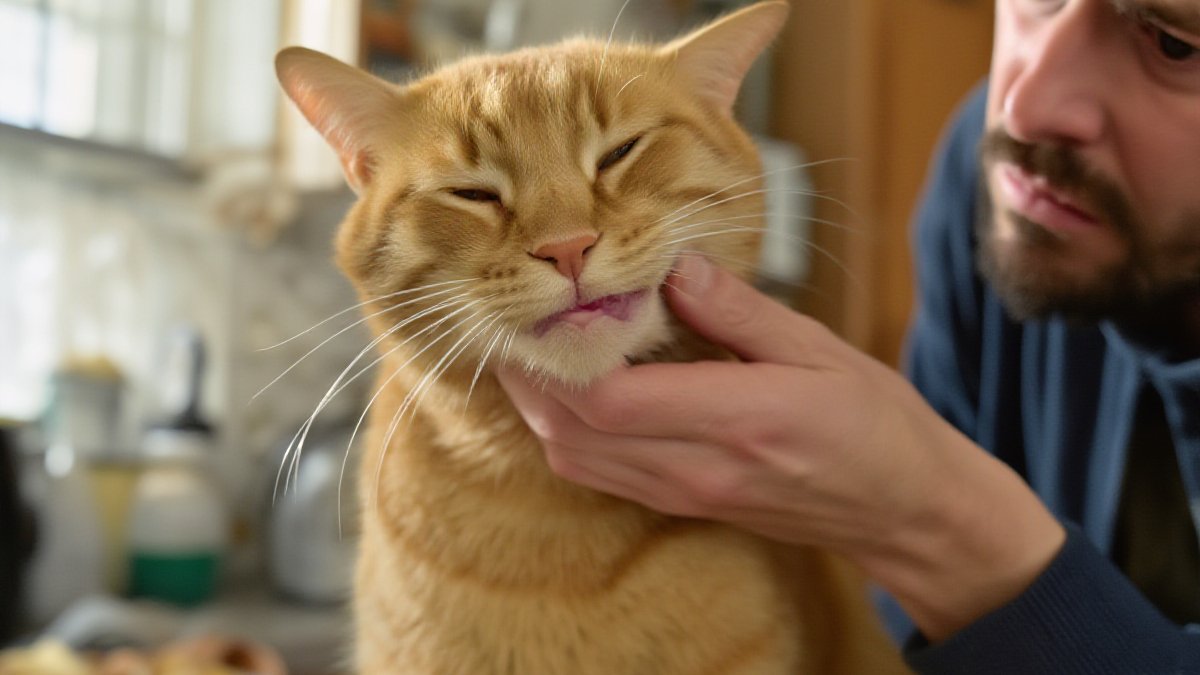
You can do a meaningful anemia check on your cat in under a minute — pull back the lower lip, look at the gum color, and watch how the breathing goes while the cat is resting. That one-minute exam separates "off today" from "needs a vet now," and it matters because anemia in cats rarely announces itself with one dramatic symptom. It arrives as a slow dimming: energy that fades over days, gums that look fainter than you remember, breathing that seems to work harder for no reason. By the time most owners connect those dots, the cat has been quietly losing oxygen-carrying capacity for a while.
This guide walks through the signs in checklist form, what actually causes anemia in cats living in US households (the list is shorter and more specific than most people expect), how the vet confirms it — often with a single drop of blood on a tube before any lab work — and what treatment looks like, from emergency transfusion to the long game of fixing whatever is destroying or failing to make the red cells.
The One-Minute Checklist: Signs That Point to Anemia
Start with the gums, because they are the fastest window into how much oxygen is reaching the tissues. A healthy cat's gums are a rosy, wet-dog pink — not pale, not white, not blue. Then move down the list and notice which of these you have seen in the last few days, because anemia shows up as a pattern, not a single event.
- Pale gums — pink fading toward white or chalky. Compare both sides and compare against a photo from when the cat was healthy; memory is a poor color reference.
- Lethargy and weakness — the cat stops playing, hides more, moves in slow motion, and in bad cases drags its hind legs or can barely stand.
- Rapid breathing at rest — counting breaths while the cat sleeps (normal is roughly 20–30 per minute), or open-mouth breathing, which a resting cat should never need.
- Hiding and withdrawal — not the usual grumpy corner-sitting, but a genuine disappearance under the bed with no interest in food.
- Pica — chewing or nibbling on non-food items like plastic, fabric, or string. An unusual behavior that sometimes shows up in anemic cats.
- Exercise intolerance — can't keep up with the usual stair climb, tires after a short chase that used to be nothing.
| Sign you notice | What it usually means | Likely urgency |
|---|---|---|
| Gums slightly pale; still eating, playing, breathing normally | Mild or early anemia | Vet visit today or tomorrow |
| Pale gums plus lethargy and off food for 24+ hours | Moderate anemia, oxygen delivery dropping | Today — do not wait for the weekend |
| Rapid breathing at rest, or any open-mouth breathing | Severe anemia, body compensating hard | Emergency now |
| Collapse, dragging hind legs, white/chalky gums | Critical — oxygen delivery failing | Emergency immediately |
| Sudden pale gums after known toxin exposure (acetaminophen, onion) | Toxic/oxidative hemolysis | Emergency now |
Why Pale Gums Are Not a Wait-and-See Situation
Cats are professional understaters. They hide weakness, skip meals quietly, and will still let you pet them while their blood counts slide. The practical consequence is that by the time pale gums are visible to an owner, the packed cell volume — the fraction of blood made up of red cells — has usually already fallen well below normal. Anemia itself is not a disease; it is a signal that something is destroying red cells faster than they can be replaced, or that production has failed. Every day of waiting lets the underlying process advance, and the difference between a case handled with a blood draw and a treatment plan versus one that starts with a transfusion is often measured in days of owner patience.
What Actually Causes Anemia in US Cats
The causes cluster into three families — loss, destruction, and underproduction — and the everyday list for a cat living in a US household is surprisingly specific.
- Fleas and external parasites — chronic flea-bite anemia from steady blood loss, most common in kittens and thin cats. It is the single most preventable cause.
- FeLV and FIV — virus-driven bone marrow suppression; both are tested for at diagnosis precisely because they sit behind so many anemic presentations.
- Chronic kidney disease — failing kidneys stop making enough erythropoietin, the hormone that tells the bone marrow to produce red cells. Common in older cats and usually slow-developing.
- Internal bleeding — gastrointestinal ulcers, tumors, or trauma causing slow blood loss that shows up as pale gums before anyone sees anything else.
- Immune-mediated hemolytic anemia (IMHA) — the immune system attacks its own red cells. Often tied to FeLV or an underlying trigger, sometimes idiopathic.
- Toxins — acetaminophen (paracetamol) and onion, garlic, or leek exposure cause oxidative damage to red cells. Cats have almost no ability to process acetaminophen; even a small amount is dangerous.
- Heinz body formation — oxidized hemoglobin forms a "Heinz body" inclusion inside the red cell; spleen and liver cells nibble it out, deforming or destroying the cell. It is the microscopic signature of toxin-driven hemolysis in cats.

How the Vet Diagnoses Anemia (and Why It Is Fast)
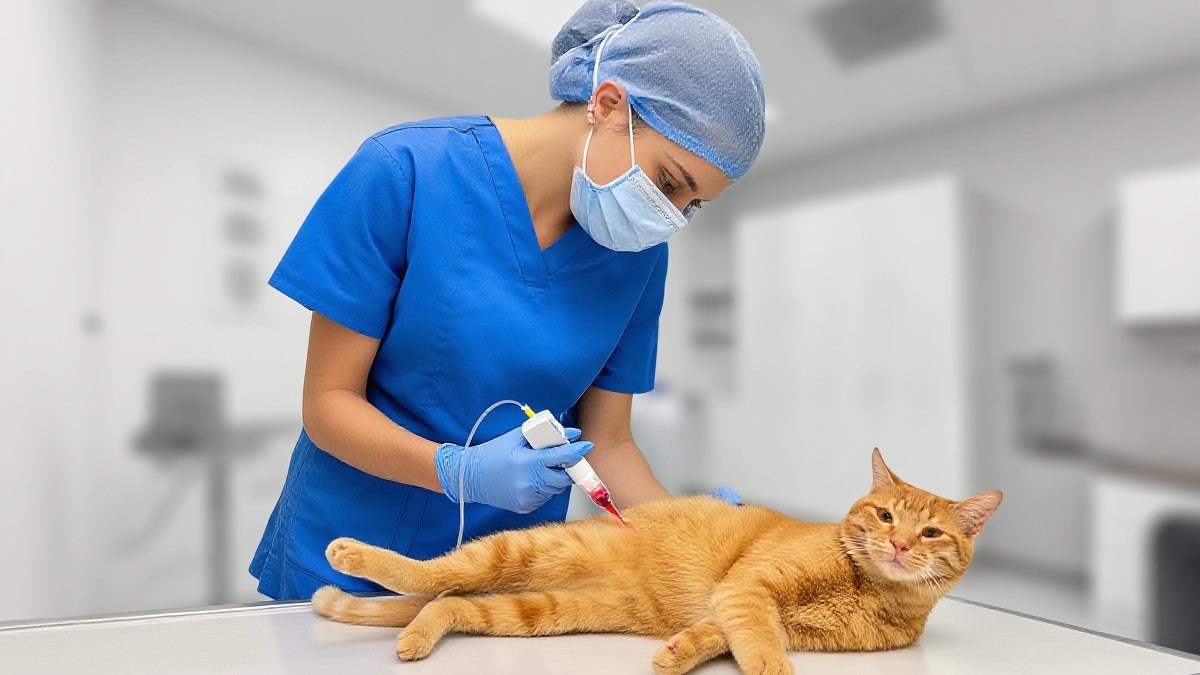
The first answer often comes before any lab result. A drop of blood drawn into a microhematocrit tube and spun for a minute gives the PCV — packed cell volume, sometimes called a TS slide in older terminology — and tells the vet within minutes whether the red cell fraction is normal, low, or critically low. That number decides the urgency: a cat with a very low PCV and fast breathing goes to transfusion planning; a mildly low one gets a workup.
- Complete blood count (CBC) — quantifies the anemia and shows whether the bone marrow is responding with young red cells (a regenerative response), which points toward loss or destruction; a non-regenerative picture points toward underproduction.
- Blood smear — examined under the microscope for Heinz bodies, oddly shaped red cells, and other clues that separate toxin-driven hemolysis from immune-mediated disease.
- Underlying-cause workup — kidney values, FeLV/FIV testing, and imaging if internal bleeding is suspected. The anemia is the headline; this part finds the story behind it.
Own a Veterinary Clinic?
Enjoyed this article? Our editorial team researches, writes, and publishes professional features just like this one about clinics across the US. Get your practice in front of thousands of cat owners searching for a vet in your city.
Treatment: Transfusion Buys Time, the Underlying Fix Cures
There is no single "anemia treatment" — the plan depends on severity and cause. In severe cases, a blood transfusion restores oxygen-carrying capacity fast enough to keep the cat stable while the team hunts for the underlying problem. It is the bridge, not the cure.
- Flea-driven anemia — rigorous flea control plus time; red cell production rebounds over one to three weeks once the blood loss stops.
- Kidney-related anemia — treating kidney disease and, in some cases, hormone therapy to replace the erythropoietin the kidneys no longer make.
- Immune-mediated hemolytic anemia — immunosuppressive therapy to stop the self-attack, with close monitoring of blood counts as it takes hold.
- Toxin exposure — supportive care (fluids, oxygen, sometimes transfusion) while damaged red cells clear and new ones are made; removing the toxin ends the damage.
- Bleeding or tumor-related — addressing the source directly, from ulcer treatment to surgical removal.
Prevention and What Recovery Looks Like
Year-round flea prevention is the single biggest lever an owner controls — it closes off the most common preventable cause, and it matters most for kittens, whose small blood volume means a heavy flea burden can tip them into anemia fast. Keep acetaminophen medications and onion- or garlic-heavy foods well out of reach, and keep up with annual bloodwork in older cats so kidney-driven anemia is caught while it is still mild.
The recovery outlook is cause-dependent. Cats with flea-bite anemia typically bounce back fully within a few weeks of treatment, with energy and gum color returning as the counts climb. Kidney-related cases are manageable but chronic. IMHA and cancer-associated anemia carry a more guarded prognosis, especially if they were caught late — which is exactly why the one-minute checklist at the top of this guide earns its keep.
What This Looks Like in Practice: Hillcrest Animal Hospital
Hillcrest Animal Hospital
700 Shelby Rd, Poplar Bluff, MO, 63901
Phone: (573) 785-1471
⭐ 4.4 (734 reviews)
To make the visit concrete, here is one worked example. Hillcrest Animal Hospital in Poplar Bluff, MO sits at 700 Shelby Rd and holds a 4.4-star average across 734 reviews — a long-running local practice rather than an emergency center, which matters for anemia specifically: the standard workup (slide PCV, CBC, FeLV/FIV test) is exactly the kind of same-day visit a well-staffed neighborhood hospital handles, with the slide answer in minutes and lab results back before the day is out. Their number is (573) 785-1471.
The practical takeaway is sequencing. If the gums look faintly pale but the cat is still eating and breathing normally, a routine appointment within a day or two is the right tier — call in the morning and describe exactly what you saw. If breathing is fast at rest, if the cat has stopped eating for over a day alongside the paleness, or if there was any possible toxin exposure, that stops being a scheduling conversation and becomes a same-day one. Owners who can name which of those two situations they are in tend to catch anemia earlier and keep it out of transfusion territory.
Questions Cat Owners Ask About Anemia
Anemia rarely shows up alone — cat kidney disease signs covers one of its most common quiet drivers in older cats, and FIP signs and treatment walks through the other serious infection that can drag blood counts down. If your anemic cat has also stopped eating, when to worry about a cat not eating sets the timeline for that symptom, and what diagnostic tests your cat may need explains the CBC and everything beyond it in plain language.
This article is editorial content produced by the CatVetFinder team. Clinic details are drawn from public listings and may change — always confirm hours and services with the clinic directly.