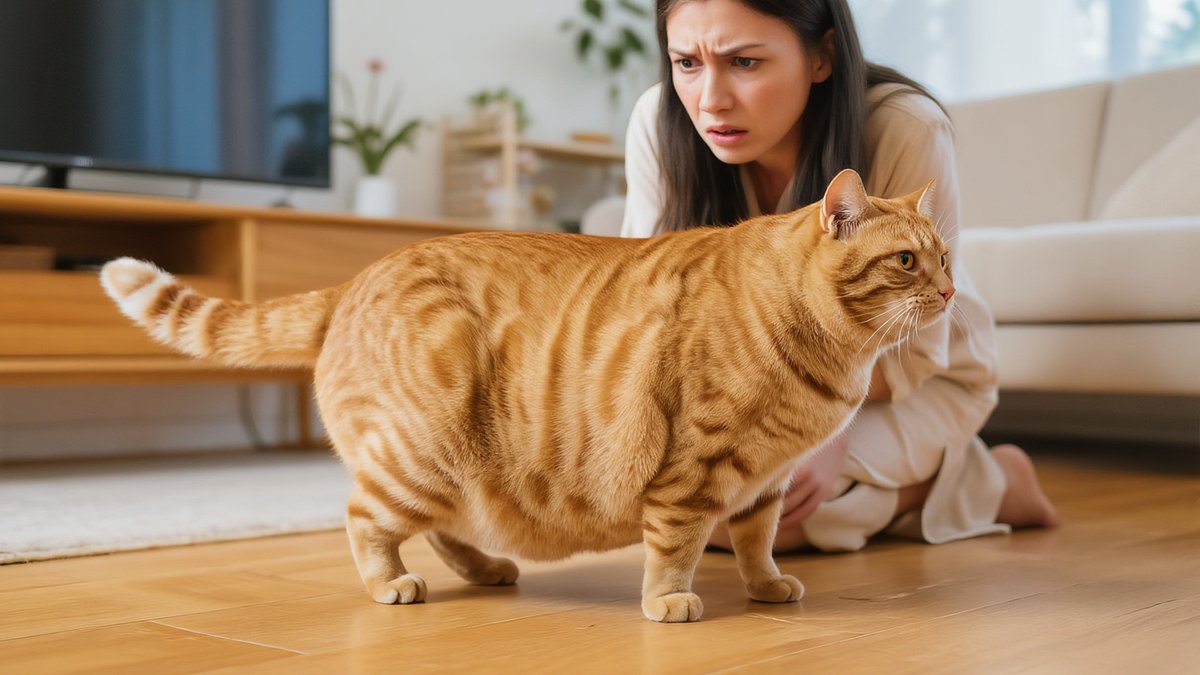
A cat's belly goes round for reasons that range from completely boring to genuinely dangerous — and the same silhouette can mean any of them. Maybe it happened over months of extra treats, or maybe you noticed it this morning and your cat is also not eating, hiding, or breathing oddly. Those two scenarios have completely different answers, and the difference shows up mostly in how the belly feels and what else changed.
The plan below is a touch-and-track routine: what a normal cat belly feels like, the six causes to work through from most to least common, the timeline questions to answer before you call, and the firm thresholds for when a swollen belly becomes an emergency visit rather than a Monday-morning phone call.
Step 1: Establish the Baseline — What a Normal Belly Feels Like
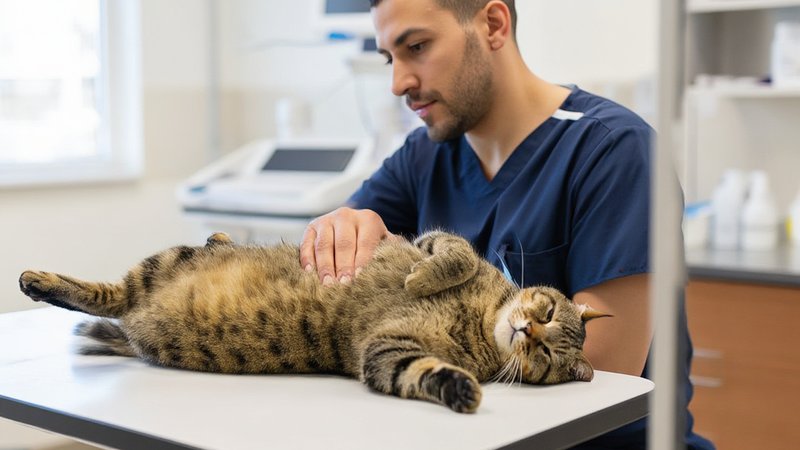
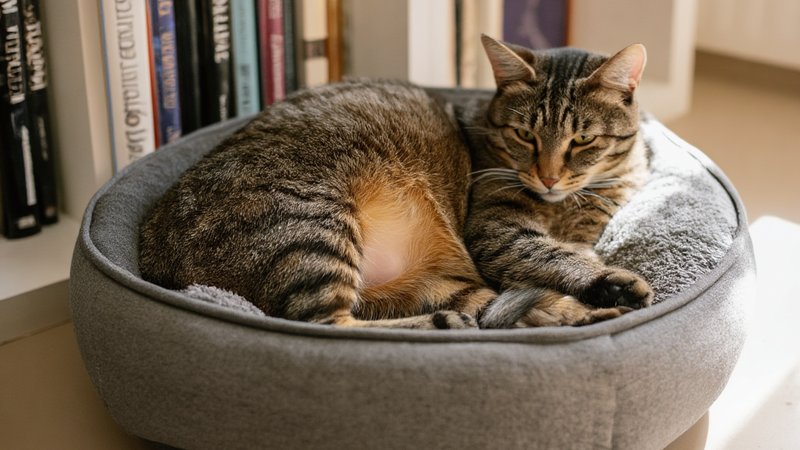
A healthy adult cat's abdomen is soft and relaxed, with ribs you can feel under light pressure and a small sagging pouch of skin near the rear (the primordial pouch) that is normal anatomy, not weight gain. The distinguishing test between "round but fine" and "round and wrong" is firmness and comfort. Fat distributes as soft padding on the sides and over the ribs; a belly that is tight like a drum, tender when touched, or growing while the rest of the cat stays thin is not fat, whatever the scale says. Some cats object to belly handling on principle, so compare how the belly feels on a relaxed, sleeping cat rather than wrestling an awake one.
Step 2: Work Through the Causes, Most Common First
- Overweight or overeaten: the most common "round belly" is simply weight, which feels soft and sits symmetrically on a cat whose ribs are also padding up. A kitten or gulper who ate too fast gets a temporary gas distension that deflates within hours.
- Intestinal parasites: roundworms produce a classic pot-bellied look in kittens — firm, symmetric, and often paired with a dull coat, occasional vomiting, or rice-like segments near the tail. A fecal test settles it in minutes and deworming resolves it.
- Constipation or blockage: a backed-up colon feels firm in the lower belly and comes with straining in the litter box, small dry stools, or none at all. Watch the box closely — straining with no urine at all is a urinary emergency, not constipation.
- Pregnancy: in an intact female, a pregnant belly is evenly rounded, the cat feels well, nipples pink up, and the timeline is only about two months. If she is not spayed and gaining a firm roundness, this belongs on the list.
- Fluid in the abdomen (ascites): fluid from heart disease, liver disease, cancer, FIP, or bleeding after trauma makes a sloshing, heavy, symmetrically enlarged belly, often with breathing changes and a cat who is quietly not himself. This is the cause that always needs a vet, usually promptly.
- Organ enlargement or a mass: a kidney, spleen, or tumor can enlarge one side of the belly asymmetrically. Slow growth over weeks in a cat eating normally still deserves imaging — asymmetry is the clue.
Step 3: Track the Three Questions That Steer the Diagnosis
Before you call or visit, write down three things. First, the timeline: did the belly grow over months (fat, pregnancy, slow mass), weeks (fluid, organ enlargement), or overnight (gas, obstruction, bleeding)? Second, the rest of the cat: appetite, thirst, litter-box output, energy, breathing rate at rest. A bloated belly plus normal appetite and behavior steers toward weight, worms, or pregnancy; a bloated belly with a dull, quiet, not-eating cat steers toward fluid or obstruction. Third, the feel: soft and symmetric versus tight, tender, or lopsided. Photograph the profile from the side today so you can compare tomorrow — bellies are surprisingly hard to remember across days.
The Emergency Thresholds
Go the same day — do not book next week — if the swollen belly comes with any of these: a cat retching or vomiting repeatedly, a male cat straining in the box without producing urine, obvious pain when the belly is touched or when picked up, labored or open-mouth breathing, pale gums, a belly that ballooned within hours after possible trauma such as a fall, or lethargy with refusal to eat. A bladder that ruptures or a bleeding abdomen after a fall can look deceptively calm for a day before crashing. And any kitten with a tight, full belly that is also dull or not nursing skips the waiting list entirely — kittens decompensate in hours.
South Jersey Cat Clinic
484 E Evesham Rd Suite 7, Cherry Hill, NJ, 08003
Phone: (856) 412-3514
⭐ 5.0
What This Looks Like in Practice: South Jersey Cat Clinic
Imagine your tabby in Cherry Hill, New Jersey, has looked rounder for two weeks while still eating well. At South Jersey Cat Clinic (5.0 stars from 106 reviews, 484 E Evesham Rd Suite 7, Cherry Hill), the workup follows the sequence above: hands-on palpation to distinguish fat, gas, stool, fluid, and organ size; a fecal test; and — when fluid or asymmetry is suspected — X-rays or an ultrasound with, if needed, a small fluid sample for analysis. A feline-only practice like this one does bellies all day without the stress of dog waiting rooms, which matters because a tense cat palpates poorly. If you are comparing practices in the area, the CatVetFinder Cherry Hill listings show other clinics and their ratings.
Prevention and Maintenance
- Weigh your cat monthly and feel the ribs quarterly — catching gradual girth early turns the fat-versus-fluid question into a non-question.
- Keep parasite prevention and routine fecal tests current, especially for kittens and hunters; a pot belly from worms is cheap to prevent and cheap to fix.
- Feed slow: puzzle feeders and shallow dishes reduce the gulping that causes harmless after-dinner balloon bellies.
- Watch the litter box habitually. Output changes are the fastest early warning for constipation, blockage, and the urinary emergencies that hide behind a "swollen tummy" report.
- Keep indoor hazards off the floor — string, hair ties, and tinsel cause obstructions that present as a suddenly miserable, gassy, vomity cat.
Own a Veterinary Clinic?
Enjoyed this article? Our editorial team researches, writes, and publishes professional features just like this one about clinics across the US. Get your practice in front of thousands of cat owners searching for a vet in your city.
The bottom line: a cat's belly is the one body region where "watch it for a month" is the wrong default. Feel it, photograph it, check the litter box, and let the timeline and the cat's energy level tell you which day to call. When the belly is tight, tender, or the cat is quiet, the same day is the right day. Related reading: cat constipation signs covers the backed-up-belly pattern in depth, cat straining to urinate explains the urinary emergency that mimics it, and worms in cats walks through the parasite side of the pot-bellied kitten.
This article is editorial content produced by the CatVetFinder team. Clinic details are drawn from public listings and may change — always confirm hours and services with the clinic directly.