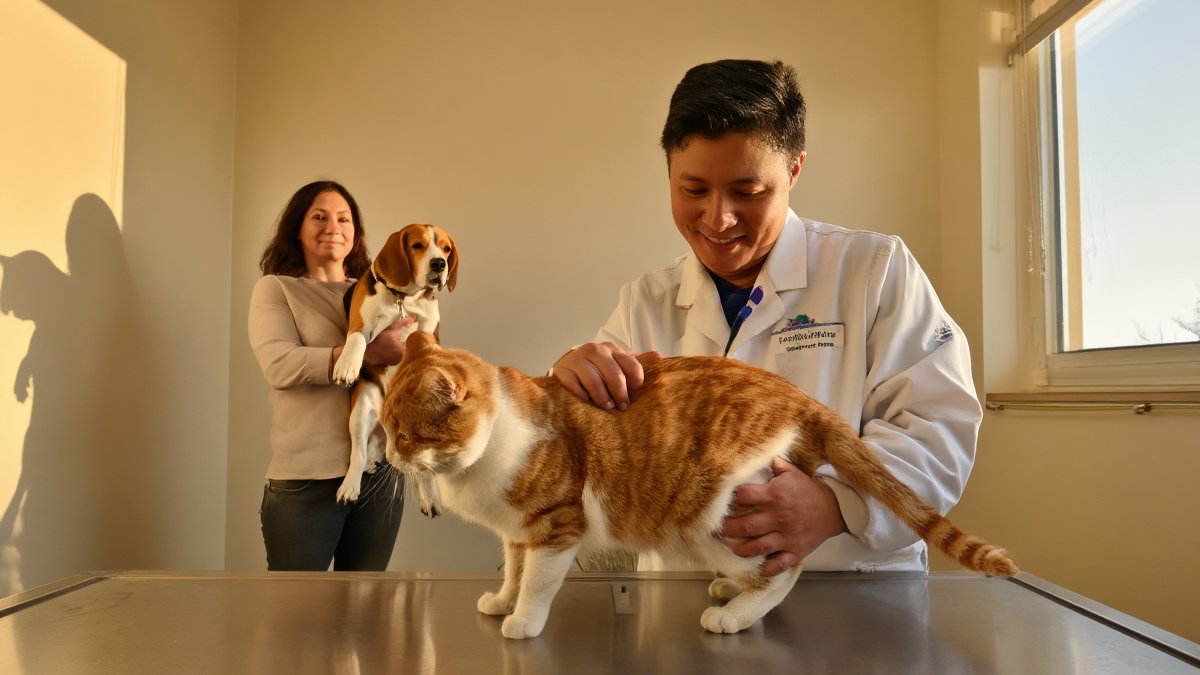
Straining in the litter box is one of those signs that can mean almost nothing or everything. Most of the time it is cystitis — an inflamed, burning bladder that makes the cat squat and push and produce almost nothing, over and over. But the same posture, in the wrong cat, is the single most time-critical emergency in feline medicine: a blocked urethra, where the plumbing closes entirely and urine backs up into the bloodstream. A fully blocked male cat can die within 24 to 48 hours of the obstruction, and the first owner-visible symptom is usually just "he keeps going to the box and nothing happens." That is why this sign gets the strongest response of almost anything on the at-home-worry list.
The Warning Signs, Ranked by Urgency
- Straining with NO urine produced, especially a male — emergency, leave now.
- Straining plus vomiting, hiding, or a painful, firm belly — emergency; a blocked bladder becomes a hard, egg-shaped ball you can feel in the front abdomen.
- Straining with small drops of blood-tinged urine — same-day exam.
- Frequent trips to the box, crying while squatting, licking the genitals — same-day exam.
- Peeing in odd places while straining — a distress signal cats produce deliberately; still needs an exam.
- Increased water drinking alongside any of the above — worth reporting; it shifts the diagnosis list.

Why It Happens — and What Prevents the Next Episode
Own a Veterinary Clinic?
Enjoyed this article? Our editorial team researches, writes, and publishes professional features just like this one about clinics across the US. Get your practice in front of thousands of cat owners searching for a vet in your city.
Feline lower urinary tract disease is an umbrella, and the straining cat may sit under any panel of it: idiopathic cystitis (inflammation with no infection, driven partly by stress — the most common diagnosis by far), crystals or stones forming in concentrated urine, urethral plugs, and true bacterial infections, which are less common in young cats than owners assume. The prevention toolkit is correspondingly unglamorous but effective. Water, above all: cats evolved as desert animals with a weak thirst drive, so wet food (which is roughly 70% water), extra water bowls away from the food, and circulating fountains measurably dilute urine and cut crystal formation. Weight control matters — overweight indoor cats have significantly more urinary disease. For idiopathic cystitis, stress reduction is genuine medicine: predictable routines, enough litter boxes (one per cat plus one), and enrichment. Prescription urinary diets dissolve certain crystal types and are the standard follow-up for cats who have formed them; your vet will match the diet to the crystal type seen under the microscope, because the wrong diet for the wrong crystal can make things worse.

What This Looks Like in Practice: Fossil Ridge Animal Hospital, Fort Collins, CO
Fossil Ridge Animal Hospital
4848 S College Ave, Fort Collins, CO, 80525
Phone: (970) 797-2322
⭐ 4.9 (206 reviews)
Urinary emergencies reward a clinic with same-day surgical capability and after-hours coverage, and Fossil Ridge Animal Hospital on S College Ave is a strong local example: a 4.9-star rating across 206 client reviews, one of the highest-rated practices in Fort Collins, with full-service medicine and the diagnostics a blocked-cat workup needs — bloodwork, imaging, and hospitalization under one roof. If your cat is straining now, call (970) 797-2322 and say the words "not urinating" clearly; triage staff prioritize that phrase. Owners comparing options in Northern Colorado can browse the full cat vets in Fort Collins, CO listing to see every clinic in the city.
The Takeaway
Straining in the box is a symptom you never watch passively. Female, most likely a painful bladder needing a same-day visit; male, treat unproductive straining as a clock ticking — 24 to 48 hours is the whole window, and potassium poisoning does the killing. After the crisis passes, the prevention is hydration, weight, stress, and the right diet for the crystal type — boring measures that work. The cat who gets through one blockage without prevention changes is the cat who sees the emergency room again; the cat whose owner rebuilds the water-and-diet routine usually does not.
This article is editorial content produced by the CatVetFinder team. Clinic details are drawn from public listings and may change — always confirm hours and services with the clinic directly.