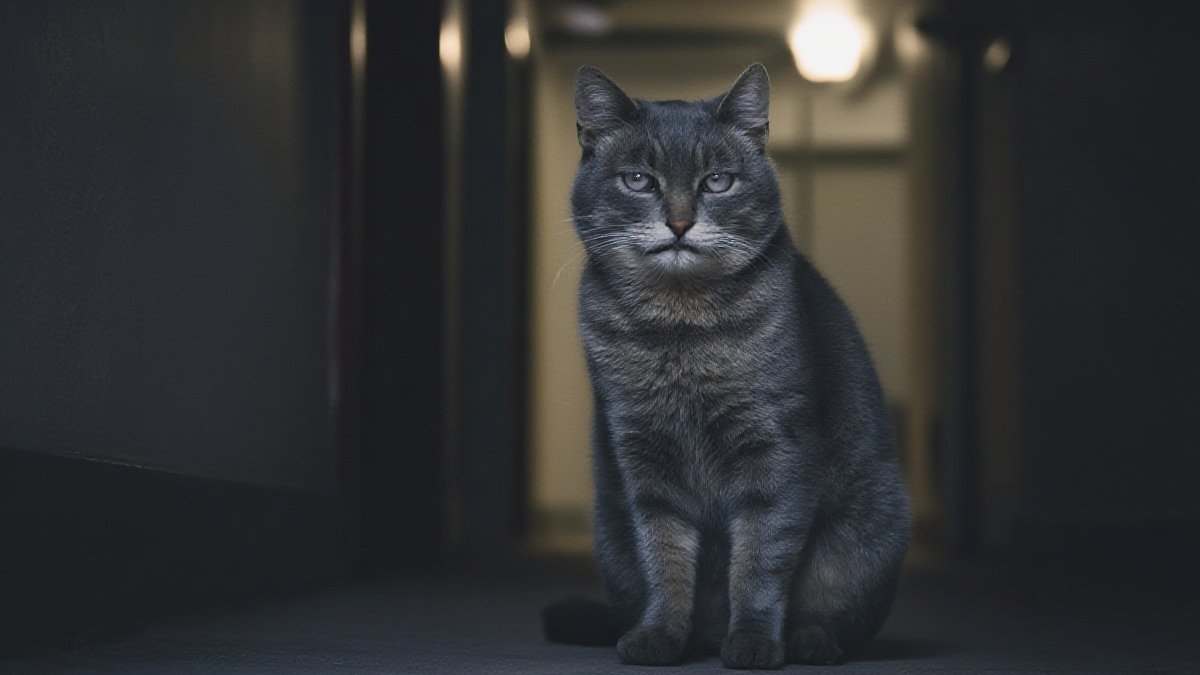
There is a particular sound that changes how people feel about their senior cat almost overnight: yowling at 3 a.m., loud and lost, from a hallway the cat has known for fifteen years. Owners tend to land on two explanations — the cat is becoming "difficult," or the cat is becoming senile — and both are wrong in ways that matter. Loud nighttime vocalizing in an older cat is a symptom with a differential diagnosis. Some causes are treatable within days. One of them, cognitive dysfunction, is not curable but is genuinely manageable, and the difference between an owner who recognizes it early and one who does not is often the difference between a household that sleeps and one that quietly falls apart.
This guide separates the behavior myths from the medical reality: what feline cognitive dysfunction (CDS) actually looks like, what else produces nearly identical signs, what to try at home, and how a real veterinary workup unfolds — with one worked example from a neighborhood practice that sees this conversation regularly.
First, the Myth: "Cats Just Get Weird in Old Age"
The most costly assumption in senior-cat care is that confusion, crying, and house-soiling are just personality changes to tolerate. They are not. A cat who seems disoriented is a cat with something wrong in the brain, the bloodstream, or the joints — and every one of those categories has treatments. Cognitive dysfunction itself is a real, diagnosable condition: the feline version of the changes seen in human dementia, driven by oxidative damage and protein deposits in an aging brain. It affects a large share of cats past fifteen. But before you attribute anything to it, the mimics have to be ruled out, because several of them are easier to fix.
The Signs of Cognitive Dysfunction in Cats
Veterinarians often use the acronym DISHA — Disorientation, Interaction changes, Sleep-wake reversal, House soiling, Activity changes — as a screening checklist. What it looks like in a living room:
- Disorientation — the classic signs: standing in a corner or in front of a wall as if stuck, hesitating at doorways the cat has passed through thousands of times, getting "lost" in the middle of an open floor, or failing to find the food bowl in a familiar spot.
- Night yowling and vocalizing — loud, plaintive calling at night or in the pre-dawn hours, often while pacing. This is the sign that brings most owners in, and it is the one most often blamed on "being demanding." In a senior cat it is frequently neurological — but see the mimics below before concluding that.
- Sleep-wake cycle reversal — the cat sleeps all day and paces, vocalizes, or wanders all night. Aging circadian rhythm plus reduced daytime stimulation makes this worse every month it goes unmanaged.
- House soiling — a cat with perfect litter habits for a decade starts missing the box, going just beside it, or soiling in the owners' bed. Sometimes the cat genuinely forgets where the box is; sometimes arthritis makes the trip or the high-sided box painful; both can coexist with CDS.
- Interaction changes — the once-social cat hides for a day, or the once-standoffish cat becomes clingy and follows owners room to room, unable to settle. Both directions count.
- Activity and appetite changes — aimless wandering, reduced grooming, forgetting to eat, or anxiety behaviors like repetitive licking.
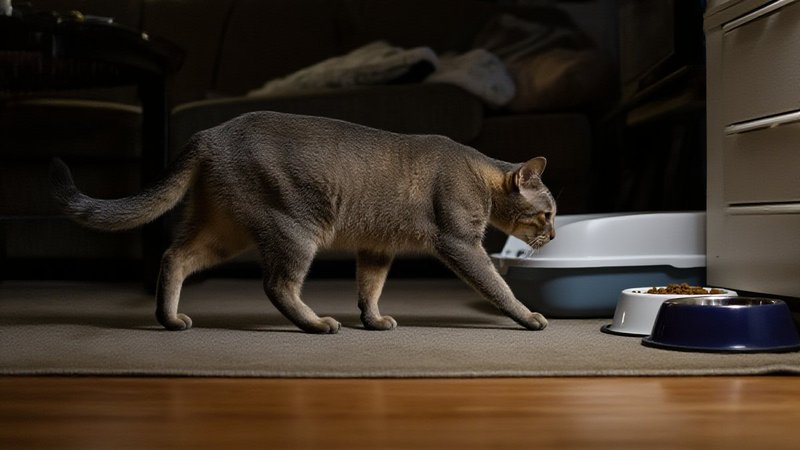
The Mimics: What Else Makes Old Cats Yowl and Wander
This is the section that saves people from mislabeling their cat. Several common senior-cat conditions produce signs that overlap with CDS almost exactly, and at least three of them are far more common in cats over twelve:
- Hyperthyroidism — an overactive thyroid revs the whole cat: vocalizing (often at night), restlessness, weight loss despite a good appetite, increased thirst. It is extremely common in senior cats and it is treatable. A cat labeled "demented" who actually has hyperthyroidism gets better with treatment.
- High blood pressure (often riding on kidney disease) — hypertension in cats causes retinal changes, disorientation, vocalizing, and in bad cases sudden behavior change or blindness. It also worsens the brain damage of true CDS. Bloodwork plus a blood-pressure cuff at the clinic settles this in one visit.
- Pain, especially arthritis — a cat in chronic pain sleeps badly, paces, resents being touched, and stops using a box that requires jumping. Owners consistently misread this as senility. Pain management in a senior cat often transforms behavior within weeks.
- Vision or hearing loss — a cat going blind startles at nothing, hesitates in dim light, and cries when disoriented. Dimming rooms at dusk and leaving nightlights change these cats dramatically.
- Dental disease and nausea — chronic mouth pain and gastrointestinal upset both produce restlessness and crying before food.
The practical takeaway: a night-yowling senior cat is not diagnosed by watching. It is diagnosed with bloodwork, a blood-pressure check, a thyroid value, and a hands-on pain exam. Only after the mimics are excluded does the label "cognitive dysfunction" earn its place — and even then, it usually coexists with one or two of the above rather than replacing them.
What Actually Helps: Home Plan and Medical Options
There is no reversal for an aging brain, but there is a lot of slowdown. The plan that works combines environmental scaffolding with medical management, and the environment piece is the one owners control entirely from tonight:
- Structured evening routine — feed the last meal late in the evening and end it with calm, low-light interaction. A predictable pre-sleep pattern anchors a failing internal clock better than anything else in the house.
- Daytime enrichment — puzzle feeders, two or three short play sessions, a window perch with a bird view, and normal household daylight. A cat that sleeps 22 hours of the day will be awake the other two at night, guaranteed.
- Night lights and consistency — plug-in nightlights along the cat's regular routes, no furniture moving, no food-bowl or litter-box relocation. Every reorganization costs a CDS cat its map.
- Litter box logistics — one more box than you think you need, low entry sides, on each floor the cat uses, and visible from common rooms. This single change often resolves the house-soiling half of the syndrome.
- Vet-directed options — once mimics are treated or excluded, discuss a prescription diet formulated for brain health (antioxidants and medium-chain triglycerides), supplements such as SAMe or omega-3s, and medications like selegiline that some practices use for CDS. Anti-anxiety medication is sometimes layered in for the night-vocalizing specifically. Dosing belongs at the clinic — several human options are unsafe in cats.
- Reintroduce interaction on the cat's terms — cognitive dysfunction does not end the relationship; it rewrites it. Short, gentle, repeated contact beats long sessions the cat cannot follow.
What the Veterinary Workup Looks Like
Own a Veterinary Clinic?
Enjoyed this article? Our editorial team researches, writes, and publishes professional features just like this one about clinics across the US. Get your practice in front of thousands of cat owners searching for a vet in your city.
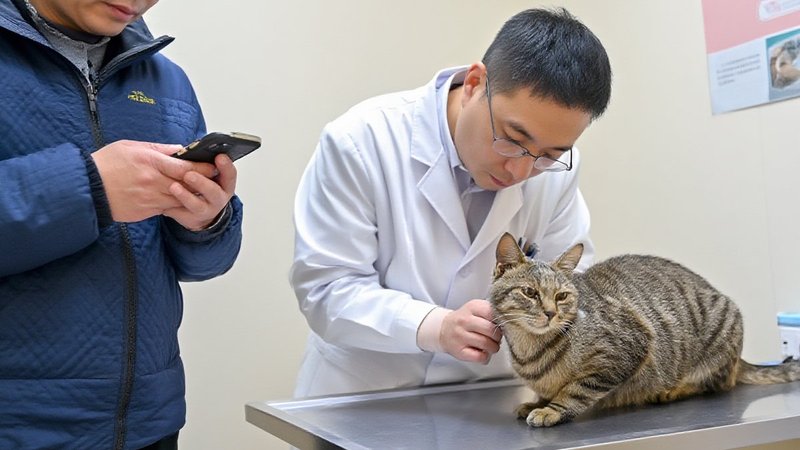
Bring the timeline. A two-week log of when the vocalizing happens, what preceded it, and what the litter box has shown is worth more than any single observation. The visit itself is straightforward: a senior physical exam with emphasis on joints, teeth, and thyroid palpation; bloodwork covering kidney values and thyroid hormone; a blood-pressure measurement; and a urinalysis if the kidney picture needs sharpening. The whole battery answers the question that matters — is this CDS, a mimic, or both — and almost always in a single appointment plus lab turnaround.
Auburn Pet Clinic
61 Flood Rd, Auburn, CA, 95603
Phone: (530) 888-7387
⭐ 4.9 (149 reviews)
Auburn Pet Clinic, on Flood Road at the edge of Auburn near the American River canyon country, is a good picture of how this conversation goes at a long-tenured neighborhood practice. They hold a 4.9-star average across 149 client reviews — a review base that size reflects years of Placer County households bringing the same animals back through every life stage. Continuity matters for cognitive dysfunction specifically: the vet who has tracked a cat's habits across its senior years can spot the drift toward CDS two years before an owner who only visits for emergencies. The phone is (530) 888-7387 and the address is 61 Flood Rd, Auburn, CA 95603.
The practical flow: call and describe the night-vocalizing pattern, the sleep flip, and any litter-box change — clinics triage CDS workups by age and how sharply the behavior changed, because an abrupt overnight change is worked up faster than a slow drift. The questions worth asking: will thyroid and blood pressure be tested at this visit, is arthritis pain being scored separately, and what is the environmental plan for the first two weeks. The answers to those three questions separate a workup from a prescription pad. For owners comparing practices around Placer County, the cat vets in Auburn, CA directory lists the alternatives, and the full profile at Auburn Pet Clinic carries hours and directions.
Old cats do not get weird. They get sick, they get sore, and they get forgetful — in that order, and all three are workable. The yowling at 3 a.m. is a question, not a nuisance.
Questions Cat Owners Ask About Cat Cognitive Dysfunction
Cognitive dysfunction rarely travels alone — it shares the senior-cat stage with the conditions that cause or worsen it. Senior cat vet checkup frequency covers how often cats past eleven should be examined at all, cat kidney disease early signs explains the kidney side of the bloodwork, and senior cat arthritis signs walks through the pain component that so often gets mislabeled as senility.
This article is editorial content produced by the CatVetFinder team. Clinic details are drawn from public listings and may change — always confirm hours and services with the clinic directly.