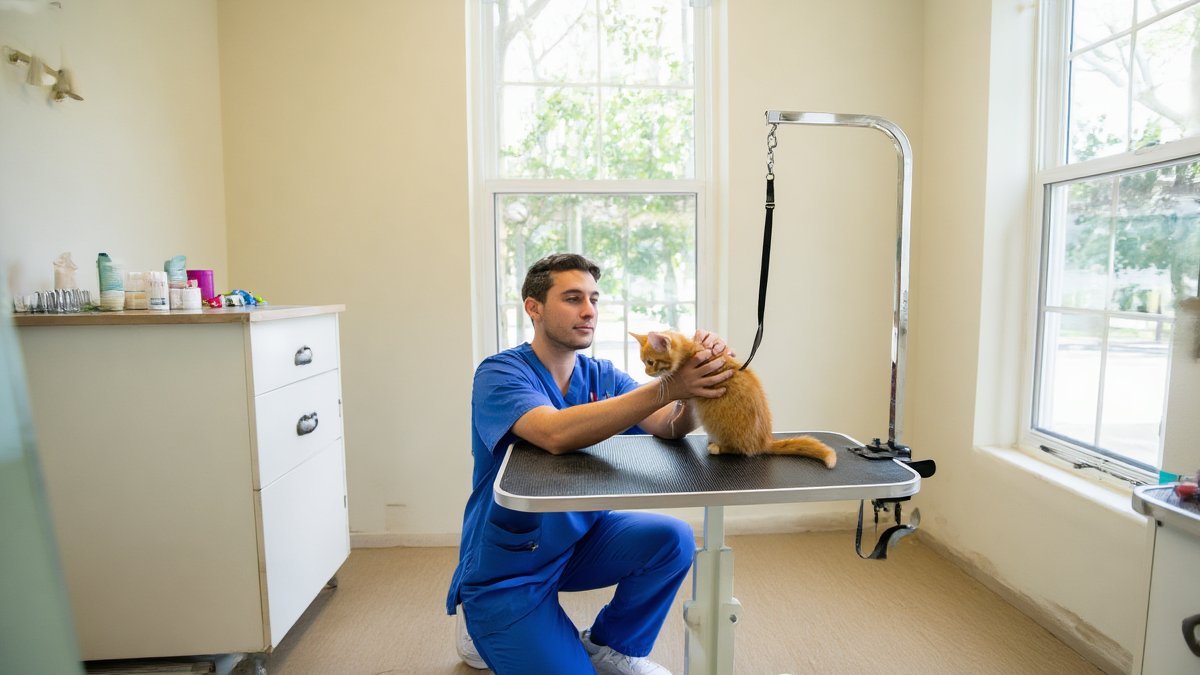
Drooling from a cat that has never drooled is one of those changes that reliably gets an owner’s attention — a wet chin, a damp spot on your shirt, a puddle on the bed where the cat slept. The reason it deserves attention is that sudden drooling in cats is almost never about the drool itself. It is a downstream sign of something in the mouth, in the stomach, or in the bloodstream. Sometimes that something is as benign as a happy cat kneading your lap. Sometimes it is a piece of string anchored under the tongue, a toxic houseplant leaf, or a mouth so painful the cat has stopped eating. The trick is sorting which is which, quickly.
Start With the Two Innocent Cases
Before assuming disease, check whether your drooler fits one of two harmless profiles. First, the bliss-drooler: some cats drip a little when deeply relaxed — purring on a lap, kneading a blanket, half-asleep in a sunbeam. That drooling is intermittent, tied to contentment, and the cat eats and acts completely normally. It is a quirk, not a symptom. Second, the anticipation drooler: a cat that starts to drip while you prepare food, or when a bitter-tasting medication has just been given, or during a car ride that makes it nauseous. Both patterns come and go with a trigger you can name. Drooling that arrives without a trigger, hangs around, or comes with other changes is the kind that needs a real answer.
Own a Veterinary Clinic?
Enjoyed this article? Our editorial team researches, writes, and publishes professional features just like this one about clinics across the US. Get your practice in front of thousands of cat owners searching for a vet in your city.
The Causes That Need a Vet, Worst-Case First
- Toxin exposure. A cat that chewed a lily, daffodil, or sago palm, licked antifreeze off a driveway, or got flea product meant for dogs on its coat may drool heavily within minutes to hours. Drool here is often frothy and accompanied by pawing at the mouth, vomiting, wobbliness, or collapse. This is a same-hour emergency — the plant-and-chemical version is worth knowing in advance [[foods and plants that poison|/blog/plants-toxic-to-cats/]] and [[human foods cats cannot have|/blog/foods-cats-cant-eat/]].
- A string, needle, or bone stuck in the mouth. Linear foreign bodies — thread, yarn, tinsel — can anchor under the tongue with the rest swallowed, and drooling plus repeated gagging or pawing at the mouth is the classic presentation. Never pull a visible string; the embedded length can saw through tissue.
- Dental disease and oral pain. Resorptive lesions, fractured teeth, severe gingivitis, and oral tumors all cause drool — often blood-tinged — with weight loss, dropping food, or chewing on one side. In cats this pain is famously hidden; a cat that still eats but eats carefully is not a cat without a dental problem [[when a swollen face means tooth trouble|/blog/cat-swollen-face-tooth-abscess/]].
- Nausea from kidney, liver, or gut disease. Drooling is a common face of nausea in cats, and chronic kidney disease in particular builds uremic mouth irritation that cats drool over. If the drooling pairs with weight loss, increased drinking, or vomiting, the workup is bloodwork-first [[the thirst and kidney connection|/blog/cat-kidney-disease-signs/]].
- Heat and stress. An overheated cat or a terrified one drools. If the environment has been hot and the cat is open-mouth breathing, that is heatstroke territory and it moves fast [[cat overheating signs|/blog/cat-overheating-signs/]].
The Five-Minute Home Check Before You Call
Lift the lip gently and look at what you can see: broken or missing teeth, red swollen gums, a dark mass, or a string under the tongue. Offer a favorite treat and watch how it is eaten — dropping kibble, chewing on one side, or walking away mid-meal all point into the mouth. Check the coat for sticky residues and the house for chewed plant leaves; owners regularly discover the cause during this step. Note whether the drool is clear, thick, or blood-tinged, and whether the cat is eating, drinking, and using the litter box normally. Then call the clinic with that summary — a vet who knows "drooling two days, eats but chews slowly, found a shredded lily leaf in the hallway" can triage in one phone call instead of three.
How Treatment Usually Goes
Treatment follows the cause, which is why the exam matters more than the symptom. Toxin cases get decontamination and supportive care immediately. A stuck foreign body is retrieved under sedation — quick once found, dangerous if missed. Dental cases get a proper anesthetized oral exam under scaling and X-rays, because a cat’s mouth hides resorptive lesions below the gumline that no awake exam can see; extraction of the affected tooth is curative in a way no antibiotic can match. Nausea-driven drooling gets the underlying organ disease treated, and the drool typically stops as the cat feels better. Owners sometimes expect a "drooling pill" — there is not one, and the search for one delays the actual fix.
What This Looks Like in Practice: Canton Center Animal Hospital, Canton, MI
Canton Center Animal Hospital
5900 N Canton Center Rd, Canton, MI, 48187
Phone: (734) 459-1400
⭐ 4.6 (475 reviews)
A sudden drooler benefits from a clinic that can put an exam, bloodwork, and dentistry under one roof, because the cause rarely announces itself. Canton Center Animal Hospital at 5900 N Canton Center Rd in Canton, Michigan holds a 4.6-star average across 475 client reviews and runs a full in-house lab alongside dental suites — the combination that turns "cat is drooling" into a same-visit answer rather than a referral chain. Call (734) 459-1400 to book, and Canton Township owners still choosing between practices can compare the cat vets in Canton, MI listing first.
The Short Version for Skimmers
Drooling tied to relaxation or a named trigger is a quirk; drooling that starts suddenly and stays is a symptom. Check the mouth, the coat, and the houseplants first, note eating and behavior changes, and escalate immediately for toxins, mouth-pawing, blood in the drool, or heat. Most causes — dental disease above all — are treatable once someone actually looks in the mouth.
This article is editorial content produced by the CatVetFinder team. Clinic details are drawn from public listings and may change — always confirm hours and services with the clinic directly.