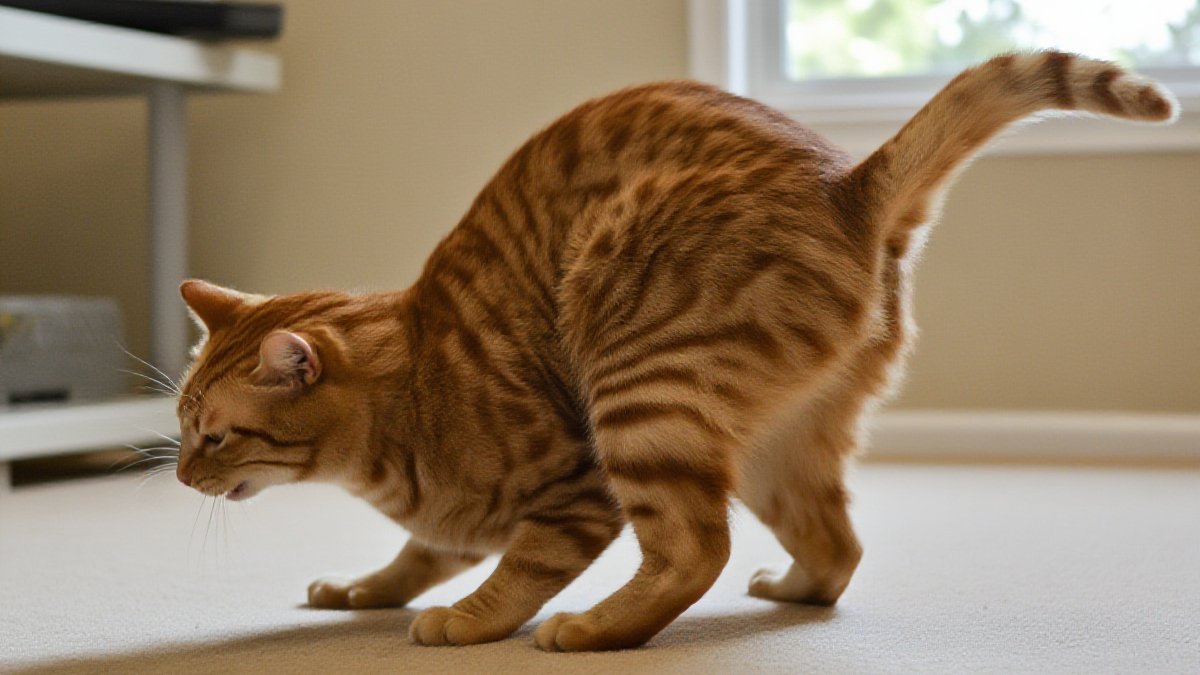
The most counterintuitive fact in cat dermatology is also the one that explains most mystery itching: for a cat with flea allergy dermatitis, a single flea bite triggers weeks of intense itching. The allergy is not to the insect itself but to proteins in flea saliva, and in a sensitized cat the immune system keeps reacting long after the flea is gone. That is why owners search the cat, find nothing, and conclude fleas are impossible — while the cat is living through the aftermath of one bite that happened days or weeks earlier.
This guide explains what flea allergy dermatitis (FAD) looks like on a cat, why the usual "but I never see fleas" reasoning fails, how treatment actually works when the itch has snowballed, and how one real clinic approaches the problem — because the treatment plan only works when it targets the flea population, not just the symptoms.
The Itch Map: What Flea Allergy Looks Like on a Cat
FAD has a characteristic geography. Fleas live where a cat cannot groom them out — along the back at the base of the tail, around the hips and thighs, and on the belly. The rash follows the map:
- Itching concentrated at the tail base — the signature move: the cat turns its head backward and gnaws or frantically scratches the top of the tail and the rump, sometimes spinning around trying to reach it.
- Hair loss in that same band — thinning fur or a bald stripe down the lower back and around the tail, often with small crusty bumps underneath.
- Miliary dermatitis — a sandpaper rash of tiny scabs, most often along the back, neck, and head. It is the most common skin reaction seen in allergic cats and fleas are its leading cause.
- Hot spots and raw skin — in severe reactions the cat can chew an area raw within days, and the moisture and inflammation invite secondary bacterial infection.
- Over-grooming elsewhere — some cats respond to the allergy by licking themselves nearly bald in reachable zones, which misleads owners toward a "stress" explanation.
- Flea dirt as the tell — black specks in the coat that smear reddish-brown on a wet paper towel are digested blood: proof of flea feeding even if the flea itself was eaten during grooming. Cats are efficient flea hunters of themselves.
Own a Veterinary Clinic?
Enjoyed this article? Our editorial team researches, writes, and publishes professional features just like this one about clinics across the US. Get your practice in front of thousands of cat owners searching for a vet in your city.
Why "I Never See Fleas" Is the Wrong Test
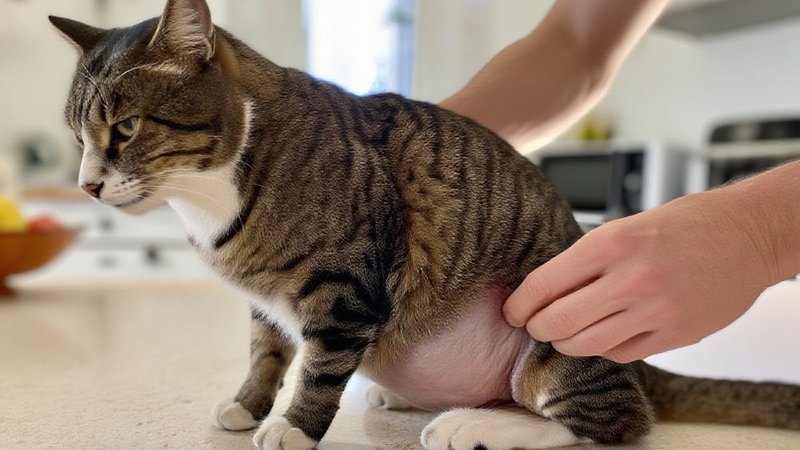
Owners resist the flea diagnosis for understandable reasons: the cat is indoor-only, no fleas were found on inspection, and other pets look fine. All three can be true while FAD is still the correct diagnosis. Fleas move between hosts fast; a feeding flea is on the cat for minutes, not hours, and fastidious cats swallow them during grooming. Indoor cats are not sealed environments — fleas ride in on humans, screens, and other animals, and in warm states like Texas they breed outdoors year-round. Meanwhile a single missed bite in a sensitized cat produces a reaction that outlives the flea by weeks.
There is also a hairball-shaped trap: flea-allergic cats that over-groom swallow more fur, so the first symptom the owner notices is more frequent hairballs, not itching. The skin condition hides behind a digestive complaint.
Treatment: Calm the Cat, Then Break the Life Cycle
FAD treatment has two halves, and skipping the second half is why the itch keeps returning:
- Stop the current itch — the vet treats the inflamed skin directly: typically a short anti-inflammatory course (injection or tablets), sometimes paired with an antibiotic if the skin is secondarily infected. This is relief, not a cure, and it is deliberately time-limited.
- Kill every flea on every pet — every dog and cat in the household gets a modern, vet-appropriate flea preventive applied to all of them on the same schedule, year-round in warm climates. A product used intermittently, or on only one pet, leaves the cycle intact.
- Treat the environment — the eggs, larvae, and pupae live in carpets, bedding, and floor cracks, not on the cat. Wash pet bedding hot, vacuum thoroughly and dispose of the bag, and expect the environmental stage to keep hatching for weeks; consistent preventive use during that window is what starves it out.
- Recheck and reassess — if the itch returns despite all of the above, the vet widens the workup to food allergy and environmental atopy, which genuinely coexist with flea allergy in many cats.
What the Veterinary Visit Looks Like
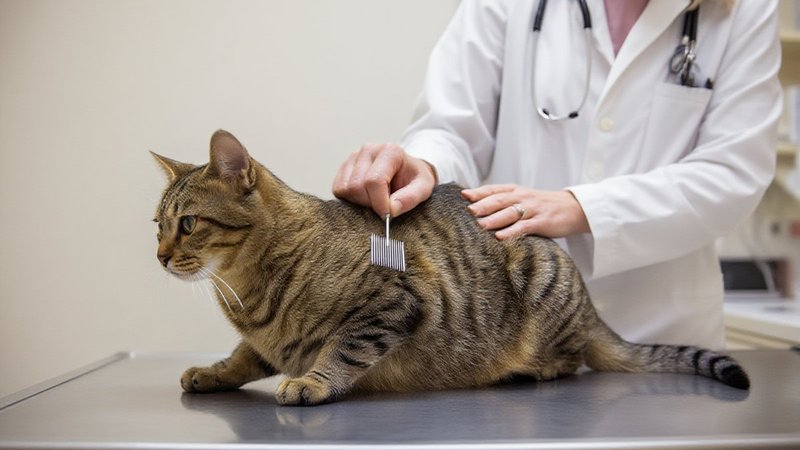
The appointment is usually quick to diagnose: a flea-combing exam plus the distribution of the rash confirms or rules out FAD in minutes, and the history — other pets, preventives used, indoor access — completes the picture. What the vet checks beyond the skin: ear and coat condition for other parasites, and whether the rash pattern fits fleas alone or suggests a second allergy underneath. Severe secondary infections may need a skin cytology. The single most useful thing an owner can bring is the exact flea preventive used, on which pets, and how often — because the most common cause of "treatment failure" is a product or schedule that was never actually sufficient.
Northwest Animal Hospital
1027 William D Tate Ave, Grapevine, TX, 76051
Phone: (817) 488-7533
⭐ 4.9 (421 reviews)
Northwest Animal Hospital on William D Tate Avenue in central Grapevine is a good picture of how this appointment runs at a high-volume neighborhood practice. They hold a 4.9-star average across 421 client reviews — one of the largest review bases in the northeast Tarrant County area, which reflects decades of DFW households cycling the same animals through every season. That continuity matters for FAD specifically: flea allergy is a recurrence problem, and a practice that has watched the same cat through several Texas flea seasons already knows whether last year's protocol worked before you finish describing this year's itch. The phone is (817) 488-7533 and the address is 1027 William D Tate Ave, Grapevine, TX 76051.
The practical flow for an owner: call and describe where the cat is itchy, whether the rash is at the tail base, what preventive has been used and on which pets, and whether any other animal in the house scratches. The questions worth asking: will the skin be checked for secondary infection, which preventive product and schedule is being prescribed for every pet in the home, and how long the anti-inflammatory course runs. Those three answers separate a complete FAD plan from a steroid patch. For owners comparing clinics around the DFW mid-cities, the cat vets in Grapevine, TX directory lists the alternatives, and the full profile at Northwest Animal Hospital carries hours and directions.
In a flea-allergic cat, the flea you cannot find matters more than the flea you can. Treat the household, not the symptom.
Questions Cat Owners Ask About Flea Allergy Dermatitis
Flea allergy rarely travels alone on the parasite list. Cat ear mites and head shaking covers the other common cause of frantic scratching, seasonal cat hazards explains why warm-season parasite pressure changes the whole household plan, and cat sneezing and upper respiratory infections is a reminder that skin trouble is not the only thing warm weather brings indoors.
This article is editorial content produced by the CatVetFinder team. Clinic details are drawn from public listings and may change — always confirm hours and services with the clinic directly.