A cat that has stopped lapping at its water bowl is one of those things that starts small and then eats your evening. You refill the dish, wait, check again — still full. Maybe the cat is not eating much either. The instinct is to wait it out, but cats are famously bad at showing they are sick, and water is where the trouble shows up first: a cat can quietly go from "fine" to genuinely dehydrated in about a day, and dehydration is one of the fastest ways an otherwise manageable illness becomes an emergency.
Here is the good news: in most homes, a cat that is not drinking much is usually not a crisis — it just gets its water another way. The real skill is telling the "normal for this cat" from the "call the vet today." This guide walks through how much water cats actually need, why wet-fed cats barely drink at all, the dehydration signs that actually matter, the common reasons intake drops (or spikes), and exactly what a vet does when hydration is the problem.
Quick Answers: The Questions Owners Ask First
How Much Water a Cat Actually Needs
The single most useful reframe is that "how much does my cat drink" is the wrong question — the right one is "how much water does my cat get, from every source." Cats are desert-adapted ancestors, and their bodies are efficient at conserving fluid, which is why they can go so long without drinking. But efficient is not unlimited.
| Measure | Ballpark daily need |
|---|---|
| Per kilogram of body weight | About 40–60 ml per kg |
| Per pound of body weight | Roughly 1 fl oz (30 ml) per lb |
| A 10 lb (4.5 kg) adult cat | About 300–480 ml total, all sources |
| From wet food alone | Wet food is ~70–80% water — covers most of the need |
| From dry kibble alone | Dry food is ~10% water — the rest must come from drinking |
That last row is where the confusion lives. A cat eating a full diet of wet food may take in most of its daily water from the can and drink only a few tablespoons from the bowl — and that is fine. A cat on dry kibble, by contrast, has to make up nearly all of its water through drinking, so for those cats the bowl is doing real work. The same "barely drinks" behavior is completely normal in one household and a genuine red flag in another, and the difference is almost always the food.
When "Not Drinking" Is Normal — and When It Is Not
The pattern that matters is change, not a fixed number. A wet-fed indoor cat that always sips a little and stays lively is a normal baseline. What should move you toward the phone is a shift from that baseline: a cat that used to lap at the bowl for minutes and now ignores it, or a dry-food cat whose water intake has clearly dropped over a day or two.
- The drop in drinking shows up alongside a drop in eating, even a small one.
- The cat seems quieter, hides more, or skips its usual favorite spot.
- There is any vomiting or diarrhea, which drains fluid faster than normal.
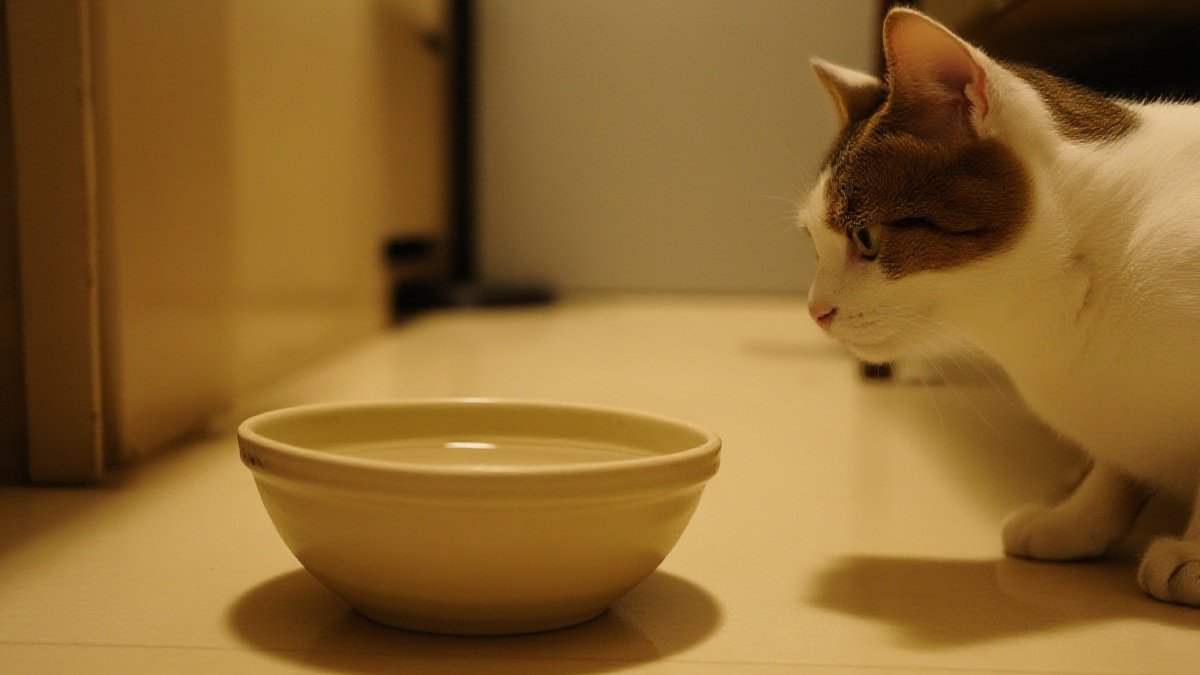
- The water bowl is being avoided but the food bowl is not — often an oral-pain clue.
- It is a kitten, a senior, or a cat with a known kidney condition; those get dehydrated fastest.
Dehydration Signs That Actually Matter
You do not need to be a vet to do a decent hydration check at home. Three checks cover most of it, and they take under a minute.
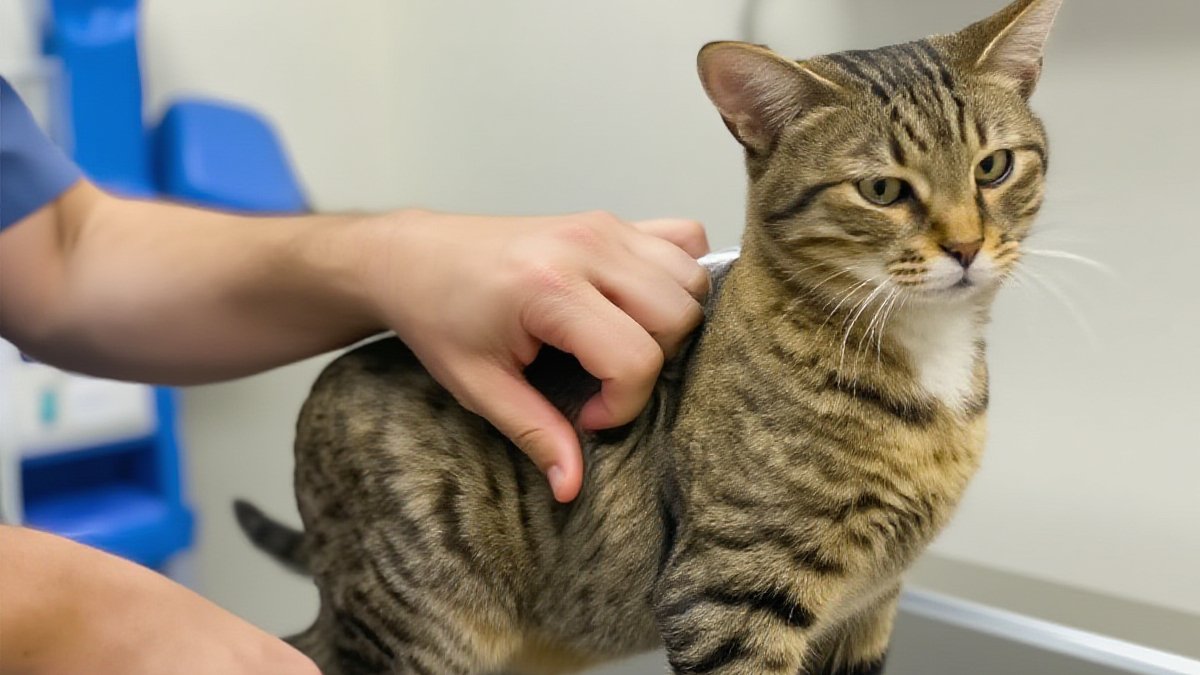
- Skin tent — gently lift the skin over the shoulder blades or the back of the neck and let go. In a well-hydrated cat it snaps right back. If it stays up for a second or two before settling, that is a tent, and it means fluid is low.
- Gums — press lightly on a gum and look at the color and texture. Normal gums are pink, moist, and slick to the touch. Tacky, sticky, or dry gums point toward dehydration; pale or very dark gums raise other concerns worth flagging.
- Eyes and energy — sunken-looking eyes, a dull coat, and general lethargy round out the picture. A dehydrated cat often looks flat in a way that is hard to describe but easy to recognize if you know your cat.
None of these is a diagnosis on its own, and any single mild sign can be nothing. The pattern is what matters — two or more together, especially in a cat that has stopped drinking, is the combination that should prompt a same-day visit.
Why Cats Stop Drinking: The Usual Suspects
Water intake drops for a short list of reasons, and most of them are fixable at home once you spot which one it is. A few, though, are early signals of something the vet needs to see.
Own a Veterinary Clinic?
Enjoyed this article? Our editorial team researches, writes, and publishes professional features just like this one about clinics across the US. Get your practice in front of thousands of cat owners searching for a vet in your city.
- Feeling generally unwell — cats that are nauseated or just "off" often stop drinking before they stop eating. This is why a drop in water can be the earliest symptom of an illness that has not announced itself yet.
- Dental or mouth pain — tooth resorption, gum disease, and stomatitis make it painful to open the mouth and lap at a bowl. A cat that avoids the water dish but will still eat soft food is a classic presentation.
- Kidney disease — early chronic kidney disease often shows up as drinking more, not less, but a cat in later stages or one feeling nauseated from a buildup of toxins can drink very little. Either direction is worth a bloodwork check.
- Heat and stress — a hot room, a new pet, or a routine change can suppress appetite and thirst at the same time. Cats cope with heat by hiding and conserving, which looks like disinterest in everything, water included.
- Fountain preference and whisker fatigue — many cats strongly prefer moving water, and some will not drink from a bowl where their whiskers touch the rim (whisker fatigue). A perfectly healthy cat can "stop drinking" simply because it hates the dish.
- Bowl placement — a water dish sitting right next to the food, in a high-traffic spot, or one that has not been cleaned in a few days will get ignored by a fastidious cat. Cats generally prefer their water away from their food.
How to Get Your Cat to Drink More
Most of these fixes are free and take an afternoon. Start with the ones that match the likely cause, and give each a day or two before judging it.
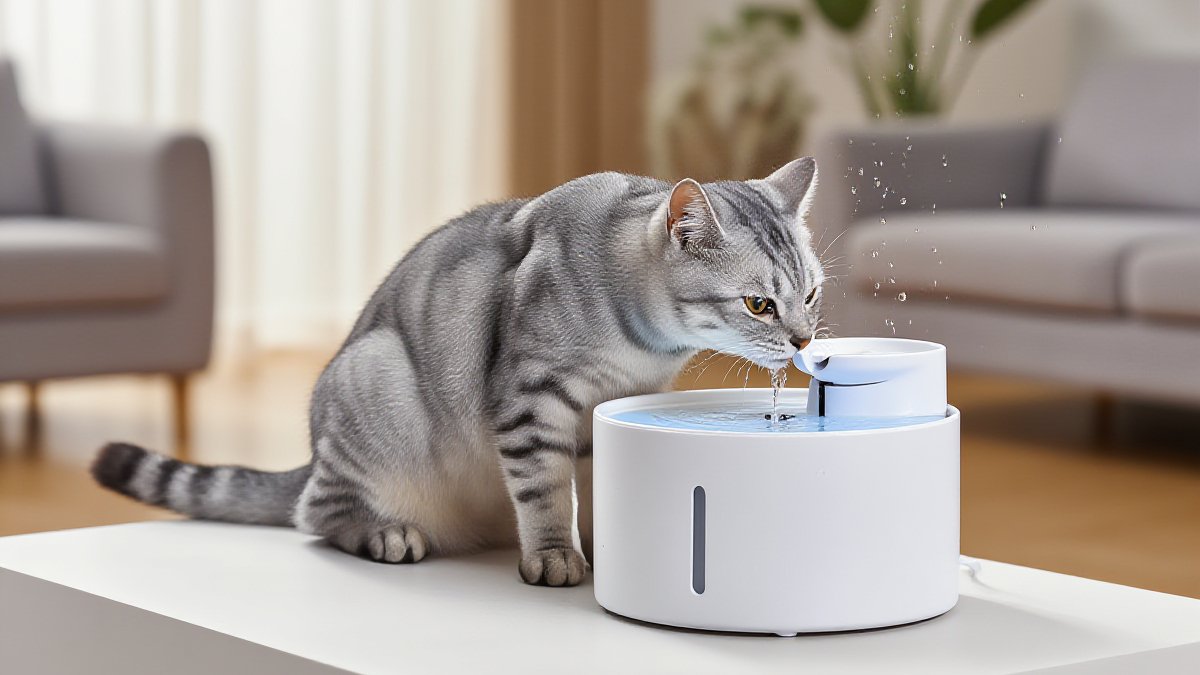
- Add a fountain — moving water is the single most effective change for many cats. If your cat has ever ignored a still bowl but lapped at the toilet or a drip, this is almost certainly the fix.
- Offer multiple bowls — put fresh water in several spots around the house so the cat does not have to travel to a spot it does not like. More options, more drinking.
- Use wide, shallow bowls — a broad dish keeps whiskers off the rim and eliminates whisker fatigue. Ceramic or stainless steel beats plastic for many cats, which pick up on odor and texture.
- Add water to the food — warm a little water into wet food, or top dry kibble with warm water so it softens and carries more moisture. Many cats will take in the extra liquid without noticing.
- Try colder water — some cats prefer cool water; ice cubes in the bowl can also make it more interesting. Swap out the water at least once a day so it never goes stale.
When Drinking Is Too Much, Not Too Little
It is worth covering the mirror image, because a sudden increase in water intake is its own red flag. Cats that start drinking a lot more than usual — refilling the bowl constantly, lapping at the toilet, hunting for water — are often signaling one of three conditions: kidney disease, diabetes, or hyperthyroidism. All three cause the body to lose fluid faster and trigger thirst as compensation.
The pattern that matters here is a steady change over weeks, not a hot day. If your cat's water intake has clearly climbed and you notice it going to the litter box more often (larger or more frequent urine), that combination deserves a vet visit for bloodwork and a urinalysis. What kidney disease looks like in cats covers the early signs of the most common of the three, and it is the one where catching it early changes the outcome the most.
What the Vet Actually Does
A visit for a cat that is not drinking is usually quick and straightforward, and knowing what to expect makes it easier to book. The core of it is a hydration assessment plus a look for the cause.
- Hydration check — the vet repeats the skin-tent and gum checks you can do at home, adds a capillary refill time (how fast pink returns to a pressed gum), and estimates how dehydrated the cat is.
- Fluids if needed — a mildly dehydrated cat may go home with subcutaneous fluids (a small amount of saline given under the skin, usually done in-clinic or taught for home use). A more dehydrated cat gets intravenous fluids to rehydrate properly.
- Bloodwork and urine — if the cause is not obvious, bloodwork and a urinalysis screen for kidney disease, diabetes, and thyroid problems, which are the usual suspects behind both low and high intake.
- A plan and a follow-up — you leave with what was found, how to support hydration at home, and when to recheck. For chronic conditions, this becomes a monitoring schedule rather than a one-off visit.
The Emergency Threshold
Most of the time, a cat that is drinking less is a "change something and watch it" situation. But there is a clear line where waiting stops being safe.
- No water at all for about 24 hours, especially with any other warning sign.
- Clear dehydration: a skin tent that holds, tacky or dry gums, sunken eyes.
- Vomiting or diarrhea on top of not drinking — fluid loss plus no intake dehydrates fast.
- Lethargy, collapse, or the cat is hard to rouse.
- It is a kitten or a senior cat, which tolerate dehydration far less well than a young adult.
What This Looks Like in Practice: Sunrise Boulevard Animal Hospital
Sunrise Boulevard Animal Hospital
7484 Sunrise Blvd, Citrus Heights, CA, 95610
Phone: (916) 726-2334
⭐ 4.7 (473 reviews)
To make the visit concrete, here is one worked example. Sunrise Boulevard Animal Hospital in Citrus Heights, CA sits on 7484 Sunrise Blvd and holds a 4.7-star average across 473 reviews — a volume that tells you this is a high-throughput neighborhood practice where a cat that has stopped drinking is an everyday presentation, not a special case. A hydration visit there follows the same arc as anywhere: exam and skin-tent check, fluids if the cat is down, bloodwork if the cause is not obvious, and a clear plan for keeping water up at home. Their number is (916) 726-2334.
The practical takeaway from a practice like this one is timing. If your cat simply has not been lapping much today but is eating, playing, and its gums are slick, that is a "fix the bowl and watch it through the day" situation — change how the water is offered and recheck in the morning. If the skin tents, the gums feel tacky, or there is vomiting on top of no drinking, that is the same-day call. Owners who can tell which of the two they are in tend to book sooner when it matters and skip a needless visit when it does not.
This article is editorial content produced by the CatVetFinder team. Clinic details are drawn from public listings and may change — always confirm hours and services with the clinic directly.