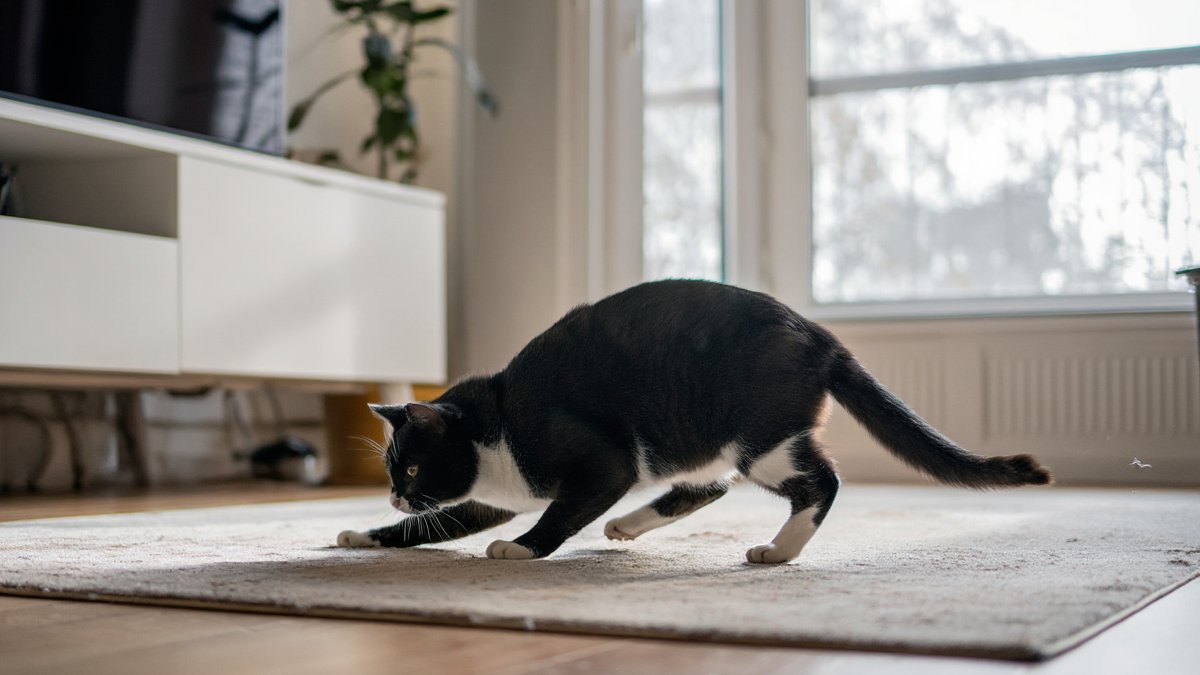
There is no subtler set of signs in the cat-owner experience. The cat is on the rug, front paws planted, and drags itself forward a foot or two with its hind end skimming the carpet, expression entirely serene — and then leaps up as if nothing happened and stares at you. Scooting is not a joke the cat is making. It means something back there itches, stings, or feels stuck, and the cat has found that friction is the only tool it has.
Dogs got the anal-gland reputation; cats quietly have the same anatomy and the same trouble, plus a few causes dogs do not get. The good news: scooting in a cat is usually one of a short list of identifiable problems, most are quickly treatable, and the plan below runs from home checks that rule things out to exactly what happens at the vet visit — plus the one symptom that turns this from "soon" into "today."
The Problem Menu: What Scooting Actually Is
Start with the anatomy, because it explains the whole problem. Two small sacs sit at roughly four o’clock and eight o’clock just inside the anus, each holding a few drops of strong-smelling secretion that normally expresses itself during defecation. Problems arise in order of likelihood like this: an impacted or inflamed anal sac, where secretion thickens and the sac fails to empty; a bacterial infection of the sac, which is hotter, more swollen, and much more painful; an abscess, which forms fast and may rupture through the skin looking like a small bloody sore beside the anus; and tapeworm segments, which crawl out onto the fur and cause itching at the exit because that is where they exit. Separate them from the non-gland causes: matted feces stuck to long fur ("dingleberries" are a real scoop-down-the-hallway cause), diabetes or obesity-related skin irritation, a scratch or bite wound near the tail base, or diarrhea/poop-stickiness residue.
The At-Home Five-Minute Check Before You Call
Gather three facts. One: lift the tail and look — swollen, red, or oozing skin beside the anus means stop assessing and call; a clean quivering rear with normal fur but scooting behavior points more toward irritation from inside. Two: inspect the last few stools (or the litter) for white rice-like segments or flat white kernels that move. Three: check the fur around the rear for mats or stuck feces — every longhair owner should own this problem’s simple fix, a careful clip or a thorough lukewarm wash. Cats with soft or mushy stool smudge the anal area constantly; if the last week of stool has been soft, the litter-box record is the clue, and a firming diet may end the scooting without a gland procedure.
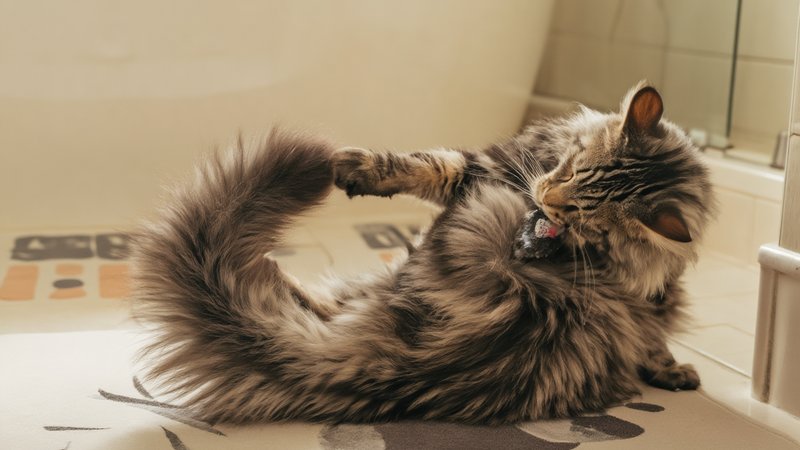
Recurring scooting without visible cause deserves one more explanation: weight and grooming. A heavy cat cannot reach its own rear to groom it, so dried residue accumulates and itches; an obese cat scooting is often simply a hygiene problem solved by the weight-loss checklist we cover in the indoor cat weight loss plan. Skin allergy plays a part too — much like dogs, food- or environment-allergic cats can present with rear and tail-base itching.
Whatever the driver, the plan has the same shape: reduce whatever is at the source (gland impaction, worms, mats, stool softness) and protect the skin while it heals. Do not express anal sacs at home yourself. An emptying squeeze on a healthy sac is a skill; on an inflamed or abscessing sac it is painful, wrong-handed, and can rupture tissue inward. Several owners learn this after a video on how it is done in dogs; cats have smaller, deeper sacs, and the "expression every grooming visit" habit many dog owners accept is not a thing cats need.
A Worked Example: Briggs Warren E DVM, Lakewood, New Jersey
A scooting visit is exactly the kind of case where a compact solo practice shines: no wait in a big waiting room, a fast hands-on exam, and it usually ends same-day with one of just a few outcomes — an expressed sac, a wormer, or a SHORT course of medicated drops. In Lakewood, New Jersey, one option is Briggs Warren E DVM on River Avenue in Lakewood, a small practice rated 4.7 across eleven reviews, run by one veterinarian who sees the animal end-to-end — the kind of practice where the same doctor handles the exam, the treatment, and the recheck call a week later.
Own a Veterinary Clinic?
Enjoyed this article? Our editorial team researches, writes, and publishes professional features just like this one about clinics across the US. Get your practice in front of thousands of cat owners searching for a vet in your city.
Briggs Warren E DVM
838 River Ave, Lakewood, NJ, 08701
Phone: (732) 363-7202
⭐ 4.7
What matters is that a rear-end problem is short-cycle: most cats get a same-week resolution for something that had been annoying them for weeks.
What Happens at the Vet — and What It Fixes
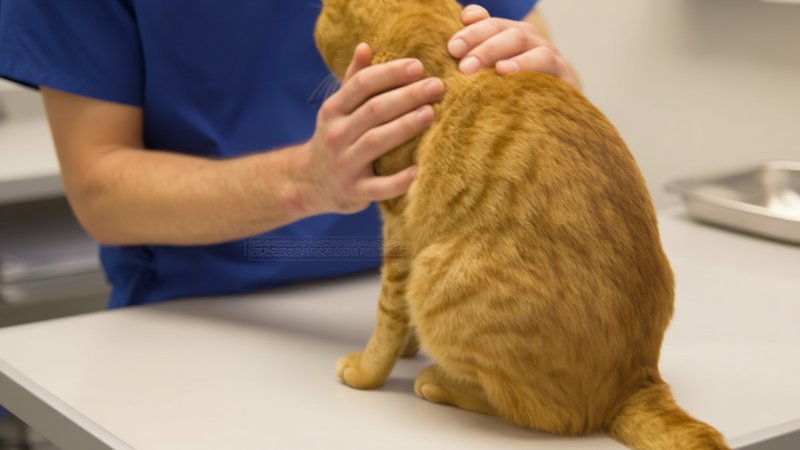
The visit is usually short and mostly quiet. The vet expresses (empties) both sacs manually, notes what comes out — normal tan paste, thick gritty sludge (impaction), or blood-tinged material (infection) — and flushes them if material is resistant. With infection, an antibiotic follows directly or the sac is dosed with topical medication while you wait. An abscess gets drained and usually treated with antibiotics and a cone until it closes. A tapeworm gets a praziquantel dose and a flea-control plan, because treating worms without treating fleas is a rinse-and-repeat cycle. Painful swelling without obvious infection gets pain relief on the spot.
Surgical sac removal is genuinely rare in cats and reserved for years of recurring disease or cancerous masses. If someone tells you your cat "always needs expressions," ask instead what is driving the impaction — stool firmness, weight, diet, allergy — because recurring reasons usually point to a fixable underlying cause rather than a standing maintenance appointment.
Questions Cat Owners Ask About Scooting
Scooting can also show up alongside the worm burden that follows fleas — our cat worms signs guide covers the full parasite picture — and tail-base irritation sometimes traces back to flea allergy rather than glands at all, which the flea allergy dermatitis guide sorts out. Soft stool behind it all is covered in the cat diarrhea when to worry guide.
This article is editorial content produced by the CatVetFinder team. Clinic details are drawn from public listings and may change — always confirm hours and services with the clinic directly.