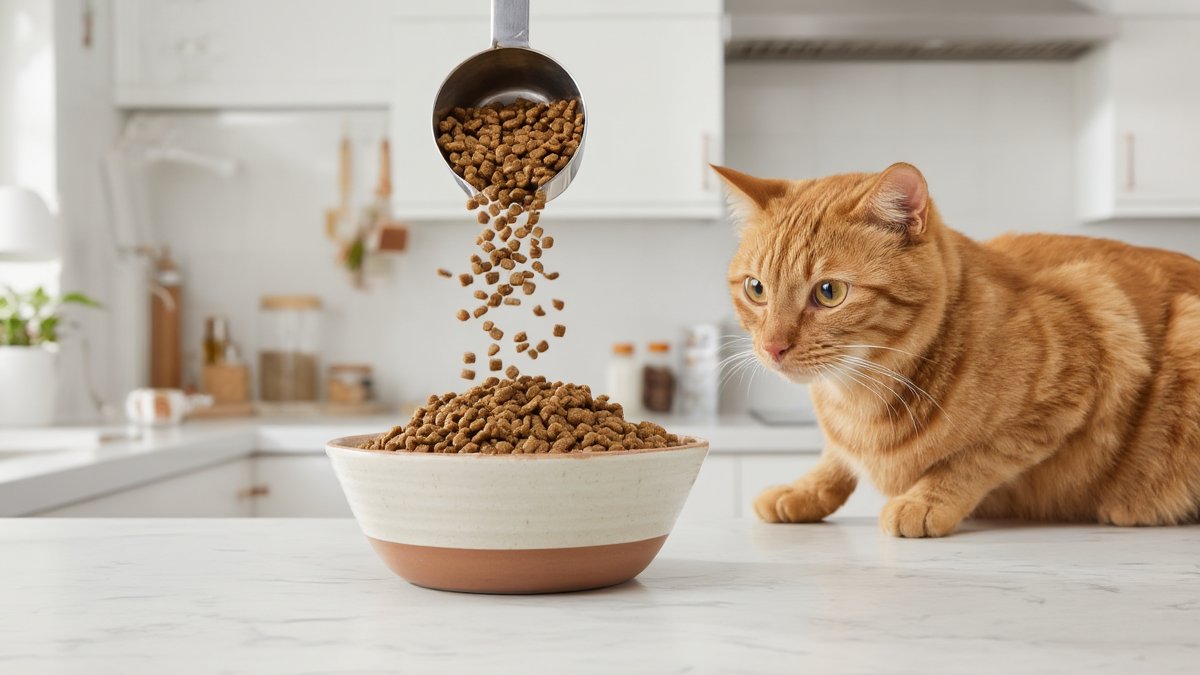
Every bag and can of cat food carries a feeding guide, and nearly every owner has discovered the problem with it: the chart assumes a generic cat that does not live in your house. Feed the label amount to a neutered indoor adult who sleeps fourteen hours a day and you will often overshoot by a wide margin; feed it to an unneutered young cat who sprints the hallway at 2 a.m. and you may undershoot. The reason the chart fails is that the right portion is a function of the cat, not the product — body weight, age, neuter status, activity, and life stage all shift the number. Once you understand the one calculation that sits underneath every feeding guide, portion sizes stop being a guessing game.
The Number That Matters: Calories, Not Cups
Portion guidance in cups or pouches is a translation of a calorie requirement, and the translation is where confusion lives, because calorie density varies enormously between products. The underlying math is simple enough to do by hand. A healthy adult cat needs roughly 40 to 50 calories per kilogram of body weight per day; a neutered indoor adult with an average activity level usually lands closer to 40, while a young, intact, or genuinely active cat runs toward the upper end. A 10-pound cat weighs about 4.5 kilograms, which puts a typical indoor adult in the range of roughly 180 to 220 calories a day. Now look at your bag: if the food carries 400 calories per cup, a 200-calorie day is half a cup, not the "3/4 to 1 cup" the generic chart printed for all adult cats. If your canned food carries 90 calories per 3-ounce can, that same day is about two cans. Same cat, same requirement, completely different-looking "portions." This single reconciliation step — calories needed versus calories per unit — resolves most feeding confusion on its own.
Portions by Life Stage
| Life stage | What changes | Practical approach |
|---|---|---|
| Kitten (to ~6 months) | Enormous growth demand; triple the adult calories per pound | Feed freely — multiple small meals a day of a kitten formulation; never restrict |
| Junior (6–12 months) | Growth tapering, adult teeth in | Transition toward 3–4 measured meals; begin watching body condition |
| Adult (1–7 years) | Requirement set by neuter status and activity | Typical neutered indoor adult: roughly 40 kcal/kg/day, split into 2–3 meals |
| Senior (7+ years) | Muscle mass and metabolism shift; kidney and thyroid issues appear | Portion per body condition, not habit; vet-guided, especially with chronic disease |
Own a Veterinary Clinic?
Enjoyed this article? Our editorial team researches, writes, and publishes professional features just like this one about clinics across the US. Get your practice in front of thousands of cat owners searching for a vet in your city.
Two life-stage notes worth flagging. First, kittens are the one stage where over-restriction is the mistake — growth demands are so high that measured-restriction logic from adult feeding does not apply. Second, "senior" is not a lower-portion instruction by default: some seniors need fewer calories as activity fades, while hyperthyroid seniors burn through food and need more. The stage changes the conversation, not the answer.
Wet Food, Dry Food, and the Mixed-Feeding Arithmetic
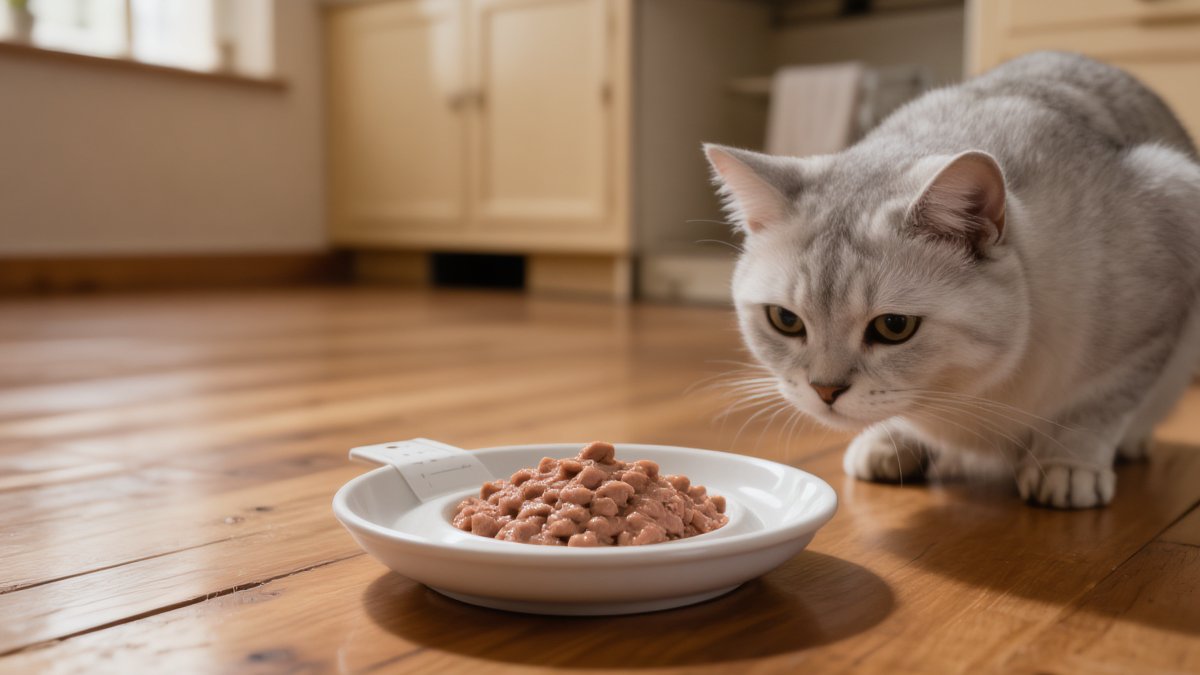
Mixed feeding — some canned, some kibble — is the most common pattern in American homes and the most common place portions drift. The failure mode is treating each food as its own allotment: a full pouch plus the labeled kibble amount doubles the day. The fix is to subtract, not add. If your cat needs 200 calories and gets a 90-calorie can in the morning, the kibble allowance for the whole day is the remaining 110 calories — check what that is in cups on the bag’s calorie statement, and measure it once with a proper measuring cup rather than an improvised scoop. Owners who eyeball dry food free-choice through a full bowl while also adding wet food routinely feed 30 to 50 percent above the intended target without any meal looking large. Water content is the quiet bonus of the canned portion: wet food runs roughly 75 to 80 percent moisture, which supports hydration in a species that drinks reluctantly — a genuine urinary-health consideration, not a marketing line.
How to Tell Whether the Plan Is Working
- Feel the ribs weekly. Run flat hands along the sides: you should feel the ribs under a thin padding with light pressure, like the back of your hand through fabric. Requiring firm pressure means the plan is overfeeding; sharply prominent ribs mean underfeeding.
- Look for the waist from above. A healthy cat has a visible tuck behind the ribs when viewed from above and a slight abdominal tuck from the side. An oval silhouette with no waist is the classic early overweight shape.
- Weigh monthly, at home. A kitchen or luggage scale and a carrier works: weigh yourself holding the cat, subtract yourself. A steady drift upward of more than a few percent means the portion is above the cat’s real burn rate, whatever the label said.
- Recheck every diet change. New food, new calorie density — re-derive the portion from the calorie statement of the new product before you open the first can.
A Worked Example: The Gentle Vet, Akron, OH
The Gentle Vet
1937 N Cleveland Massillon Rd, Akron, OH, 44333
Phone: (330) 665-5915
⭐ 4.9 (454 reviews)
Nutrition counseling is one of the quiet staples of a good general practice, and The Gentle Vet on North Cleveland Massillon Road in Akron, Ohio approaches exactly this kind of conversation — the name is not incidental, the practice is built around low-stress handling and unhurried appointments. Holding a 4.9-star rating across 454 client reviews, the hospital does routine wellness, dental, and chronic-disease care, all of which start with the same baseline a feeding plan needs: an accurate weight and a body condition score. Bring the actual foods you use — the labels, or a photo of the calorie statements — and a vet can turn the arithmetic above into a specific measured plan for your cat in one visit. Call (330) 665-5915 to schedule, or browse the full cat vets in Akron, OH listing to compare area practices.
The Takeaway
Feeding a cat the right amount is not about finding the perfect brand chart; it is about knowing roughly 40 to 50 calories per kilogram for an adult, translating your specific foods into that calorie budget, and letting body condition — ribs, waist, monthly weight — tell you whether the budget is right. Life stage shifts the target, mixed feeding is where portions silently double, and slow is the only acceptable speed for weight loss. A measuring cup, a calorie statement, and five minutes of arithmetic will settle the question more reliably than any chart on a bag.
This article is editorial content produced by the CatVetFinder team. Clinic details are drawn from public listings and may change — always confirm hours and services with the clinic directly.