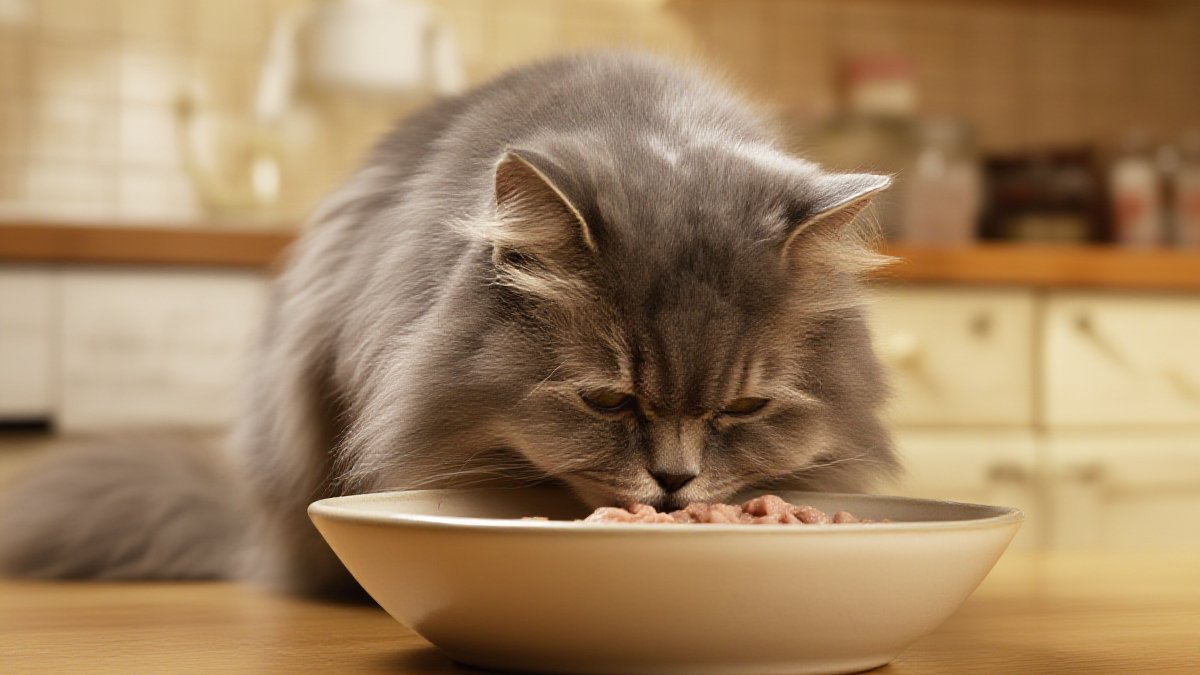
Most cats start showing their age not with one dramatic change but with a slow drift — a little less interest in the dry kibble they have eaten for years, a thinner body you notice when you pick them up, more time spent lying down. The word 'senior' gets thrown around loosely, and it is where feeding advice goes wrong fastest: a seven-year-old house cat and a fifteen-year-old with early kidney disease are not on the same nutritional track, yet they are often sold the exact same 'senior formula.' The single most useful thing you can do is stop thinking of senior food as one product and start thinking of it as a set of adjustments that match your specific cat's age stage, body condition, and bloodwork.
This guide walks through all of it: the age thresholds where needs genuinely shift, what actually changes in how an older cat uses protein, calories, phosphorus, and water, how to feed around the conditions that show up most often after ten (kidney disease, hyperthyroidism, diabetes, dental trouble, arthritis), the feeding routine that keeps a fussy senior eating enough, and when it is time to let bloodwork — not the bag on the shelf — decide what goes in the bowl.
When Does a Cat Become a Senior? The 7 / 11 / 15 Milestones
Veterinary medicine splits adult cats into three aging brackets, and they matter for feeding because each one carries a different metabolic story. 'Adult' runs from about four to seven years, when the cat is at full maintenance. 'Senior' covers roughly seven to eleven years, the window where subtle changes start but most cats are still healthy enough that diet tweaks are preventive rather than corrective. 'Mature senior' — sometimes called geriatric — begins around eleven to fifteen and beyond, where chronic conditions become common enough that the food is doing real therapeutic work.
- 7+ (senior): metabolism slows, muscle maintenance becomes a priority, and dental wear starts to matter. This is the stage for preventive nutrition — keeping protein quality high and watching weight.
- 11+ (mature senior): kidney function, thyroid activity, and insulin sensitivity are all worth checking regularly. Diet often shifts from 'maintain' to 'manage,' and wet food usually earns its keep here.
- 15+ (geriatric): multiple conditions may coexist. Feeding is frequently condition-driven and prescription-based, with small frequent meals and close weight monitoring.
How Senior Nutritional Needs Actually Change
The changes are not dramatic, but they are real, and most of them point in a direction that surprises owners. The popular mental model is that older cats need less of everything — fewer calories, milder food, gentler protein. The evidence points the other way on almost every axis except one.
| Nutrient / need | What shifts as cats age | Why it matters for feeding |
|---|---|---|
| Protein | Needs stay high; quality matters more than ever | Older cats lose muscle (sarcopenia) and need amino acids to hold on to it — cutting protein accelerates the loss |
| Calories | Total energy needs often drop, but many seniors under-eat and lose weight | The bigger risk is losing too much, not too little; appetite falls even when calories are still needed |
| Phosphorus | Should be controlled once kidney disease appears | High phosphorus stresses failing kidneys; restriction is a core part of renal diets |
| Water / hydration | Thirst sense blunts and kidneys concentrate urine less well | Dehydration becomes a real risk, especially in cats with kidney or urinary issues |
| B vitamins & omega-3s | Absorption can decline; inflammatory load rises | Supports energy, gut health, and helps moderate joint and systemic inflammation |
Protein is the one that gets argued about most. A common claim — passed around in forums and even on some older product labels — is that high protein harms aging kidneys, so seniors should be fed less of it. The current evidence does not support blanket restriction in healthy cats. What the research actually shows is that adequate, high-quality animal protein helps preserve lean muscle mass, and muscle loss (sarcopenia) is one of the defining problems of cat aging. Restricting protein in a kidney-healthy senior tends to make them thinner and weaker, not healthier. The nuance is this: protein restriction only becomes appropriate once kidney disease has been diagnosed, where it is paired with controlled phosphorus — and even then it is individualized, not a default.
Phosphorus is the nutrient that flips from 'fine in normal amounts' to 'actively harmful' once kidney function declines. Healthy kidneys excrete excess phosphorus easily; failing kidneys cannot, and the buildup contributes to further damage and to the mineral imbalances behind kidney disease. That is why renal diets are lower in both phosphorus and protein, and why a cat that has not had bloodwork drawn should not be put on a renal formula just because it is old — you would be restricting nutrients it does not need restricted.
Here is the counterintuitive part: many senior cats do not overeat — they under-eat. Appetite fades for a dozen reasons (dental pain, a diminished sense of smell, early illness), and metabolic rate does slow, so the classic failure mode is not an overweight cat but a slowly thinning one. If your older cat is losing weight or drifting down on the body-condition scale, the answer is usually more calories and better palatability, not fewer. 'Senior' food that is just regular kibble with fewer calories can quietly starve a picky senior.
Water deserves its own line item because cats are already marginal drinkers, and aging makes it worse. Wet food is the single most reliable way to raise a senior cat's fluid intake — a diet that is mostly wet can double or triple daily water compared with dry kibble alone. That matters enormously for kidney health, urinary tract comfort, and constipation, all of which become more common with age. If your senior eats only dry food, think of adding wet meals as a medical intervention, not an indulgence.
Two quieter adjustments round out the picture. B-vitamin absorption can decline with age and with certain medications, so energy and gut health benefit from adequate levels — another argument for complete, well-formulated food over home-cooked shortcuts. And omega-3 fatty acids (EPA and DHA) carry real anti-inflammatory value, supporting joint comfort in arthritic cats and modulating the low-grade inflammation that runs through many chronic conditions.
Feeding by Condition: Match the Diet to the Diagnosis
Once a condition is diagnosed, the diet stops being about age and becomes about the specific problem. These are the five that dominate senior cat feeding, and the direction each one points:
| Condition | Dietary direction | What to watch |
|---|---|---|
| Kidney disease (CKD) | Renal formula: controlled phosphorus, moderate high-quality protein, added omega-3s; wet preferred | Appetite, thirst, weight; bloodwork guides how far to go on restriction |
| Hyperthyroidism | Iodine-restricted diet can help control hormone levels in some cats | Rapid weight loss despite a big appetite; check the thyroid before assuming it is just age |
| Diabetes | Consistent meal timing, lower-carb / higher-protein profile, steady calories | Sudden weight change, increased thirst and urination — the two flags that overlap with kidney disease |
| Dental disease | Softer textures (wet, rehydrated kibble) to reduce chewing pain | Dropping food, one-sided chewing, bad breath; pain is often why appetite falls |
| Arthritis / joint disease | Calorie control plus omega-3s and joint-support nutrients; keep weight ideal | Stiffness after rest; excess weight makes every joint problem worse |
Kidney disease is the big one, and it is the reason a senior cat's diet can look completely different from its neighbor's even at the same age. Chronic kidney disease progresses slowly and silently — cats compensate for years before they show obvious signs like increased thirst or weight loss — which is exactly why bloodwork, not guesswork, should steer the transition to a renal diet. A renal formula is lower in phosphorus, moderate (not minimal) in high-quality protein, and enriched with omega-3s; wet versions are strongly preferred for hydration.
Hyperthyroidism is the condition that masquerades as normal aging. An overactive thyroid cranks up metabolism, so the cat eats more but loses weight, may become vocal or restless, and can develop a ruffled coat. Iodine-restricted diets can help control hormone production in a meaningful share of cats, and treating the thyroid often resolves the 'mystery' weight loss that owners have been blaming on old age.
Diabetic feeding is about consistency as much as content: regular meal times, a profile lower in carbohydrate and higher in quality protein, and steady calories to keep blood sugar from swinging. The practical overlap with kidney disease is real — both show up as weight change plus increased thirst and urination — which is why a senior cat with those signs needs a workup rather than a diet guess.
Dental disease is the most under-diagnosed reason an older cat quietly stops eating well. Painful teeth and gums make chewing dry kibble uncomfortable, so cats drop food, chew on one side, or simply eat less. Switching to wet food or rehydrating kibble removes the mechanical pain and often restores appetite overnight — a low-cost fix for what looks like a picky senior.
Arthritis changes feeding in two ways. First, excess weight multiplies the load on every joint, so calorie control matters more here than anywhere else. Second, omega-3 fatty acids and other joint-support nutrients have genuine anti-inflammatory benefit, and keeping the cat at an ideal body condition is itself a treatment. The goal is not a thin cat — it is a cat that can move without pain.
The Weight-Loss-But-Still-Eating Trap
Own a Veterinary Clinic?
Enjoyed this article? Our editorial team researches, writes, and publishes professional features just like this one about clinics across the US. Get your practice in front of thousands of cat owners searching for a vet in your city.
The most dangerous feeding scenario in an older cat is the one that looks fine on the surface: the cat is still eating — maybe even ravenously — and yet getting thinner. That combination is a red flag, not a reassurance. A normal senior losing weight usually has a falling appetite; a senior who keeps up its intake but loses muscle is burning more than it is absorbing, which points to one of two metabolic culprits: an overactive thyroid (hyperthyroidism) or uncontrolled diabetes. Both are treatable, and both are missed when the weight loss gets written off as 'just getting old.' If your cat's appetite is steady but the body is shrinking, that is a bloodwork visit, not a diet change.
A Practical Feeding Routine for Senior Cats
The 'what' matters less if the 'how' fails, because a senior cat that will not eat is a senior cat that is losing weight regardless of how good the formula is. These are the tactics that keep older cats eating:
- Feed multiple small meals instead of two big ones — three to four smaller feedings a day suits slowing digestion and keeps calories coming in without overwhelming appetite.
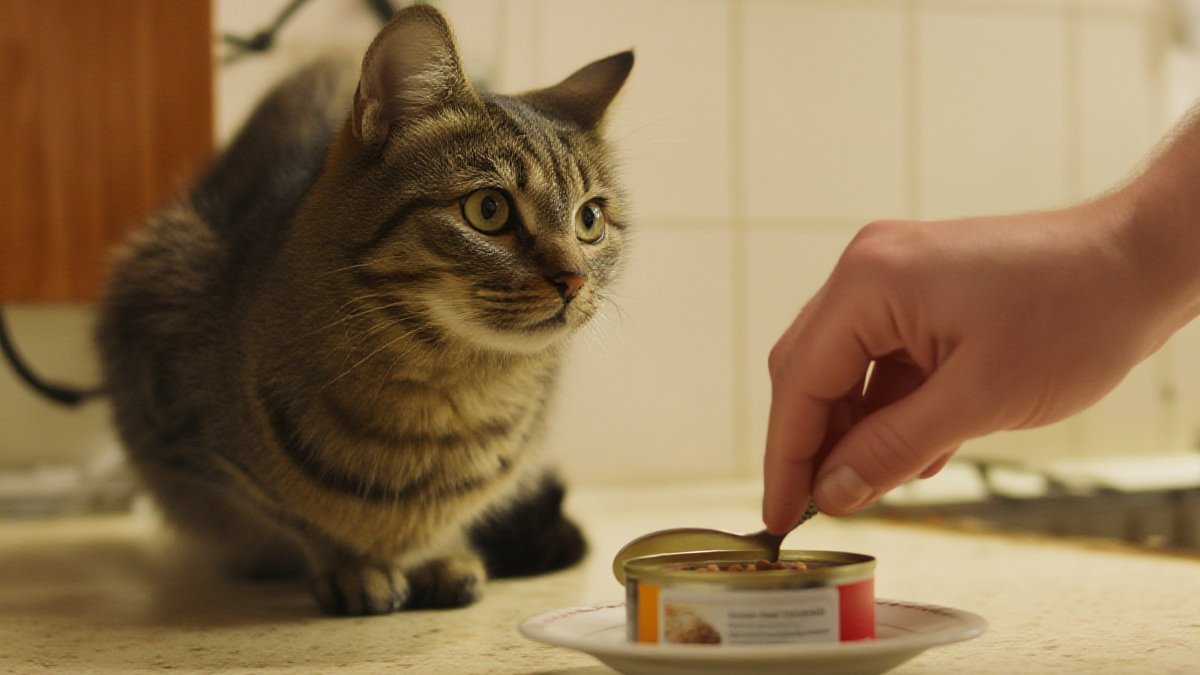
- Warm wet food slightly before serving; heat releases aroma, and smell is often the first sense to fade. A few seconds in the microwave (not hot) can make a bland bowl suddenly interesting.
- Add toppers — a splash of warm water or low-sodium broth, a little canned tuna juice, or a commercial gravy — to boost both flavor and fluid intake at once.
- Keep feeding stations easy to reach. A cat with stiff joints should not have to jump onto a high counter or crouch into a deep bowl; low, flat bowls near where the cat rests win.
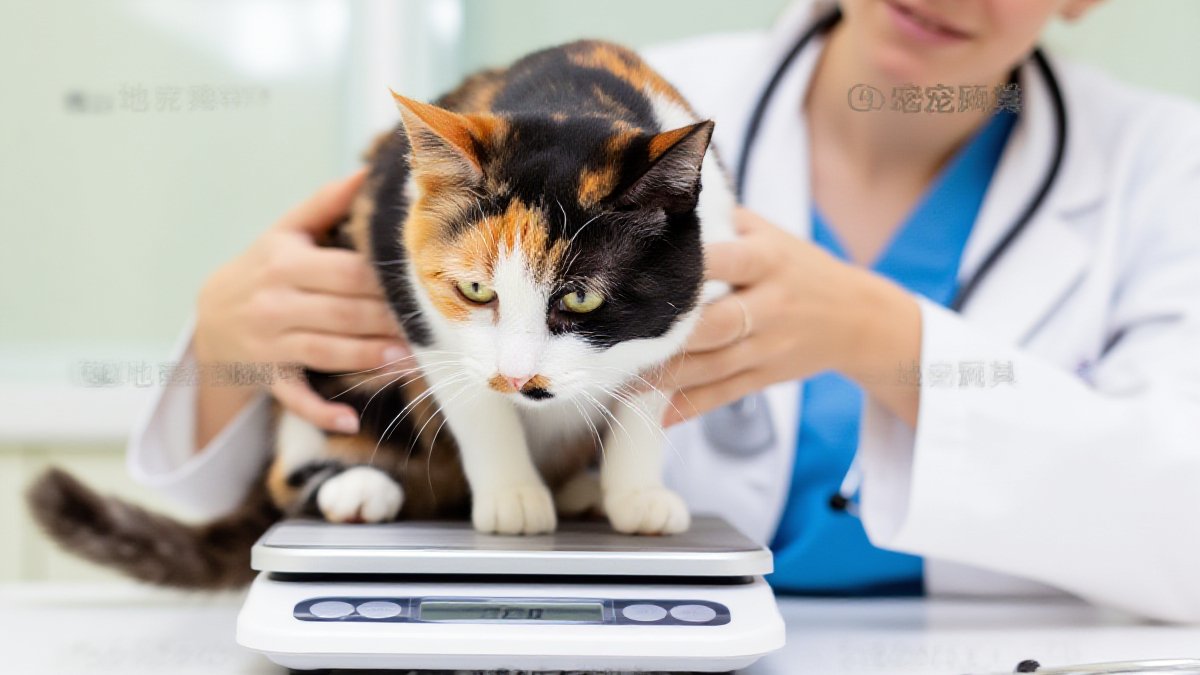
- Weigh your cat monthly at home using a kitchen scale — stand on it yourself first, note your weight, then lift the cat and subtract. A slow downward trend caught early is far easier to reverse than one found at the vet.
That last habit is underrated. Most owners cannot reliably judge a few percent of weight loss by eye, but a scale makes it visible. Tracking once a month turns 'I think she looks thinner' into a number with a trend, and it is the single best early-warning signal for both under-eating and the metabolic conditions above.
When Bloodwork Should Guide the Diet
The honest answer is: more often than owners assume. A senior cat that has never had bloodwork drawn is on a guess. Annual (and in many cases semi-annual) screening — kidney values, thyroid hormone, blood sugar, and a complete blood count — is what tells you whether 'senior food' should actually be a renal diet, an iodine-restricted diet, or just high-quality maintenance food with extra wet meals. The rule of thumb: if the cat is over eleven, has any weight change, increased thirst, vomiting, or a change in litter-box habits, bloodwork should come before you change the food, because the results decide which direction to go.
Treats and Snacks for Older Cats
Treats are part of feeding, not separate from it — an older cat's treats should follow the same logic as its meals. A few principles:
- Keep treats under about 10% of daily calories so they supplement the diet rather than crowd out the food that is doing the therapeutic work.
- Prefer soft, low-phosphorus, high-moisture treats for cats with kidney or dental issues; a crunchy treat is harder to chew and drier to drink around.
- Use treats as enrichment and reward, not filler — a small, special thing given at a meal or during a short play session beats free-grazing all day.
What This Looks Like in Practice: Healing Path Animal Wellness
Healing Path Animal Wellness
1009 W Colorado Ave, Colorado Springs, CO, 80904
Phone: (719) 632-4626
⭐ 4.9 (112 reviews)
To make the screening-and-diet conversation concrete, here is one worked example. Healing Path Animal Wellness in Colorado Springs, CO sits at 1009 W Colorado Ave and holds a 4.9-star average across 112 reviews — the kind of small-practice rating that usually reflects exactly the steady, unhurried senior-care visits this guide describes: a thorough exam, a set of bloodwork, and a feeding plan matched to what the numbers actually show rather than the cat's age on the chart. Their number is (719) 632-4626.
The practical takeaway from a practice like this one is sequencing again. If your senior cat is eating well, holding weight, and drinking normally, a routine annual check with bloodwork is the right cadence — no urgency, just diligence. But if there is any of the flags above — steady weight loss despite appetite, new thirst or urination changes, vomiting, or a coat that has gone dull and ruffled — that moves the visit up to this week, because those are the signs where catching the diagnosis early is the difference between a manageable diet adjustment and a much harder one later.
Questions Cat Owners Ask About Senior Cat Feeding
Feeding decisions rarely stand alone — they connect to the bigger picture of how long your senior cat has ahead and what is quietly changing under the surface. Senior cat vet checkups covers what to expect at those annual visits, and How long do indoor cats live? puts the aging brackets in context. If bloodwork points toward a specific condition, cat kidney disease signs and cat hyperthyroidism symptoms go deep on each one, and indoor cat weight loss tackles the thinning-cat problem head-on.
This article is editorial content produced by the CatVetFinder team. Clinic details are drawn from public listings and may change — always confirm hours and services with the clinic directly.