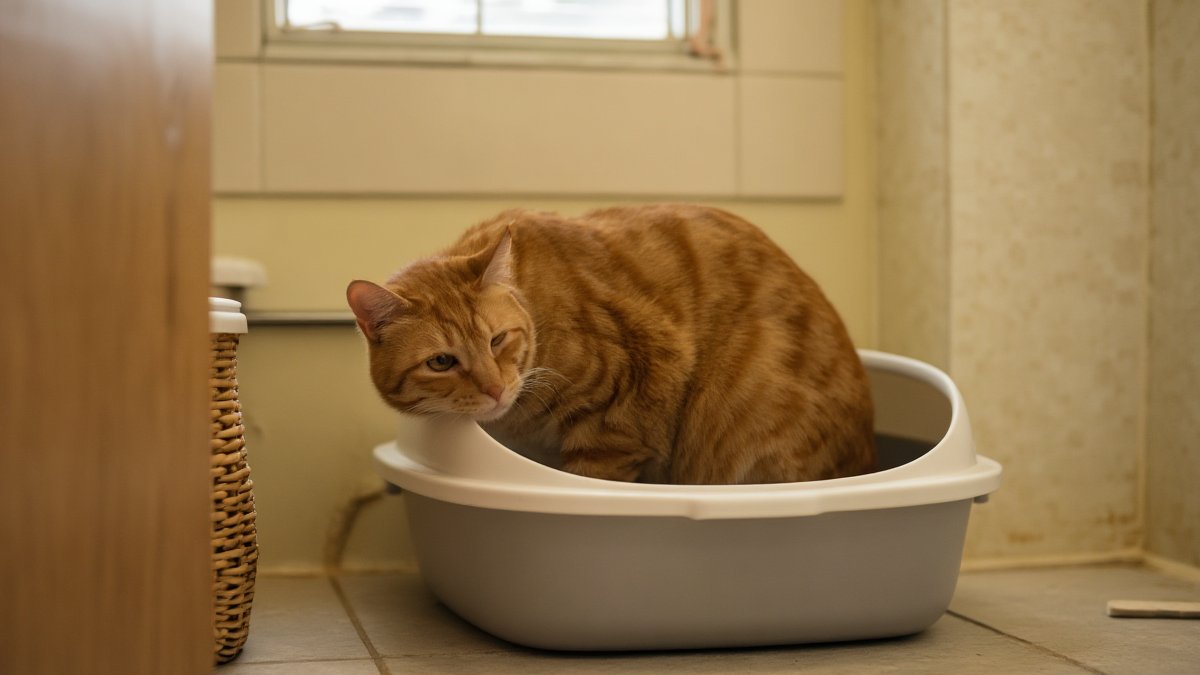
Your male cat is in the litter box again — third time in an hour. He crouches, shifts his weight, produces nothing or only a bead of urine, maybe cries out, then walks away and goes right back in. If your first instinct is "constipation," we understand the confusion, but there is a scenario here that outranks almost everything else in feline medicine: a blocked urethra.
Male cats are built with a long, narrow urethra, and it is the perfect size to plug with crystals, tiny stones, or mucus. When it plugs, urine backs up, potassium climbs, and the kidneys start failing within hours. A blocked male cat can go from "seems a bit off" to dead in 24 to 48 hours. That is not a line meant to scare you into a vet visit for nothing — it is the actual reason straining in a male cat is treated as an emergency until proven otherwise.
Straining vs. Just Visiting: What You Are Actually Seeing
Cats spend time in the litter box for many reasons, so separate the behaviors before you panic:
- True straining: the classic hunched posture, ten or more seconds of visible pushing with little or nothing produced, sometimes a cry at the end. Repeated trips with tiny or absent output.
- Frequent small spots: an irritated, inflamed bladder feels full when it is nearly empty, so the cat produces drops every few minutes. This can be cystitis (bladder inflammation), or — critically — it can be a partial blockage that is not fully plugged yet.
- Vocalizing and licking the penis: pain signals that pair with either picture above and raise the urgency a level.
- Peeing elsewhere with normal amounts: usually behavioral or a full-but-painful bladder, less immediately dangerous, still worth a call.
The trap most owners fall into: the cat seems to "pass something" eventually, so the emergency feeling fades. Partially blocked cats dribble around a plug. The plug does not clear itself, and every hour of backup does kidney damage.
The 30-Second Home Check (and Its Limits)
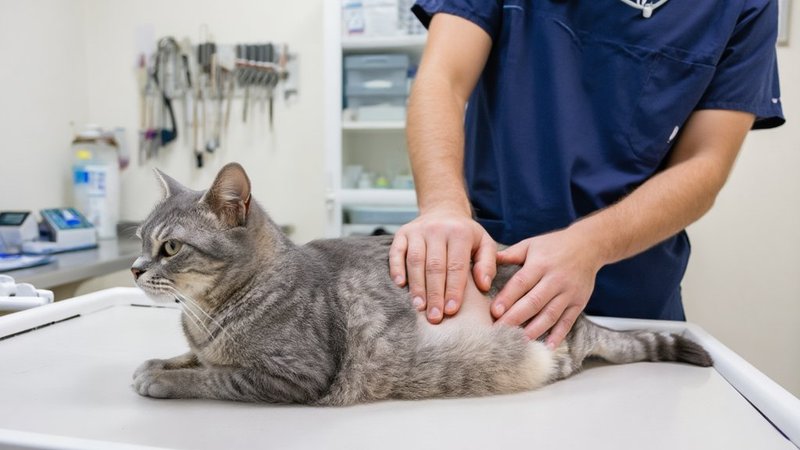
Gently feel your cat's lower belly, just in front of the hips. A normal bladder is soft and squishy, about the feel of a half-filled water balloon. A blocked bladder is firm to hard, often the size of an orange, and usually painful — many cats will hiss or turn and bite when you press it. If you feel that firm, painful ball on a male cat who is straining, stop poking and go now.
Two honest caveats. First, a bladder that has ruptured is not palpable at all — a cat who was straining hard all night and now seems suddenly "better" but lethargic may be deteriorating, not improving. Second, a calm cat is not a safe cat; cats mask pain with stillness. The belly check helps you escalate; it cannot rule anything out.
Why Male Cats, and Why Now
Neutered males have the narrowest urethra of any cat, and the plugs that block it — struvite crystals, calcium oxalate grit, and urethral mucus plugs — form in concentrated urine. Indoor cats on dry-food-only diets, overweight cats, and cats who drink little and get stressed by routine changes all sit higher on the risk curve. Winter months see more blockages, partly because cats drink less when it is cold.
None of that means you did anything wrong. It means the deck is stacked in a way that makes monitoring water intake and litter box output part of owning a male cat, the same way tire checks are part of owning a car.
Meadows Cat Hospital
1480 NW Gilman Blvd # 6, Issaquah, WA, 98027
Phone: (425) 392-8770
⭐ 4.8
What Actually Happens at the Clinic
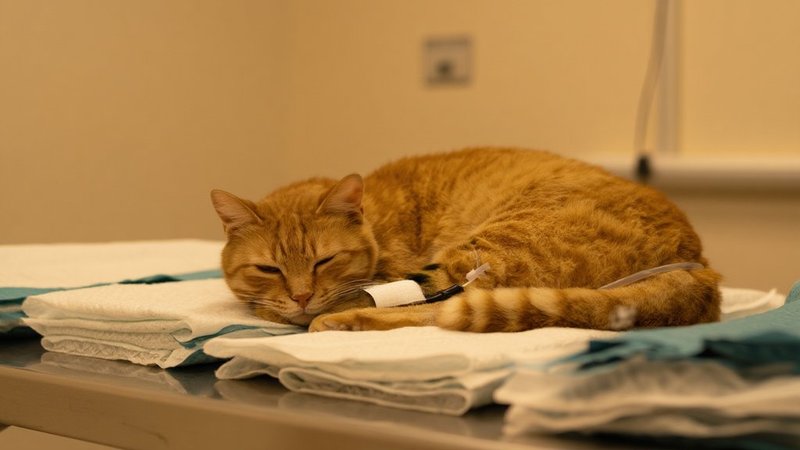
Knowing the sequence makes the drive easier. A blocked cat first gets stabilized: fluids under the skin or intravenously, pain control, and calcium and potassium levels checked, because dangerous heart arrhythmias come from potassium, not the urine itself. Then the blockage itself: the cat is sedated, a urinary catheter flushes and removes the plug, and the bladder is emptied and flushed. Most cats stay in the hospital one to three days on IV fluids while the kidneys recover and the team watches for re-blockage, which happens in roughly a third of cases in the first week.
After the Crisis: Keeping It From Happening Twice
Once unblocked, the plan is lifelong, and it is genuinely manageable:
- A prescription urinary diet, not an over-the-counter "urinary" bag — the mineral balance in therapeutic diets is what actually dissolves crystals and prevents the common types.
- More water, aggressively: a fountain, an extra bowl in every room, wet food as a large share of the diet. Every milliliter of dilute urine is crystal-proofing.
- Litter box maintenance on a schedule — scooped daily, one box per cat plus one, in quiet locations. A cat holding urine because he dislikes his box is a cat concentrating his urine for free.
- Weight loss done slowly, and a conversation with your vet about stress triggers, because flare-ups of feline idiopathic cystitis track closely with household stress.
- A recheck of urine within one to two weeks after discharge, and another a month later. The first week is when most re-blockages happen.
Own a Veterinary Clinic?
Enjoyed this article? Our editorial team researches, writes, and publishes professional features just like this one about clinics across the US. Get your practice in front of thousands of cat owners searching for a vet in your city.
The bottom line: straining in a male cat is a fire alarm, not a suggestion box. Feel the belly, trust what your cat is telling you, and let the vet decide if it is cystitis or a blockage. Related reading: why a cat might be peeing a lot covers the opposite sign that also matters, and cat straining to urinate vs. blockage differences walks through the UTI-versus-emergency question in more depth.
This article is editorial content produced by the CatVetFinder team. Clinic details are drawn from public listings and may change — always confirm hours and services with the clinic directly.