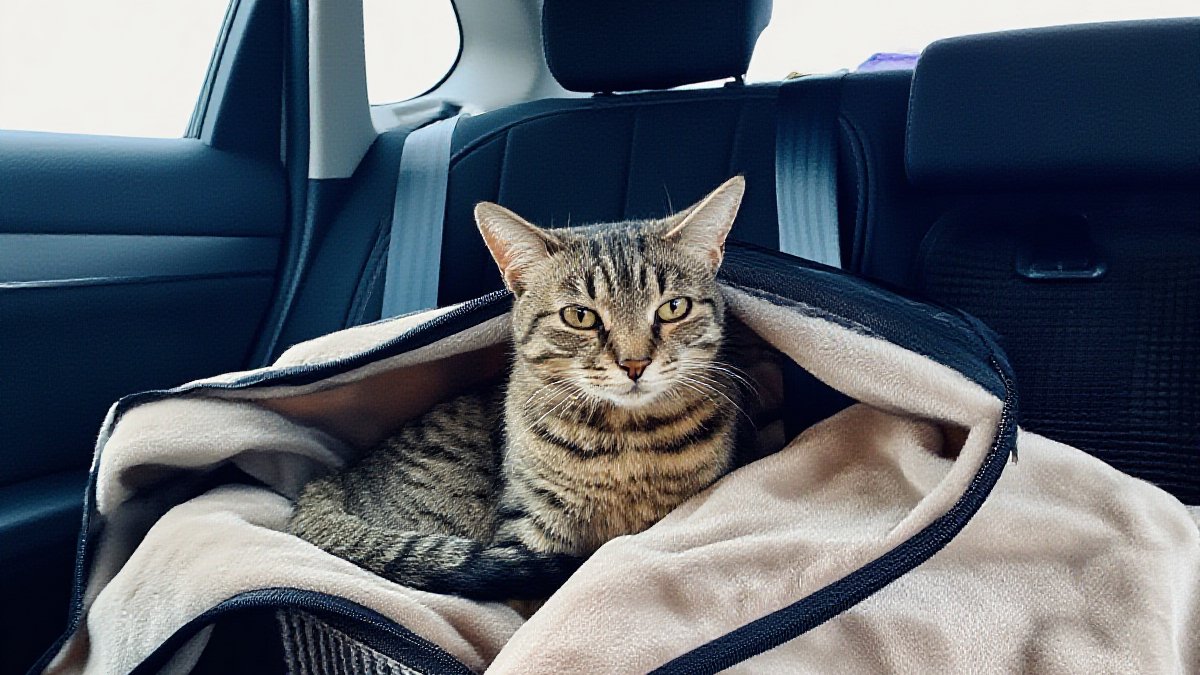
The first long car ride with a cat is usually worse for both parties than it needed to be. The carrier comes out of the closet for the first time in a year, the cat vanishes, the extraction involves furniture, and twenty minutes down the highway the yowling starts — the same two-note complaint, on a loop, for three hundred miles. Almost none of that is inevitable. Cats are not naturally bad travelers; they are travelers with no preparation, a carrier that only ever means bad news, and a car that hits their senses like a wind tunnel.
This guide is organized as a checklist rather than an essay, because trip prep is a packing problem: get the carrier right, get the timing right, plan the litter and food logistics, and rehearse before the real drive. Work through it in order and even a committed hater of cars can usually arrive without the scream concert.
The Pre-Trip Checklist (Start Two to Four Weeks Out)
- Carrier out of the closet, permanently — weeks before the trip, the carrier becomes ordinary furniture with a blanket and treats inside. A cat that naps in the carrier at home does not associate it solely with the vet, and the whole trip changes.
- Harness-and-leash rehearsal, if you plan any walking stops — indoors first, then the yard. A leash-trained cat is a far safer road-trip cat than one loose at a rest stop.
- A trial drive of ten to fifteen minutes — around the block, ending back home with a treat. This separates motion sickness and genuine fear from ordinary protest, and lets you act on sickness before it happens at mile 200.
- Vet check for the long haul — a cat with dental pain, arthritis, or a heart murmur travels better and safer with those managed first. Ask whether an anti-nausea medication or a mild anti-anxiety option makes sense for this specific cat; there are well-studied feline options, and sedation is a last resort, not the default.
- Book cat-friendly lodging — chains in New England and elsewhere commonly allow pets for a fee; confirm explicitly at booking, never assume. A "no" discovered at midnight in Bangor is a different trip.
- Update the ID stack — microchip registration address, collar tag with a reachable phone number, and a current photo on your phone in case of an escape at a rest area.
Carrier Setup: The Single Biggest Upgrade
The carrier is the entire travel experience as far as the cat is concerned, so the details matter. Hard-sided carriers with top-loading access are easiest for vetting a reluctant cat in and out; soft-sided ones work for calm cats and short hops. Bigger is not automatically better — the carrier should be big enough to turn around in and hold a small litter option, but small enough to feel den-like and secure. Line it with a towel that already smells like home, and keep a spare.
- Secure it in the car — back seat, seatbelt threaded through the carrier handle or wedged behind a front seat. A loose carrier becomes a projectile in a hard brake, and even mild sliding terrifies a cat.
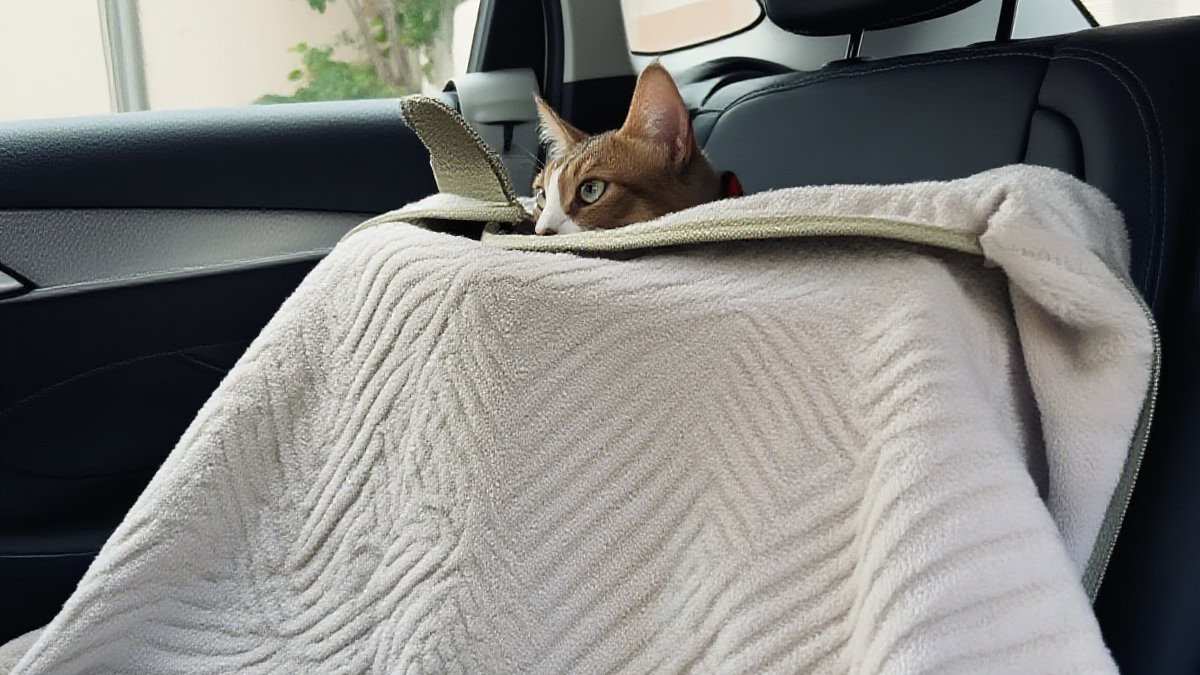
- Cover three sides with a light blanket — dimness calms most cats and reduces the visual chaos of passing traffic. Leave one side open for airflow and your occasional reassurance.
- No free-roaming in the cabin — ever. A cat under the brake pedal is a genuine safety event, not a charming road-trip photo.
- A portable litter option — a small disposable tray or a folded travel litter box rides in the trunk area with a sandwich bag of litter from home (familiar smell matters).
Own a Veterinary Clinic?
Enjoyed this article? Our editorial team researches, writes, and publishes professional features just like this one about clinics across the US. Get your practice in front of thousands of cat owners searching for a vet in your city.
On the Road: Food, Water, Litter, and Calm
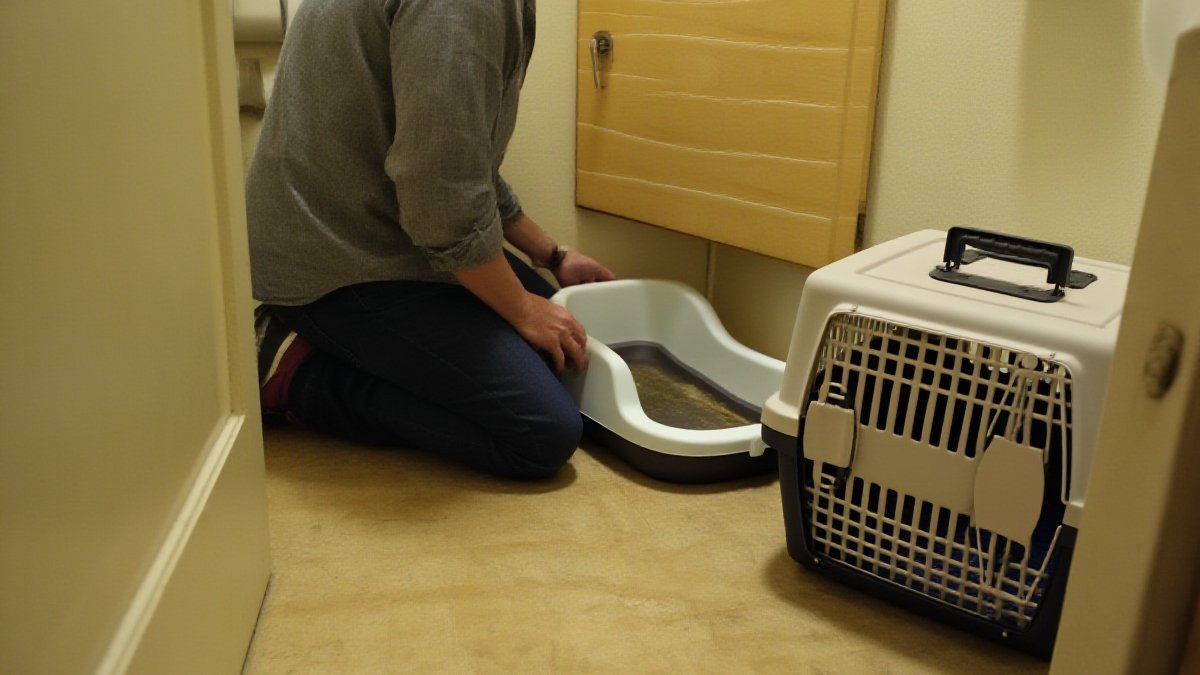
Feeding is the part owners get wrong most often. A full stomach plus motion equals nausea, so feed a light meal three to four hours before departure rather than a big breakfast at the wheel. Water should be available in short stops; a no-spill travel bowl clipped to the carrier door works in a pinch. On drives over four to six hours, plan a real break: the cat gets a litter tray offer in a closed, quiet space (a motel bathroom is the classic setup — litter tray, carrier, door shut), a few minutes of calm, and no leash-walking near traffic unless the harness rehearsal went well.
For the yowling: most of it is protest, not pain, and the worst response is opening the carrier to console the cat. Check once that the position is comfortable and airflow is fine, cover another side, and then let the protest burn out — it nearly always does within the first hour. Talking softly is fine; unwrapping the towel cave resets the clock to zero. If vomiting or drooling shows up instead of noise, that is motion sickness, and it is a vet-appointment topic for the return trip, not something to fix at a gas station.
What This Looks Like in Practice: Vetco Vaccination Clinic, Augusta
Vetco Vaccination Clinic
20 Whitten Rd Ste 6, Augusta, ME, 04330
Phone: (207) 622-2502
⭐ 4.9 (9 reviews)
Every road trip starts with the pre-travel vet stop, and for owners in the Kennebec Valley that is often the Vetco Vaccination Clinic on Whitten Road in Augusta — a walk-in-style vaccination and preventive-care clinic holding a 4.9-star average across 9 client reviews. Walk-in clinic format is actually well suited to travel prep: no appointment friction before a trip, quick rabies and core vaccine updates so the paperwork is current for state lines and motels, and a staff conversation about whether this particular cat needs motion-sickness help. The phone is (207) 622-2502 and the clinic is at 20 Whitten Rd Ste 6, Augusta, ME 04330.
The practical flow: arrive with the vaccination history you have (a past clinic or previous vet can email records), ask directly about a pre-travel check and anti-nausea options, and get the microchip registration confirmed while you are there. Worth asking: is my cat current on rabies for travel paperwork, would an anti-nausea medication suit this cat, and what should I do about an anxious traveler on a two-day drive? Compare options across the region through the cat vets in Augusta, ME directory, and the full profile at Vetco Vaccination Clinic lists hours and directions.
A road trip with a cat is won or lost in the two weeks before you leave the driveway.
Travel planning connects to several other cat-logistics topics. moving with cats stress-free covers the full relocation version of this problem, new cat owner checklist gets a first-time owner equipped before any trip happens, cat overheating signs matters for summer cabin cars and rest-stop heat, and seasonal cat hazards rounds out the calendar risks of being on the road.
This article is editorial content produced by the CatVetFinder team. Clinic details are drawn from public listings and may change — always confirm hours and services with the clinic directly.