You scratch behind your cat’s ears one evening and feel it first: a small, firm, reddish thickening on the upper lip, right where the pink meets the fur. It does not look like a wound. It does not seem to hurt. But weeks later it is still there — maybe bigger, maybe ulcerated in the center, stubbornly refusing to heal. This is the classic presentation of eosinophilic granuloma complex, one of the most common inflammatory skin syndromes veterinarians see in cats, and one of the most frequently misread by owners as a cut, an infection, or simple acne.
The name sounds alarming, and the lesions can look dramatic, but the story is usually manageable. Eosinophilic granuloma complex is not a single disease — it is a pattern of inflammatory reactions that share one engine: an over-recruited population of eosinophils, a white blood cell that shows up when the immune system is convinced something is worth attacking. In most cats the trigger is allergic. In all cats the reaction is visible. This guide walks through the three classic forms, what actually causes them, what treatment realistically involves, and the signs that turn a cosmetic annoyance into a genuine welfare problem.
Own a Veterinary Clinic?
Enjoyed this article? Our editorial team researches, writes, and publishes professional features just like this one about clinics across the US. Get your practice in front of thousands of cat owners searching for a vet in your city.
The Three Faces of Eosinophilic Granuloma Complex
Veterinarians group the syndrome into three lesion types, and a given cat may show one or several. Knowing which one you are looking at shapes both the urgency and the conversation you will have at the clinic.
- Indolent ulcer (rodent ulcer): a well-defined, glistening, reddish-orange ulcer usually on the upper lip, often off-center. It is painless, slowly enlarges, and is the most commonly missed form because it simply does not bother the cat.
- Eosinophilic plaque: raised, oval, pink-to-red, intensely itchy patches most often on the belly, inner thighs, or groin. This is the form cats aggravate by licking, and the licking is both symptom and cause — trauma feeds the inflammation.
- Eosinophilic (linear) granuloma: firm, pinkish, often linear streaks or nodules on the back of the hind legs, in the mouth, on the chin, or on the paw pads. Surprisingly non-painful for its appearance; young cats, especially females, are overrepresented.
A fourth, milder pattern — raised reddish-brown crusts on the lips or chin sometimes called the variants that blur into feline chin acne — is frequently lumped into the complex. The overlap matters clinically: chin acne and eosinophilic disease can coexist and feed each other, and a chin that has been "just dirty" for months may actually be inflamed tissue that needs more than a wipe.
Why It Happens: The Allergic Engine
Eosinophils are the immune system’s demolition crew, specialized for parasites. When a cat’s immune system misidentifies a harmless substance as an invader, eosinophils pour into the skin and release inflammatory chemicals that damage local tissue — hence the cratered, ulcerated look. The shortlist of triggers is short and familiar to anyone who has chased a cat skin problem before: flea allergy is the single most common culprit, even in cats with only a handful of fleas; food allergy, often to a protein the cat has eaten for years; environmental atopy to pollens, dust mites, or molds; and occasionally an over-aggressive grooming habit where the cat’s own barbed tongue does the tissue damage. In a minority of cases no allergy is found, and the condition appears to be genuinely idiopathic — the immune system firing at nothing measurable.
How Your Vet Reaches the Diagnosis
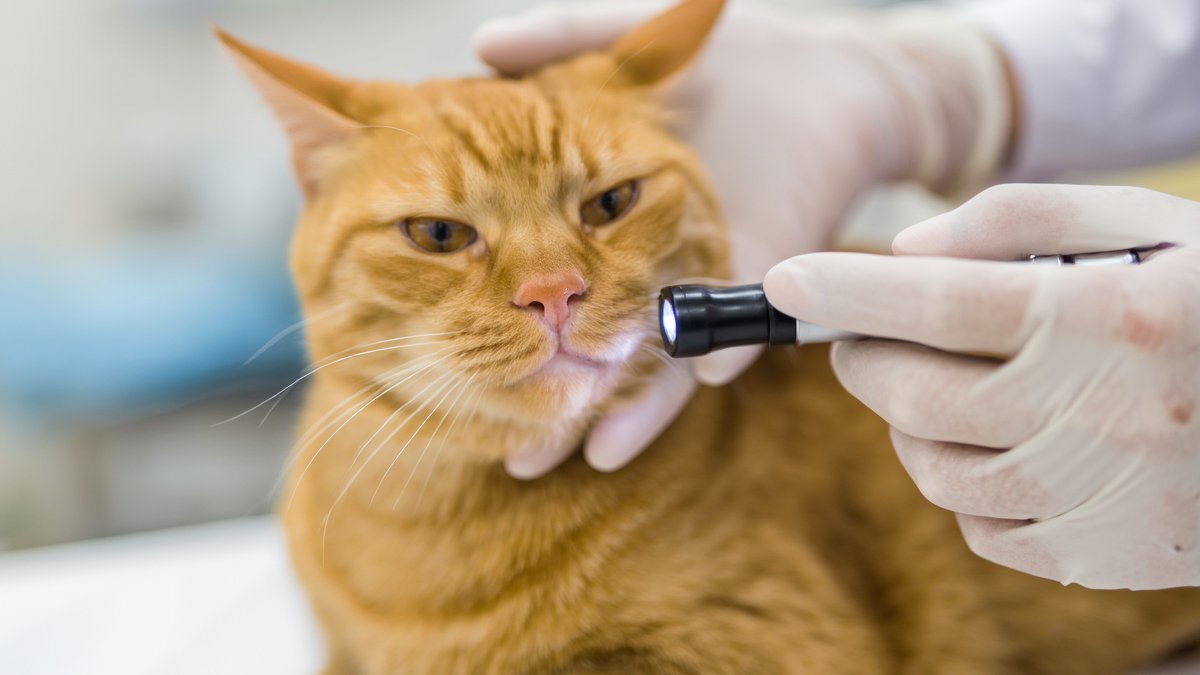
The location and appearance of the lesions are highly suggestive, but a responsible diagnosis rules out the lookalikes: bacterial infection, fungal infection (including ringworm), some cancers of the mouth and skin, and foreign bodies. Typically that means cytology — pressing a slide to the lesion or fine-needle sampling — which shows the telltale eosinophil swarm and excludes infection cheaply and immediately. A course of trial treatment often doubles as a diagnostic test: lesions that melt away with allergy-directed therapy confirm the diagnosis retroactively. Stubborn or atypical lesions, especially oral ones, earn a biopsy, because oral eosinophilic granulomas are the form most worth confirming under a microscope before committing to long-term treatment.
Treatment: Two Layers, Always in the Right Order
Effective treatment is two-layered, and the layering is where most owner frustration is born. The first layer knocks down the inflammation — anti-inflammatory medication, classically a corticosteroid course, sometimes paired with newer immune-modulating options for cats whose disease flares repeatedly. The second layer is the one that actually prevents recurrence: identifying and controlling the trigger. A cat treated only for inflammation will usually relapse within weeks of finishing medication, because the underlying allergy never went anywhere. A cat whose flea, food, or environmental trigger is also managed can stay clear long-term, often with no daily medication at all.
- Clear the current inflammation with the medication your vet prescribes, completing the full course even after the lesion looks healed.
- Run impeccable flea control on all household pets, every month, with no gaps — this alone resolves a large share of cases.
- If lesions recur, discuss a food-elimination trial with your vet; it is the only reliable way to identify a food allergy.
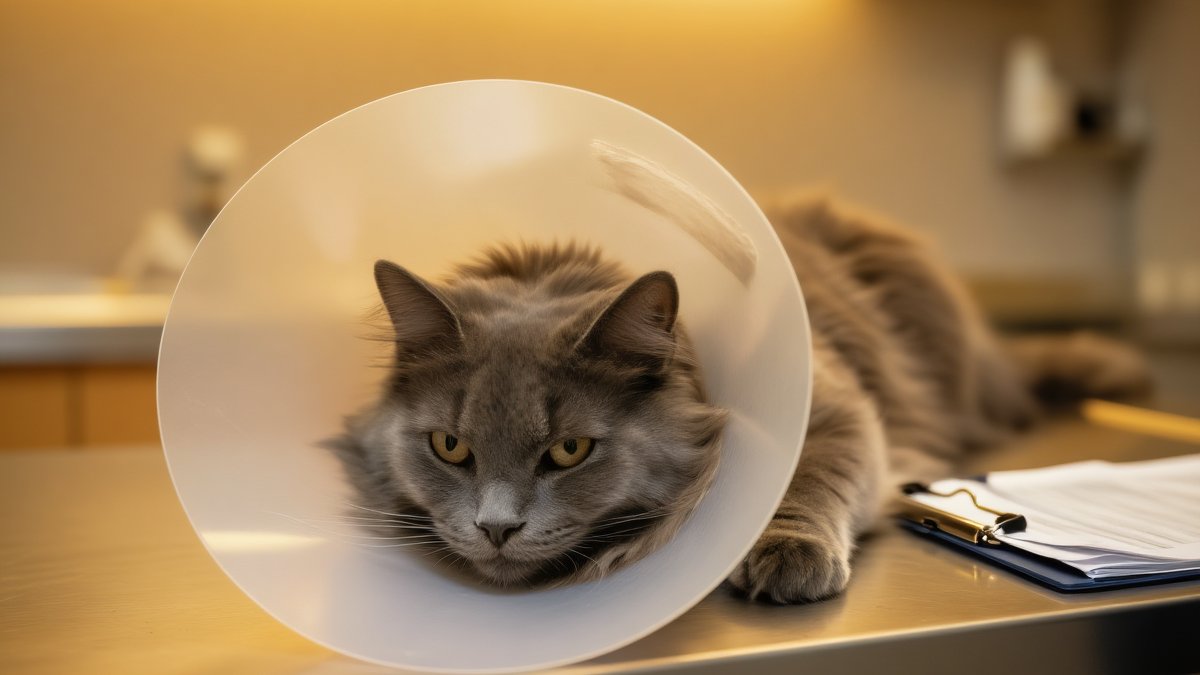
- Protect healing skin from licking with an e-collar or soft recovery collar during flare-ups, since self-trauma slows everything down.
- Recheck on schedule. The first recurrence is the moment to widen the workup, not to wait and hope.
When a Lip Sore Is an Emergency — and When It Is Not
Most eosinophilic lesions are slow and painless, and the right response is a scheduled appointment, not a midnight panic. That changes under a few specific conditions. Rapid growth of an oral lesion, bleeding from the mouth, drooling with pawing at the face, refusal of food lasting more than a day, weight loss, or a lesion that appears suddenly alongside lethargy each justify a same-week or same-day visit. An ulcer on the lip that has been stable for months is a dermatology problem; an oral mass that is eating the cat is a different question entirely, and the only way to know which you have is an examination with cytology or biopsy.
What This Looks Like in Practice: Coddle Creek Animal Hospital, Concord, NC
Skin cases like this are everyday work for a general practice, and a well-run one makes the difference between a lesion that flares for years and one that stays solved. In Concord, North Carolina, Coddle Creek Animal Hospital holds a 4.9 rating across nearly a thousand client reviews, and the size of that sample is the point: sustained quality across that many visits usually reflects steady diagnostic follow-through, not luck. Owners in the Concord and Davidson area can browse the cat vets in Concord, NC listing to compare practices before booking a skin consult.
Coddle Creek Animal Hospital
9172 Davidson Hwy, Concord, NC, 28027
Phone: (704) 795-9005
⭐ 4.9
Questions About Eosinophilic Granuloma Complex
Chronic skin disease in cats is rarely solved in one appointment — it is solved by a loop of treat, observe, and adjust. Why cats lose hair from overgrooming covers the self-trauma side of that loop, flea allergy dermatitis explains the most common trigger in detail, and why cats stop grooming shows how coat changes signal that a cat is already uncomfortable.
This article is editorial content produced by the CatVetFinder team. Clinic details are drawn from public listings and may change — always confirm hours and services with the clinic directly.