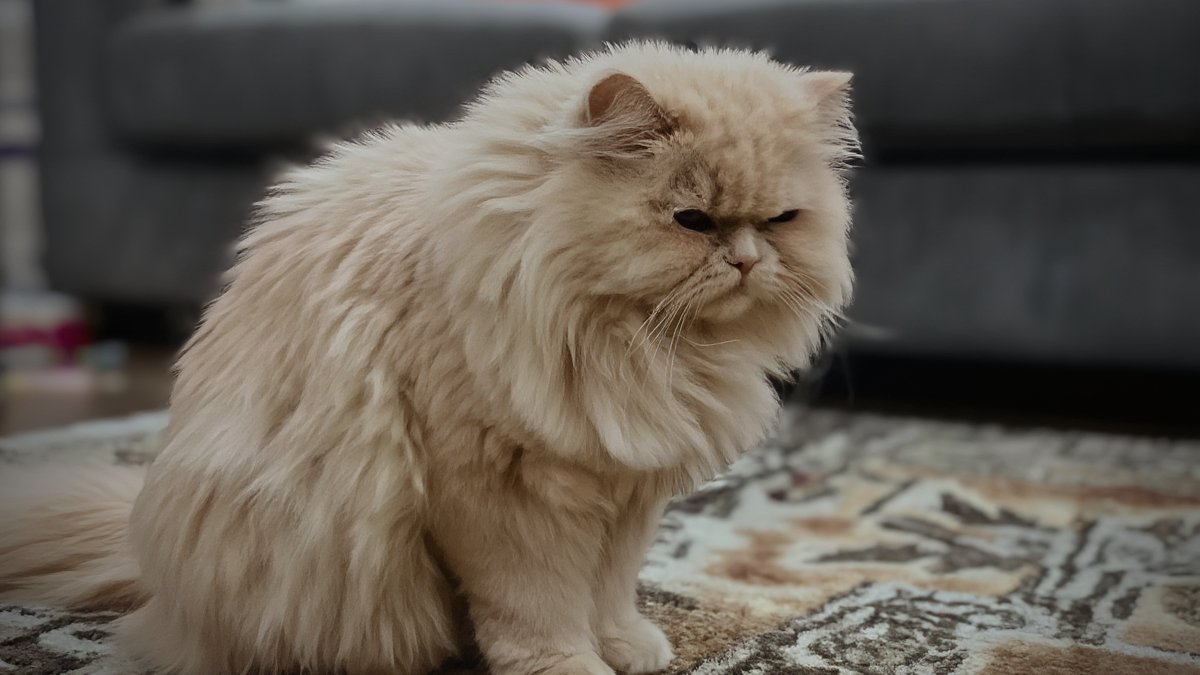
Cats broadcast their health through their coats before almost anything else. A cat who grooms on schedule wears a smooth, evenly layered coat with a matte sheen; a cat who has quietly cut back leaves fingerprints everywhere — a greasy strip down the spine, clumps forming where the hind legs meet the body, litter dust that no longer gets licked away from the paws. Owners often notice only after weeks, because the decline is gradual and the cat otherwise seems fine. That delay is exactly why grooming is worth watching as a signal: a cat stops grooming for a reason — pain, stiffness, obesity, dental discomfort, or systemic illness — and the coat is the symptom you can see from across the room. This checklist walks through what to look for, then the causes behind it, then what to do at each stage.
The Five-Minute Coat Checklist
Run this once a month; it takes five minutes and catches decline months before it becomes mats:
Own a Veterinary Clinic?
Enjoyed this article? Our editorial team researches, writes, and publishes professional features just like this one about clinics across the US. Get your practice in front of thousands of cat owners searching for a vet in your city.
- Rear and hindquarters. Lift the tail and check the fur around the anus and the backs of the thighs. Dampness, cling-on debris, or a stale smell means grooming is failing exactly where cats clean most thoroughly when healthy.
- Spine and flank grease. Stroke firmly along the spine toward the tail. If your fingers come away slick or the fur parts into stringy strips, the barbed tongue is not reaching or not working like it used to.
- Clump and mat scan. Run your hands over the shoulder blades, behind the ears, and the groin — the three classic mat sites. Small tangles you can separate with fingers are early; tight mats against skin are a grooming-failure landmark.
- Paw and face detail. Look for litter granules stuck between the toes and food debris on the chin and cheeks. A fastidious cat cleans these within minutes of making them.
- Dandruff and texture. White flakes at the base of the tail or a coat that suddenly feels coarse and dry instead of soft — both point to reduced grooming or skin disease underneath.
What Stops a Cat From Grooming — the Common Causes
- Arthritis and joint pain. The top cause in senior cats. Reaching the spine and hindquarters requires a spine twist that a stiff cat simply stops attempting. Owners often assume "old cats get scruffy" — the coat is really the pain talking, and arthritis treatment usually restores grooming within weeks.
- Obesity. An overweight cat physically cannot reach parts of her own body. Fat pads on the thighs and lower back break the grooming arc; the coat fails in exactly those zones. The weight-loss playbook is in our indoor cat weight guide.
- Dental and mouth pain. Grooming is mouth work. A cat with tooth resorption, gum disease, or a fractured tooth often grooms less or grooms only the front half of her body — and drools. Mouth pain is famously hidden in cats; our bad breath guide covers the dental warning signs.
- Systemic illness. Kidney disease, diabetes, and hyperthyroidism all drain the energy and flexibility grooming demands. An unkempt coat is frequently one of the first things an exam notes in a cat with a new diagnosis — which is why sudden grooming decline without a mechanical explanation warrants bloodwork.
- Skin disease and parasites. Flea allergy, mites, and infections make grooming painful instead of absent — the cat licks obsessively, pulls out fur, or leaves scabs. That is a different pattern from neglect, and our overgrooming guide covers the itchy half.
- Cognitive decline. Some senior cats genuinely forget or lose the routine, grooming in odd sequences or not at all.
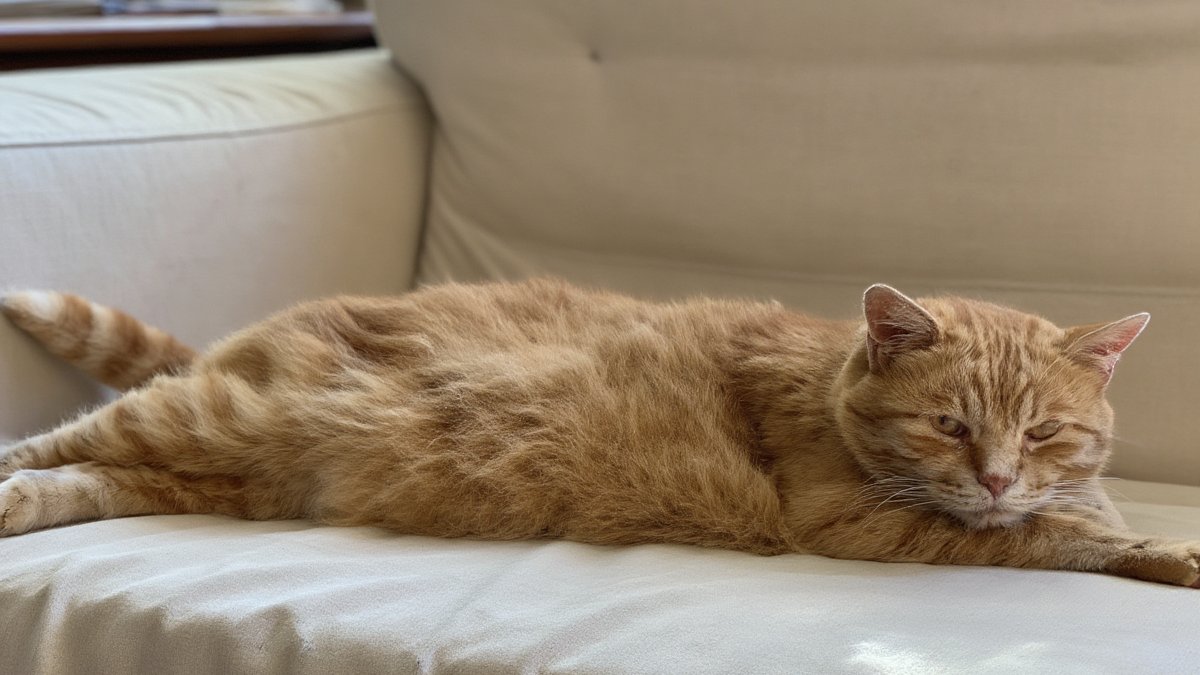
What to Do — Matched to What You Find
| What you found | Most likely story | Your move |
|---|---|---|
| Greasy spine, still mobile | Early grooming slowdown | Start assisted brushing weekly; book a checkup within the month |
| Mats forming behind ears/groin | Can no longer reach or tolerate those areas | Vet visit — pain check plus safe mat removal, never scissors at home |
| Grooms front of body only | Mouth pain is a prime suspect | Vet visit focused on dental exam |
| Sudden decline, previously fastidious | Illness rather than mechanics | Vet visit this week; ask for senior bloodwork |
| Overweight, coat fails at hips/thighs | Physical reach limit | Vet-guided weight plan; interim wiping with unscented pet wipes |
| Excessive licking, scabs, bald patches | Itchy skin or fleas, not neglect | Parasite check; see our overgrooming guide |
One firm rule: never cut mats out with scissors at home. Cat skin is paper-thin and tented loosely over the body — the emergency-room stories about owners slicing into skin while cutting a mat are common enough that vets repeat the warning constantly. Mats close to skin belong with a professional, whether that is a groomer experienced with cats or the vet clinic, where sedation can make the process painless if the mats are tight.
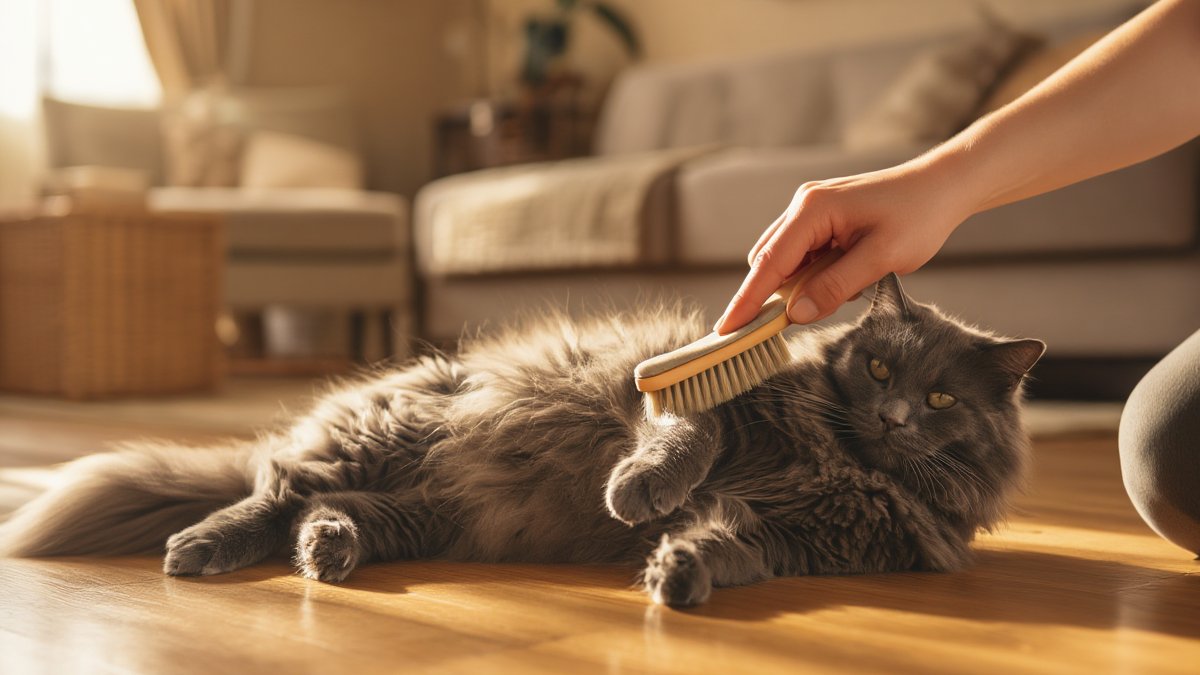
Helping a Struggling Groomer at Home
- Brush on the cat's terms. Short sessions, the areas she tolerates, the tool she prefers — often a soft brush for the body and your fingers for the face. Frequency beats force: three calm minutes daily outperforms a weekly wrestling match.
- Wipe where she cannot reach. Unscented pet wipes or a warm damp cloth on the hindquarters and spine replace the tongue's work; wipe front-to-back like you would for a kitten.
- Offer surfaces, not baths. Rough doormats, a slightly damp brush, even a gentle rub with a microfiber glove does more coat maintenance than most cats will ever accept from a sink.
- Weigh monthly. If obesity is the cause, the coat recovers as the weight comes off — but slowly, at vet-guided pace. Rapid dieting in cats risks hepatic lipidosis, so this is one project that must be supervised.
- Keep senior comfort in mind. Heated beds, low-entry litter boxes, and steps up to favorite perches all reduce the stiffness that makes grooming feel like work.
What This Looks Like in Practice: Hawaiian Humane Society Kosasa Family Campus at Ho’opili, ‘Ewa Gentry, HI
Hawaiian Humane Society Kosasa Family Campus at Ho’opili
91-1945 Fort Weaver Rd, ‘Ewa Gentry, HI, 96706
Phone: (808) 356-2200
⭐ 4.7 (158 reviews)
As a worked example: the Hawaiian Humane Society's Kosasa Family Campus at Ho’opili at 91-1945 Fort Weaver Rd in ‘Ewa Gentry, Hawaii holds a 4.7-star rating across 158 local reviews, and a community-focused campus like this is exactly the kind of place where coat complaints and wellness exams intersect — the "he's just gotten scruffy with age" comment during a vaccine visit is a classic opening for the arthritis and dental checks that explain it. If your cat's coat story started suddenly rather than gradually, the same visit should include bloodwork rather than a brushing lecture. You can reach the campus at (808) 356-2200, and ‘Ewa Gentry owners can compare all 10 local practices on the cat vets in ‘Ewa Gentry listing.
If You Only Read One Section
A cat's coat is a monthly health meter: grease along the spine, mats behind the ears, debris on the paws, and a stale hindquarter all mean grooming is failing — and grooming fails for reasons, usually pain, weight, mouth trouble, or illness. Never cut mats with scissors at home; match your response to what the checklist finds, and let a vet visit turn "he looks scruffy" into a diagnosis while it is still an easy one.
More Cat Health Guides
- Cat losing hair: the overgrooming side of coat problems
- Cat dandruff and dry flaky skin
- Scabs on a cat's skin: miliary dermatitis explained
- Indoor cat weight loss done safely
- Cat bad breath: the dental connection
- Senior cat vet checkups: what to test and when
- Hawaiian Humane Society Kosasa Family Campus — ‘Ewa Gentry, HI
- Cat vets in ‘Ewa Gentry, HI
- Explore cat care services
This article is editorial content produced by the CatVetFinder team. Clinic details are drawn from public listings and may change — always confirm hours and services with the clinic directly.