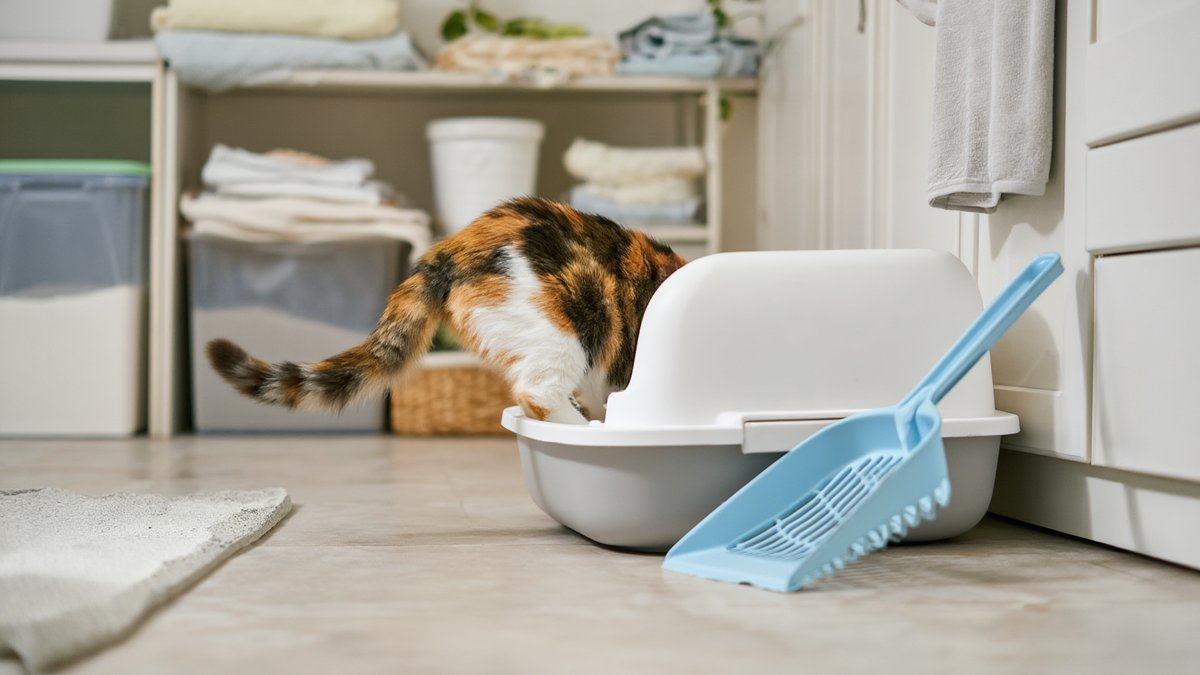
Almost every litter box problem traces back to one of two things: the box is not cleaned often enough for the particular cat standing in front of it, or it is cleaned in a way that cat finds offensive. Cats are not being difficult about this — from their side, being asked to use a dirty toilet is a reasonable dealbreaker, and their answer is to go somewhere else. The good news is that the fix is a routine, not a struggle: a short scooping pass once or twice a day, a top-up on a schedule, and one proper deep clean a month. Here is the schedule that works for most households, plus the adjustments for multi-cat homes and the signals that a persistent odor problem is actually a medical one.
The Schedule at a Glance
- Every day — scoop the whole box, not just the visible clumps. Run the scoop along the bottom and the corners, where urine pools and the smelliest material hides. Thirty seconds of thorough scooping beats two minutes of skimming the surface.
- Every day (second pass if you can) — a quick evening scoop. Cats prefer a box that was scooped within the last several hours; twice-daily scooping measurably reduces house-soiling in touchy cats.
- Every 2–4 days — top up litter to the right depth, about two to three inches for most clumping litters. Cats do not want a deep sandbox; too much litter invites digging games and kicked-out piles.
- Once a week — wipe the rim and the outside of the box, sweep or vacuum scattered litter around it, and check the scoop itself. A grimy scoop contaminates everything it touches afterward.
- Every 3–4 weeks — full change and deep clean: empty the box completely, wash it with warm water and mild, unscented dish soap, dry it, and refill with fresh litter to the proper depth.
Why Daily Scooping Matters More Than Any Other Part
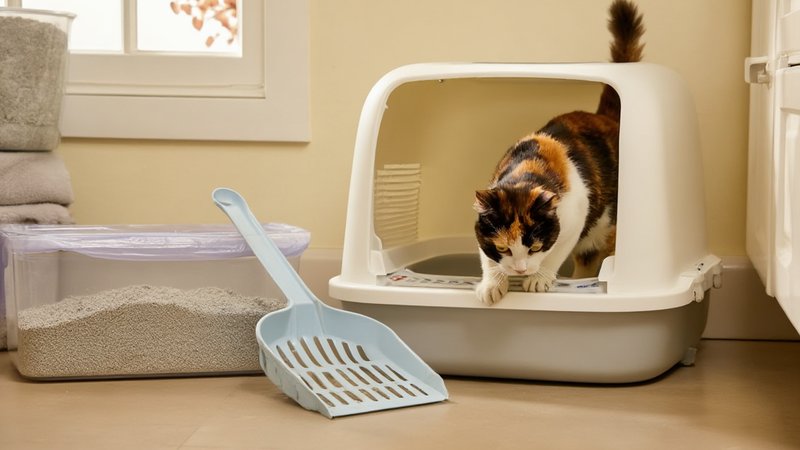
A clumping litter box scooped every day stays ahead of the ammonia curve, because urine clumps are removed before they start breaking down and releasing odor. Let the same box sit for two or three days and the smell is not just stronger — it soaks into the litter at the bottom of the pan, and no amount of perfume-scented litter on top hides it. Scented litters exist for humans, not cats: a cat's nose is roughly fourteen times more sensitive than yours, and strong fragrance is one of the documented reasons cats abandon a box. Unscented, fine-clumping litter scooped daily outperforms any scented product scooped every other day.
Daily scooping is also your cheapest disease screen. What your cat leaves in the box is a daily report on her health: urine clumps that have grown to the size of hockey pucks suggest she is drinking and urinating far more than usual — an early flag for kidney disease or diabetes; tiny, frequent, blood-tinged clumps point toward cystitis or a urinary blockage risk, which is an emergency in male cats; soft or bloody stool flags parasites, dietary indiscretion, or colitis. Owners who scoop daily catch these changes days or weeks before they would otherwise notice, which is exactly the window in which treatment is simplest.
The Monthly Deep Clean, Done Right
- Empty the entire box — do not just pour new litter over old. The fine dust and the microscopic urine residue at the bottom is what keeps a "clean" box smelling faintly wrong to a cat.
- Wash with warm water and unscented dish soap. Never use ammonia-based cleaners — ammonia smells like urine to a cat and can send exactly the wrong signal — and avoid bleach, pine, and citrus products, all of which cats find aversive.
- Dry completely before refilling. Damp litter cakes and clumps poorly.
- Refill to two to three inches. Deeper is not better; the exception is a digger or a cat who buries enthusiastically, who may prefer four inches.
- Replace plastic boxes every year or two. Scratches and hairline cracks from years of scooping harbor odor that washing can no longer remove — an old, scarred box can smell clean to you and foul to her.
Own a Veterinary Clinic?
Enjoyed this article? Our editorial team researches, writes, and publishes professional features just like this one about clinics across the US. Get your practice in front of thousands of cat owners searching for a vet in your city.
Multi-Cat Homes: Run the Math, Not the Hope
The standard formula is one box per cat, plus one extra — two cats means three boxes — spread across different rooms so no single hallway becomes a choke point. In a multi-cat home, daily scooping is non-negotiable, because a subordinate cat who approaches a box holding a dominant cat's fresh deposit may simply start going elsewhere, and the resulting house-soiling gets blamed on spite when it is really box availability. Scoop each box daily, deep clean on a rotating schedule so one box is always fresh, and if territory tension is a factor, add a large storage-tote-style box in a quiet low-traffic spot before concluding anything is behavioral.
When a Clean Box Is Not Enough: Medical Signals to Act On
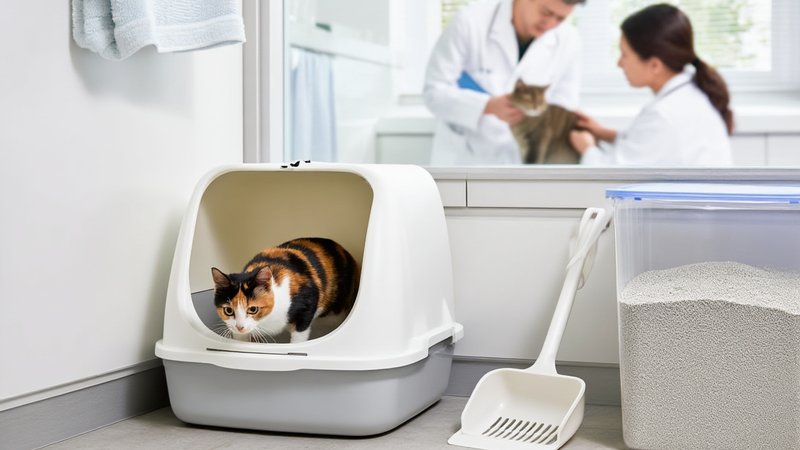
If you are following the schedule and your cat still urinates or defecates outside the box, strains in the box, cries while going, or produces urine with pink or red coloring, the box is no longer the problem — a veterinary exam is. Urinary tract disease in cats is painful, progresses quickly in males, and is one of the most common reasons owners end up at an emergency clinic. A good first step for Norfolk-area owners is a clinic that treats house-soiling as a medical question first: Ghent Veterinary Hospital in Norfolk, Virginia — a 4.7-star practice with 241 local reviews at 939 W 21st St, reachable at (757) 351-0167 — is one example, and the full cat vets in Norfolk listing lets you compare every local practice.
Ghent Veterinary Hospital
939 W 21st St, Norfolk, VA, 23517
Phone: (757) 351-0167
⭐ 4.7 (241 reviews)
Common Schedule Mistakes
- Scooping only once every two or three days and calling it "maintenance." The smell you no longer notice, your cat does — and so do your guests.
- Dumping scented litter over an unscooped box to "freshen" it. You get a perfumed dirty box, which is worse than an honest one.
- Cleaning with strong fragranced products during the monthly wash, then wondering why the cat hesitates at the box for a week afterward.
- Changing litter brands at the same time as the deep clean. If you need to switch litters, do it gradually over a week or two — mix increasing proportions of the new litter into the old.
- Tucking every box next to a loud appliance. Washers and furnaces startle mid-squat; a cat spooked once may avoid that box for weeks.
The One-Paragraph Version
Scoop thoroughly once or twice a day, top up to two or three inches as needed, wipe the box and the area weekly, and empty-wash-dry-refill with unscented soap every three to four weeks. Watch what you scoop for changes in urine clump size and stool quality, because the litter box is your cat's daily health report. Give each cat a box plus one extra, keep them in quiet spots, and skip the perfumes. If a scrupulously clean box still is not enough, stop changing products and start with a vet visit.
This article is editorial content produced by the CatVetFinder team. Clinic details are drawn from public listings and may change — always confirm hours and services with the clinic directly.