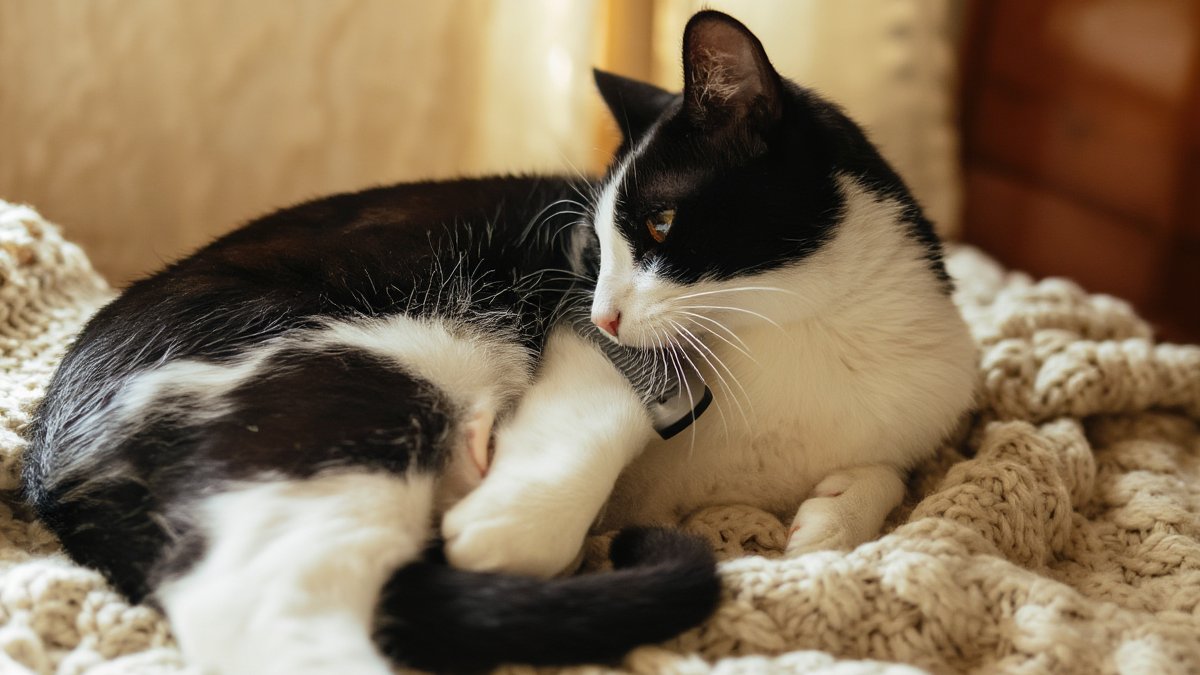
Most owners first notice it by accident: a patch of bare skin on the belly or the inside of the thighs that used to be covered in fur. There is no wound, no rash worth the name — just a tidy, evenly thinning patch where the hair should be. That is the signature of over-grooming, a cat solving an itch or a feeling by licking the fur out, and it is one of the most common reasons cats land in a dermatology appointment.
The confusing part for owners is that a bald spot from licking looks nothing like a wound and everything like a mystery. The cat is not sick, usually not itchy in any obvious way, and the skin under the bald patch is often completely normal. The story underneath — fleas, allergies, pain, or anxiety — determines the treatment, which is why the first vet visit is a process of elimination rather than a single test.
The Over-Grooming Checklist: What to Note Before the Appointment
Walking into the vet with this information shortens the diagnostic path by weeks. Before the visit, check off:
- Where the baldness sits. Over-grooming follows the cat's own reach: belly, inner thighs, flank, forelegs, or a strip along the back near the tailbase. Baldness the cat cannot reach — the head and neck, or a symmetrical thinning across the whole back — points away from licking and toward hormones or parasites that need different treatment.
- The edges of the patch. Fur licked off leaves an even, almost barbered edge with normal skin underneath. Fur falling out from disease leaves stubble, redness, scale, or crusting.
- Flea prevention status — honestly. Every over-grooming workup starts by ruling out fleas, because flea allergy is the most common itchy skin disease in cats and a single flea bite can keep a sensitive cat grooming for weeks. Note the exact product used, how often, and whether every pet in the house is treated.
- When it started relative to life changes. A new baby, a moved litter box, a new pet, a renovation, a schedule change — stress-linked grooming tracks household events more closely than owners expect.
- Whether you have ever seen the licking happen. Some cats groom publicly; many do it only at night or when alone, which is why "I never see him do it" does not rule anything out.
- Any subtle limping, stiffness, or reluctance to jump. Cats frequently over-groom a joint that hurts — arthritis on a hip or knee shows up as a licked-bald patch over that spot surprisingly often.
The Four Usual Suspects
Behind the tidy bald patch, the diagnostic list is short, and vets work it roughly in this order:
- Flea allergy dermatitis — the presumptive first suspect in almost every case. Treatment is a strict, vet-grade flea control protocol on every animal in the home, and many "anxiety" cats are cured by flea treatment alone.
- Food allergy or environmental atopy — itching from within. Food trials run eight to twelve weeks on a strict prescription diet; environmental allergies are managed seasonally or with immunotherapy.
- Pain — the sneaky one. Over-grooming concentrated over one joint or one side of the body is a pain referral pattern, and senior cats with arthritis present this way with no limp at all.
- Stress-linked (psychogenic) over-grooming — the diagnosis reached after the medical causes are excluded. Some cats displace anxiety into grooming the way a person might bite their nails. It is real, it balds real cats, and it responds to routine stabilization, enrichment, and sometimes anti-anxiety medication.
Why Vets Rarely Label It Anxiety on Day One
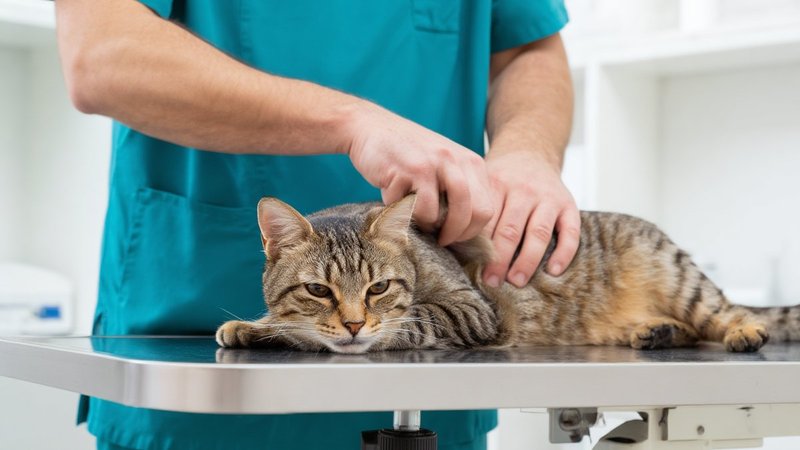
Psychogenic alopecia is the diagnosis owners expect and the one vets reach last, and the reason is simple: anxiety is a diagnosis of exclusion, and treating anxiety while fleas are still biting fails both cat and owner. A typical workup is a thorough flea-control reset, a skin scraping or combing evidence check, possibly a trial treatment for parasites, and only then — if the skin is clean, the fleas are ruled out, and the pattern matches — the behavioral conversation. Owners who understand this sequence are less frustrated by it; the "just treat the stress" visit that skips the medical elimination is how months get lost.
The tell for a stress component, once medical causes are handled: regrowth during calm periods and relapse during upheaval. Fur regrows over weeks once the licking stops, and the pattern of stop-and-start across a household event calendar is close to diagnostic.
What This Looks Like in Practice: Kutish Matthew E DVM, Wilkes-Barre, PA
Skin cases reward a methodical general practitioner more than a fancy one. In Wilkes-Barre, Pennsylvania, Kutish Matthew E DVM on Wilkes Barre Township Boulevard — a 4.7-rated local practice — is the kind of neighborhood clinic where the flea-history conversation, the skin check, and the follow-up plan happen with the same vet each visit, which matters here because over-grooming cases are judged across weeks, not one appointment. Owners in the Wyoming Valley can also browse the full cat vets in Wilkes-Barre, PA listing to find the right fit.
Kutish Matthew E DVM
770 Wilkes Barre Township Blvd, Wilkes-Barre, PA, 18702
Phone: (570) 825-7617
⭐ 4.7 (30 reviews)
What Recovery Looks Like
Fur regrows on its own clock: roughly four to eight weeks for a bald patch to fill back in once the licking genuinely stops, sometimes faster for a young healthy cat. The detail worth knowing is that partial regrowth is success in the short term — if the patch is fuzzing in and the cat is not actively licking, treatment is working even before the coat looks normal. Owners sometimes quit a working flea protocol because the bald patch is still there in week two; the timeline, not the mirror, is the scoreboard.
Own a Veterinary Clinic?
Enjoyed this article? Our editorial team researches, writes, and publishes professional features just like this one about clinics across the US. Get your practice in front of thousands of cat owners searching for a vet in your city.
Bald spots from over-grooming are solvable, but they are solved by subtraction — fleas out, allergies identified, pain treated, stress reduced — rather than by a single miracle product. If the hair loss looks different from what is described here (patchy, crusty, scabbed, or on the head), the general guide to why cats lose hair covers the broader causes, and flea allergy dermatitis in cats goes deep on the most common trigger behind all of this.
This article is editorial content produced by the CatVetFinder team. Clinic details are drawn from public listings and may change — always confirm hours and services with the clinic directly.