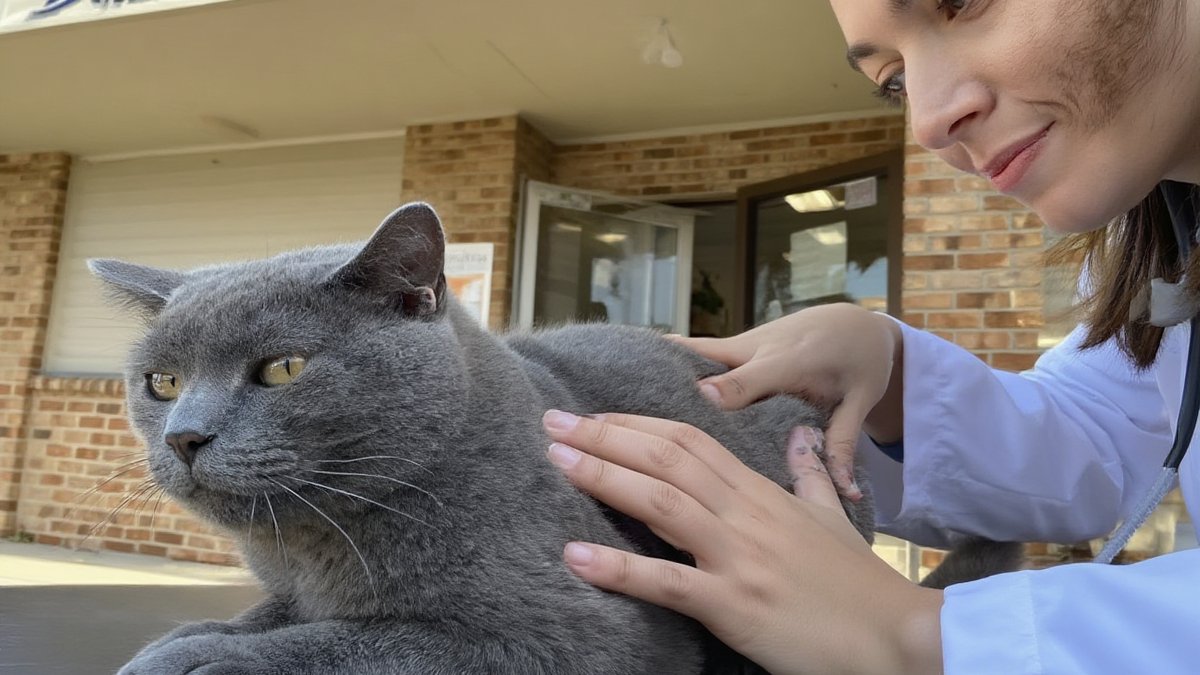
Run your hand along your cat’s back toward the tail and you feel them before you ever see them: a gravel of tiny crusty bumps under the fur, clustered along the spine, around the base of the tail, or on the neck where the cat can reach with a hind foot. Veterinarians call this miliary dermatitis — "miliary" because the little crusts look like millet seeds. The name trips owners up, because it sounds like a specific disease. It is not. Miliary dermatitis is a skin alarm — a shared reaction pattern to half a dozen very different triggers — and the entire diagnostic job is figuring out which trigger is ringing the bell for your particular cat.
The Home Check That Makes the Vet Visit Twice as Useful
Work through this list before the appointment and bring the answers with you. Each item narrows the trigger list faster than any single test.
- Map the scabs. Note where they live: along the back and tail base points to fleas; the head, ears, and neck point to food allergy or an ear problem; the belly and inner thighs point to over-grooming and stress [[the bald-patch version of this problem|/blog/cat-losing-hair-overgrooming/]]. A quick phone photo of the worst area is worth more than a paragraph of description.
- Count the fleas — including the ones you cannot see. Comb the rump with a fine-tooth flea comb onto a damp white paper towel. Flea dirt dissolves into rust-colored streaks. Remember that a flea-allergic cat can be covered in scabs from a handful of bites, and fastidious groomers swallow the evidence, so "I’ve never seen a flea" proves nothing.
- Check what changed in the last 8 to 12 weeks. New food, new litter, a new detergent, a move, a new pet, a skipped flea preventive. Allergies are cumulative — a cat can tolerate a food for years and then cross the threshold.
- Look in the ears and at the chin. Dark crumbly debris in the ears suggests mites or yeast [[the ear version of itchy|/blog/cat-ear-mites/]]; blackhead-like dots on the chin are a separate condition called chin acne [[cat chin acne explained|/blog/cat-chin-acne/]]. Owners routinely fold these into "scabs" and muddy the picture.
- Check everyone else in the house. Another cat or dog scratching, or human bites around the ankles, turns flea allergy from a guess into near-certainty.
- Watch the pattern across the day. Scabs the cat is constantly attacking behave differently from scabs the cat ignores — the first says itch, the second says something else entirely.
What the Scabs Usually Turn Out to Be
Flea allergy dermatitis leads the list by a wide margin — an allergic reaction to flea saliva, where a single bite raises a storm of crusts and itch that lasts for days. Food allergy comes next, a true immune reaction to a protein in the diet, typically hitting the head and neck. Environmental allergies — pollen, dust, storage mites — produce seasonal or year-round flares. Skin infections, both bacterial and fungal including ringworm, can produce crusting and are contagious, which makes them a household matter rather than a single-cat one. Bacterial and fungal skin infections each behave differently, and mites round out the list: ear mites in young cats, and the harder-to-catch mange mites that cause scabs on the head and neck of any age cat the ear-mite version.
How a Vet Actually Sorts This Out
The workup is a sequence of cheapest-first steps rather than a single test. The vet combs for fleas, examines the ears, and may take a skin scraping or a tape press to look for mites and yeast under the microscope. A fungal culture settles the ringworm question when the pattern suggests it. If the skin checks out clean, the diet trial becomes the main event: a strict eight-to-twelve-week trial on a novel or hydrolyzed protein with no other food of any kind passing the cat’s lips, including treats and dental chews. Only when parasites, infection, and food have all been excluded does the conversation turn to environmental allergy and longer-term control. Owners who have done the home checklist above usually skip one or two steps because they already have the answers.
Own a Veterinary Clinic?
Enjoyed this article? Our editorial team researches, writes, and publishes professional features just like this one about clinics across the US. Get your practice in front of thousands of cat owners searching for a vet in your city.
What This Looks Like in Practice: Cornerstone Veterinary Hospital of Clifton Park, Country Knolls, NY
Cornerstone Veterinary Hospital of Clifton Park
1245 NY-146, Country Knolls, NY, 12065
Phone: (518) 383-6254
⭐ 4.7 (1,079 reviews)
Skin cases are appointment-volume work — they need time, follow-up, and a vet willing to sequence the workup rather than throw a steroid at it. Cornerstone Veterinary Hospital of Clifton Park, located at 1245 NY-146 and serving the Country Knolls area of New York, holds a 4.7-star rating built on more than 1,079 client reviews — the kind of volume that only happens when a practice handles chronic, unglamorous problems like itchy skin well, visit after visit. The clinic operates on walk-in friendly hours for minor issues, which suits the "my cat has suddenly shredded its neck" timeline better than a three-week wait. Call (518) 383-6254, and owners in surrounding towns can compare the full cat vets in Country Knolls, NY listing before committing.
The Short Version for Skimmers
Tiny crusty scabs along the back, tail base, or neck are miliary dermatitis — a reaction pattern, not a diagnosis. Flea allergy causes most of it, even in households that never see a flea; food allergy, environmental allergy, mites, and skin infections fill out the list. Map the scabs, comb for flea dirt, review what changed, and check the ears and chin before the appointment, because those five minutes of homework routinely shorten the whole workup.
This article is editorial content produced by the CatVetFinder team. Clinic details are drawn from public listings and may change — always confirm hours and services with the clinic directly.