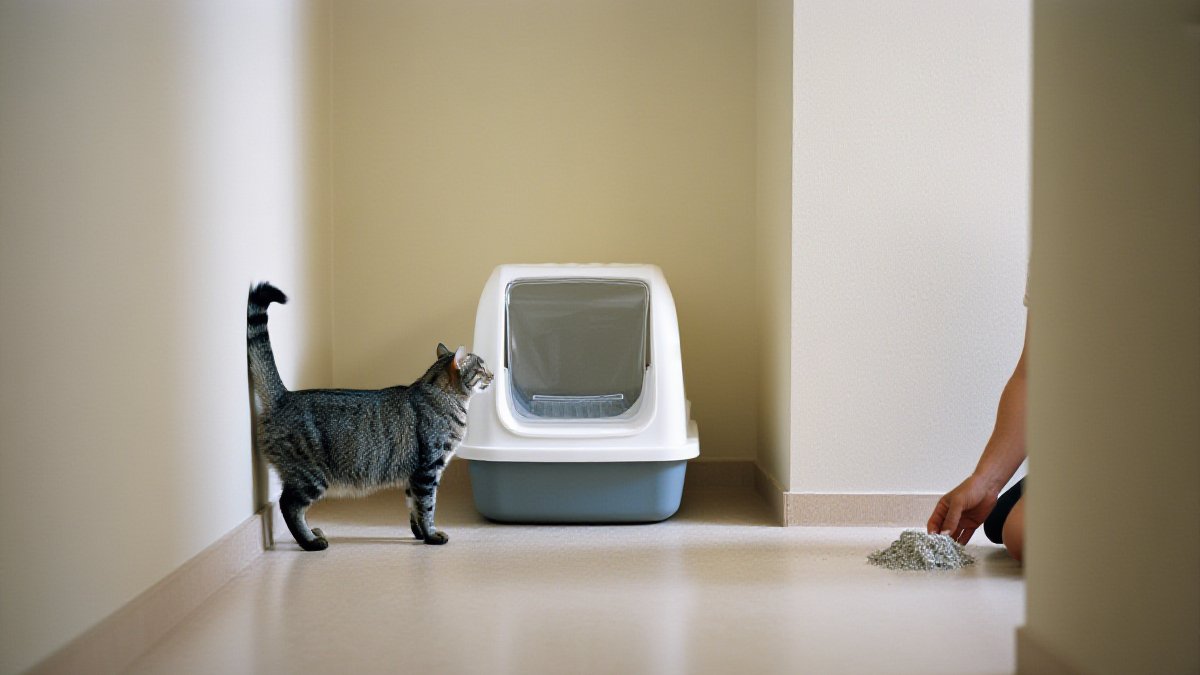
Blood in a cat's urine almost never announces itself as blood. It shows up as a clump of litter with a pink or rust-colored edge, a few red drops on the tile beside the box, or a cat that keeps visiting the box and producing almost nothing. Owners find the stain first and the explanation second, and the interval between the two is where a manageable urinary problem either gets solved or turns into an emergency.
This guide covers what blood in cat urine (hematuria) actually means, why feline idiopathic cystitis — stress inflammation — outranks bacterial infection as a cause in cats under ten, how a vet tells the difference, and how one real clinic works up the complaint. The one rule to take away first: a cat that is straining and passing little or no urine is a same-hour emergency, regardless of how much blood you are seeing.
Reading the Litter Box: How Blood Shows Up and What Else to Look For
Hematuria rarely arrives alone. The company it keeps tells you more than the color does:
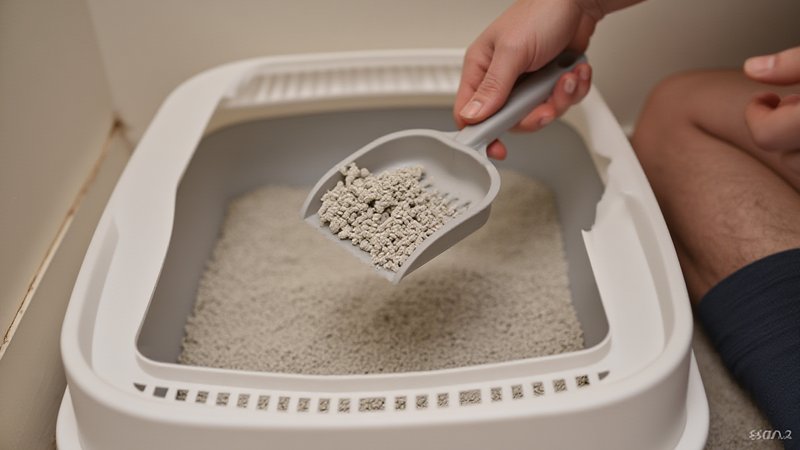
- Pink, red, or rust-tinged clumps — even a small volume of blood turns litter dramatically pink, so the visual alarm usually overstates the actual blood loss. Gross visible blood is still never normal.
- Frequent small urinations — trips to the box every few minutes or hours, producing coin-sized clumps instead of the usual ones.
- Straining with little output — posture held for a long time in the box, crying, then walking away without urinating. This is the sign that changes the timeline.
- Urinating outside the box — cats associate the box with pain and start choosing cooler, softer surfaces. Bathtubs and laundry are classic.
- Over-grooming the belly or groin — lick marks around the lower abdomen, balding near the prepuce or vulva, often mistaken for a skin problem.
- Vomiting, hiding, or a hard painful belly — with these, stop watching and start driving: a blocked urethra is in progress.
The Cause List: Why Infection Is Not the Leading Suspect
The most common assumption owners bring in is a urinary tract infection, and in dogs they would usually be right. In cats the ranking is different. In young to middle-aged cats, the most frequent cause of bloody urine is feline idiopathic cystitis (FIC) — intense, painful inflammation of the bladder wall driven largely by stress, with no bacteria cultured at all. True bacterial infections are far more common in older cats, where kidney disease, diabetes, and hyperthyroidism dilute the urine and make it friendlier to bacteria. The rest of the differential includes bladder or urethral stones, crystals, urethral plugs, trauma, and, less often, tumors — a consideration that rises with age.
This matters because the treatments diverge sharply. Antibiotics do nothing for FIC, and a cat treated repeatedly for "infections" that never culture positive is usually a cat with untreated cystitis. Meanwhile stones can require prescription diet or surgery, and a blocked male cat requires decompression within hours.
How the Vet Works It Up
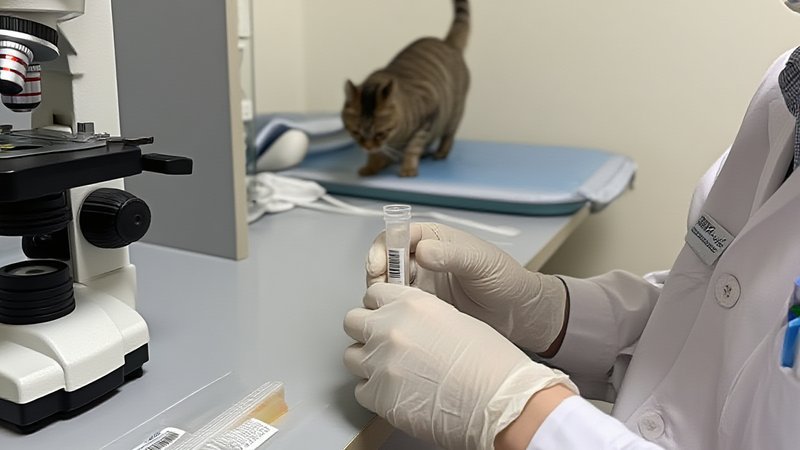
The workup is more concrete than owners expect, and much of it happens the same day. A urinalysis — ideally from a sample collected by cystocentesis, a quick needle draw through the abdominal wall — examines concentration, blood, crystals, glucose, and protein, then gets cultured to settle the infection question once and for all. Bloodwork screens kidney values, blood sugar, and thyroid, which both shape the differential and change which drugs are safe. Palpation of the bladder distinguishes the small, thick, painful bladder of cystitis from the large, hard, overfull bladder of an obstruction. X-rays or ultrasound look for radiopaque stones, bladder wall thickness, and sediment. What the owner brings matters: a photo of the discolored litter clump, and a short timeline of frequency and output, narrow the picture before any test is run.
Own a Veterinary Clinic?
Enjoyed this article? Our editorial team researches, writes, and publishes professional features just like this one about clinics across the US. Get your practice in front of thousands of cat owners searching for a vet in your city.
Animal Health Center LLC
4636 E Mockingbird Ln, Laramie, WY, 82070
Phone: (307) 745-6381
⭐ 4.6 (465 reviews)
Animal Health Center on the east side of Laramie is a good picture of how this appointment runs at a long-established small-animal practice. They hold a 4.6-star average across 465 client reviews — one of the largest review bases in Albany County, which reflects decades of Laramie households bringing the same animals back through every stage of life. That continuity matters for hematuria specifically: the diagnosis often turns on history rather than a single test, and a team that knows whether this cat has been stressed by a new household member, a move, or a long Wyoming winter of indoor confinement can weigh stress cystitis against stones before the urinalysis comes back. The phone is (307) 745-6381 and the address is 4636 E Mockingbird Ln, Laramie, WY 82070.
The practical flow for an owner: call and describe the color of the litter clumps, how often the cat visits the box, whether output is reduced, and any recent household changes. The questions worth asking: will the urine be cultured or just examined, is the bladder palpably full, and if stones are found, what dissolves them versus what removes them. For owners weighing options around southeastern Wyoming, the cat vets in Laramie, WY directory lists the alternatives, and the full profile at Animal Health Center carries hours and directions.
Blood in the urine tells you the bladder is angry. Straining without output tells you the clock is running — and it runs in hours, not days.
Questions Cat Owners Ask About Blood in Cat Urine
Urinary trouble rarely stays in one lane. Cat constipation and litter box straining is the other common reason a cat camps out in the box, chronic kidney disease in cats explains what happens when the urinary system degrades slowly rather than suddenly, and flea allergy dermatitis shows how over-grooming the belly is often blamed on the wrong cause entirely.
This article is editorial content produced by the CatVetFinder team. Clinic details are drawn from public listings and may change — always confirm hours and services with the clinic directly.