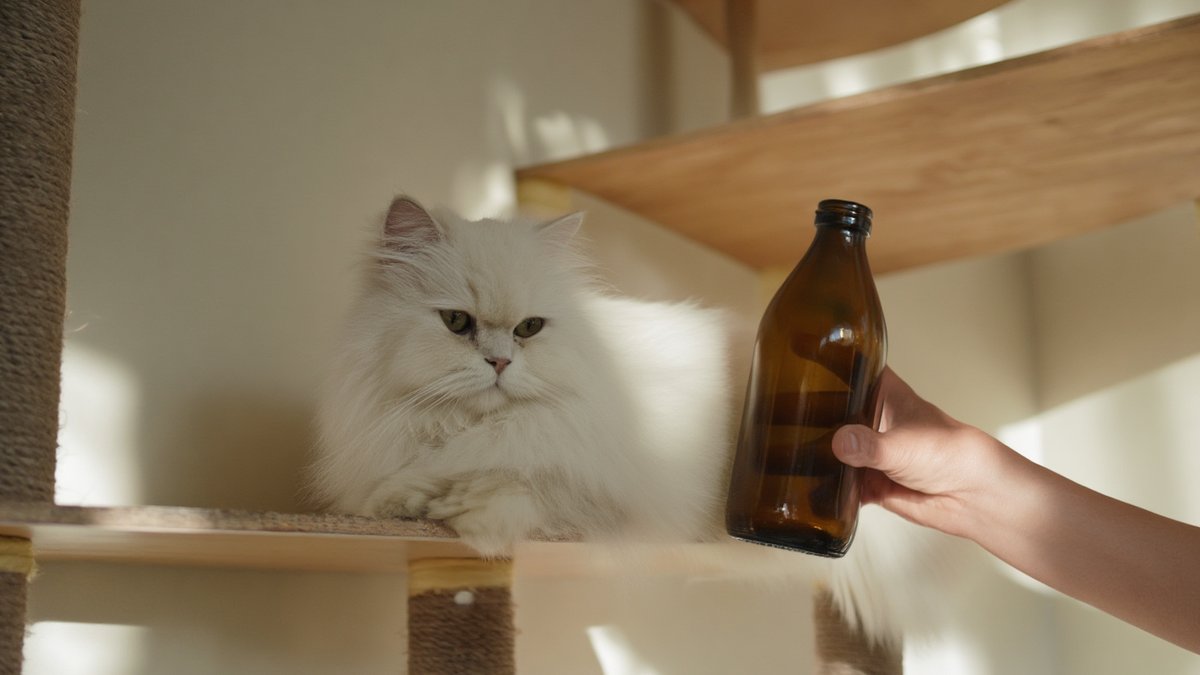
Essential oils occupy a strange corner of pet safety: they are natural, they smell pleasant, they are sold next to the healthy groceries — and several of the most popular ones are genuinely dangerous to cats. The mismatch confuses a lot of well-meaning owners, because "natural" and "safe" feel like the same word. For cats, they are not.
The short version: cats lack a liver pathway humans and dogs use to clear the compounds in many essential oils, so those compounds pool instead of leaving. A diffuser running all day in the same room as the cat, a drop of tea tree oil applied to the skin, or an overly enthusiastic self-grooming session after touching scented hands can all be the start of a poisoning case. This guide opens with the checklist that answers "is this setup safe" in a minute, then explains why the feline liver says no, which oils cause the most trouble, and what actual exposure looks like when it needs a clinic the same day.
The 60-Second Checklist Before You Diffuse
- Is the oil on the high-risk list (tea tree, eucalyptus, peppermint, citrus, cinnamon, wintergreen, pine, ylang-ylang)? If yes, keep it out of any cat-shared air entirely.
- Does the diffuser run in a room the cat can leave — or one she cannot? Only a fully cat-free, door-closed, ventilated room with the door kept shut is acceptable, and even then only briefly.
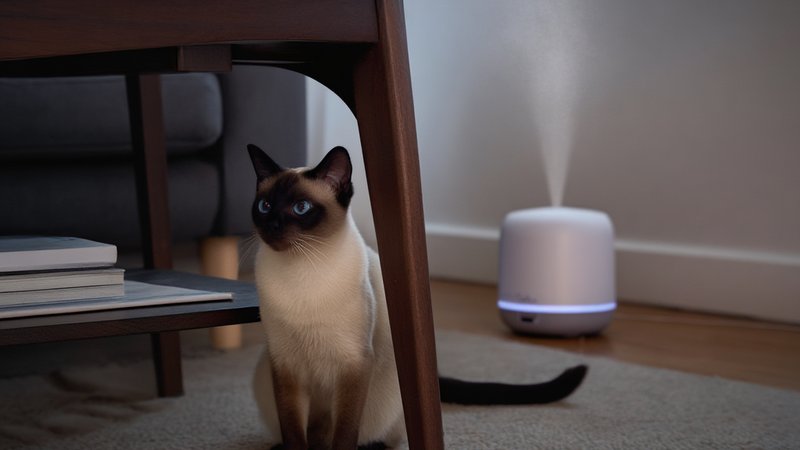
- Can the cat walk away? Cats cannot "escape" a misted living room. A small apartment diffusing for hours is a full-home exposure, not a corner one.
- Do you wash your hands after applying oils to yourself (lotions, roll-ons, bath products) before petting the cat? Transfer from skin to fur to tongue is a real route.
- Is anything ingestible in reach — the bottle itself, cotton balls, DIY cleaners? Curious cats knock things over, and a few swallowed milliliters is a far bigger dose than hours of scent.
- If any answer above is "yes" or "not sure," the setup is not safe — move it, close it, or skip it.
Why Cats Process Oils Differently
The core issue is a liver detox pathway called glucuronidation. Humans and dogs use it to tag certain fat-soluble compounds — including the phenols and terpenes concentrated in essential oils — so the kidneys can carry them out. Cats do this pathway poorly, an evolutionary leftover of a meat-only diet that never required it. The same dose that a dog clears in hours can sit in a cat for days.
That is why the exposure route matters as much as the oil. Scent alone from a single brief whiff is rarely the problem; the trouble starts with cumulative inhalation in a closed room, with oils landing on fur and being groomed into the mouth, or with direct skin contact — the cat’s thin skin and grooming habits turn a "topical" product into an oral one. Concentration matters too: a properly diluted product in a washable cleaner is a different risk than the neat oil from the bottle, and undiluted oil on skin or fur is always an incident.
The Oils That Cause the Most Trouble
Tea tree (melaleuca) is the repeat offender in veterinary poisoning reports — the most common essential-oil exposure in pets and among the most serious, especially when applied undiluted "for fleas" or hot spots. After it: eucalyptus, peppermint and other mints, citrus oils (d-limonene), cinnamon, wintergreen (which carries methyl salicylate, cousin of aspirin), pine, ylang-ylang, clove, and pennyroyal. Oil of turpentine-adjacent products and "pet-safe" flea sprays using concentrated botanical oils deserve the same suspicion.
One honest nuance: severity scales with dose, and not every whiff of lavender is an emergency. Lavender and chamomile sit lower on the risk list, and a cat in a well-ventilated home with an occasional, brief, cat-avoidant diffuser session is living a different life than a cat sharing a studio apartment with a three-hour diffuser run. But the safety margin is thin enough that the household checklist above — not the oil’s marketing — is what keeps it safe.
Signs of Exposure You Should Never Wait On
Essential-oil poisoning in cats announces itself within minutes to a few hours of a significant exposure. The signature signs: sudden drooling or pawing at the mouth, vomiting, unsteady "drunk" walking, muscle tremors, weakness or collapse, and rapid or labored breathing. Skin or nose irritation — redness, a cat rubbing its face frantically — often comes first. Tea tree exposures add a distinctive wobble and low body temperature.
Timing matters because treatment is supportive and early: decontamination, fluids, and monitoring let the overloaded liver catch up. A cat who stays quiet, drools for an evening, and "seems fine by morning" may not have dodged the bullet — liver injury can lag, so a known significant exposure earns a same-day visit even when symptoms seem mild, and bloodwork may be checked a second time after a couple of days.
Scent in a Cat Household Without the Risk
None of this means living in a beige, scentless box. Air the house rather than misting it — a ten-minute open window does more for a "stale" room than a diffuser. Simmer plain water with a slice of lemon on the stove while the cat is elsewhere and the kitchen is ventilated, then shut it down before the cat returns. Use unscented litter and let a clean, scooped box be the room’s actual perfume. If you use scented body products, wash hands before petting, and keep the oil storage box latched — knocked-over bottles are a classic exposure in the vet case reports.
And skip the DIY flea-and-tick oil blends entirely. Concentrated botanical oil products marketed online for cats have caused severe poisonings, and the safe, proven parasite preventives come from a vet, not from a recipe.

What This Looks Like in Practice: Veterinary Specialists Of Hanover, Mechanicsville, VA
When an exposure is significant, specialty backup matters. In Mechanicsville, Virginia, Veterinary Specialists Of Hanover is a 4.8-rated specialty practice with more than a hundred client reviews on Mechanicsville Turnpike, serving the Richmond metro area — the kind of practice where a "the diffuser tipped over and now she is drooling" call gets triaged immediately and escalated to advanced care if the bloodwork says so. Owners nearby can survey general practices in the cat vets in Mechanicsville, VA listing for the routine, non-emergency questions.
Veterinary Specialists Of Hanover
6127 Mechanicsville Tpke, Mechanicsville, VA, 23111
Phone: (804) 277-8021
⭐ 4.8
Questions Owners Ask Next
Own a Veterinary Clinic?
Enjoyed this article? Our editorial team researches, writes, and publishes professional features just like this one about clinics across the US. Get your practice in front of thousands of cat owners searching for a vet in your city.
The bottom line: essential oils are not a hazard because they are unnatural — they are a hazard because cats clear the natural compounds inside them slowly, and modern homes make exposure effortless. Run the checklist, keep the high-risk oils out of shared air, and know the drooling-and-wobble signs that convert a scent problem into a same-day clinic visit. Related reading: plants toxic to cats covers the botanical side of household hazards, and foods cats can’t eat extends the same "natural but not safe" logic to the kitchen.
This article is editorial content produced by the CatVetFinder team. Clinic details are drawn from public listings and may change — always confirm hours and services with the clinic directly.