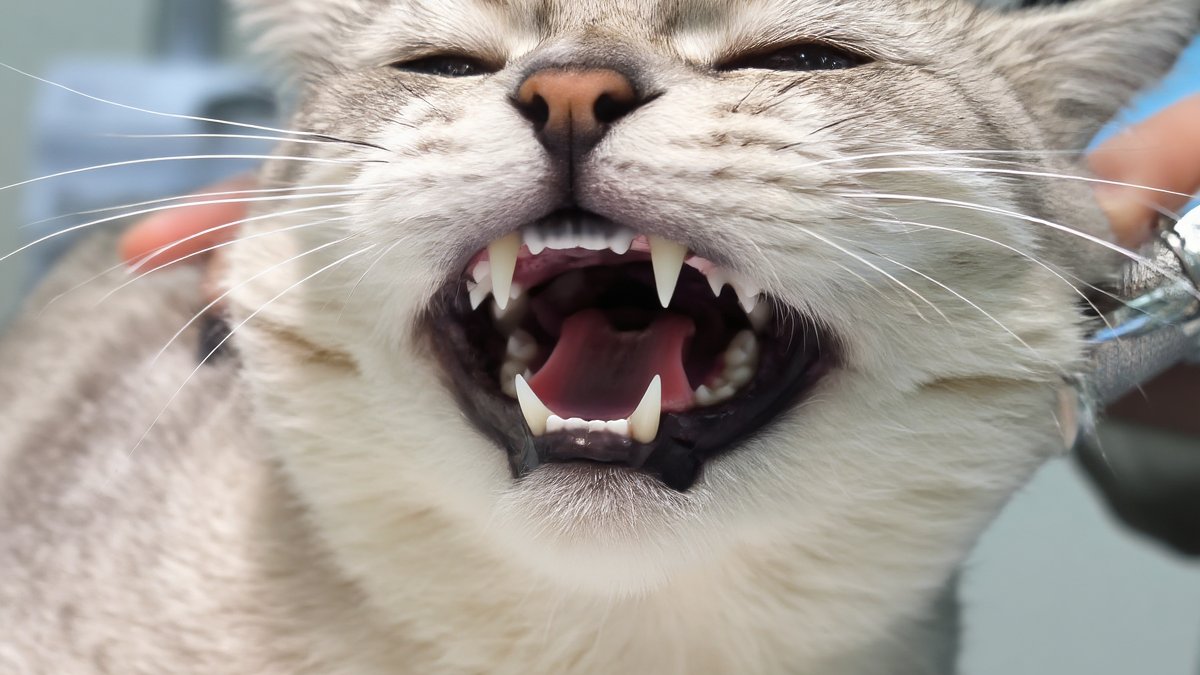
An adult cat carries exactly 30 teeth — sixteen on top, fourteen on the bottom — and almost every owner learns this number the same way: a tiny tooth turns up in the carpet, a kitten chews with comic enthusiasm, or a vet counts them during a checkup and announces a number nobody guessed. Cats pack those 30 teeth into a jaw smaller than a golf ball, and each one has a job description written by a predator. Knowing the map is more than trivia; it tells you which tooth is hurting when a cat chews oddly, why a missing premolar matters more than a missing incisor, and when the tooth that fell out was supposed to fall out.
The Five-Minute Home Tooth Count
Own a Veterinary Clinic?
Enjoyed this article? Our editorial team researches, writes, and publishes professional features just like this one about clinics across the US. Get your practice in front of thousands of cat owners searching for a vet in your city.
You do not need to pry open a willing cat’s jaws to check its teeth. This routine works on almost any cat and doubles as the foundation for lifelong tooth tolerance.
- Start with the lip flip. Lift the lip on one side like a mustache while the mouth stays closed. The big upper premolar and the long lower canine do most of the visible work [[the full dental exam this previews|/blog/cat-bad-breath/]].
- Count what you can see by zone: six tiny incisors centered between the canines on each jaw, one long canine on each side, and the cheek teeth behind them. You are not aiming for 30 — you are aiming for symmetry: same teeth visible left and right.
- Look for the carnassial pair. Upper last premolar and lower molar on each side shear past each other like scissors — these are the biggest teeth in the mouth and the ones that do the actual cutting.
- Smell the breath. Mild fish odor is normal; a rotten or distinctly sour smell points at resorption or infection below the gumline, where most feline dental disease actually lives.
- Check the gumline color, not just the teeth. A thin neat red line is gingivitis; brown-green crust at the gum junction is tartar worth a professional look.
- Note any chewing oddities for the vet: chewing on one side, dropping kibble, a head tilt while chewing, or pawing at the face after meals.
Kittens: 26 Baby Teeth on a Strict Schedule
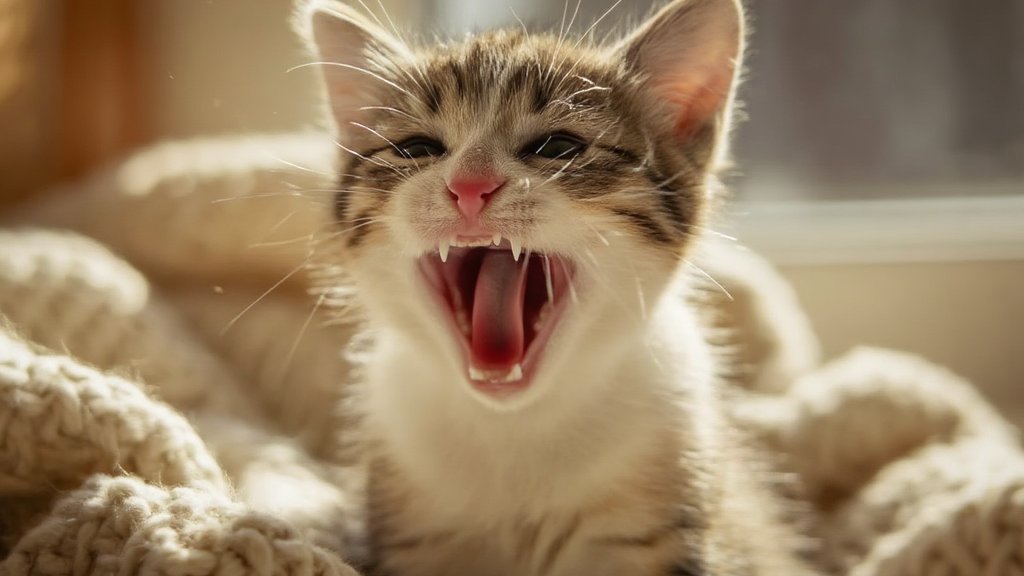
Kittens are born toothless and erupt 26 deciduous teeth — no molars in the baby set — between roughly two and six weeks of age. These are the famous needle teeth that make bottle-feeding an occupational hazard. Around three to four months, the adult set begins pushing the baby ones out, and by about six to seven months the swap is complete: all 30 adult teeth are in place and the kitten phase of losing teeth is over. During the teething window, expect enthusiastic chewing on anything chewable, some drooling, and the occasional mystery tooth in the rug — most are swallowed unnoticed, which is harmless. The one genuine kitten emergency is a retained baby tooth: a baby canine still sitting beside an emerging adult canine past six months, which crowds the adult tooth and sets up early tartar traps. Vets extract retained teeth during spay or neuter age anesthesia, solving it in the same breath.
The Adult Tooth Map at a Glance
Per side, top and bottom: three incisors for delicate gripping and grooming, one canine for the puncturing kill bite, then the cheek teeth — three premolars up top and two on the bottom on each side in the adult, plus one top molar and one bottom molar per side for grinding. The most functionally important teeth are the carnassial shearing pair and the canines; the incisors are the smallest and the ones owners most often find missing in older cats without great consequence. The most commonly diseased teeth, however, are hidden: the premolars, where feline odontoclastic resorption lesions eat the tooth from the outside in. Resorption is the quiet epidemic of feline dentistry — painful, invisible to the naked eye in its early stages, and found mainly by dental X-rays, which is why a "counting" exam and a professional dental are different levels of looking.
What a Broken or Missing Adult Tooth Actually Means
Cats fracture teeth the way dogs never quite do — mostly from biting hard objects: pen caps, hard nylon toys, bones, the occasional metal crate latch. A fractured tooth with an exposed pulp canal is not a cosmetic issue; it is an open door straight into the jawbone, and the resulting pain is the quiet kind cats are famous for hiding. The tell is often behavioral: chewing suddenly on one side, licking lips after eating, refusing the dry food that was fine last week. Treatment is either extraction or a root canal performed by a dental specialist, and extraction is the more common route in general practice. Meanwhile an unexplained missing tooth in an adult cat deserves the same follow-up as a fracture — the root may have been resorbed, lost to periodontal disease, or already extracted years ago; the dental X-ray answers all three.
What This Looks Like in Practice: Muirfield Animal Hospital, Dublin, OH
Muirfield Animal Hospital
6001 Memorial Dr, Dublin, OH, 43017
Phone: (614) 761-8400
⭐ 4.9 (187 reviews)
Dental counting turns into dental care at a practice equipped for it. Muirfield Animal Hospital, located at 6001 Memorial Dr in Dublin, Ohio, provides comprehensive care for cats and dogs, and holds a 4.9-star rating built on 187 client reviews — the kind of consistently high score that reflects routine work like dentals and wellness exams going smoothly, visit after visit. Its team handles the full dental ladder: the annual tooth count, the professional cleaning under anesthesia with X-rays, and the extraction or referral decision when a fractured or resorbing tooth turns up. Call (614) 761-8400, and owners in surrounding suburbs can browse the full cat vets in Dublin, OH listing to compare nearby practices.
The Short Version for Skimmers
Kittens cut 26 baby teeth by six weeks and lose them between three and six months; adults hold exactly 30 permanent teeth — incisors, canines, premolars, and molars arranged for shearing, not grinding. A lost adult tooth is never routine; it signals fracture, resorption, or gum disease and earns a dental exam. Most serious feline dental trouble hides below the gumline, so home lip-flips and breath checks catch the early warnings and annual professional exams with X-rays catch the rest.
More Guides for a Cat With Teeth on the Agenda
This article is editorial content produced by the CatVetFinder team. Clinic details are drawn from public listings and may change — always confirm hours and services with the clinic directly.