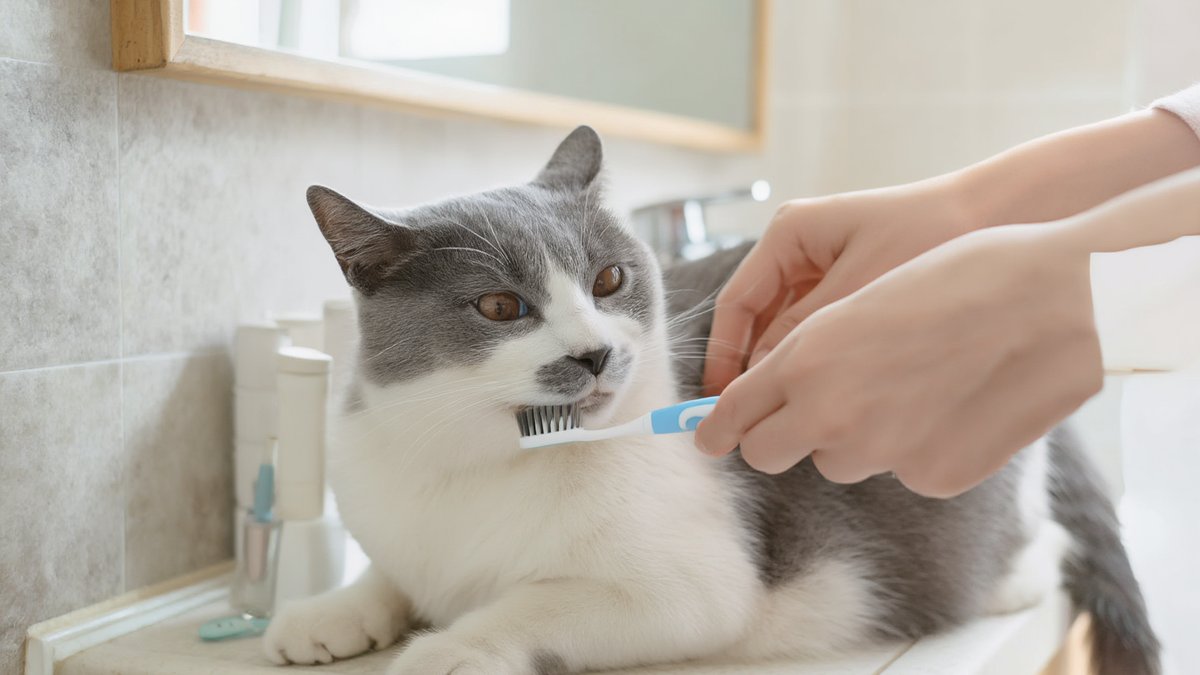
Ask a room of cat owners who brushes their cat's teeth and you will get a handful of raised hands, some nervous laughter, and at least one story that ends with a bandage. The idea has a reputation for being impossible, and that reputation is mostly an artifact of doing it backwards — buying a brush first and expecting the cat to cooperate on day one. Cats accept a great deal if you introduce it at their pace, and tooth brushing is no exception.
This guide starts where the work actually starts: a short checklist of what to have on hand, then a four-week introduction plan that ends with most cats tolerating a full 45-second brush. It also covers the honest fallbacks for cats who never come around, and the point where home care hands off to the veterinary dental table.
The Setup Checklist: Everything You Need Before Day One
- Cat-specific enzymatic toothpaste — poultry or seafood flavors exist precisely for this job. Never human toothpaste: the fluoride load is wrong for a cat, and some tubes contain xylitol, which is toxic to pets.
- A small cat toothbrush with a compact head, or a silicone finger brush if your cat objects to bristles. Both cost less than a bag of treats.
- A consistent, quiet spot — the same place every session, ideally not near the food bowl or litter box.
- High-value treats for immediately after every session, even the ones that go badly.
- Ten minutes a day for the first week, then about a minute a day once the routine is established.
One supply note worth repeating: the "cat toothpaste" aisle exists because human toothpaste is genuinely unsafe for cats, not as a marketing scheme. The fluoride concentration and sweeteners are formulated for spitting, and cats swallow everything. A cat-safe enzymatic paste does its work while being swallowed — that is the design.
The Four-Week Introduction Plan
Week one is taste only. Put a smear of the toothpaste on your fingertip and let the cat lick it off once a day, at the same time of day. The goal is nothing more than the cat learning that this flavor appears reliably and comes with a treat afterward. Do not reach for the mouth, do not restrain — the entire week is building the association.
Week two adds touch. After the cat licks paste off your finger, gently lift the lip on one side for two or three seconds and reward. Over the week, work up to rubbing a paste-coated fingertip along the outer gumline for a few seconds on each side. For a cat that flinches, shorten the contact rather than holding on — brief touches that end before the cat objects build trust far faster than longer ones that end in a struggle.
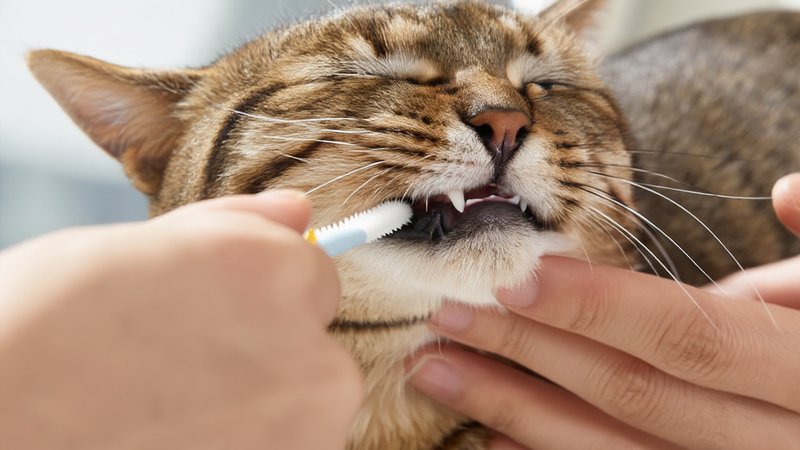
Week three brings in the brush with paste, but only for a few teeth — the canines are the easiest starting point, reached from the front with the lip lifted. Ten seconds of actual brushing, then reward and stop, even if the cat was tolerant of more. Week four extends along the outer surfaces of the teeth toward a full pass. The outer gumline is where plaque concentrates anyway; the inner surfaces matter less because the tongue keeps them scoured. A full routine at the end of week four is roughly forty-five seconds: two short passes per side, angle the bristles about forty-five degrees toward the gumline, done.
Brushing every other day still gives most of the benefit — plaque takes about two to three days to harden into tartar, so the brush only has to outrun that clock. Daily is the textbook answer; three or four sessions a week in a real household is a realistic, useful target.
Own a Veterinary Clinic?
Enjoyed this article? Our editorial team researches, writes, and publishes professional features just like this one about clinics across the US. Get your practice in front of thousands of cat owners searching for a vet in your city.
Why Any of This Matters
By middle age, the majority of cats carry some form of periodontal disease — gum inflammation that starts as plaque, hardens into tartar, and eventually eats into the structures holding teeth in place. The consequences owners notice are bad breath, drooling, reluctance to chew, and teeth that loosen or must be extracted. The quieter consequence is systemic: a chronically inflamed mouth is a daily drain on an animal that never complains. The full disease progression, from gingivitis to the professional cleaning that reverses it, is covered in cat dental disease and cleaning.
Brushing interrupts that progression at the cheapest and least invasive point — before tartar forms. It is the one intervention that works between professional cleanings, and cats that tolerate it from a young age tend to accept it for life, which is why the four-week plan is worth starting even with a young cat.
When the Cat Refuses: Partial-Credit Options
Some cats — especially those adopted as adults with a history of mouth handling going badly — never accept a brush, and forcing the issue damages the routine more than skipping a few sessions does. The honest ranking of fallbacks: dental-specific treats and prescription dental diets, which carry a recognized cleaning claim and do real, if partial, work; gel or water additives, which help modestly; and chew toys, which matter least. All of them are supplements, not replacements. A cat that will not tolerate a brush benefits most from a shorter dental checkup interval, so tartar gets addressed professionally before it becomes gum disease.
When Home Care Hands Off to the Vet
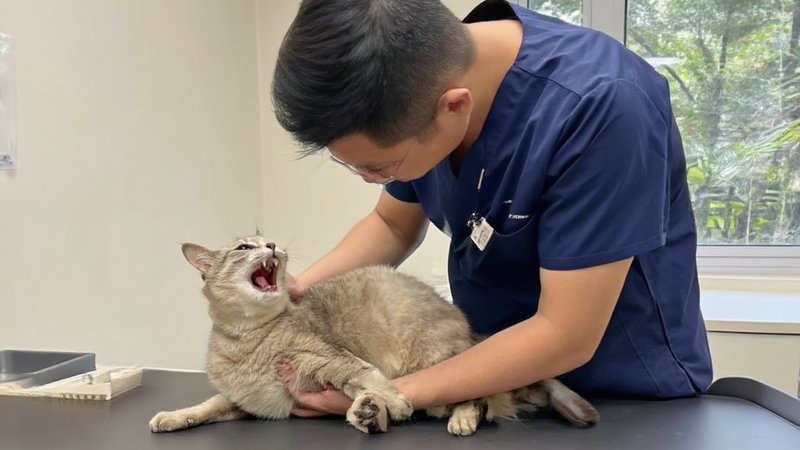
A few signs move the problem out of the sink and into the clinic: breath that turns consistently foul, drooling that is new, red or bleeding gums, pawing at the mouth, chewing on one side or dropping kibble, and a visible broken or discolored tooth. Dropping food and chewing strangely in particular often point to a painful tooth rather than finicky behavior — how many teeth cats have and what breaks them covers the tooth inventory, and cat drooling: when to worry sorts the drool question. A swollen muzzle or jaw is a same-week call, since that picture can mean an abscessed tooth root, explained in cat facial swelling and tooth root abscess.
Professional cleaning under anesthesia is the step that resets the clock — it removes tartar the brush never can, charts every tooth, and takes X-rays of the roots that cannot be seen from the surface. Home brushing is what stretches the intervals between those resets; the two are a pair, not alternatives.
What This Looks Like in Practice: Milton Animal Hospital, Milton, FL
Dental questions are among the most frequent reasons owners bring cats in, and the answers vary cat by cat — the degree of tartar, the age of the cat, and the temperament of the patient all change the plan. In Milton, Florida, Milton Animal Hospital is a 4.7-rated practice with nearly seven hundred client reviews serving Santa Rosa County from its Avalon Boulevard location, and it is the kind of established clinic where a "my cat hates the brush" conversation produces a concrete, cat-specific plan rather than a lecture. Owners nearby can browse the full cat vets in Milton, FL listing to compare practices before booking.
Milton Animal Hospital
4282 Avalon Blvd, Milton, FL, 32583
Phone: (850) 623-6780
⭐ 4.7
Cat Tooth Brushing: Common Questions
The plan is unglamorous, and that is its strength: a minute every other day, a treat after, and a routine that quietly protects the teeth for years. For more on the subject, cat dental disease and cleaning explains the professional side, how many teeth cats have covers the anatomy, and the full services guide sorts what different clinics offer.
This article is editorial content produced by the CatVetFinder team. Clinic details are drawn from public listings and may change — always confirm hours and services with the clinic directly.